
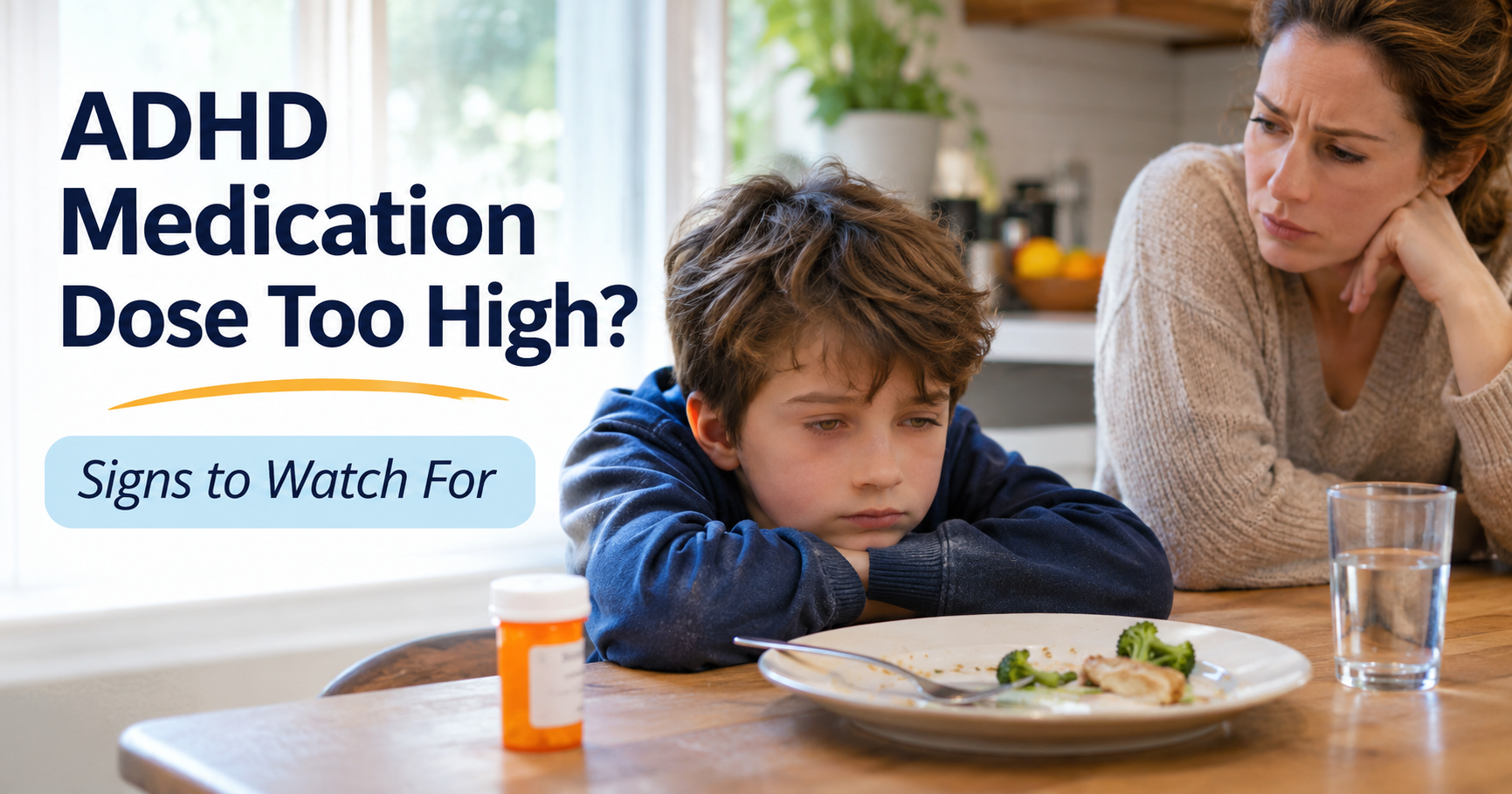
When you’re trying to figure out whether your child’s ADHD medication dose is too high, things can get confusing pretty quickly. You want the medicine to help them focus, manage their behavior, and get through school without constantly struggling. But you don’t want your child feeling miserable, exhausted, unusually emotional, or like a completely different person.
My wife and I understand that balancing act more than we’d like to.
Our 7-year-old son has significant ADHD challenges, and we’ve spent more than a year working with his mental health doctor to find treatments that help. We’ve tried multiple medications and dosages. Some didn’t make enough difference, while others were associated with emotional and behavioral changes that seriously concerned us.
And sometimes, it’s hard to know whether a medication isn’t working, the dose needs adjusting, or something else is happening entirely.
A dose that’s too high can cause unwanted side effects, but side effects alone don’t prove the dose is excessive. Some children are sensitive to particular medications even at commonly prescribed doses.
Here’s what parents should watch for, what we’ve learned from our own medication journey, and when it’s time to call the doctor.

What Are the Signs Your Child’s ADHD Medication Dose Is Too High?
The signs depend on the medication, the child, and how their body responds.
Stimulant medications such as Vyvanse, Adderall, Ritalin, and Concerta can sometimes cause noticeable side effects when the dose is more than a child tolerates.
But there’s no single symptom that automatically tells parents the dose is too high.
Some possible warning signs include:
- Unusual quietness or emotional flatness. Your normally expressive child seems withdrawn, overly subdued, or unlike themselves.
- Increased irritability. They become unusually angry, frustrated, or upset while the medication is active.
- Excessive tearfulness. They cry more often or seem unusually emotionally sensitive.
- Significant appetite suppression. They consistently struggle to eat enough during the day.
- Sleep difficulties. They have more trouble falling asleep or staying asleep after medication changes.
- Headaches or stomachaches. These become frequent, persistent, or difficult to tolerate.
- Unusual restlessness or anxiety. They seem more nervous, uncomfortable, or agitated than before treatment.
- A noticeable change in personality or engagement. They no longer seem interested in activities they normally enjoy.
These symptoms deserve attention, particularly when they begin after a medication increase.
However, they can also have other causes. The prescriber needs to consider the entire picture.
Why More Medication Doesn’t Always Mean Better Results
It’s easy to think that if a medication helps a little, increasing the dose should help even more.
But ADHD treatment doesn’t always work that way.
The goal is to find a dose that improves symptoms while keeping side effects tolerable.
A higher dose might provide additional benefit for one child but create unnecessary problems for another.
That’s why doctors adjust ADHD medication carefully and monitor the response over time.

Can Too Much ADHD Medication Make a Child Act Like a Zombie?
You’ve probably heard parents describe a child on ADHD medication as acting like a zombie.
It’s not a medical term, but I understand what they’re trying to describe.
They mean a child who seems unusually quiet, emotionally flat, withdrawn, or disconnected from what’s happening around them.
Calm and Overmedicated Aren’t the Same Thing
There’s an important difference between a child being calmer because their ADHD symptoms are better controlled and a child becoming unusually subdued.
For example, a child who previously interrupted constantly might begin waiting their turn and listening more carefully.
That’s potentially a positive change.
But if that same child suddenly stops showing excitement, barely participates in conversations, or seems emotionally disconnected, that’s something to discuss with their doctor.
Children should still be able to enjoy being children.
They should still laugh, play, talk, and show interest in things they love.
The goal of ADHD medication isn’t to make a child silent.
What Should Parents Do if Their Child Seems Overly Sedated?
Contact the prescribing clinician and describe the change.
Try to explain exactly what you’re noticing instead of only saying your child seems different.
For example:
“He’s much quieter than usual and doesn’t seem interested in playing.”
Or:
“Since the dose increased, he seems tired and withdrawn during the day.”
Those details help the doctor evaluate whether the medication, dose, sleep, or another concern might be involved.
Don’t adjust the dose yourself.

Can a High ADHD Medication Dose Make a Child Angry or Emotional?
Yes. Some children experience irritability, crying, or other mood changes when a stimulant dose is too high.
However, emotional side effects can also occur at doses that aren’t excessive.
And ADHD itself can make emotional regulation difficult.
That’s what makes this so frustrating for parents.
Our Experience With Emotional Side Effects
Our son’s medication history includes an Adderall trial in late 2024.
We initially tried a 5 mg extended-release dose, which our notes described as ineffective.
After increasing to 10 mg, we documented irritability, sadness, defiant behavior, and episodes where he hit himself in the head when frustrated.
Later medication trials also brought concerns.
During a short Focalin trial in June 2025, we recorded severe emotional outbursts and our son saying he couldn’t control himself.
Those experiences were frightening.
But I want to be clear that our observations don’t prove those doses were too high. A medication can be poorly tolerated for reasons other than excessive dosing.
What we do know is that those behaviors needed professional attention.
We’ve shared the detailed dates and observations in our son’s ADHD medication case study.
What if the Anger Happens Only in the Evening?
That’s another important distinction.
Some children experience irritability as stimulant medication wears off.
This is sometimes called medication rebound.
It isn’t necessarily the same thing as experiencing irritability while the medication is active.
If you’re seeing that pattern, our article about ADHD medication and unexpected anger in children explains the differences in more detail.
Either way, the timing is useful information to share with your child’s prescriber.
Is Loss of Appetite a Sign the ADHD Dose Is Too High?
It can be a sign that the medication or dose needs review, but appetite suppression doesn’t automatically mean the dose is too high.
Reduced appetite is a common side effect of stimulant ADHD medications.
Some children barely feel hungry during the school day, even when they ate normally before starting treatment.
Why Lunchtime Can Become Difficult
Think about a typical school morning.
Your child takes their medication before leaving for school.
A few hours later, it’s lunchtime.
But while other children are eating, yours might not feel hungry.
The medication may be suppressing their appetite.
If this happens repeatedly, parents may begin worrying about nutrition and growth.
That’s reasonable.
What Should Parents Watch?
Rather than judging everything by one unfinished lunch, pay attention to patterns.
Is your child regularly skipping meals?
Are they losing weight?
Are they eating much more when the medication wears off?
Has their pediatrician noticed changes in their growth pattern?
These questions are worth discussing with their doctor.
We cover practical meal strategies in our article about children losing their appetite while taking ADHD medication.
Can ADHD Medication Make a Child Too Tired?
Yes, although the explanation isn’t always straightforward.
Some children seem unusually tired or subdued while taking certain ADHD medications.
Others experience fatigue because medication interferes with sleep.
And some nonstimulant medications, including guanfacine, can cause drowsiness.
Not All ADHD Medications Work the Same Way
Stimulant medications and nonstimulant medications affect the body differently.
That means the side effects aren’t identical.
For example, guanfacine can cause sleepiness and sometimes lower blood pressure.
Stimulants are more commonly associated with appetite suppression and difficulty sleeping, although individual reactions vary.
If your child seems unusually tired after starting medication or changing a dose, tell their prescriber.
Don’t assume that being sleepy means the medication is working.
What if My Child Is Tired but Can’t Sleep?
This is another situation that deserves attention.
A child might seem exhausted during the day but still struggle to settle down at bedtime.
Poor sleep, anxiety, medication timing, and other medical concerns can contribute.
Our family has dealt with significant sleep difficulties alongside our son’s ADHD.
That’s one reason we’ve learned to look at sleep and daytime behavior together instead of treating them as unrelated problems.
If your child has persistent insomnia or unusual fatigue, ask their clinician to review the full medication schedule and sleep history.

How Can You Tell if the ADHD Dose Is Too High or Too Low?
This is one of the most useful questions parents can ask, but there isn’t a simple test you can perform at home.
A child who still struggles with focus might need a medication review.
But that doesn’t automatically mean they need a higher dose.
And a child experiencing side effects doesn’t automatically need a lower dose.
The medication itself, its formulation, the timing, and other health concerns all matter.
What Might Suggest the Medication Isn’t Helping Enough?
Parents and teachers may notice that the child continues having significant difficulties with:
- Following instructions.
- Completing schoolwork.
- Staying focused on age-appropriate activities.
- Managing impulsive behavior.
- Participating in classroom routines.
However, these problems can continue even when a medication is appropriately prescribed.
Some children need additional educational, behavioral, or mental health support.
What Might Suggest the Dose Needs Reviewing?
A clinician may want to reassess treatment when:
- Side effects begin or become worse after a dose increase.
- The child seems unusually withdrawn or emotionally flat.
- Sleep or appetite problems become significant.
- The child experiences severe irritability or other behavioral changes.
- The medication provides little benefit despite an adequate trial.
- The child has difficulty functioning during parts of the day when medication should be active.
The important thing is to bring specific observations to the doctor rather than trying to decide the correct dose yourself.


What Should Parents Track After an ADHD Medication Dose Change?
If there’s one practical thing I’d encourage other parents to do, it’s keeping notes.
Not because you need to document every minute of your child’s life.
But because medication appointments can become overwhelming when you’re trying to remember what happened over the past several weeks.
We’ve learned that firsthand.
Our son’s treatment history includes multiple medications, dose changes, and emotional side effects.
Having dates and observations written down makes it much easier to explain what happened.
A Simple Medication Observation Log
Here’s an example of what parents could record.
| What to Track | Example Observation |
|---|---|
| Medication and dose | Record exactly what’s prescribed |
| Time taken | 7:00 AM |
| School focus | Teacher reported fewer reminders |
| Appetite | Ate breakfast, barely touched lunch |
| Mood | Became unusually tearful around 2 PM |
| Sleep | Took longer than usual to fall asleep |
| Other concerns | Headache after school |
These are illustrative examples, not entries from our son’s actual medical notes.
You don’t need to record everything every day.
Focus on changes that seem important or repeat consistently.
Ask Your Child How They Feel
This is something that can get overlooked.
Parents and teachers spend a lot of time discussing whether medication improves behavior.
But the child is the one taking it.
Depending on their age and ability to explain their feelings, ask simple questions.
“Does your medicine help you concentrate?”
“Do you feel different when you take it?”
“Does anything about it bother you?”
“Do you still feel like yourself?”
A seven-year-old might not have a perfect explanation, but their perspective matters.
When Should You Call the Doctor About ADHD Medication Side Effects?
Not every mild side effect is an emergency.
Some children experience temporary headaches, appetite changes, or sleep difficulties when starting medication.
However, significant or persistent side effects deserve medical review.
And certain symptoms require urgent attention.
Contact the Prescriber Promptly For
- New or worsening irritability, sadness, or unusual behavior.
- Significant appetite loss or concerning weight changes.
- Persistent sleep problems.
- Unusual daytime sedation or withdrawal.
- Repeated headaches, stomachaches, or other troubling symptoms.
- Symptoms that become worse after a medication increase.
Get Urgent Help for Serious Symptoms
Seek urgent medical evaluation if your child develops hallucinations, severe agitation, unusual thoughts, or self-injurious behavior.
If your child may seriously hurt themselves or someone else, or has chest pain, fainting, a seizure, difficulty breathing, or another potentially life-threatening symptom, seek emergency care.
If you suspect an accidental overdose, contact Poison Control at 1-800-222-1222 in the United States. Call 911 for severe or life-threatening symptoms.
Our son’s medication history includes behaviors that were serious enough to require immediate attention to his safety.
That’s why I don’t believe parents should dismiss dramatic behavioral changes as something children simply have to tolerate.
Common Questions About ADHD Medication Doses in Children
What Happens if a Child Takes Too Much ADHD Medication?
An excessive dose can cause significant side effects, and an accidental overdose may be dangerous.
Symptoms can include agitation, rapid heartbeat, vomiting, confusion, or more serious complications, depending on the medication.
If a child accidentally takes more medication than prescribed, contact Poison Control immediately rather than waiting for symptoms.
Can Too Much Vyvanse Make a Child Emotional?
Yes. Irritability or mood changes can occur with Vyvanse, and excessive stimulant exposure may increase side effects.
However, emotional changes don’t prove the dose is too high.
The prescribing clinician should evaluate the timing and severity.
Can ADHD Medication Make My Child Too Quiet?
Some children become unusually subdued or emotionally flat while taking stimulant medication.
That can indicate the dose or medication needs reassessment.
A child becoming better able to listen and control impulses is different from becoming withdrawn or disconnected.
Does a Higher ADHD Dose Work Better?
Not necessarily.
The goal is to find the most effective dose with tolerable side effects.
Increasing a dose beyond what’s appropriate can create additional problems without providing meaningful benefit.
Can ADHD Medication Side Effects Go Away?
Some mild side effects become less noticeable as a child adjusts to medication.
Others persist or become more concerning.
Never assume severe emotional or behavioral changes will resolve on their own.
Should I Lower My Child’s ADHD Medication Dose Myself?
No. Contact the prescribing clinician before making changes.
Some medications require special considerations when adjusting or stopping treatment.
For example, abruptly stopping certain nonstimulant medications can cause problems.
How Often Should My Child’s ADHD Medication Be Reviewed?
Children need regular follow-up while taking ADHD medication, especially when starting treatment or adjusting doses.
The appropriate schedule depends on the medication, symptoms, side effects, and clinician’s recommendations.
Growth, sleep, appetite, behavior, and school functioning may all need monitoring.
Finding a Dose That Helps Without Changing Who Your Child Is
As a dad raising a son with significant ADHD challenges, I know how badly parents want to find something that works.
We want our kids to focus better in school.
We want fewer emotional struggles.
We want them to sleep well, eat normally, and enjoy their childhood.
And when medication helps with one problem but seems to create another, it’s frustrating.
My wife and I have been through enough medication trials to understand that the process isn’t always simple.
Sometimes the dose isn’t effective enough.
Sometimes a medication causes side effects.
And sometimes ADHD, anxiety, sleep problems, and ordinary childhood behavior overlap in ways that make everything harder to figure out.
What matters is paying attention, keeping accurate notes, and working closely with the doctor responsible for your child’s treatment.
Because the goal isn’t to make our son the quietest child in the classroom.
It’s to help him feel better, function better, and still be himself.