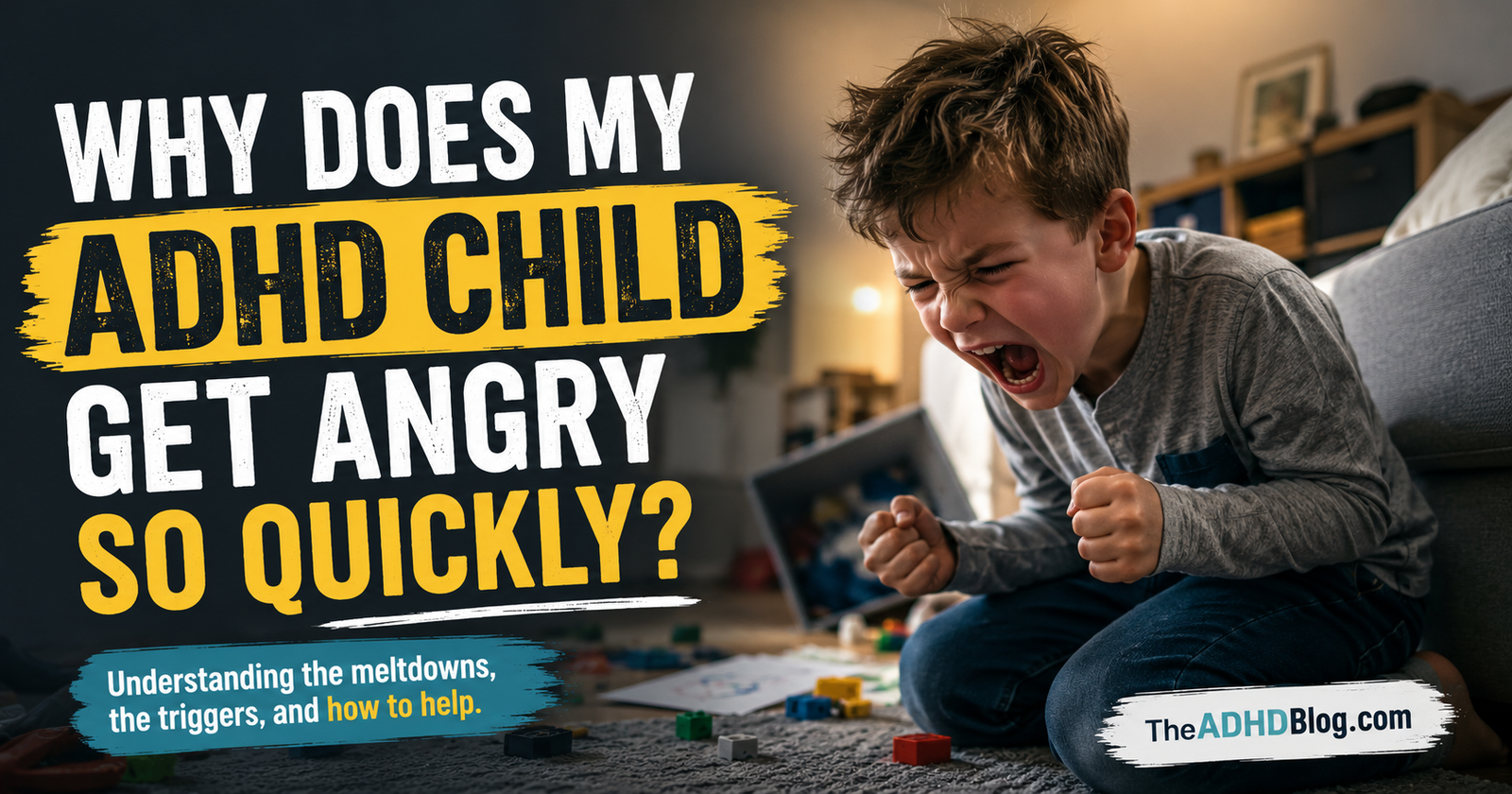
One of the hardest ADHD behaviors for me to understand is how incredibly fast anger can happen.
Everything can seem completely normal.
Then you ask your child to put away the tablet.
They can’t find a shoe.
A sibling interrupts them.
Homework doesn’t make sense.
You say no to something.
And suddenly you’re looking at a child who seems absolutely furious.
Not mildly annoyed.
Not a little frustrated.
Furious.
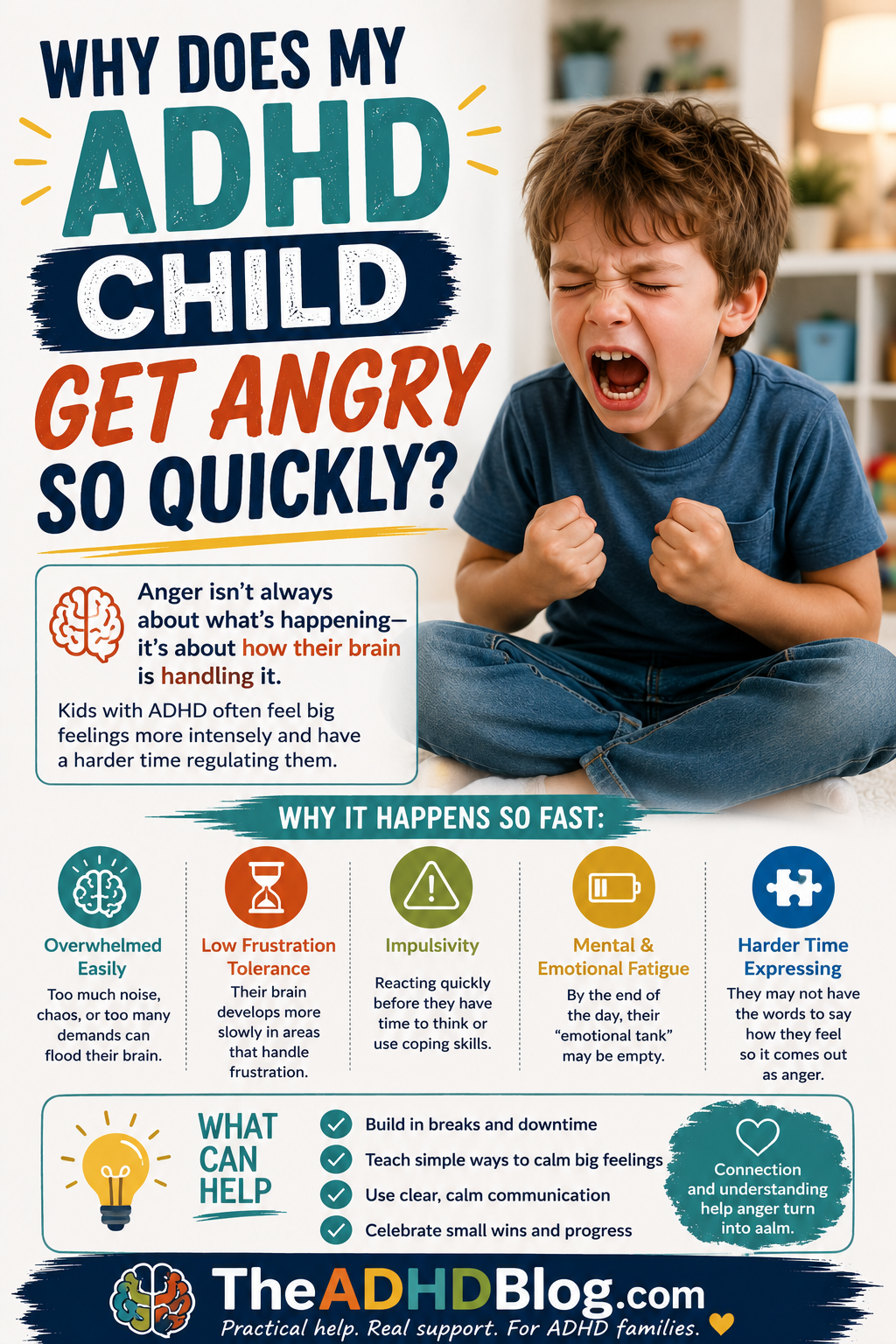
I’ve had moments where I genuinely wondered how we went from a normal conversation to this level of anger in what felt like 30 seconds.
If that sounds familiar, you may be wondering:
Why does my ADHD child get angry so quickly over things that don’t seem like a big deal?
The first thing I think parents need to know is that ADHD isn’t simply a problem with paying attention.
For some kids, managing frustration and strong emotions can be difficult too. CHADD describes low frustration tolerance, explosive reactions to small annoyances, and intense responses to disappointment as problems that can occur in children with ADHD.
That doesn’t mean anger should be ignored.
It doesn’t mean ADHD excuses hitting, screaming, destroying things, or treating other people badly.
But understanding why the anger gets so big so quickly gives us a much better place to start.
ADHD Anger Can Seem to Go From 0 to 100
This is probably the part that confuses parents the most.
There doesn’t always seem to be much warning.
A child may go from:
“I can’t find my charger.”
to:
“WHERE IS IT? SOMEONE TOOK IT!”
incredibly quickly.
Or homework goes from:
“I don’t understand this.”
to:
“I’M NOT DOING THIS! I HATE HOMEWORK!”
before you’ve even figured out which problem they’re struggling with.
That speed matters.
For some children with ADHD, the problem isn’t that they experience emotions nobody else experiences.
Everybody gets frustrated.
Everybody gets disappointed.
Everybody gets angry.
The difference can be how intensely the emotion arrives and how difficult it is to regulate once it gets going.
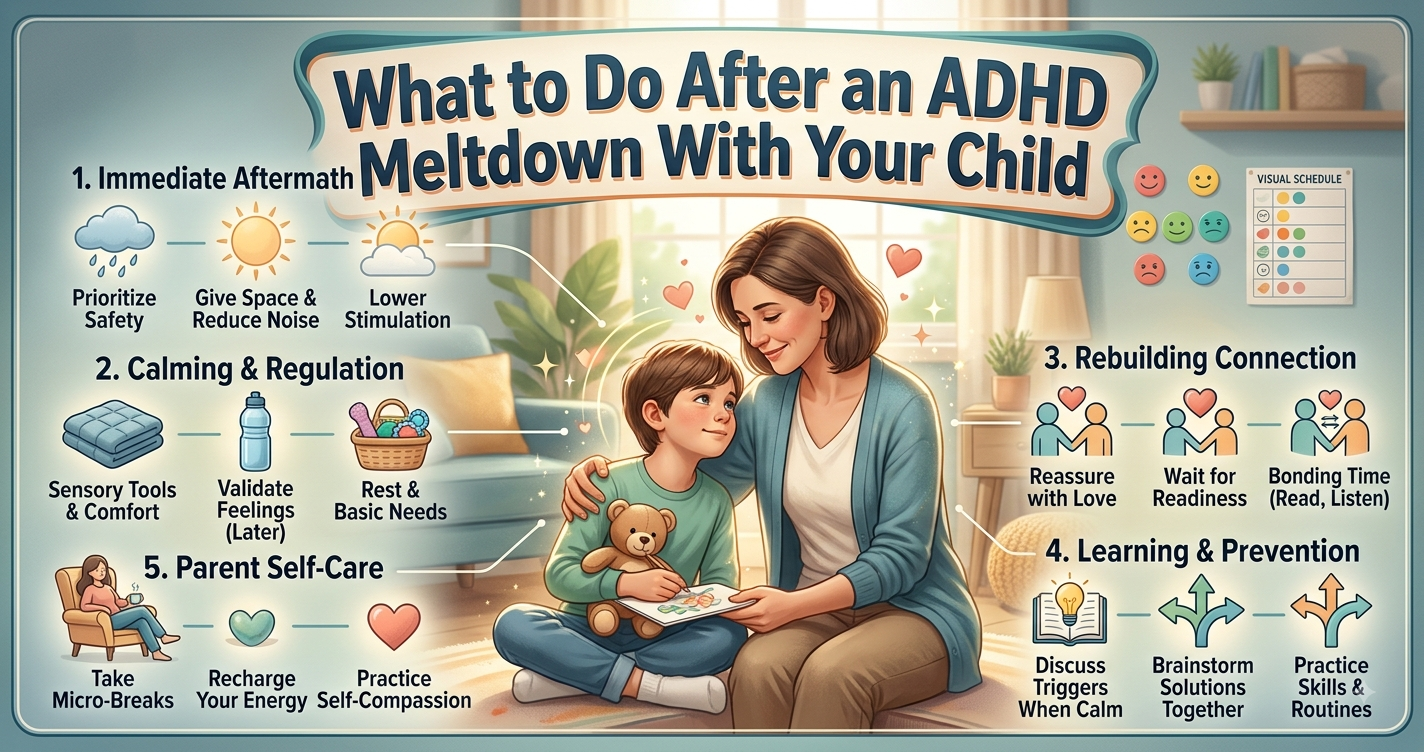
Research and clinical discussion around ADHD increasingly recognize these emotional-regulation difficulties. CHADD notes that children with ADHD may show explosive overreactions to relatively small frustrations and then return to their usual mood after the situation passes. After the child’s mood returns, support after an explosive reaction offers a practical next step for handling what happened.
That’s a pattern I’ve learned to watch closely.

Your Child May Not Actually Be Angry About the Thing You Think
This was a huge realization for me.
The child is screaming because their favorite cup is dirty.
Obviously the cup is the problem.
Right?
Maybe.
But maybe the cup is just where everything finally came out.
Your child may have:
Slept badly.
Struggled through school.
Been corrected repeatedly.
Had trouble with friends.
Skipped half of lunch.
Sat through a noisy classroom.
Lost something important.
Worked incredibly hard to stay focused.
Come home exhausted.
Then they find out the cup they wanted is in the dishwasher.
That’s when the explosion happens.
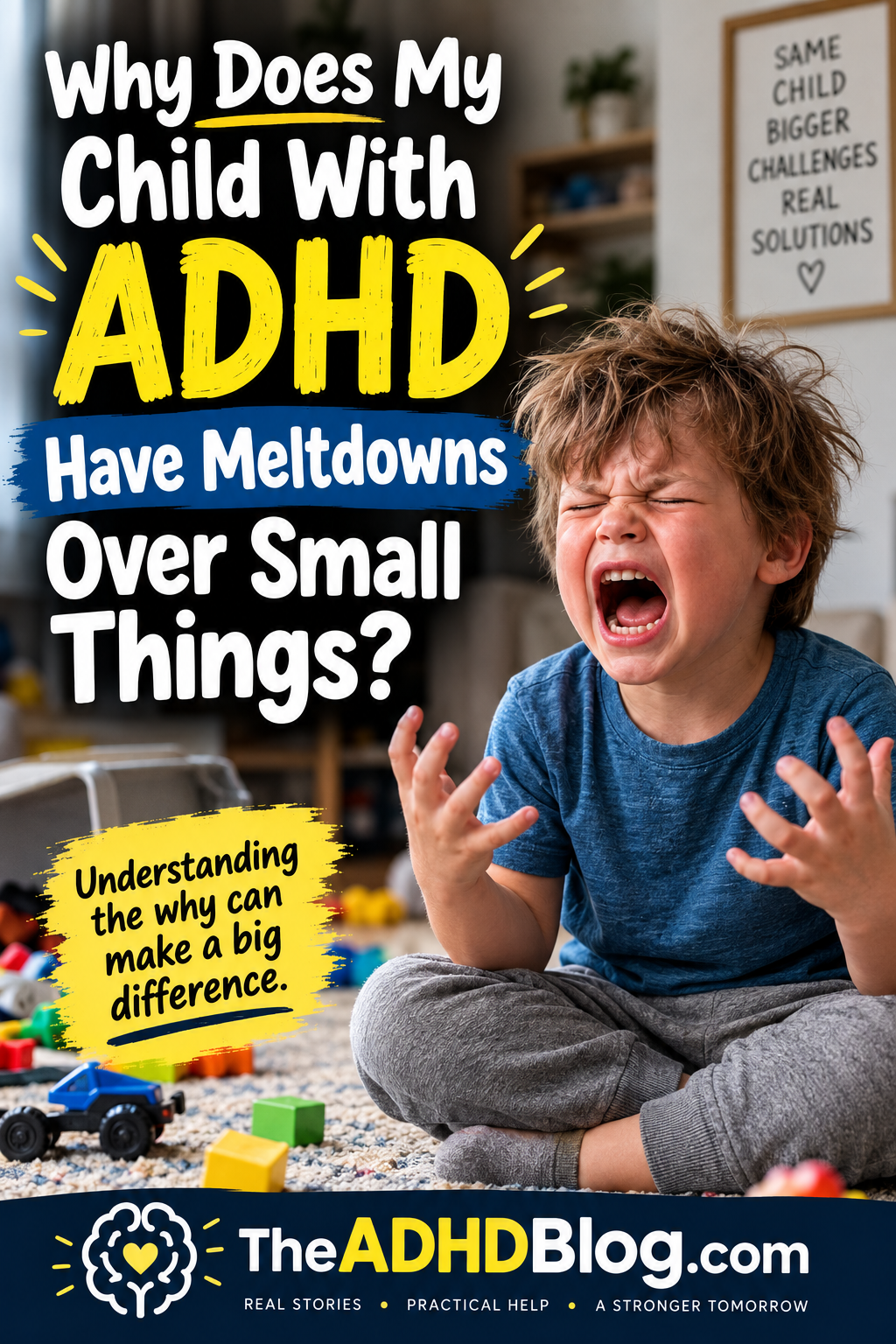
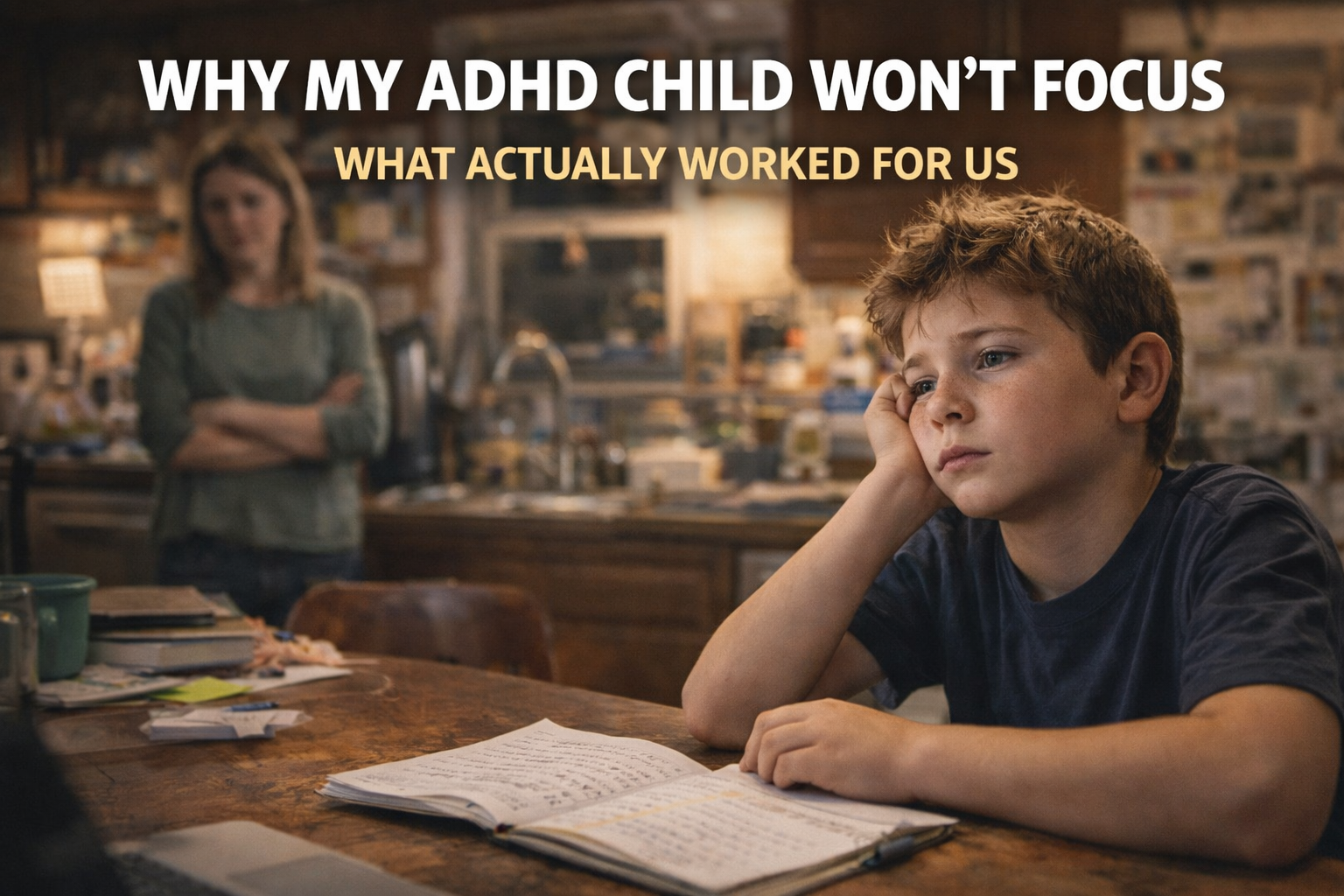
This is exactly why I wrote about why children with ADHD have meltdowns over seemingly small things.
The final trigger may be tiny.
The emotional load behind it may not be.
Low Frustration Tolerance Can Make Ordinary Problems Feel Huge
Frustration tolerance is something I think about a lot with ADHD.
Imagine two children working on the same puzzle.
Both get stuck.
One thinks:
“Hmm. I’ll try another piece.”
The other immediately feels:
“THIS ISN’T WORKING.”
That frustration grows.
They try again.
Still doesn’t work.
Now they’re angry.
They shove the puzzle away.
Someone says:
“Just calm down and try again.”
And somehow those six words make everything ten times worse.
That’s low frustration tolerance in real life.
It isn’t necessarily that the child wants to be furious.
They may simply reach their frustration limit much faster than another child would in the same situation.
ADHD Impulsivity Doesn’t Only Affect Physical Behavior
When we hear “impulsive,” we often picture a child running through the house, interrupting conversations, grabbing something without asking, or doing something before thinking.
But I think emotional impulsivity is an important concept for parents to understand too.
Sometimes the feeling seems to come out before the child has time to put the brakes on it.
The thought isn’t:
“I’m becoming frustrated. I should take a moment, identify my feelings, evaluate my options, and choose an appropriate response.”
It’s:
“I’M MAD!”
And it’s already out.
CHADD discusses this kind of emotional impulsivity as one possible way of understanding overly intense emotional reactions in ADHD.
That doesn’t remove accountability.
It tells me which skill we need to work on.
ADHD Anger Can Be Worse When a Child Is Tired
This one deserves way more attention than it gets.
Think about yourself after sleeping badly.
Are you more patient?
Do minor annoyances bother you less?
Can you handle disappointment better?
Probably not.
Now take a child who already has trouble stopping impulsive reactions and regulating frustration and add exhaustion.
That’s not exactly a recipe for a peaceful evening.
If your child’s anger consistently becomes much worse late in the day, I would absolutely pay attention to sleep.
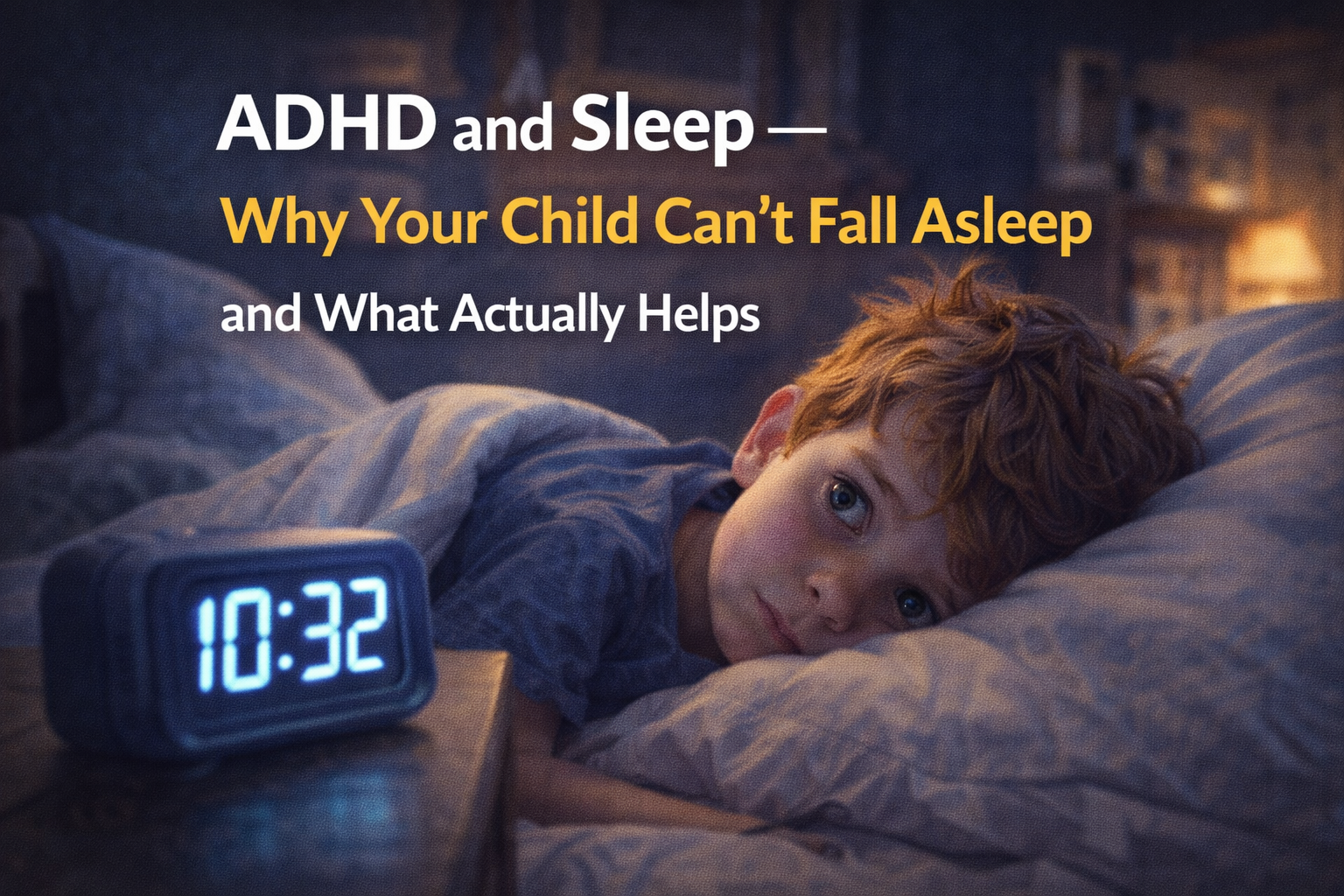
We’ve already gone deep into ADHD and sleep problems in children because sleep problems can spill into so many other areas of family life.
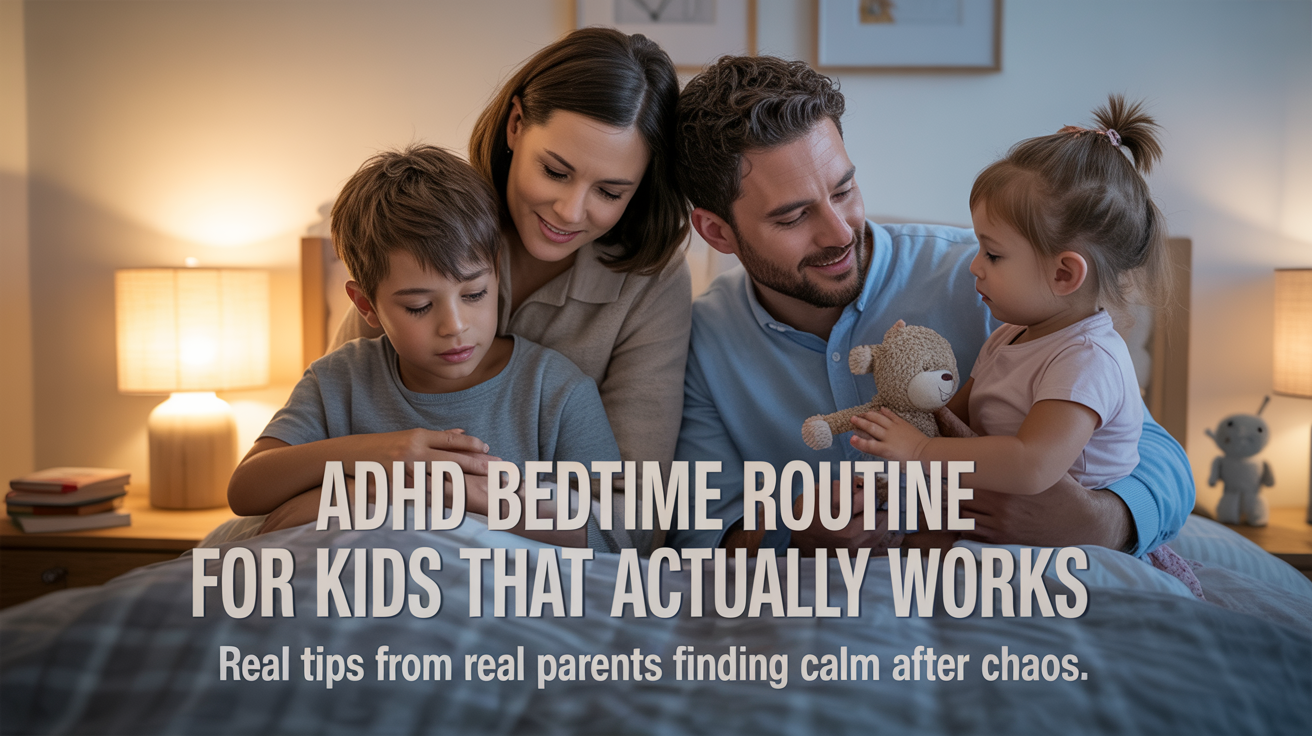
And if nighttime itself is when things explode, our experience with ADHD bedtime battles may sound very familiar.
Sometimes we’re trying to fix an “anger problem” at 8:30 p.m. when we’re actually dealing with an exhausted brain that has very little regulation left.
Hunger Can Make ADHD Anger Worse Too
I know this sounds ridiculously basic.
But before I analyze every psychological explanation for a 4 p.m. explosion, I want to know:
When did this child last eat?
Kids come home from school hungry.
Some barely eat their lunch.
Some ADHD medications can affect appetite, which is something parents should discuss with the child’s prescriber if it becomes a concern. The CDC specifically notes appetite loss and difficulty sleeping among possible side effects of stimulant medication.
Then the child gets home and immediately hears:
Put your backpack away.
Take your shoes off.
How was school?
Where’s your homework?
Don’t bother your brother.
We need to leave soon.
And now they’re angry about everything.
Sometimes a snack and 20 minutes without demands can change the entire direction of the afternoon.
Why Is My ADHD Child So Angry After School?
This is one of those patterns I would write down if you keep seeing it.
The teacher says your child had a great day.
Your child gets into the car.
And somehow you’re driving home with a completely different kid.
That doesn’t automatically mean the child is intentionally behaving better for the teacher than for you.
Think about how much regulation school requires.
Sit here.
Listen.
Wait.
Don’t interrupt.
Remember this.
Finish that.
Ignore the person beside you.
Switch activities.
Keep track of your stuff.
Follow the schedule.
Handle disappointment.
Work when you’d rather play.
Navigate friendships.
Then do it for hours.
The CDC notes that children with ADHD can face substantial obstacles at school and may benefit from behavioral classroom management, organizational training, accommodations, and collaboration among families and educators.
By the time some kids reach home, they may simply be done.
Homework Can Turn Frustration Into Anger Fast
Homework is one of the easiest places to see this happen.
You say:
“Let’s get your homework done.”
The child already doesn’t want to.
They can’t find the worksheet.
Now they’re annoyed.
They sit down.
They don’t understand question three.
More frustration.
You explain it.
They still don’t understand.
More frustration.
You tell them they need to focus.
And there it is.
Explosion.
This is why I don’t think “try harder” is a particularly useful ADHD strategy.
The CDC recommends breaking complicated tasks into shorter, simpler steps and using breaks for longer tasks to help limit stress.
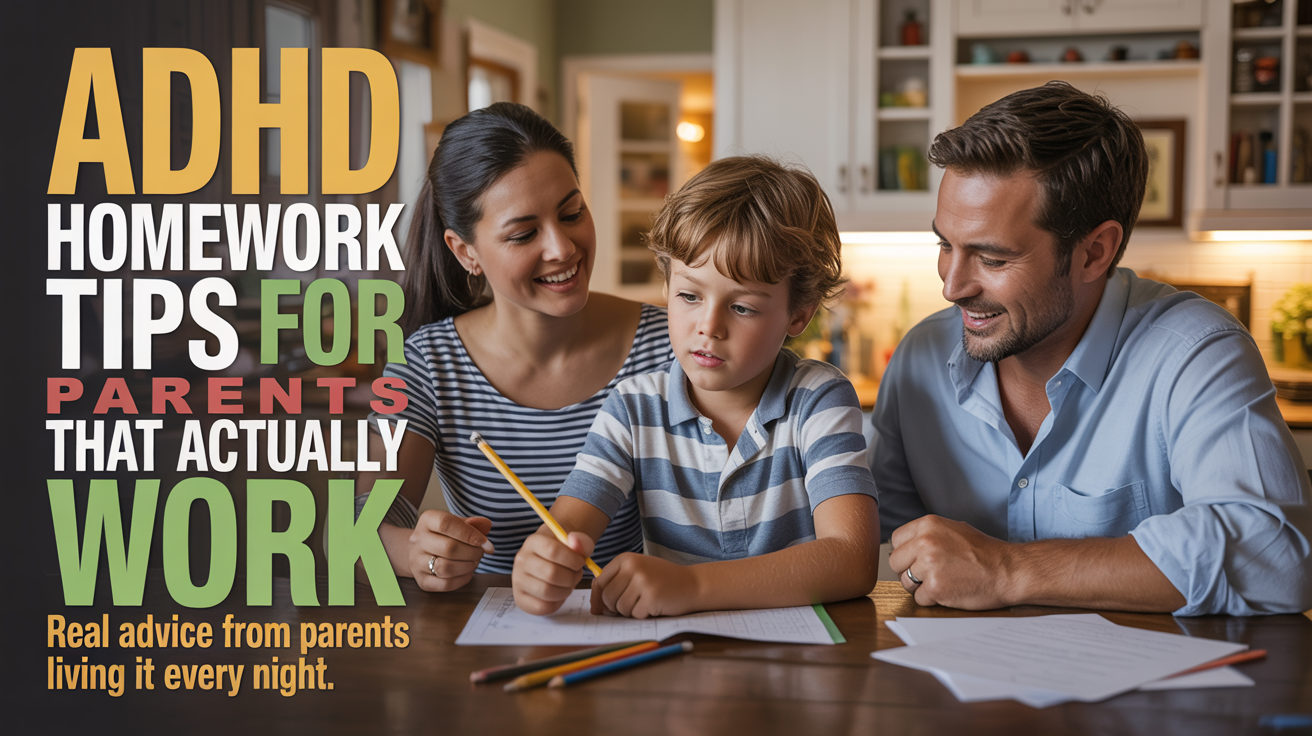
That’s also the approach behind our ADHD homework tips for parents.
Sometimes the best way to deal with ADHD anger is to reduce the frustration that keeps creating it.
Being Told to Focus Can Become Its Own Trigger
Imagine constantly being reminded to do something your brain already struggles to do.
Focus.
Pay attention.
Stop getting distracted.
Listen.
Look at me.
Finish what you’re doing.
Don’t forget.
Eventually, even the reminder itself can become irritating.
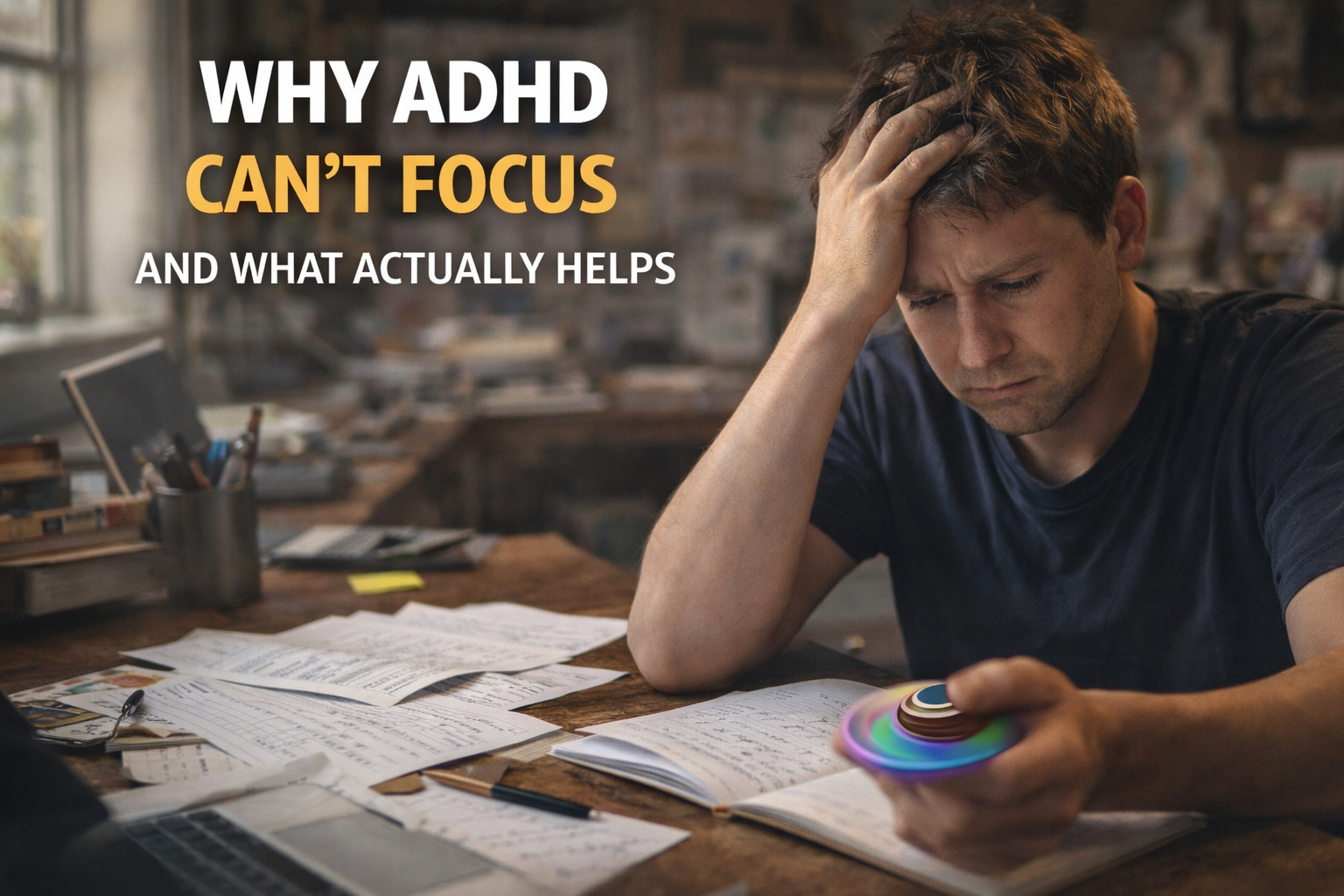
I’ve gone much deeper into why ADHD focus problems happen and what can actually help.
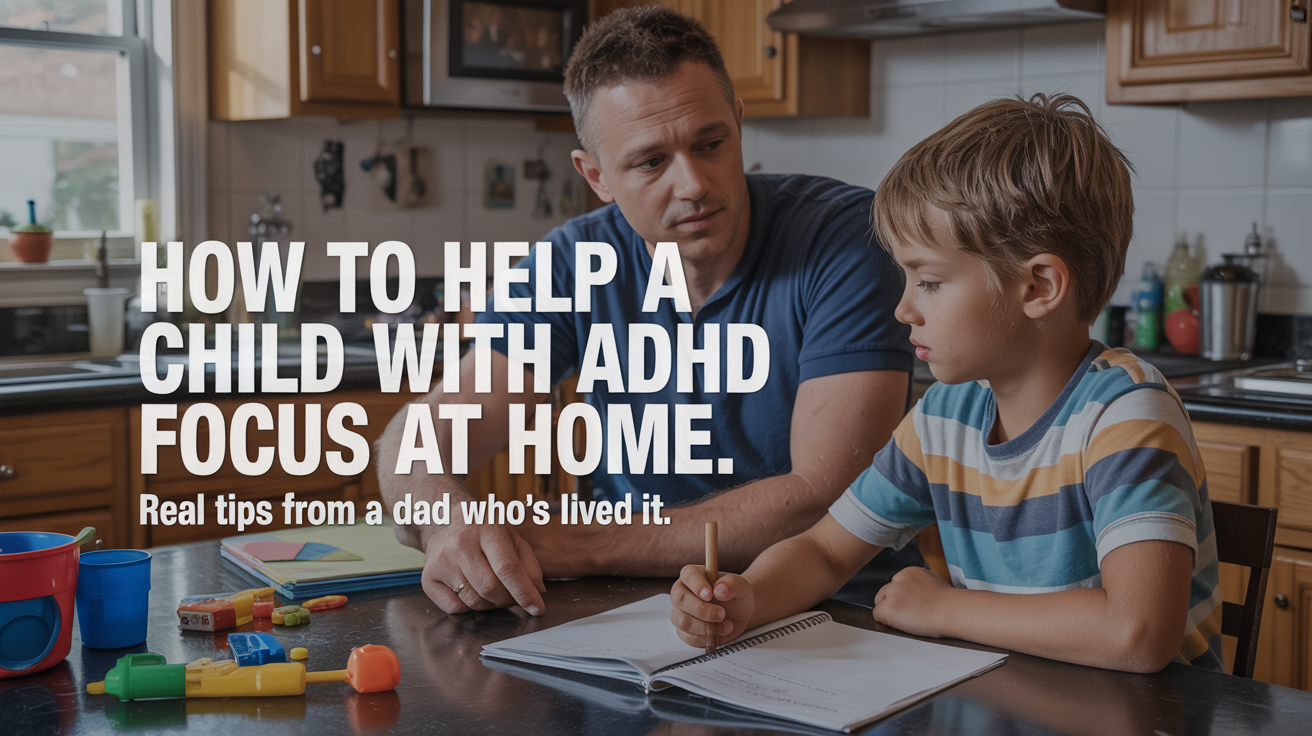
Understanding the focus problem matters because sometimes what looks like defiance begins with a child who genuinely doesn’t know how to accomplish what we’re demanding. Parents can start with practical ways to support focus that work with the child’s attention needs instead of treating difficulty as defiance.
Transitions Can Cause Sudden ADHD Anger
This is another huge one.
Turn off the game.
Get out of the pool.
Leave Grandma’s house.
Stop playing.
Come eat.
Take a shower.
Start homework.
Go to bed.
The child may have been completely happy seconds earlier.
Then we tell them the activity is ending.
Instant anger.
That’s why I like transition warnings.
Ten minutes.
Five minutes.
Two minutes.
Not because warnings magically eliminate every argument.
They don’t.
But we’re giving the child’s brain time to prepare for what’s coming rather than suddenly ripping them out of something highly engaging.

Losing Things Can Create Enormous Frustration
This one is particularly rough because ADHD itself can contribute to losing and forgetting things.
The child can’t find the homework.
Can’t find the charger.
Can’t find a shoe.
Can’t find the water bottle.
Can’t find the thing they were literally holding ten minutes ago.
Now they’re frustrated.
Then we say:
“Well, if you would put your stuff where it belongs…”
And technically?
We might be completely right.
But that probably isn’t the most useful sentence at that particular moment.
I’ve found that creating consistent places for important belongings works much better than repeatedly having the same argument. A visual system such as an ADHD planner for routines and organization may give children another way to track routines without relying on repeated verbal reminders.
The CDC similarly recommends encouraging children with ADHD to keep schoolbags, clothes, toys, and other regular belongings in consistent places so they’re less likely to lose them.
That’s an environmental fix for a problem that otherwise creates repeated emotional battles.
Too Many Instructions Can Overwhelm an ADHD Child
Sometimes I catch myself doing this:
“Go upstairs, get dressed, brush your teeth, find your shoes, bring down your backpack, put your water bottle in it, and don’t forget your jacket.”
Then ten minutes later the child is upstairs playing with something.
And now I’m irritated.
But look at how much information I just dumped out at once.
The CDC recommends clear, specific communication and brief directions for children with ADHD. It also recommends limiting choices when too many options may become overwhelming.
So instead of seven instructions:
“Go get dressed.”
Then we move forward.
This is one reason our ADHD morning routine relies so much on predictability rather than expecting a child to remember a brand-new chain of verbal instructions every morning.
Is ADHD Anger the Same as an ADHD Meltdown?
Not necessarily.
A child can become angry without having a full meltdown.
They may complain.
Argue.
Raise their voice.
Say they’re mad.
Then recover fairly quickly while still being able to communicate and make choices.
A meltdown usually involves a much greater loss of emotional control.
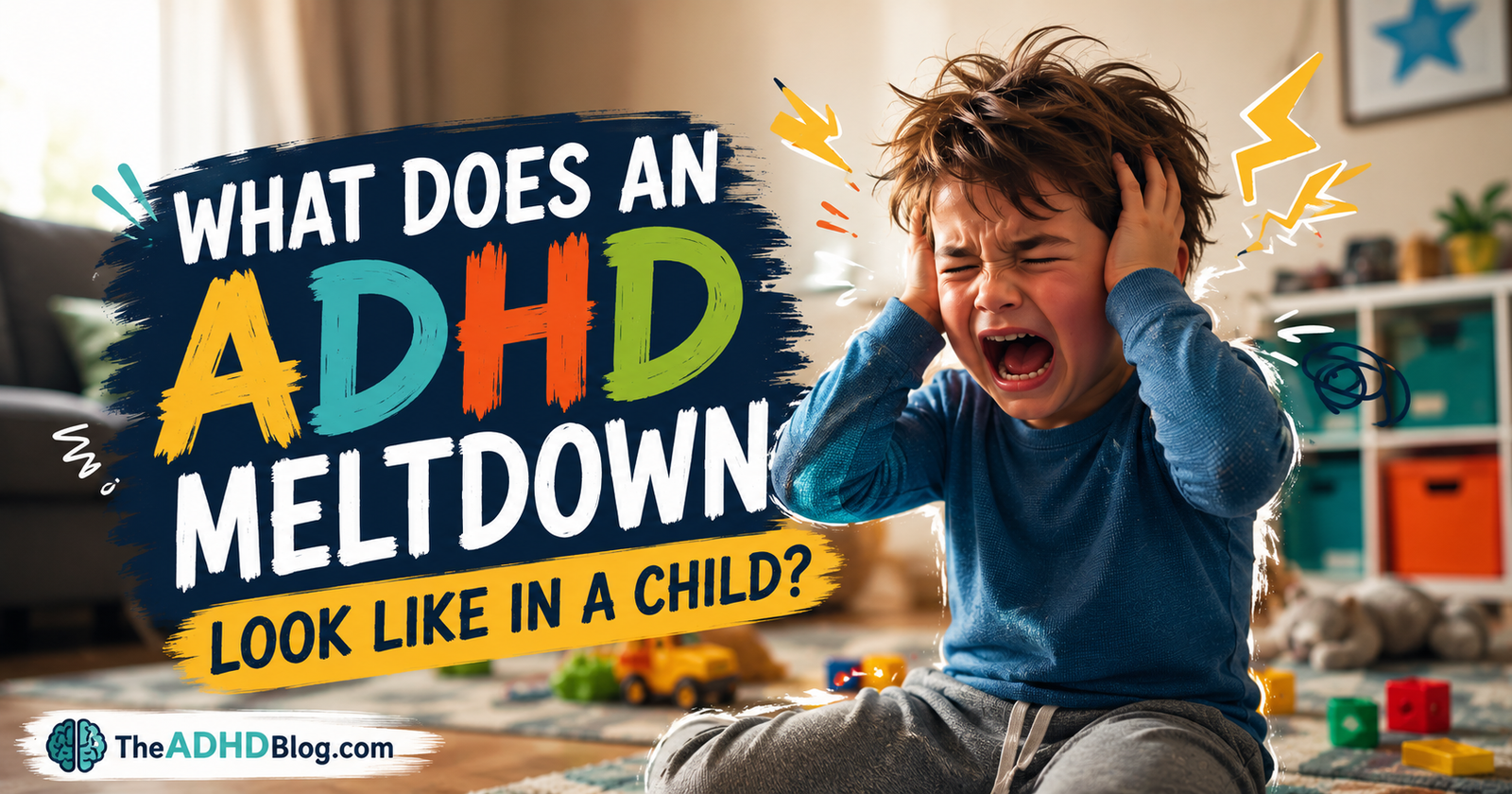
If you’re unsure what you’re actually seeing, I wrote a separate guide explaining what an ADHD meltdown can look like in a child.
That’s important because I don’t want to treat every moment of anger as a meltdown.
Kids are allowed to be angry.
The goal isn’t raising a child who never feels negative emotions.
The goal is helping them learn what to do with those emotions.
Anger Can Turn Into a Full ADHD Meltdown
This is where the distinction can get blurry.
The child starts frustrated.
Then angry.
Then increasingly angry.
At some point, the child becomes so overwhelmed that reasoning seems to disappear.
Now we’re dealing with something different.
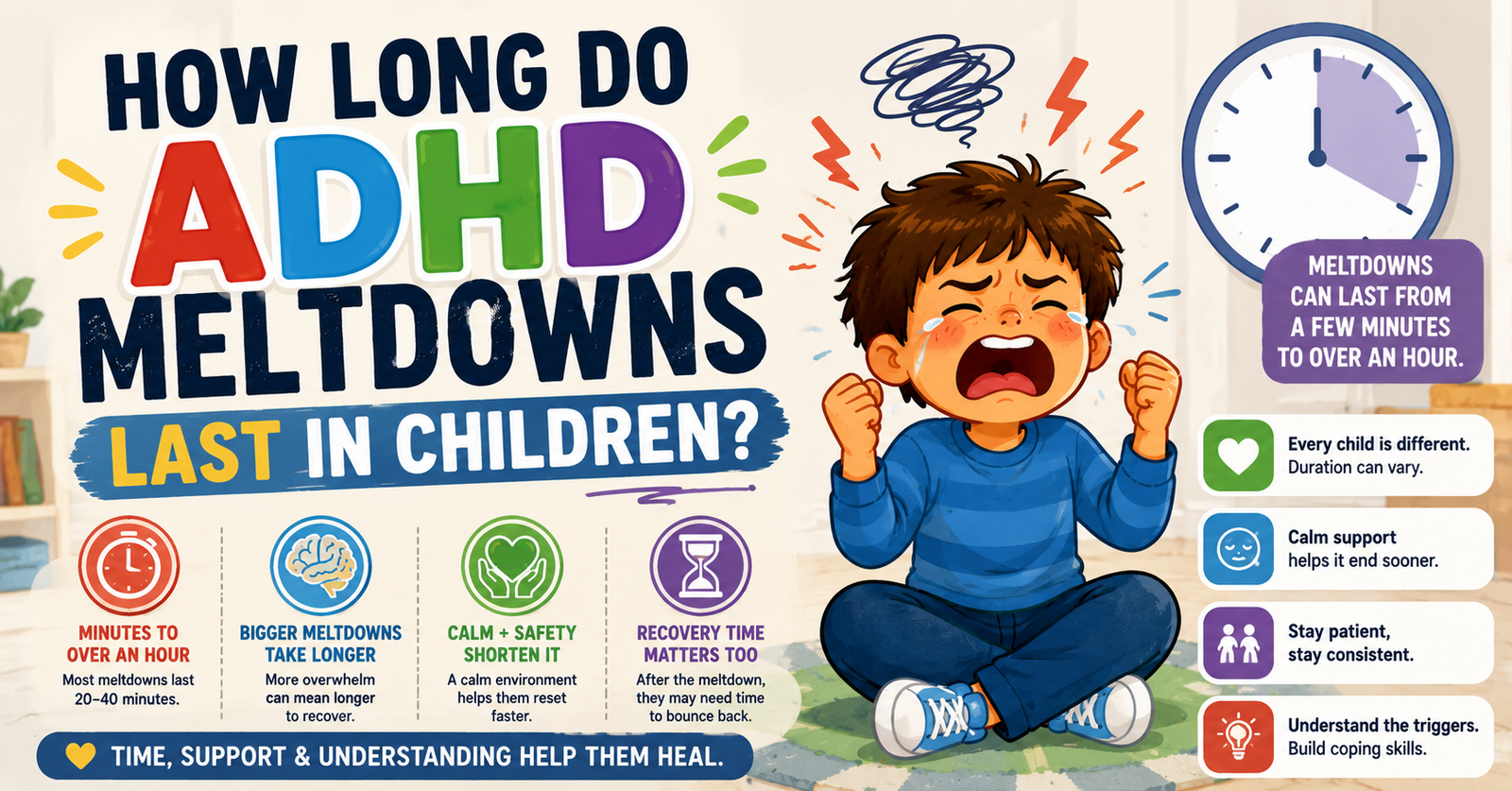
If you’re in that situation regularly, it also helps to understand how long ADHD meltdowns can last in children.
One of the biggest mistakes I’ve made is continuing to argue after we’ve crossed from ordinary anger into complete dysregulation.
At that point, more debating usually isn’t what we need.
What I Try Not to Say When My ADHD Child Is Furious
This is easier to write than it is to actually do.
When somebody is screaming at you, staying perfectly calm isn’t exactly effortless.
But there are a few phrases I’ve learned usually don’t improve things.
“You’re being ridiculous.”
“It’s not a big deal.”
“Stop getting so mad.”
“Calm down.”
“There’s nothing to be upset about.”
“Why are you acting like this?”
The problem with “it’s not a big deal” is that we’re describing our emotional experience, not theirs.
It may genuinely feel like a huge deal to them at that moment.
That doesn’t mean I agree with the behavior.
I can validate the feeling without approving of everything that happened because of it.
I Try to Keep My Own Volume Down
This may be one of the hardest parenting skills of all.
The child gets louder.
Our instinct is to get louder.
Now the child gets louder again.
Suddenly we’re basically competing for who can be the least regulated person in the room.
I’ve done enough of that to know it doesn’t get me very far.
A quieter voice forces me to slow myself down too.
I don’t need to match the child’s intensity.
In fact, when the situation is safe enough to do so, I’d rather become the least exciting thing in the room.
Fewer Words Usually Work Better During an Explosion
When a child is extremely angry, I don’t need to give a TED Talk.
Short.
Clear.
Calm.
“I know you’re angry.”
“I’m here when you’re ready.”
“You can’t hit.”
“Let’s take some space.”
“We’ll talk when we’re calm.”
That’s much easier to process than a five-minute explanation about why the child should have responded differently.
CHADD’s guidance on helping children with ADHD cool down similarly emphasizes avoiding lectures and reasoning during the peak of intense emotional dysregulation. A practical response built around safety and reduced reasoning can help parents help a child calm down safely.
There will be time to teach.
It doesn’t have to happen during the worst 90 seconds of the day.
Validate the Emotion Without Accepting the Behavior
This distinction has helped me enormously.
“You’re really angry that screen time ended.”
That’s validation.
“So go ahead and throw the controller.”
Obviously not.
We can understand the emotion and still have boundaries.
“I know you’re mad. You cannot hit me.”
Both things can be true.
I don’t need to convince the child that they shouldn’t feel angry.
I need to help them learn that anger doesn’t give them permission to hurt people or destroy things.
Don’t Turn Every Angry Moment Into a Power Struggle
This is something I think parents can fall into without realizing it.
The child says:
“I don’t want to do it!”
We say:
“Well, you’re doing it!”
They say:
“NO!”
We say:
“YES!”
And now the original issue has almost disappeared.
We’re fighting over who wins.
Sometimes the expectation absolutely needs to remain.
But the way we reach it can change.
Instead of:
“Clean your room right now.”
Maybe:
“Start with the dirty clothes. I’ll come back when those are done.”
The CDC recommends breaking complicated tasks into simpler, shorter steps and setting realistic, reachable goals for children with ADHD.
That doesn’t mean the room doesn’t get cleaned.
It means we’re creating a task the child can actually start.
Chores Are a Perfect Example
“Clean your room” sounds like one instruction.
To an overwhelmed ADHD brain, it can mean:
Where do I start?
What do I pick up?
Where does this go?
What about this?
Oh, I forgot I had this toy.
Wait, what was I doing?
Then a parent walks in 20 minutes later and nothing has happened.
Frustration on both sides.
That’s why our ADHD chores strategy for kids focuses so heavily on turning giant tasks into smaller ones.
Sometimes anger is telling us the demand needs better structure.
Give Choices, But Don’t Give 15 Choices
Choices can give a child some control.
But too many choices can create another problem.
“What do you want for dinner?”
That’s enormous.
“Do you want chicken or spaghetti?”
Much easier.
The CDC specifically recommends offering only a few choices when too many options may overwhelm or overstimulate a child with ADHD.
I like that because it gives the child some ownership without making them sort through an unlimited number of possibilities.
Positive Attention Matters More Than I Used to Realize
This part can get lost when we’re dealing with difficult behavior all day.
Think about what an ADHD child may hear:
Stop.
Sit down.
Focus.
Don’t interrupt.
Where’s your homework?
Why did you lose that?
Stop bothering your sibling.
I’ve told you three times.
Why aren’t you listening?
Now imagine that becoming a huge percentage of the feedback you receive every day.
Eventually, a child can start feeling like they’re simply the bad kid.
The CDC notes that parent training in behavior management commonly teaches positive reinforcement, structure, consistent discipline, and positive parent-child communication.
So I actively look for moments worth noticing.
“You got frustrated but kept trying.”
“You were angry and used your words.”
“You stopped yourself.”
“You remembered without me asking.”
“That was hard and you handled it.”
Those are the behaviors I want to grow.
Talk About the Anger Afterward
Once everyone is calm, that’s when I want the useful conversation.
Not:
“What is WRONG with you?”
Instead:
“You got really angry earlier. What happened?”
Maybe they don’t know.
Then we can work backward.
Were you already frustrated?
Did the noise bother you?
Were you tired?
Did you think I wasn’t listening?
Did stopping the game make you mad?
Did the homework feel impossible?
Were you hungry?
The more accurately a child can recognize what happens before the anger, the better chance they have of eventually catching it earlier.
Teach an Exit Before the Explosion
This is one of the skills I’d love every ADHD child to have.
Something they can do when they recognize:
I’m getting really mad.
Maybe it’s:
“I need a break.”
“I need help.”
“I need five minutes.”
“This is too loud.”
“I don’t understand.”
“I’m getting angry.”
Those sentences are infinitely more useful than throwing something.
But I wouldn’t wait until the child is furious to teach them.
We practice the exit when they’re calm.
What If My ADHD Child’s Anger Is Mostly at Home?
I wouldn’t automatically assume that means they’re choosing to behave badly for you.
I’d look at the whole pattern.
Maybe school takes an enormous amount of self-control.
Maybe home is where the child finally releases that pressure.
Maybe sibling interactions are the major trigger.
Maybe the home routine has more unstructured transitions.
Maybe homework starts immediately after school.
Maybe evenings coincide with hunger and exhaustion.
Or maybe there are family dynamics that genuinely need adjusting.
The important thing is to become curious rather than simply deciding:
“They behave for everyone except me.”
That conclusion doesn’t tell us what to change.
What If the Anger Seems More Extreme Than ADHD?
This matters.
Not every anger problem in a child with ADHD should automatically be blamed on ADHD.
The CDC notes that children with ADHD are more likely than children without ADHD to have certain other conditions, and symptoms from anxiety, depression, sleep problems, learning disabilities, and other concerns can sometimes overlap with or complicate ADHD.
We’ve also covered ADHD meltdowns vs autism meltdowns because parents sometimes notice sensory, social, communication, or developmental patterns that make them wonder whether something else is happening alongside ADHD.
One angry afternoon tells us very little.
A persistent pattern tells us much more.
When I’d Talk to My Child’s Doctor About ADHD Anger
I’d bring it up if the anger is becoming severe, frequent, dangerous, or significantly interfering with normal life.
Especially if you’re seeing:
Physical aggression.
Threats.
Self-harm.
Serious property destruction.
Problems at school.
Persistent irritability even when nothing upsetting is happening.
Major changes from your child’s usual behavior.
Or family life becoming increasingly difficult to manage safely.
The CDC recommends talking with a healthcare provider when children’s behaviors or emotions are severe or persist for a long time, since a more complete evaluation may be appropriate.
That’s not overreacting.
That’s giving yourself more information.
Behavior Therapy Can Help Parents Too
This is something I think deserves more attention because “therapy for ADHD” can sound like we’re sending the child somewhere to get fixed.
Parent training in behavior management is different.
Parents learn strategies for structure, reinforcement, communication, discipline, and helping the child manage behavior.
The CDC says parent training in behavior management is an effective ADHD treatment and is particularly important for younger children. For children under 6, it is recommended as the first treatment before medication, while treatment for older children commonly combines behavioral approaches with other supports and, when appropriate, medication.
I like the concept because parents are dealing with these situations every single day.
Giving us better tools matters too.
I Stopped Asking Only “How Do I Stop the Anger?”
This may be the biggest change in how I look at ADHD anger.
Of course I want less yelling.
Of course I want fewer explosions.
But instead of only asking:
How do I make this stop?
I also ask:
What keeps creating the anger?
Is the child exhausted?
Hungry?
Overwhelmed?
Frustrated by school?
Constantly losing things?
Struggling with transitions?
Being given too many instructions?
Unable to get started on tasks?
Having difficulty stopping something highly stimulating?
Getting corrected all day?
Those questions give me something I can actually work with.
Because when an ADHD child gets angry incredibly quickly, the anger itself isn’t always the first problem.
Sometimes it’s the last visible part of a chain of problems that started much earlier.
And the better I get at recognizing that chain, the better chance I have of helping my child catch the frustration while it’s still frustration, before it becomes an explosion.
About the Author: Emily Parker
Emily Parker writes for TheADHDBlog.com about raising and supporting children with ADHD, with a special focus on emotional regulation, anger, meltdowns, family routines, school struggles, and the everyday behaviors that can leave parents searching for answers. Her work combines practical family-focused guidance with reputable ADHD resources so parents can better understand patterns at home, build useful strategies, and recognize when professional support may be needed.