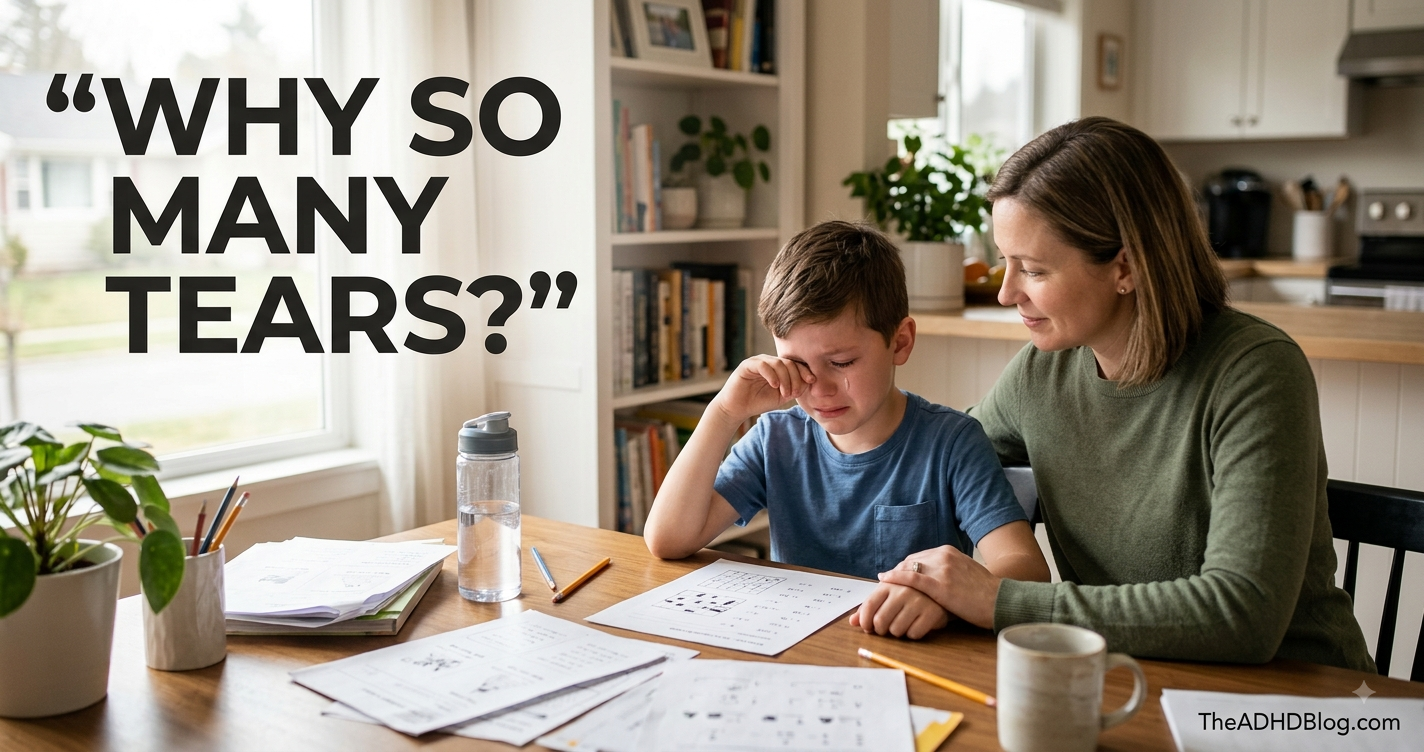
Crying can be one of the most confusing ADHD behaviors for parents because sometimes it feels like everything causes tears.
You correct one little thing.
Tears.
Homework gets difficult.
Tears.
A sibling wins the game.
Tears.
You say it’s time to turn off the tablet.
More tears.
Sometimes the reaction seems so much bigger than what actually happened that I’ve caught myself wondering:
Why does my ADHD child cry over everything?
And I’ll admit that when the crying happens repeatedly, it’s easy to become frustrated ourselves.
“It’s really not that big of a deal.”
“Why are you crying about this?”
“Nothing bad even happened.”
But I’ve learned that those statements describe the situation from my perspective.
To the child experiencing the emotion, it may genuinely feel enormous.
That’s where ADHD emotional regulation starts becoming important.
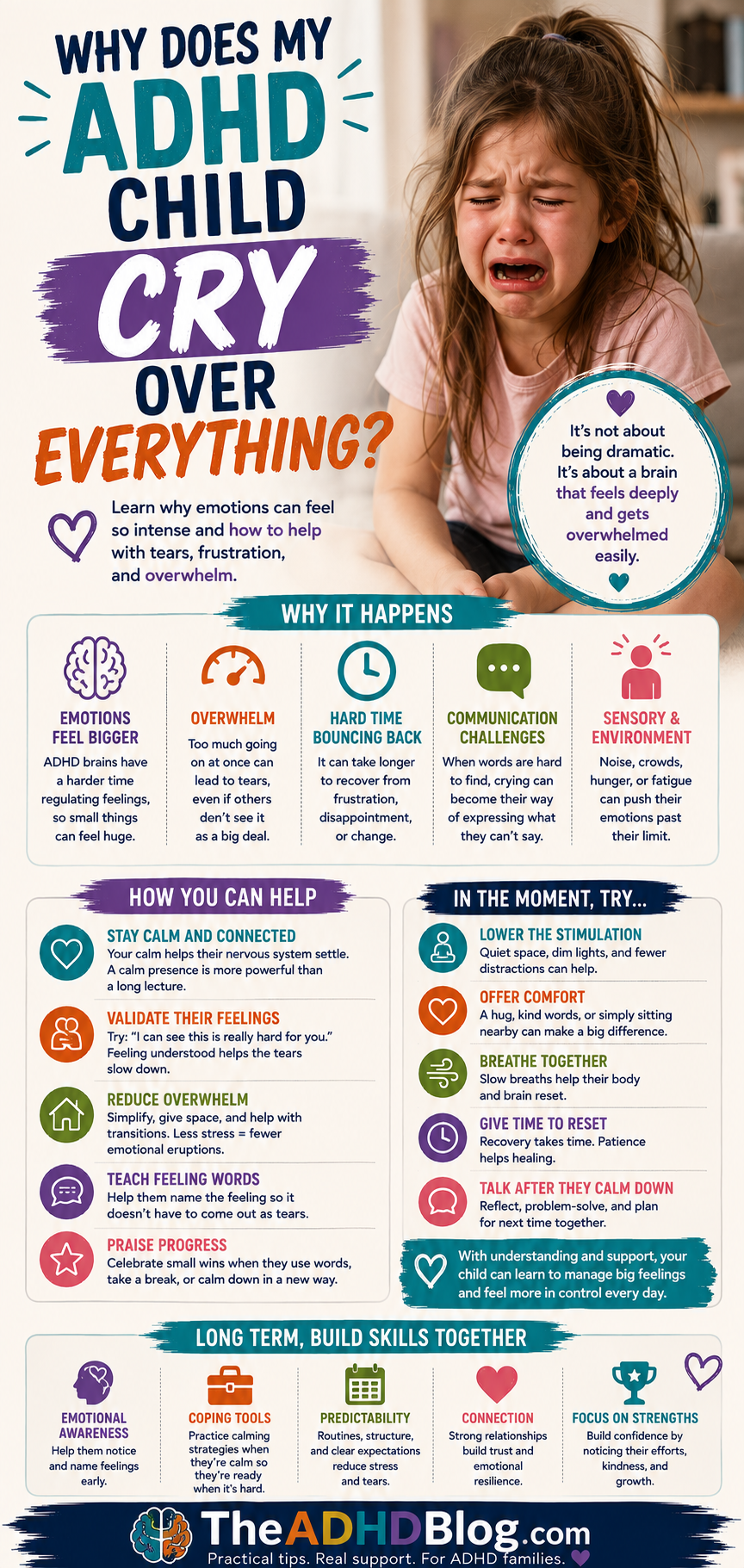
ADHD isn’t simply a problem with sitting still or paying attention. Some children with ADHD also struggle to regulate emotions, tolerate frustration, and slow down intense emotional reactions once they begin.
That can mean anger.
It can mean screaming.
It can mean a complete meltdown.
And for some kids, it can mean tears that seem to arrive incredibly easily.
ADHD Can Make Emotions Feel Bigger and Faster
I don’t think the best way to understand this is to assume an ADHD child has completely different emotions from everyone else.
We all experience disappointment.
Embarrassment.
Frustration.
Anger.
Sadness.
Impatience.
The difference can be how quickly those emotions become intense and how effectively we’re able to regulate what happens next.
CHADD describes emotional dysregulation in ADHD as difficulty controlling emotional responses, including reactions that can be more intense than we’d expect from the situation. CHADD ADHD resources
So the child isn’t necessarily thinking:
“I’m going to cry because Mom told me I made one mistake.”
The reaction may happen before they’ve had much opportunity to process the situation differently.

Crying Can Be the ADHD Version of Going From 0 to 100
We’ve already talked about how some ADHD kids seem to become angry incredibly quickly.
For another child, that same rapid emotional escalation might look like tears.
Imagine homework.
Your child doesn’t understand a question.
They try.
Wrong answer.
They erase it.
Try again.
Wrong.
You attempt to explain.
They still don’t understand.
Then suddenly they’re crying and saying:
“I CAN’T DO THIS!”
From where I’m sitting, I may think:
We’re only on question three.
But that’s not necessarily what they’re experiencing.
They may be feeling frustration, embarrassment, exhaustion, and the belief that they’re failing all at once.
The tears are simply what I can see.
“Crying Over Nothing” Usually Isn’t Really Nothing
This is probably the biggest change I’ve made in how I think about these situations.
Instead of:
Why is my child crying over nothing?
I ask:
What does this situation feel like to my child?
Those are very different questions.
The missing pencil might seem insignificant to me.
But maybe my child has already lost three things today.
The game doesn’t matter much to me.
But maybe losing feels incredibly frustrating to them.
The change in plans seems easy to me.
But maybe they had mentally prepared for exactly what they thought was going to happen.
I’ve seen this same pattern with ADHD meltdowns over seemingly small things.
The thing that finally causes the reaction may be small.
That doesn’t necessarily mean everything leading up to it was.
Some ADHD Kids Cry When They’re Frustrated
Frustration is one of the first patterns I’d look for.
Your child is trying to build something.
It keeps falling apart.
Tears.
They can’t tie something correctly.
Tears.
The math problem doesn’t make sense.
Tears.
They can’t beat a level in a game.
Tears.
Their drawing doesn’t look how they wanted.
Tears.
What we’re seeing may be low frustration tolerance.
CHADD discusses low frustration tolerance and intense reactions to relatively minor annoyances or disappointments as emotional difficulties that can occur with ADHD.
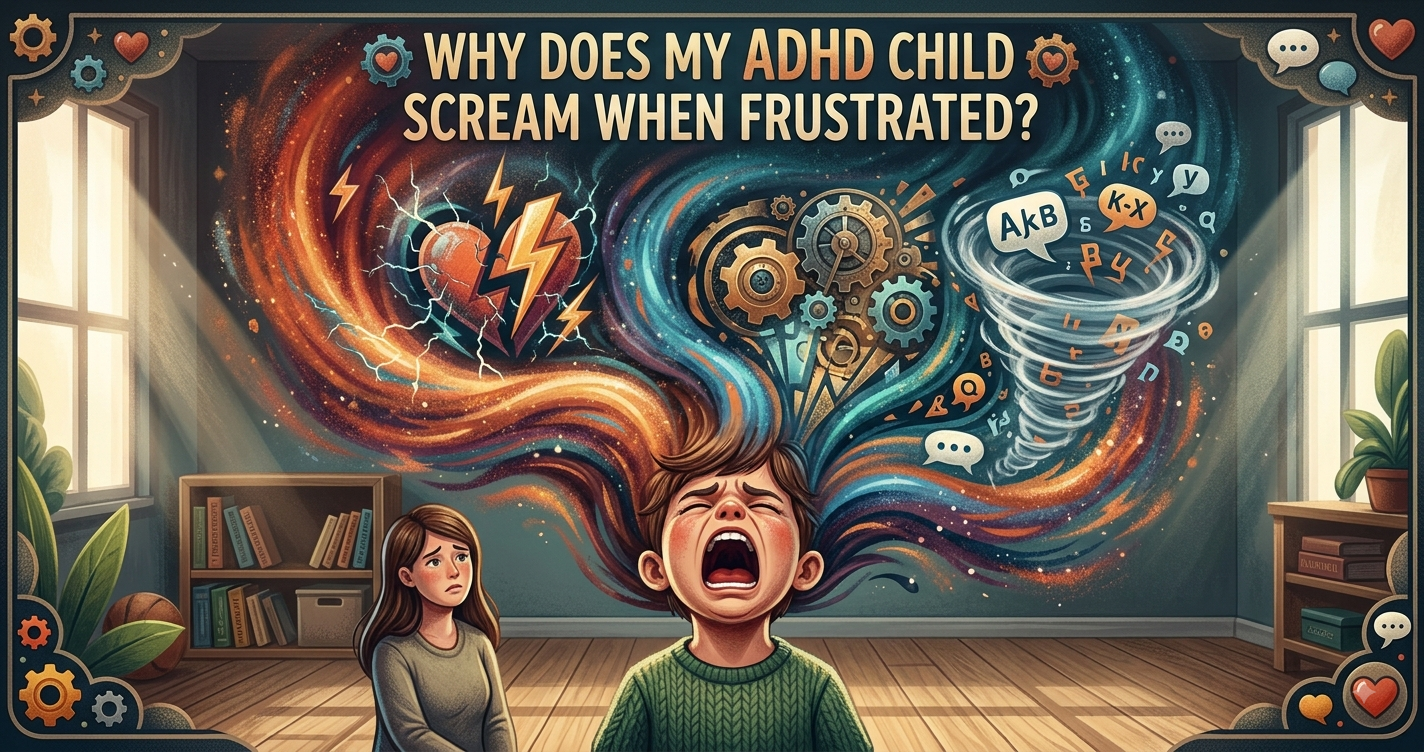
This is also closely related to why some ADHD children scream when frustrated.
One child’s frustration comes out as yelling.
Another child’s comes out as crying.
Another child’s comes out as anger.
And some kids cycle through all three.
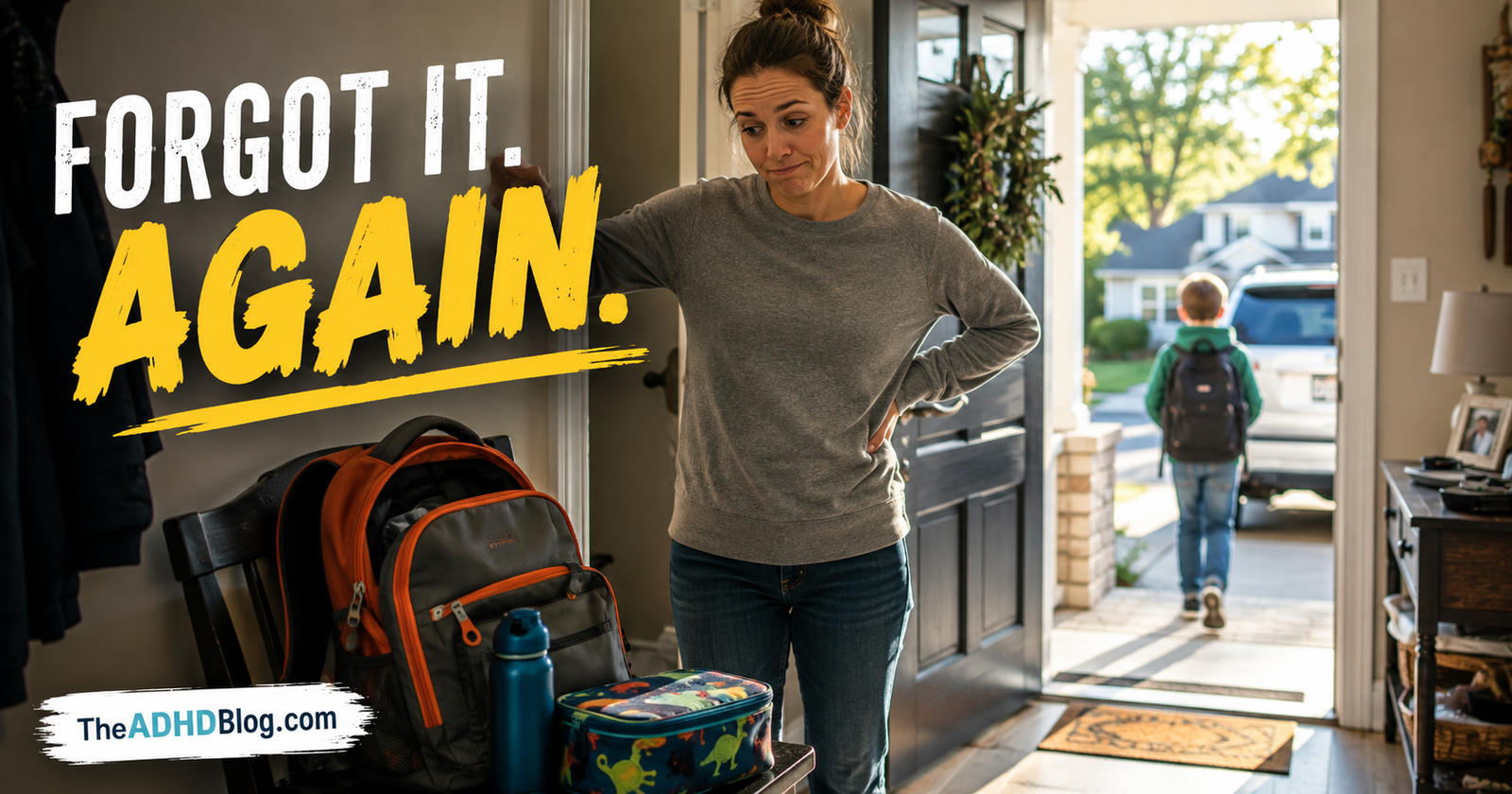
Mistakes Can Feel Much Bigger Than They Look
This is something I pay particular attention to.
Some children seem devastated by mistakes.
They miss one spelling word.
They’re crying.
They lose a game.
They’re crying.
Their picture doesn’t turn out right.
They want to throw it away.
They get corrected by the teacher.
Their entire mood changes.
From the outside, we’re thinking:
Everybody makes mistakes.
Of course they do.
But knowing that intellectually and being able to tolerate the feeling of getting something wrong aren’t exactly the same skill.
Instead of immediately saying:
“It’s just a mistake.”
I might say:
“You’re really frustrated because you wanted to get that right.”
Then we can work on what happens next.
ADHD Kids Can Become Overwhelmed by Tasks That Look Easy
Sometimes crying is really task overwhelm.
Think about:
“Clean your room.”
To me, that’s one task.
To a child struggling with executive functioning, it can be a giant collection of decisions.
Where do I start?
What goes where?
Do I pick up clothes first?
What about these toys?
Where does this belong?
What was I doing?
Now Mom says I’m not cleaning.
I’m frustrated.
I’m overwhelmed.
And suddenly we’re crying.
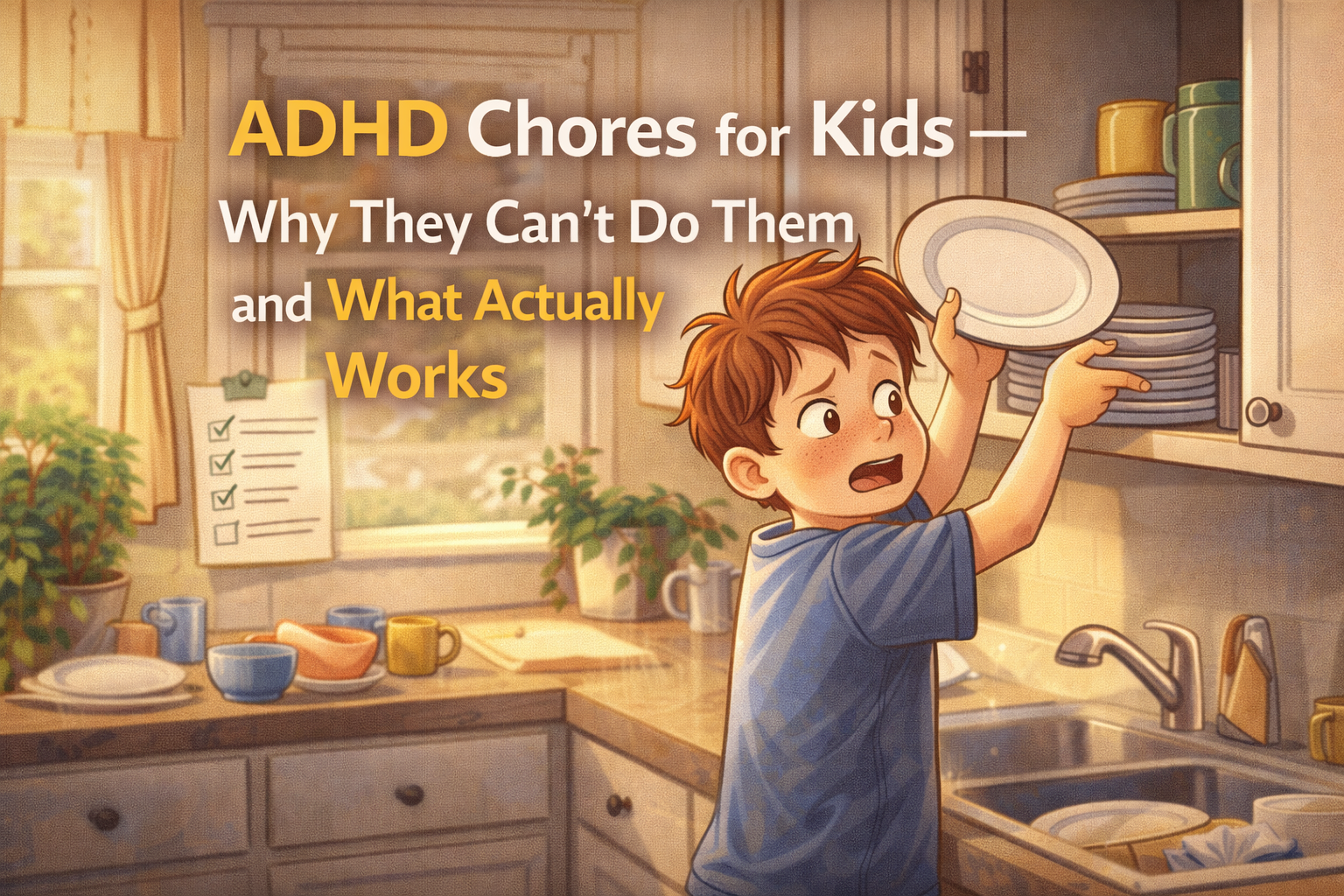
That’s why our approach to ADHD chores for kids focuses so heavily on making tasks smaller.
Instead of:
“Clean your room.”
Try:
“Put all the dirty clothes in the hamper.”
Now we have somewhere to start.


Homework Can Create Tears Night After Night
If your child regularly cries during homework, I wouldn’t automatically assume they’re trying to get out of doing it.
I’d investigate the work itself.
Is it too difficult?
Too long?
Does your child understand the instructions?
Are they having trouble getting started?
Are they constantly losing their place?
Are distractions making a 15-minute assignment take an hour?
Are they already exhausted from school?
Are we expecting homework immediately after they walk through the door?
The CDC recommends breaking complicated tasks into smaller steps and providing breaks during longer tasks as part of helping children with ADHD manage everyday demands. CDC ADHD treatment guidance

Our ADHD homework tips for parents go much deeper into this because sometimes reducing the frustration surrounding homework reduces the emotional reaction too.
Being Corrected Can Trigger Tears
This can be especially confusing.
You aren’t yelling.
You’re not angry.
You simply say:
“You forgot to put your name on your paper.”
And suddenly your child looks devastated.
It’s tempting to say:
“I’m not even mad!”
I’ve definitely thought that.
But the child’s reaction isn’t necessarily based entirely on my emotional tone.
They may already be frustrated with themselves.
Maybe they’ve been corrected repeatedly throughout the day.
Sit down.
Pay attention.
Stop interrupting.
Where’s your pencil?
Finish your work.
Don’t forget your folder.
Now one more correction arrives.
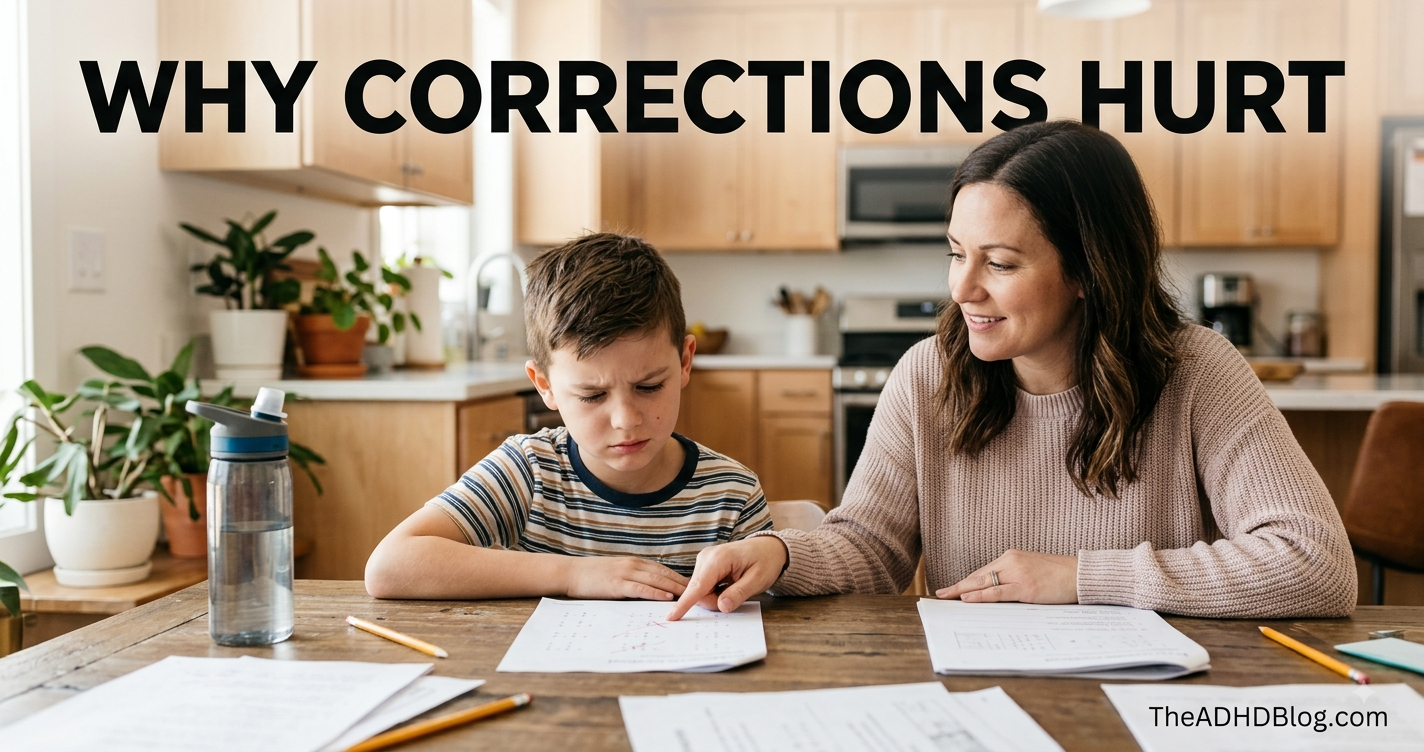
What felt like a tiny reminder to me may land on top of a whole day’s worth of feeling like they’re constantly getting something wrong. That pattern can help explain the emotional impact of correction for some children with ADHD.
Think About How Much Correction an ADHD Child Can Hear
This is something I think adults should experience mentally for a minute.
Imagine spending your day hearing:
Stop moving.
Pay attention.
Wait.
Don’t interrupt.
Where is your stuff?
You forgot again.
Focus.
Sit down.
Finish.
Don’t touch that.
Listen.
I already told you.
Now imagine you’re eight years old.
Even when every individual correction is justified, the cumulative experience can be exhausting.
That’s one reason I actively look for opportunities to notice what went right too.
“You remembered your backpack.”
“You got frustrated but kept trying.”
“You stopped and asked for help.”
“I noticed you got started without another reminder.”
Kids need to know we’re seeing more than their mistakes.
Your ADHD Child May Cry More When They’re Tired
This is one of the easiest patterns to miss.
Maybe mornings are relatively okay.
School goes reasonably well.
Then evening arrives and everything becomes emotional.
The wrong snack.
Tears.
Bath time.
Tears.
Can’t find pajamas.
Tears.
Bedtime.
More tears.
Before I decide we’re dealing with some enormous new behavioral problem, I want to know how tired this child is.
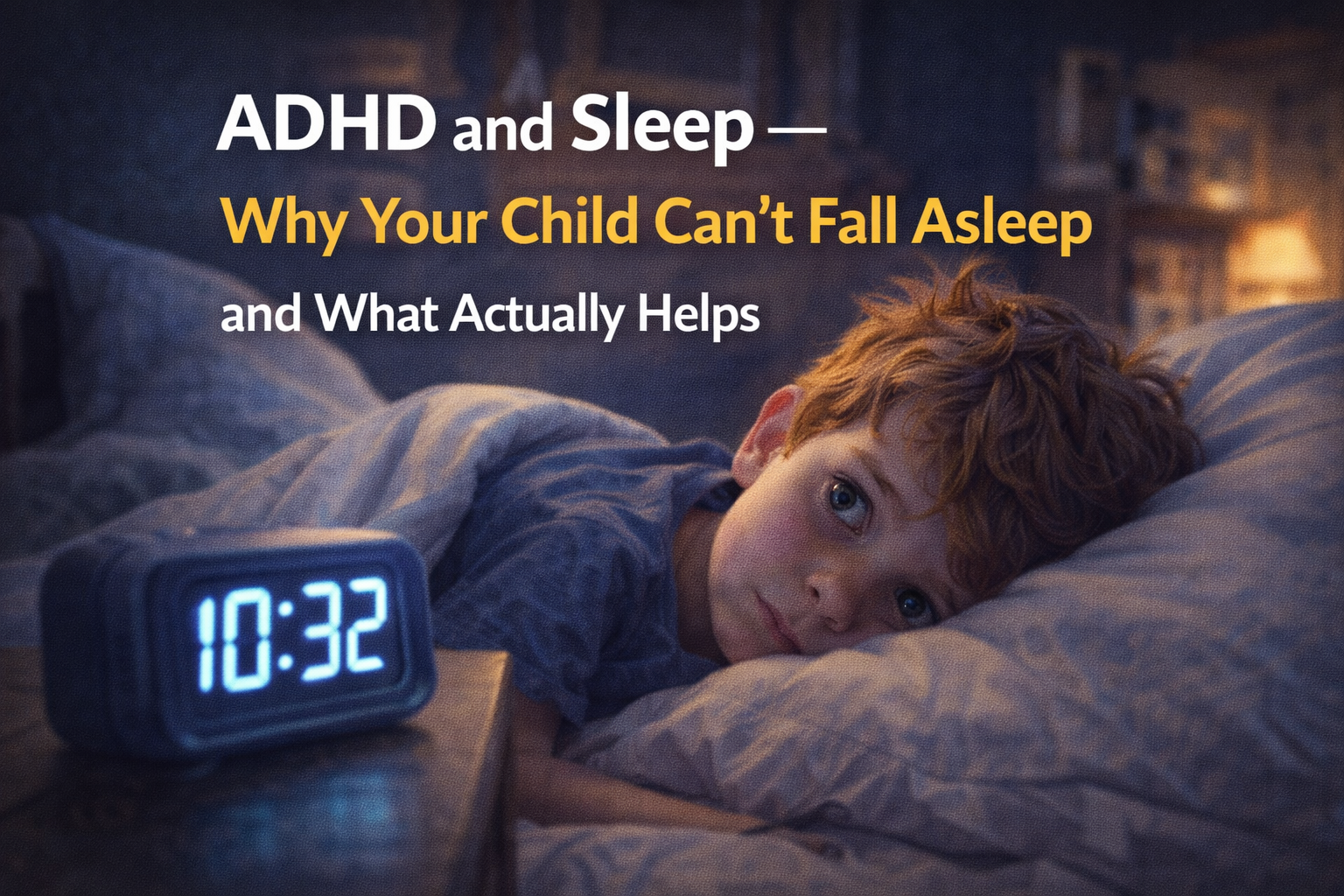
ADHD and sleep problems can become tangled together, which is why we’ve covered ADHD and sleep in childrenseparately.
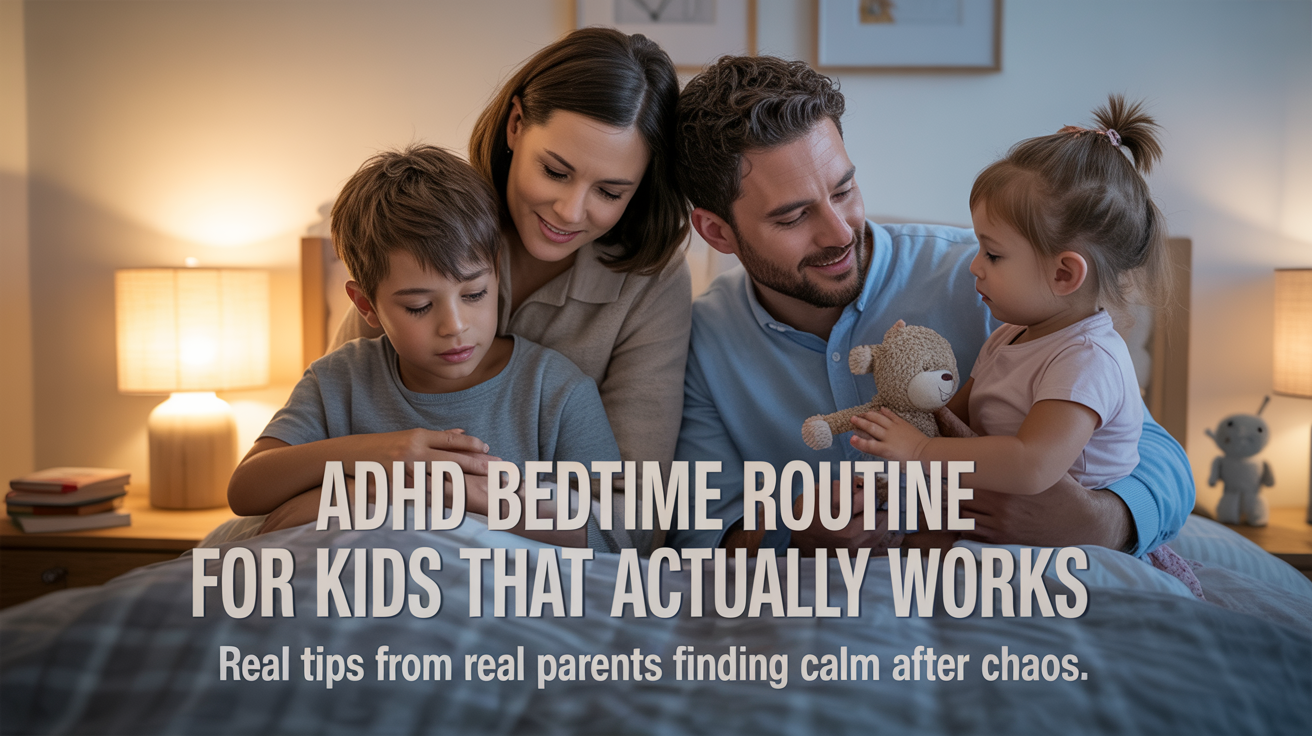
And if nighttime itself becomes the daily battleground, our experience with ADHD bedtime battles may be useful too.
Sometimes the child’s emotional regulation tank is simply empty by evening.
Hunger Can Make an Emotional Afternoon Even Harder
I check this one too.
When did they eat?
Did they actually eat lunch?
Did they come home starving?
If your child takes ADHD medication and appetite has changed significantly, that’s worth discussing with their healthcare provider. The CDC lists appetite loss among possible side effects associated with stimulant medications.
I don’t want to blame every emotional problem on hunger.
But I also don’t want to spend 45 minutes analyzing behavior when the child hasn’t eaten since noon.
Sometimes basic needs matter more than complicated parenting techniques.
Why Does My ADHD Child Cry After School?
This pattern deserves special attention.
Teacher:
“Great day today!”
Child gets home:
Everything falls apart.
That can feel almost personal.
“You held it together for everybody else. Why can’t you do that here?”
But think about what school requires.
Listening.
Waiting.
Remembering.
Following directions.
Changing activities.
Handling mistakes.
Managing friendships.
Ignoring distractions.
Sitting.
Working.
Organizing.
Controlling impulses.
Doing that for hours can be exhausting.
Home may be where the child finally has enough safety and familiarity to stop holding everything together.
That doesn’t mean every behavior after school should be ignored.
It means I want to think carefully about what the first hour home looks like.
Maybe They Need Decompression Before More Demands
Imagine walking in from an exhausting workday and immediately hearing:
How was work?
Take the trash out.
Where’s that paperwork?
Change your clothes.
We’re leaving in 20 minutes.
Did you remember to call somebody?
Why haven’t you done this yet?
I’d probably become irritable too.
For some ADHD kids, a little predictable decompression after school can help.
Maybe it’s:
Snack.
Drink.
Movement.
Quiet activity.
A little time without questions.
Then we move into responsibilities.
Not every child needs this.
But if 4 p.m. is meltdown hour every day, I’d experiment.
Transitions Can Cause Tears Too
We often picture transition problems as anger.
But some children cry.
Leaving the playground.
Ending screen time.
Going to school.
Leaving Grandma’s house.
Stopping a favorite activity.
Going to bed.
The tears don’t necessarily mean the transition shouldn’t happen.
They may mean transitions are difficult.
I still hold the boundary.
We’re still leaving.
But maybe next time I provide more warning.
Ten minutes.
Five minutes.
Two minutes.
Now the child has time to prepare for what’s coming.
Crying Doesn’t Automatically Mean You’re Doing Something Wrong
This is an important one for parents.
Sometimes we become so uncomfortable with our child’s tears that we immediately try to remove whatever caused them.
But children are allowed to experience disappointment.
Sometimes the answer really is no.
Sometimes screen time really is finished.
Sometimes we really do have to leave.
Sometimes the homework still needs to be attempted.
Helping a child regulate emotion doesn’t mean arranging life so they never experience an unpleasant one.
I can say:
“I know you’re disappointed.”
while still maintaining:
“We’re still leaving.”
Compassion and boundaries aren’t opposites.
Don’t Accidentally Teach That Crying Changes Every Boundary
This is where things can become complicated.
If every time the child cries, the original expectation disappears, we’re not necessarily helping them build frustration tolerance.
Let’s say screen time ends.
Child cries.
Screen comes back.
Next night, screen time ends.
What has the child learned?
This doesn’t mean the crying was fake.
A child can genuinely be upset and learn from what happens after that reaction.
I can comfort my child without automatically reversing the boundary.
But Don’t Accuse Them of Manipulating You Just Because They’re Crying
The opposite extreme isn’t useful either.
“You’re only crying because you want your way.”
Maybe.
Maybe not.
Sometimes a child really is overwhelmed.
Sometimes disappointment begins the episode and emotional dysregulation takes it much further.
That’s why I think understanding the difference between ordinary upset, tantrums, and meltdowns matters.
Our guide to ADHD meltdowns vs tantrums goes much deeper into that distinction.
Real life doesn’t always fit neatly into one category.
What Should I Say When My ADHD Child Starts Crying?
I try to avoid immediately challenging the emotion.
Not:
“There’s nothing to cry about.”
Instead:
“You’re really disappointed.”
Or:
“That was frustrating.”
Or:
“You really wanted that to work.”
Then I can decide what the child needs.
Maybe they need help.
Maybe they need a break.
Maybe they simply need a minute.
Maybe the expectation still needs to remain exactly the same.
Acknowledging an emotion doesn’t mean agreeing with every reaction that follows it.
Fewer Words Can Help When Crying Becomes a Meltdown
There’s a point where ordinary tears can turn into something much bigger.
Now the child isn’t simply disappointed.
They’re overwhelmed.
Crying harder.
Unable to answer.
Repeating themselves.
Getting angry.
Maybe screaming.
If we’ve crossed into a full emotional meltdown, that’s not when I want to keep explaining.
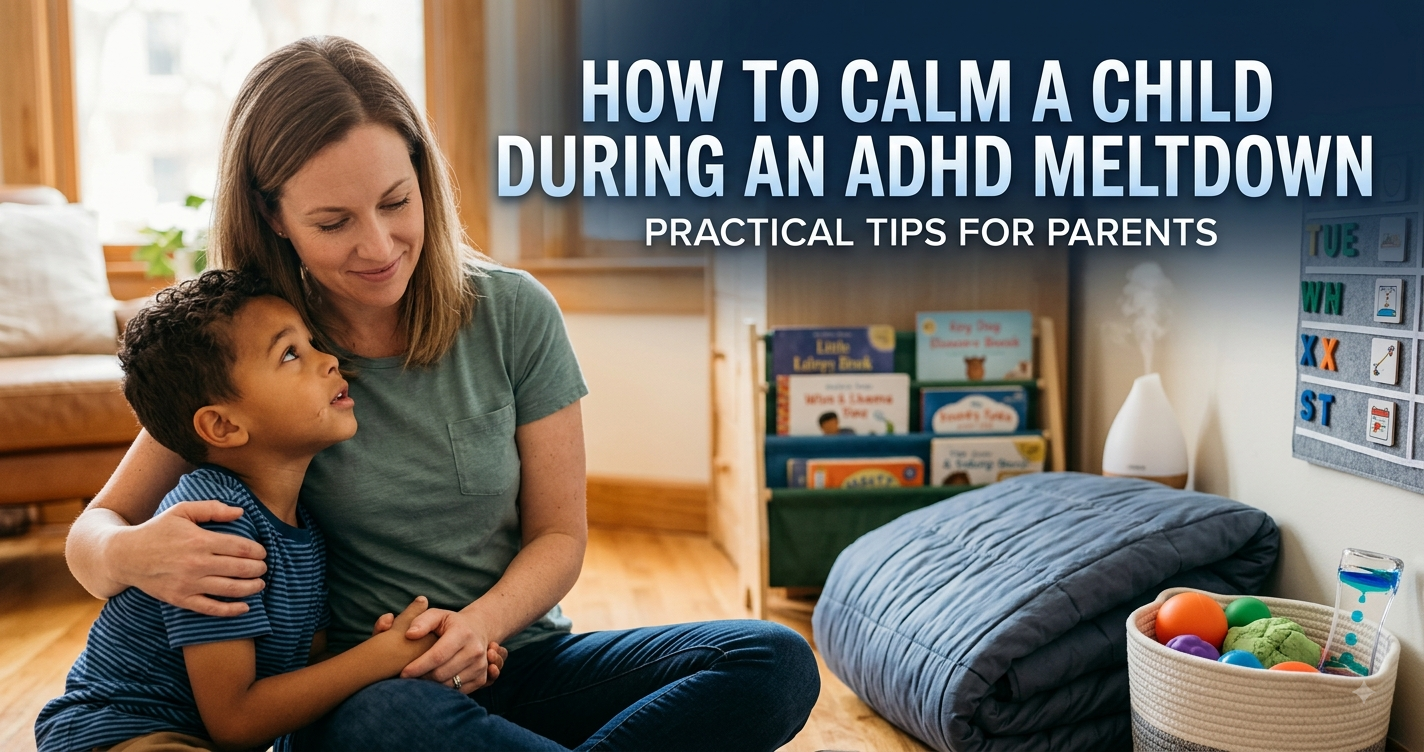
Our guide on how to calm a child during an ADHD meltdown goes into this in detail.
Safety first.
Fewer words.
Less arguing.
Reduce unnecessary stimulation.
Give appropriate space.
Let the intensity come down before trying to teach.
Learn What Your Child’s Meltdown Actually Looks Like
Not every child becomes angry.
Some become intensely tearful.
Some hide.
Some want everyone to leave them alone.
Some scream.
Some become physically restless.
Some seem unable to communicate at all for a while.
That’s why I’ve written separately about what an ADHD meltdown can look like in a child.
I don’t want parents looking for one stereotypical meltdown.
I want us learning our child’s pattern.
Help Your Child Put a Name on the Feeling
This is one of the skills I want to build when everybody is calm.
Not during the worst part.
Later.
Was that sadness?
Frustration?
Embarrassment?
Anger?
Disappointment?
Feeling overwhelmed?
Maybe the child doesn’t know.
That’s okay.
We can help.
Instead of:
“Why were you crying?”
maybe:
“Were you sad, or were you frustrated because the game wasn’t working?”
That’s easier to answer.
Over time, I want:
“I’m frustrated.”
to arrive before the tears become overwhelming.
Teach an Alternative Response to Frustration
Just like with screaming, I don’t want my entire strategy to be:
Stop crying.
What do I want instead?
Maybe:
“Can you help me?”
“I need a break.”
“I’m getting frustrated.”
“Can I try again?”
“I need a minute.”
Those are useful skills.
The child isn’t learning to suppress emotion.
They’re learning how to communicate what the emotion is asking for.
Don’t Punish the Emotion
I make a distinction between emotion and behavior.
Crying?
Emotion.
Throwing the tablet because you’re crying?
Behavior.
Feeling furious?
Emotion.
Hitting your sibling?
Behavior.
Being disappointed that screen time ended?
Emotion.
Destroying something?
Behavior.
That distinction makes discipline much clearer for me.
I don’t need to punish a child for being sad.
I may need to respond to what they did while they were sad.
Praise Emotional Recovery When You See It
This is something I don’t want to miss.
Maybe your child cries but then says:
“Can you help me?”
That’s progress.
Maybe they become frustrated and take a break.
Progress.
Maybe the tears start but they recover much faster.
Progress.
Maybe they say:
“I’m mad because I lost.”
That’s actually a pretty useful piece of emotional communication.
The CDC describes positive reinforcement and consistent feedback as important parts of behavioral approaches used with children who have ADHD. CDC behavior therapy guidance
If I want better emotional skills to grow, I need to notice when they appear.
Talk About the Tears Later If There Was a Bigger Meltdown
If the crying became an intense meltdown, I don’t need to solve everything while it’s happening.
After everyone is truly calm, that’s when I want to learn.
What happened?
What did you feel first?
What made it worse?
What helped?
What could we try next time?
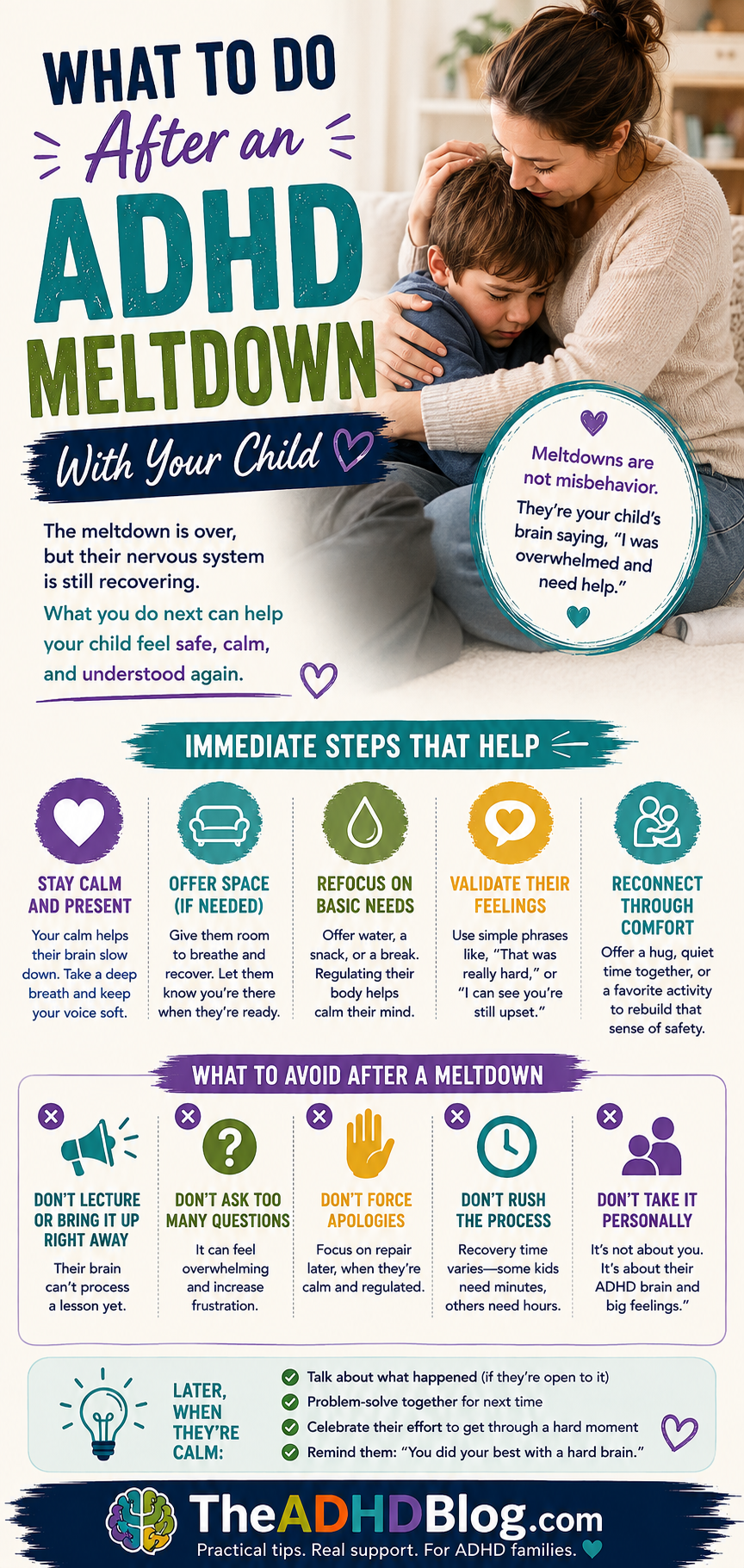
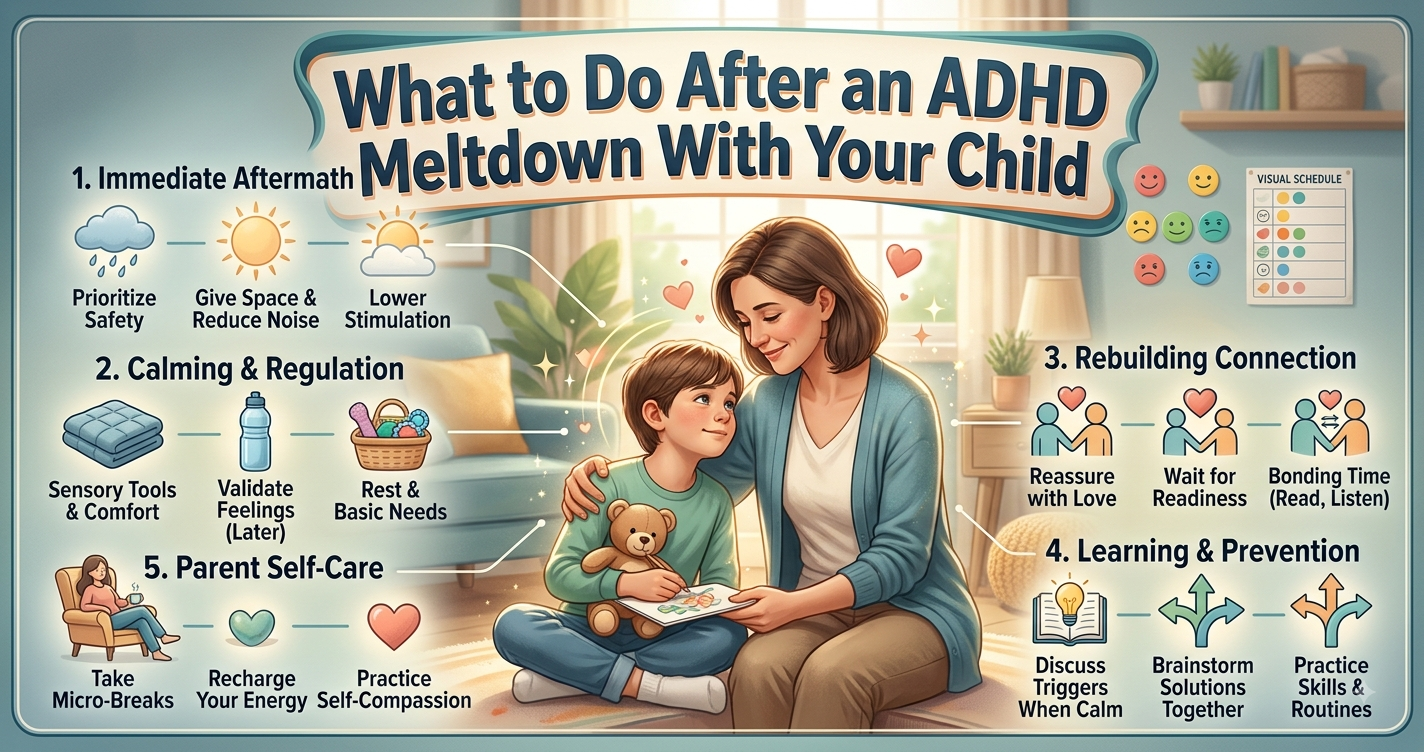
I’ve written an entire guide on what to do after an ADHD meltdown with your child because the recovery period gives us a great opportunity to understand patterns without shaming the child.
That’s when we build the plan for next time.
Keep Track of When the Crying Happens
If it genuinely feels like your child cries over everything, write it down for a couple of weeks.
You may find out it isn’t everything.
Maybe it’s:
Homework.
Mistakes.
Losing games.
Being corrected.
After school.
Sibling conflict.
Transitions.
Bedtime.
Being hungry.
Tasks that feel too difficult.
Unexpected changes.
Once I know the pattern, I can stop trying to solve crying as one giant problem.
I can work on the situations repeatedly creating it.
When Crying May Be More Than ADHD Emotional Dysregulation
This part is extremely important.
A child with ADHD is still a whole child.
Not every emotional symptom should automatically be attributed to ADHD.
Frequent crying can also happen with anxiety, depression, stress, bullying, learning difficulties, sleep problems, family changes, other developmental conditions, and plenty of situations that deserve attention in their own right.
The American Academy of Pediatrics’ ADHD clinical guidance recommends screening children with ADHD for coexisting emotional, behavioral, developmental, and physical conditions. American Academy of Pediatrics ADHD guidance
So I pay attention to changes from the child’s normal pattern.
That’s different from a child who has always become tearful when frustrated.
Watch for Persistent Sadness Outside Frustrating Situations
This is where I would become more concerned.
There’s a difference between:
My child cries when homework gets frustrating
and:
My child seems sad most of the time.
I’d talk with the child’s pediatrician if the crying is new, unusually frequent, worsening, or accompanied by other concerning changes such as losing interest in things they normally enjoy, significant changes in sleeping or eating, withdrawing from people, major school changes, persistent hopelessness, or statements about self-harm.
Those situations deserve more than an ADHD parenting strategy.
They deserve professional attention.
ADHD and Autism Can Overlap Too
Parents sometimes notice crying or meltdowns associated with noise, clothing, crowds, disrupted routines, or other forms of overwhelm and wonder whether autism could be involved.
Sensory difficulties aren’t an at-home autism test.
Children with ADHD can experience sensory difficulties too, and ADHD and autism can occur together.
That’s why our guide comparing ADHD meltdowns vs autism meltdowns focuses on the child’s broader developmental pattern rather than trying to diagnose them based on one meltdown.
If you’re seeing broader developmental, communication, social, behavioral, or sensory concerns, bring those observations to your child’s healthcare provider.
I Don’t Want My Child to Become Ashamed of Being Emotional
This is ultimately what I keep coming back to.
Some children are emotional.
Some adults are emotional.
That’s not automatically something we need to erase.
I don’t want my child growing up believing:
Crying means I’m weak.
Or:
Something is wrong with me because things affect me deeply.
What I want is emotional skill.
Recognize what’s happening.
Name it.
Ask for what you need.
Handle disappointment.
Recover from mistakes.
Know when you need a break.
Try again.
And gradually build the ability to experience a strong emotion without letting that emotion completely control what happens next.
Because when it feels like your ADHD child cries over everything, the tears themselves may not be the most useful thing to focus on.
Look underneath them.
Look for frustration.
Exhaustion.
Embarrassment.
Overwhelm.
Transitions.
Mistakes.
Hunger.
Pressure.
And patterns.
That’s where we’re much more likely to find something we can actually help with.
About the Author: Emily Parker
Emily Parker writes for TheADHDBlog.com about raising and supporting children with ADHD, with a special focus on emotional regulation, frustration, meltdowns, family routines, and the everyday behaviors that can leave parents searching for answers. Her articles combine practical parent-focused strategies with established ADHD and pediatric guidance to help families recognize patterns, build useful skills, and know when professional support may be appropriate.