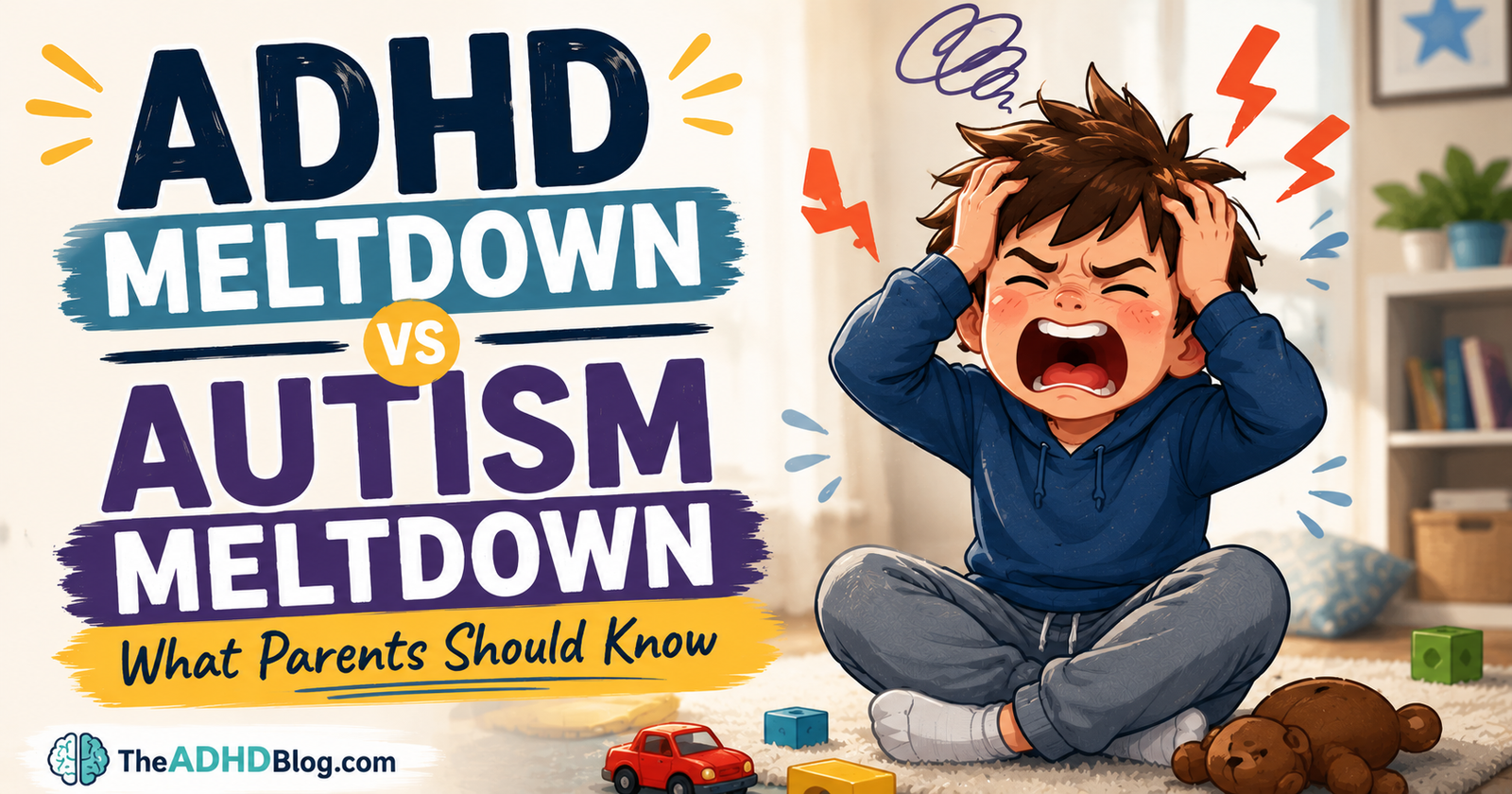
If you’ve ever watched a child completely lose control over something that seemed small, you’ve probably wondered what you were actually seeing.
Was it an ADHD meltdown?
Could it be an autism meltdown?
Was it a tantrum?
Was the child simply overwhelmed?
I’ve found this gets especially confusing because ADHD meltdowns and autism meltdowns can look incredibly similar from the outside.
A child might scream.
Cry.
Run away.
Cover their ears.
Throw something.
Become extremely angry.
Refuse to speak.
Hide.
Or seem completely unable to calm down no matter how much we try to reason with them.
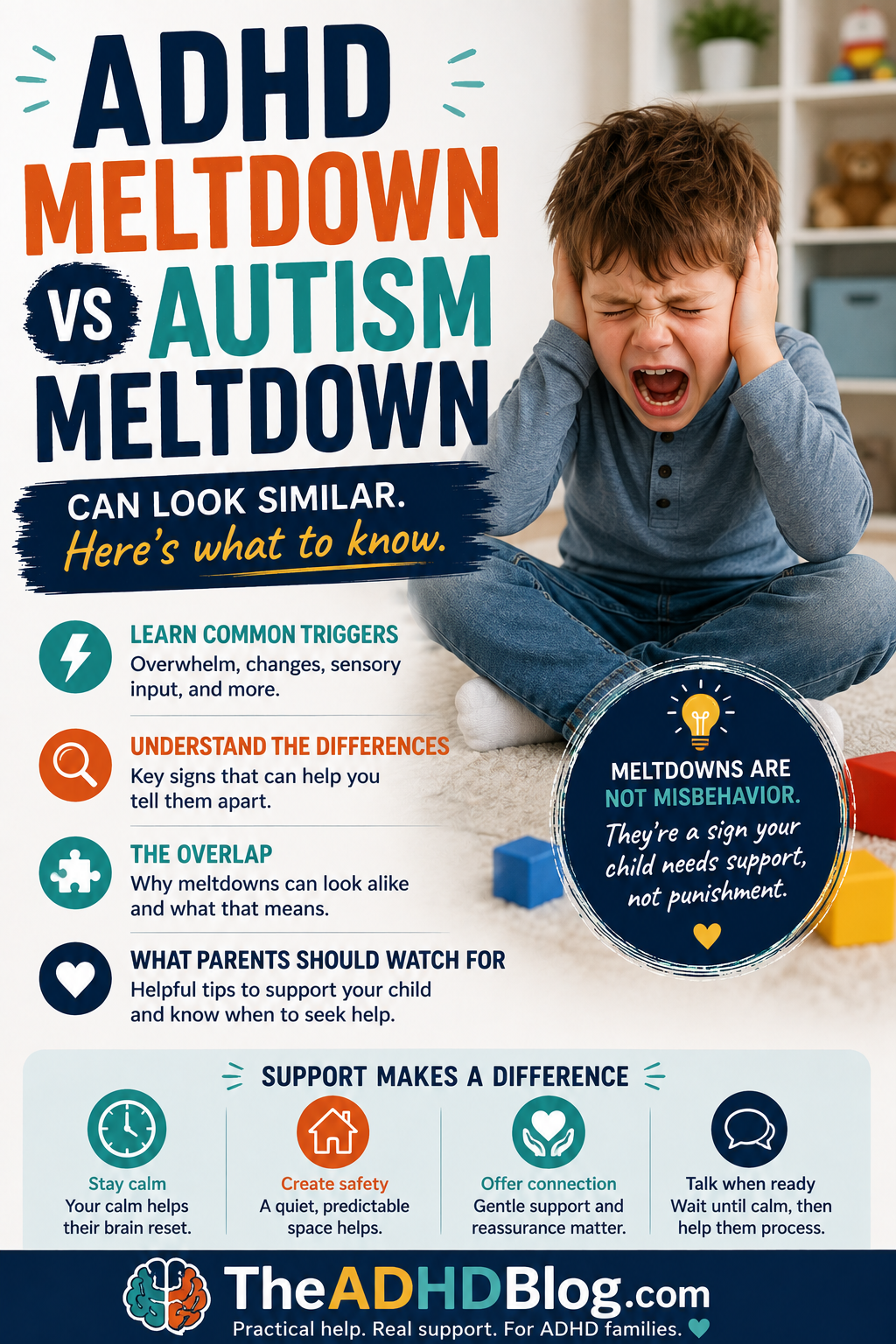
So what’s the difference between an ADHD meltdown and an autism meltdown?
The answer isn’t as simple as looking at the behavior itself.
The trigger, the child’s overall developmental pattern, what happened before the meltdown, and what helps them regulate can tell us much more than whether they screamed, cried, or became angry. When crying is the main visible reaction, ADHD-related crying and emotional regulation can help explain what may be happening beneath the surface.
And there’s another important piece parents need to understand right from the beginning.
A child can have both ADHD and autism. The CDC specifically lists autism spectrum disorder among conditions that can coexist with ADHD, and current pediatric guidance recommends screening children with ADHD for developmental conditions including autism when appropriate.
So this isn’t always an either-or question.
ADHD Meltdowns and Autism Meltdowns Can Look Very Similar
This is probably the first misconception I’d clear up.
You cannot look at a child screaming on the floor and confidently say:
“That’s ADHD.”
Or:
“That’s autism.”
The meltdown itself doesn’t diagnose either condition.
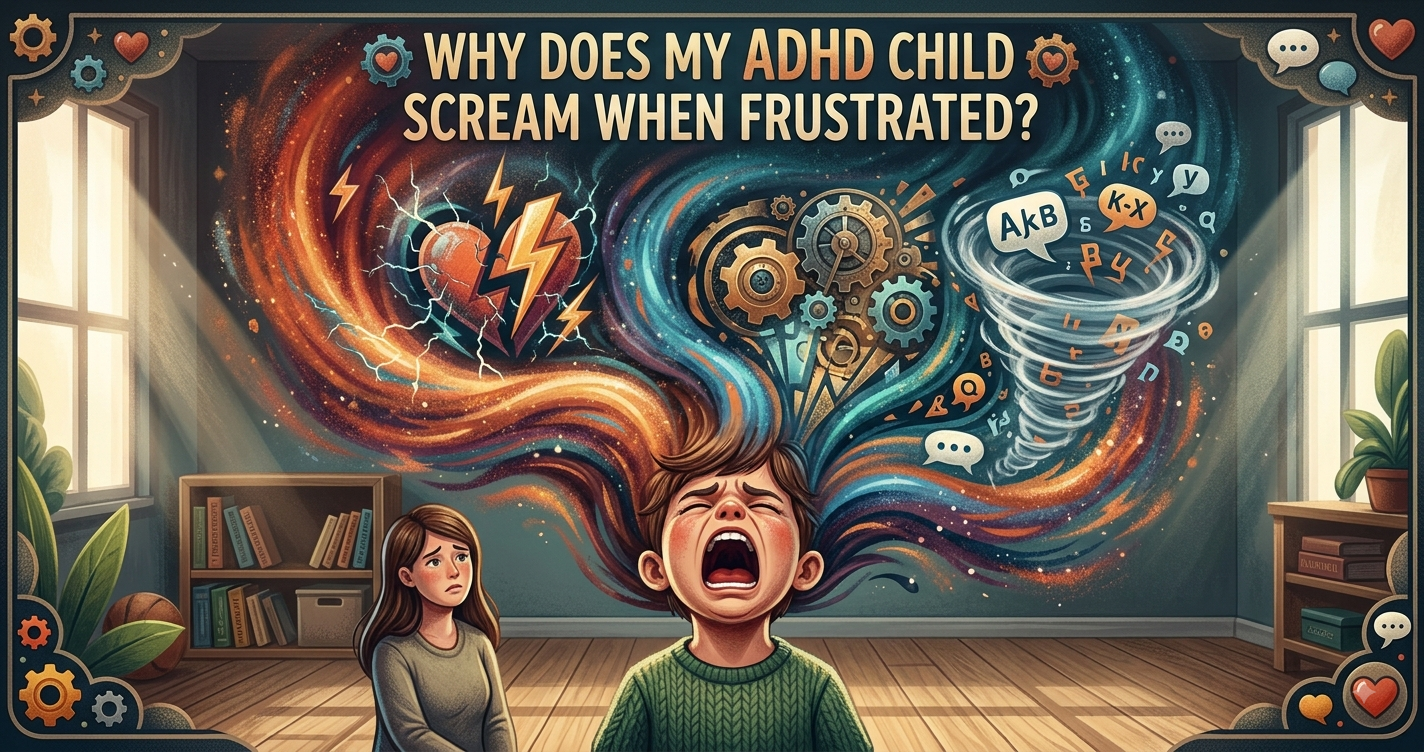
CHADD describes ADHD meltdowns as episodes involving a major loss of emotional control rather than simply deliberate manipulation. Emotional dysregulation is increasingly recognized as an important challenge for many children and teens with ADHD. That emotional dysregulation can also help explain why some children respond to frustration by screaming, as described in ADHD screaming during frustration.
Autistic children can also become severely overwhelmed.
So from the outside, both situations might include intense crying, yelling, trying to escape, shutting down, aggression, or difficulty communicating.
That’s why I want to know more about what brought the child to that point.
What Does an ADHD Meltdown Usually Look Like?
With ADHD, I often think about frustration and emotional regulation.
The child may have been dealing with little frustrations all day.
Homework isn’t working.
Their sibling interrupts them.
They lose something.
They’re told no.
Plans change.
They have to stop playing.
They’re hungry.
They’re exhausted.
Then one more thing happens.
Boom.
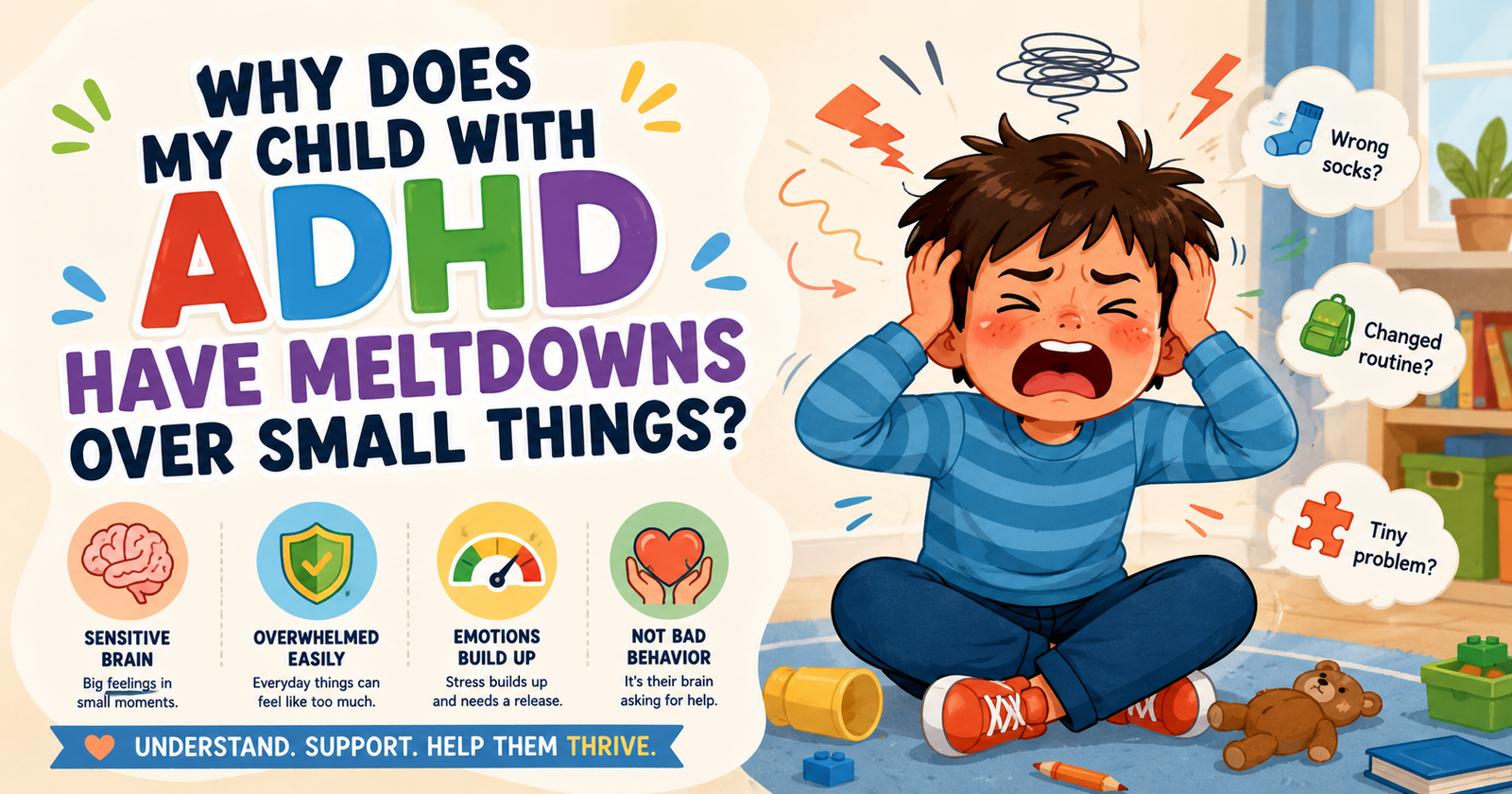
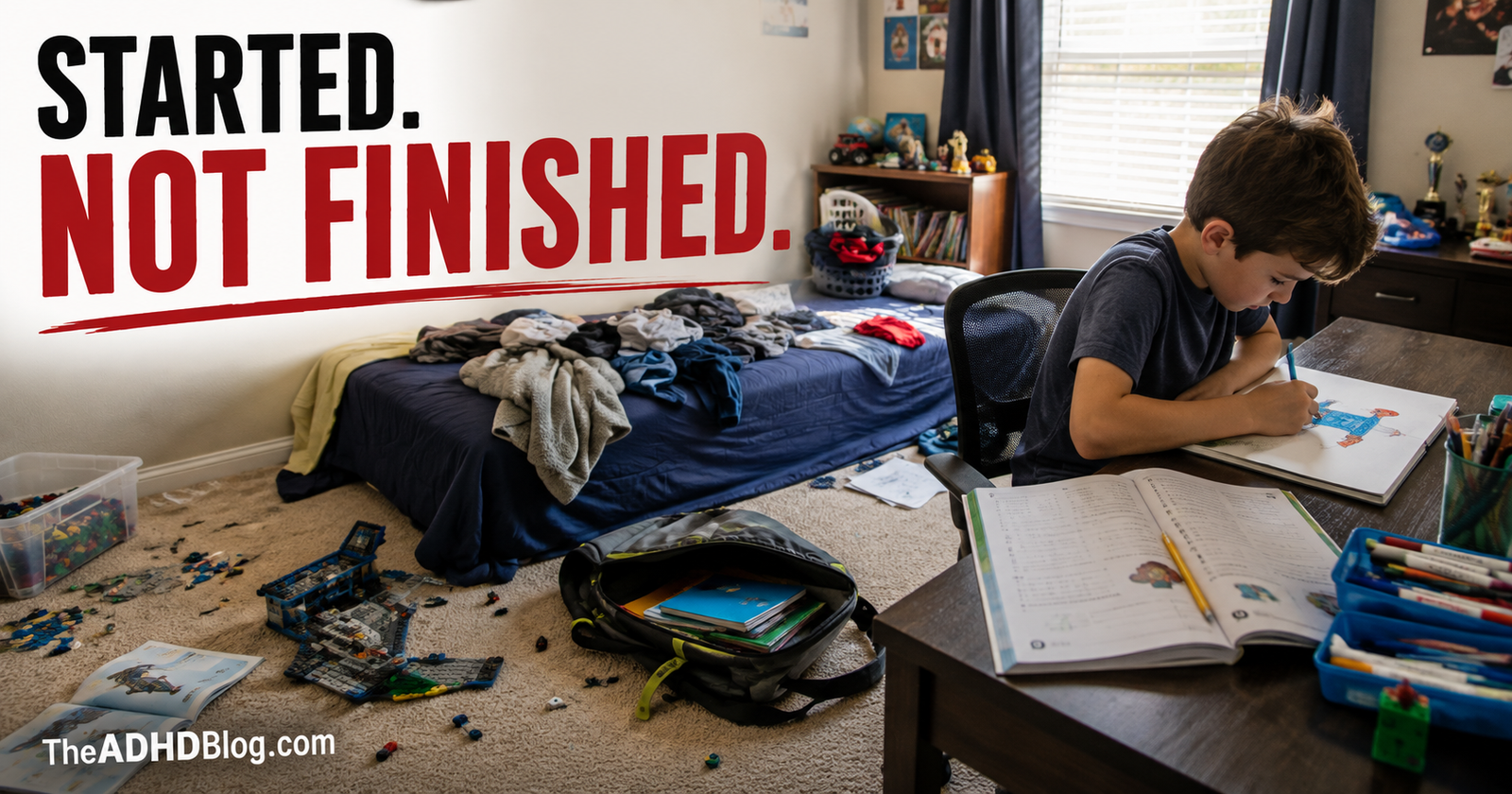
That’s exactly why I wrote about why children with ADHD can have enormous meltdowns over small things.
The final trigger doesn’t necessarily explain the size of the reaction.
Sometimes it’s just the final drop.
ADHD Emotional Dysregulation Can Happen Fast
This is one of the things that can make ADHD meltdowns startling.
A child can appear relatively okay and then become extremely upset very quickly.
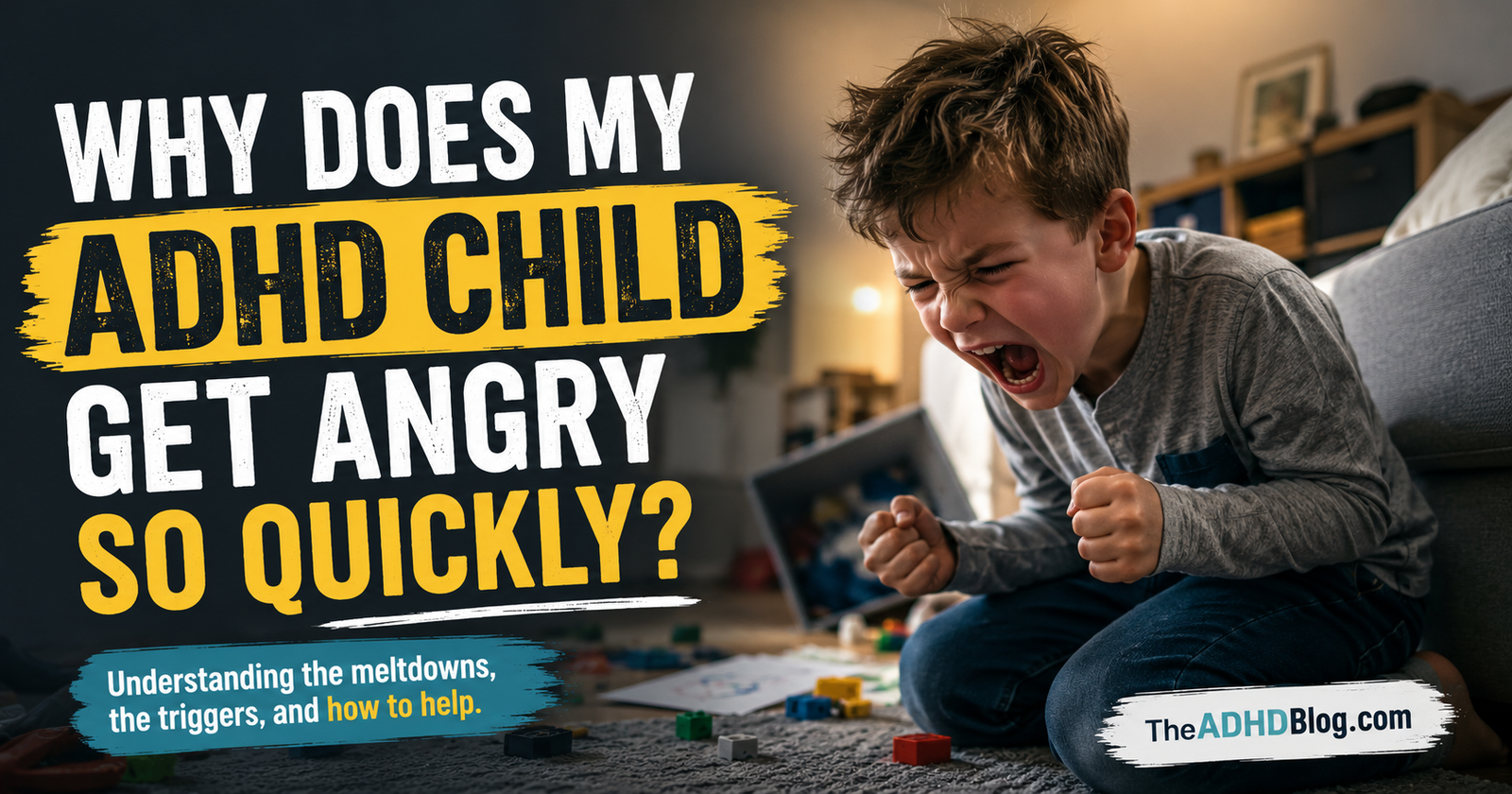
CHADD notes that when emotional regulation is difficult, children with ADHD may respond to ordinary frustrations with emotional meltdowns or behavior that seems out of control. Executive functioning also plays a role in the ability to respond thoughtfully and flexibly to emotions. A closer look at ADHD anger and emotional regulation can make those sudden reactions easier for parents to understand.
That fits something I’ve seen repeatedly.
The emotional accelerator seems powerful.
The brakes don’t always catch up quickly enough.
So an ADHD child might know afterward that their reaction was enormous.
That doesn’t necessarily mean they were capable of stopping it easily while it was happening.
What Does an Autism Meltdown Usually Look Like?
Autism meltdowns can also involve an overwhelming loss of control, but when I’m trying to understand the bigger pattern, I’d pay particularly close attention to things like sensory overload, unexpected changes, communication difficulties, disruption of routines, and demands that have become overwhelming.
Autism itself involves broader developmental differences than meltdowns. The CDC describes autism spectrum disorder as a developmental disability associated with differences in communication, social interaction, learning, behavior, and other characteristics.
That’s an incredibly important distinction.
A meltdown by itself doesn’t mean autism.
If we’re wondering whether autism might be involved, we have to look well beyond the meltdown.
Sensory Overload Can Be an Important Clue
Imagine walking into a busy store.
Bright fluorescent lights.
Shopping carts banging together.
Music playing.
People talking.
A baby crying.
Announcements coming over the speakers.
Clothing feels uncomfortable.
Someone bumps into you.
Then your parent suddenly says:
“We’re going somewhere else now.”
For a child who is already struggling with sensory overload, that final change might be too much.
The resulting meltdown could look completely irrational to someone who didn’t experience everything leading up to it.
Sensory sensitivities can occur in autistic people, although sensory issues aren’t exclusive to autism. CHADD also notes that some children with ADHD can show autism-like traits such as sensitivity to clothing textures.
That’s another reason I wouldn’t diagnose a condition based on a single meltdown trigger.
ADHD Kids Can Have Sensory Problems Too
This is where neat internet comparisons start falling apart.
You may read something like:
Sensory meltdown = autism.
Frustration meltdown = ADHD.
Real children aren’t that simple.
A child with ADHD can absolutely become overwhelmed by noise, crowds, uncomfortable clothing, or excessive stimulation.
A child with autism can absolutely become frustrated when something doesn’t go the way they expected.
And a child can have both ADHD and autism.
In fact, CDC survey data show that autism spectrum disorder occurs among a portion of children diagnosed with ADHD, reinforcing why overlap shouldn’t be treated as something unusual or impossible.
So I wouldn’t use sensory overload as some sort of at-home autism test.
It’s a clue about what overwhelms your child, not a diagnosis.
Unexpected Changes Can Be Extremely Difficult
This is another situation where I watch the pattern.
We’re going to Grandma’s house.
Except Grandma isn’t home.
We’re going to the park instead.
One child might say:
“Okay.”
Another child might become frustrated for a minute.
Another might completely fall apart because the picture they had of what was going to happen has suddenly disappeared.
Children with ADHD can struggle with transitions too.
Stopping an enjoyable activity, shifting attention, starting something boring, or suddenly changing plans can create plenty of frustration.
So again, the important question isn’t:
“Did my child melt down because plans changed?”
It’s:
What else am I seeing consistently across my child’s development and everyday life?
Social and Communication Differences Matter When Considering Autism
This is where we get beyond the meltdown itself.
If autism is a concern, I wouldn’t spend all my time analyzing emotional explosions.
I’d want to look at the broader picture.
How does the child communicate?
How do they interact socially?
Are there repetitive behaviors or unusually restricted interests?
How do they handle changes in routine?
Are there developmental differences that have been present beyond these isolated meltdowns?
CHADD similarly explains that while ADHD and autism have similarities, autism involves differences involving social interaction and communication that help distinguish the broader developmental picture from ADHD alone.
That is something a qualified professional can evaluate much better than a parent trying to diagnose a meltdown from Google.

ADHD Has Its Own Broader Pattern Too
The same principle applies in the opposite direction.
ADHD isn’t diagnosed because a child gets angry quickly.
The CDC describes childhood ADHD around persistent patterns involving attention, impulsivity and/or hyperactivity that cause difficulties in everyday life. Common signs can include frequent forgetfulness, losing things, excessive fidgeting or talking, difficulty resisting impulses, trouble taking turns, and problems getting along with others.
So if I’m trying to understand a meltdown, I want context.
A meltdown is one event.
A neurodevelopmental condition involves a much larger pattern.
ADHD Meltdown vs Autism Meltdown Triggers
This is probably what parents are really trying to figure out when they search this question.
With ADHD, I might particularly notice meltdowns around:
Frustration.
Being told no.
Homework.
Stopping something interesting.
Having to begin something boring.
Repeated failure at a task.
Impulsive emotional reactions.
Exhaustion after school.
Hunger.
Transitions.
With autism, parents may also notice intense reactions involving:
Sensory overload.
Unexpected changes.
Disrupted routines.
Communication difficulties.
Too many demands.
An overwhelming environment.
Difficulty coping with a situation that has become unpredictable.
But those aren’t two perfectly separate lists.
There can be significant overlap.
That’s why I use triggers to understand how to help the child, not to decide which diagnosis they have.


What About a Child Who Has ADHD and Autism?
This is particularly important.
It’s entirely possible.
ADHD and autism are both neurodevelopmental conditions, and they can coexist.
For a child with both, trying to label every individual meltdown as either:
“That was the ADHD one.”
or
“That was the autism one.”
may not even be useful.
Multiple factors could be interacting.
Maybe a crowded environment creates sensory overload.
Then plans unexpectedly change.
The child has already struggled with impulse control and emotional regulation all day.
They’re hungry.
They’re tired.
Now someone places another demand on them.
At that point, figuring out which diagnosis gets credit for the meltdown isn’t necessarily my first priority.
I want to know:
What overloaded this child, and what can we change next time?
ADHD Meltdown vs Tantrum Is Another Important Difference
There’s another layer here because not every explosive episode is necessarily a meltdown.
Tantrums and meltdowns can look similar too.
A tantrum can involve behavior aimed at obtaining or avoiding something, while a genuine meltdown involves a child becoming overwhelmed and losing emotional control.
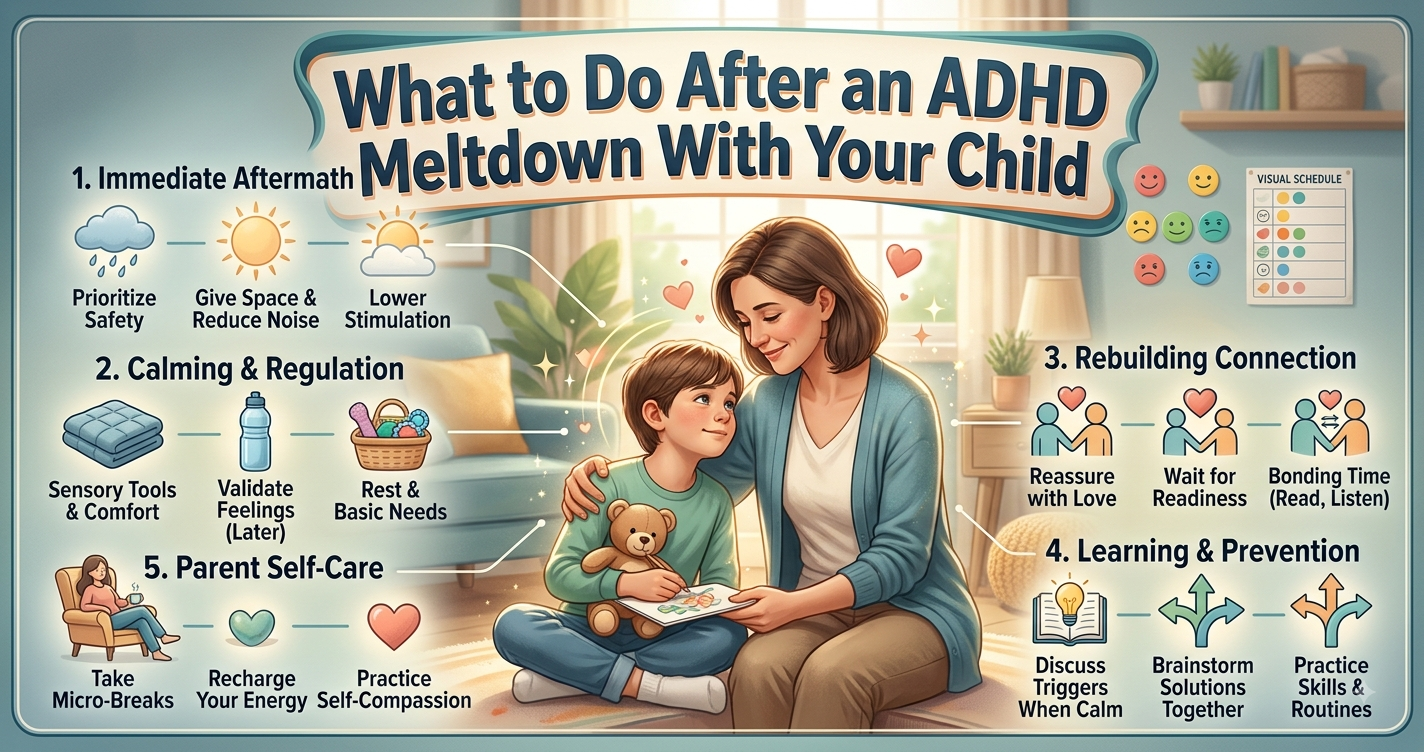
And sometimes real life gets messy enough that an episode can start as frustration about not getting something and escalate into genuine dysregulation. Once that episode has passed, steps after an ADHD meltdown can help parents think about what comes next without treating every meltdown the same way.
That’s why I created a separate guide about ADHD meltdowns vs tantrums.
Understanding that distinction can sometimes be more useful than obsessing over the exact outward behavior.
How Can I Tell If My Child Is Losing Control?
This is what I watch for.
Can the child still communicate reasonably?
Can they respond to choices?
Are they becoming increasingly overwhelmed?
Does solving the original problem stop the reaction?
Are they able to change direction?
Does their behavior seem increasingly disorganized?
Do they seem desperate to escape the situation?
Are ordinary questions making everything worse?
Those observations can tell me a lot about where we are emotionally.
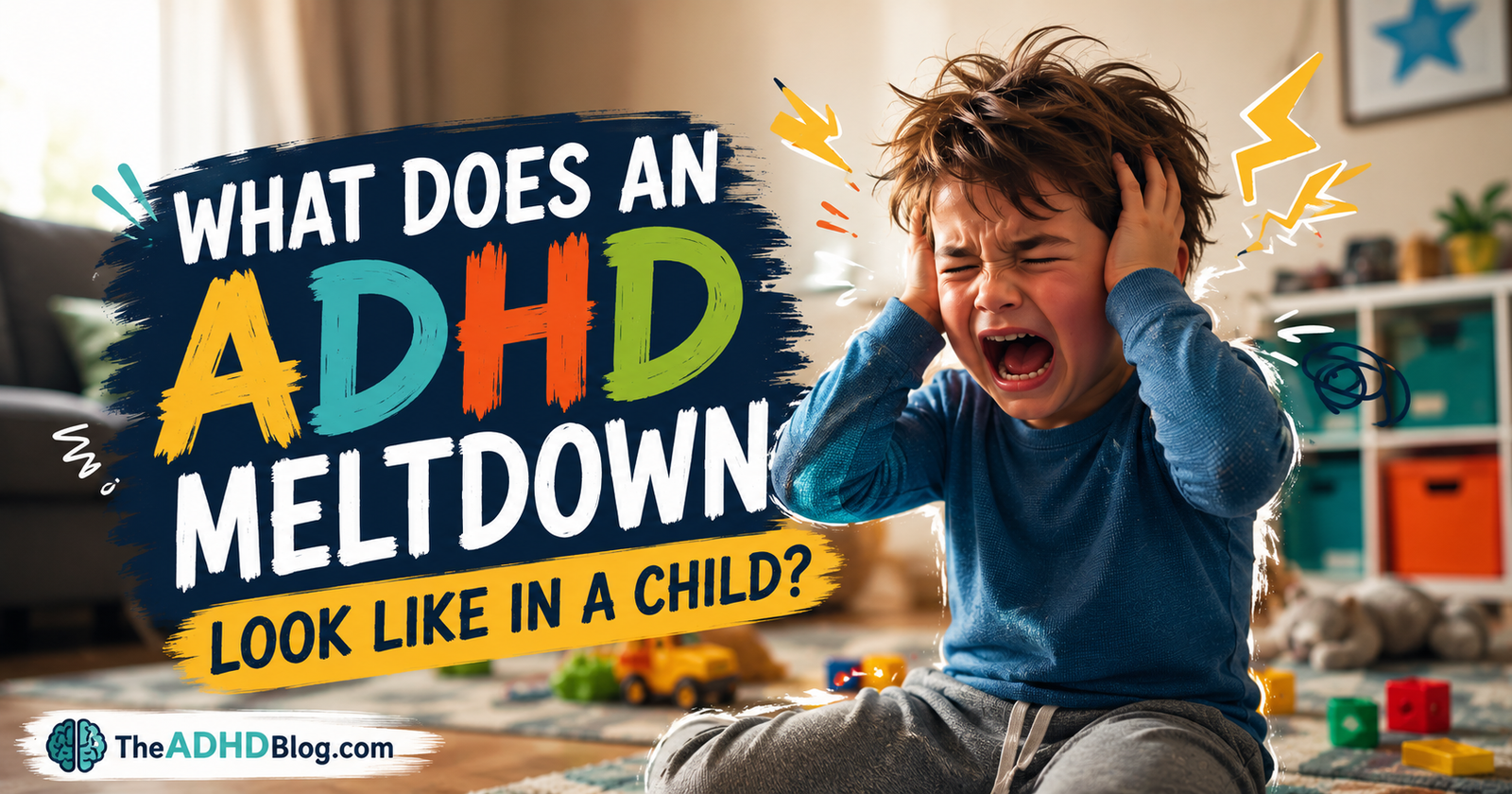
If you aren’t sure what you’re seeing, my guide to what an ADHD meltdown looks like in a child breaks down the build-up, peak, and recovery stages in much more detail.
The Build-Up Matters More Than Parents Realize
I’ve become almost obsessed with the few minutes before a meltdown.
That’s where the useful information lives.
Maybe the child starts pacing.
Their voice gets louder.
They begin repeating themselves.
They can’t make a simple choice.
Everything becomes annoying.
They complain about noise.
They say:
“I CAN’T!”
They become unusually argumentative.
They start covering their ears.
They desperately want to leave.
Those are warning signs.
Once we know a particular child’s signs, sometimes we can intervene before they reach the point where regulation becomes much harder.
What Should I Do During Either Type of Meltdown?
Whether ADHD, autism, or another form of overwhelm is involved, I don’t want to turn the peak of the meltdown into an interrogation.
I don’t need to determine the diagnosis while the child is screaming.
First, I want everyone safe.
Then I want to reduce whatever unnecessary pressure I can.
That may mean:
Fewer words.
Less noise.
Less arguing.
A calmer environment.
Physical space when appropriate.
Removing siblings from the immediate situation.
Stopping unnecessary questions.
Allowing some time.
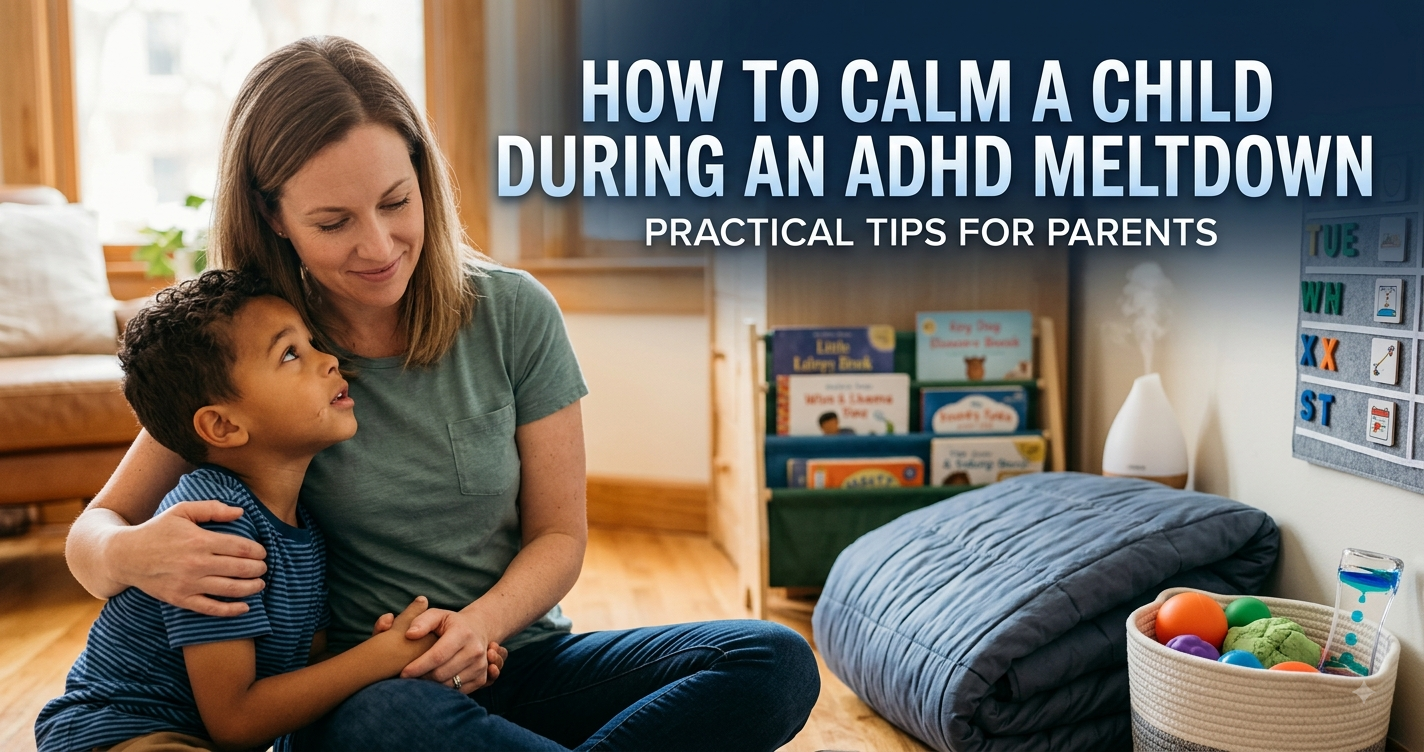
For ADHD meltdowns specifically, CHADD recommends using a calm voice, minimizing words, offering appropriate choices, and giving physical space when possible during intense dysregulation. These recommendations are put into a step-by-step parenting approach in calming strategies for ADHD meltdowns.
That’s a lot more useful to me than repeatedly saying:
“CALM DOWN!”
How Long Can the Meltdown Last?
Unfortunately, there’s no universal countdown.
Some children recover relatively quickly.
Others take much longer.
And even the same child’s meltdowns can vary dramatically depending on how tired, hungry, frustrated, or overwhelmed they already were.
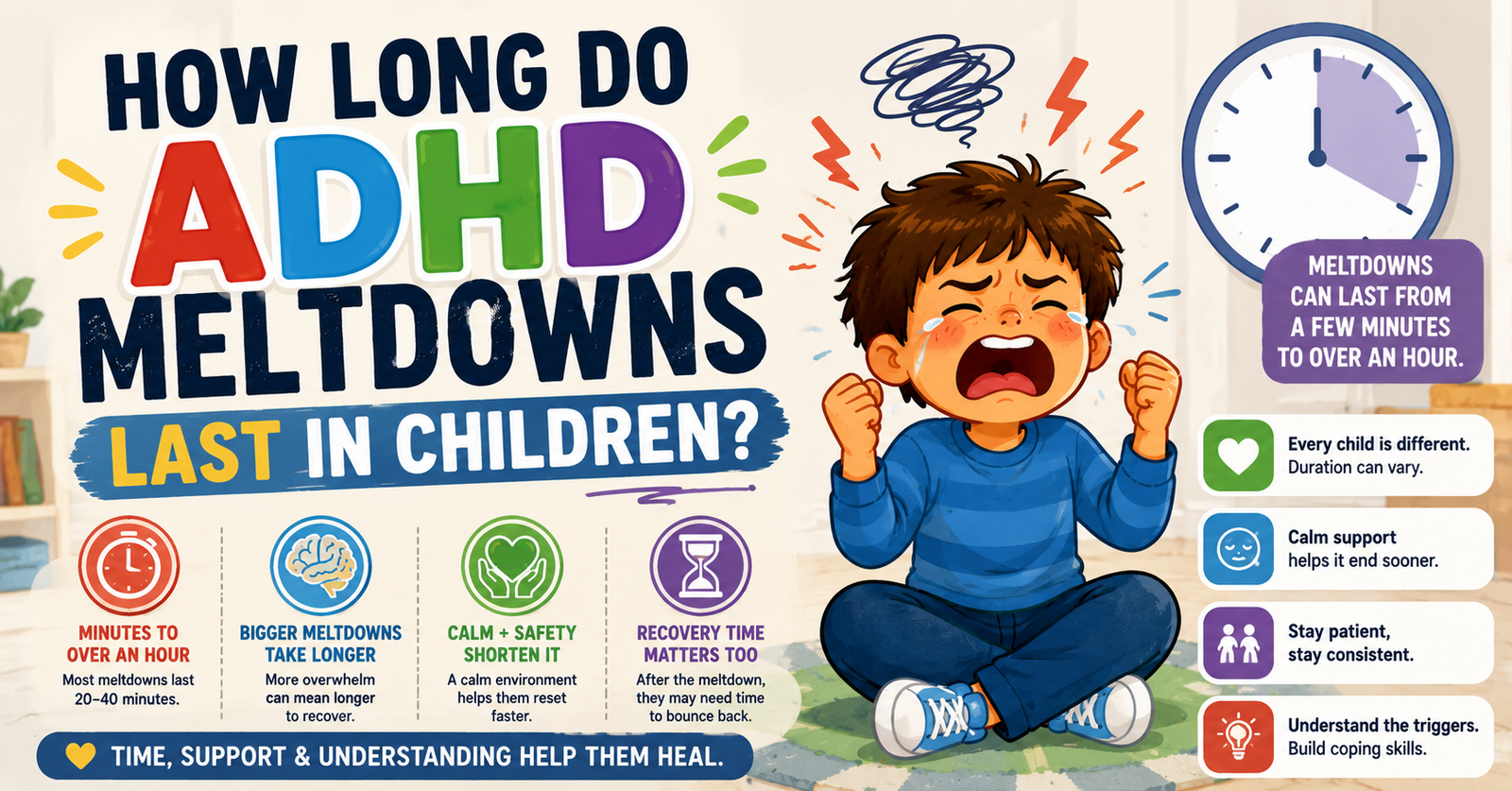
I’ve gone much deeper into how long ADHD meltdowns can last in children, including why some episodes seem to keep restarting after they were finally settling down.
One of my biggest takeaways is that I don’t want to judge progress entirely by the clock.
If the intensity is slowly coming down, we’re moving somewhere.
What Happens Afterward Can Tell You Something Too
After a severe meltdown, some children are exhausted.
Some are embarrassed.
Some become incredibly quiet.
Some want comfort.
Some need space.
Some seem to recover much faster than their parents.
That last one is almost funny once you’ve experienced it enough.
The child is playing happily 15 minutes later.
Meanwhile, I’m standing in the kitchen thinking:
“Did that seriously just happen?”
But after everyone is genuinely regulated again, that’s when I want to learn.
Not shame.
Learn.
Ask What Happened Before the Meltdown
Later, I might ask:
“Was it getting too loud?”
“Were you already upset before that happened?”
“Was changing plans really hard?”
“Did you understand what I was asking?”
“Were you frustrated because you couldn’t get it right?”
“Were you tired?”
“Did you need a break?”
Those conversations start building emotional awareness.
Eventually, instead of reaching the explosion, maybe the child can recognize:
I’m getting overwhelmed.
That’s a huge skill.
Keep a Simple Meltdown Pattern Log
If meltdowns happen frequently, I think this can be incredibly useful.
You don’t need a complicated spreadsheet.
Just record enough to remember what happened.
Date.
Approximate time.
What happened beforehand.
Where you were.
What triggered the final reaction.
Whether the environment was noisy or crowded.
Whether plans changed.
Whether the child was hungry.
How they slept the previous night.
How long the episode roughly lasted.
What helped.
What made it worse.
After several weeks, patterns may jump off the page.
And that information can also be useful if you eventually discuss the behavior with a pediatrician, psychologist, therapist, school team, or another professional.
School Behavior Can Provide Important Clues
I’d also want to know what’s happening outside the house.
Does the teacher see similar reactions?
What happens when classroom routines change?
What happens during difficult assignments?
How does the child interact with classmates?
Do loud assemblies cause problems?
What happens during recess?
How are transitions between classes or activities?
Does the child seem to hold everything together at school and completely unravel afterward?
This is one reason ADHD evaluations use information from multiple people and settings rather than relying on one behavior observed at home. CDC guidance specifically recommends gathering information from parents or guardians, school staff, mental health professionals involved with the child, and the child or adolescent when evaluating ADHD.
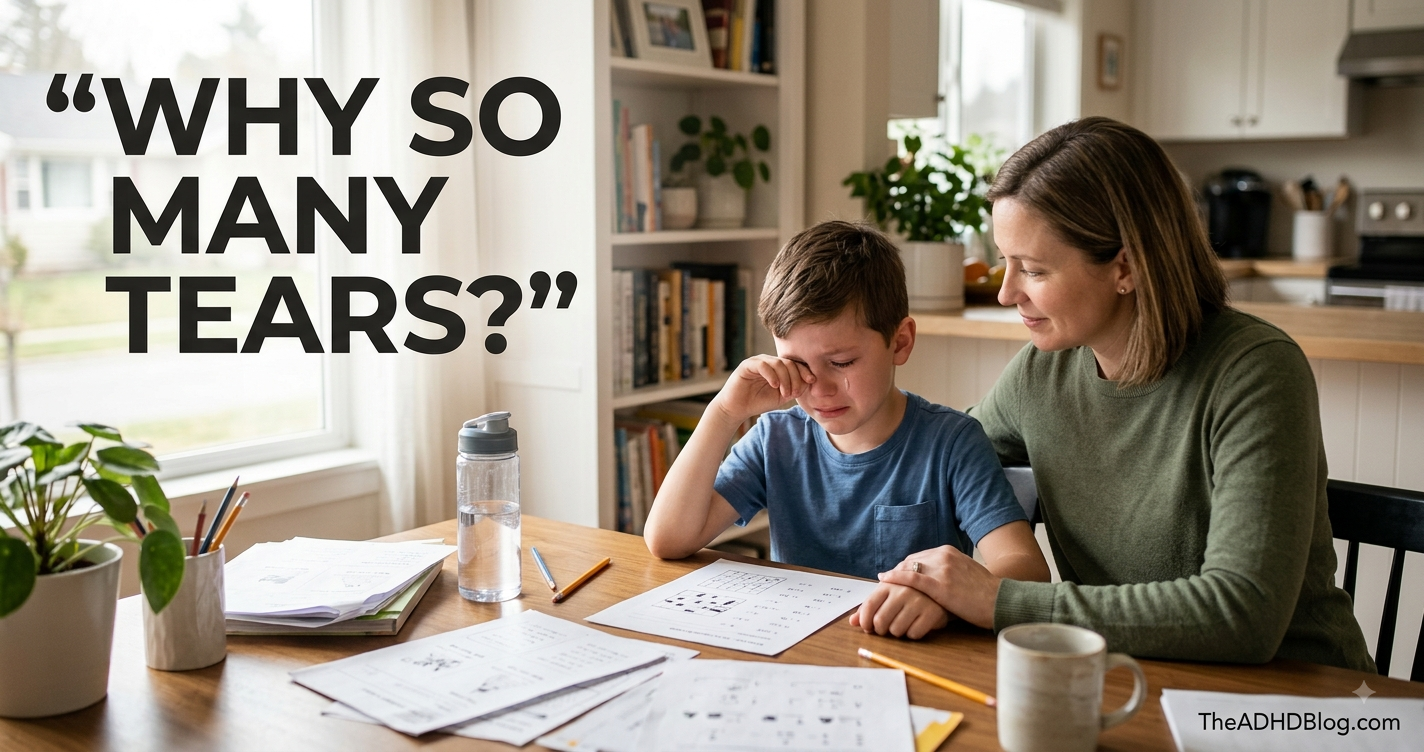
Homework Can Be Especially Revealing With ADHD
Homework repeatedly brings together several difficult ADHD demands.
Starting.
Focusing.
Remembering instructions.
Organizing materials.
Ignoring distractions.
Handling mistakes.
Sticking with something boring.
If meltdowns constantly happen around schoolwork, I’d investigate the task itself rather than assuming the child simply hates homework.

Our ADHD homework strategies for parents explain how we try to reduce some of that friction.
The easier we make it for the child to successfully begin and continue the task, the less frustration there is available to fuel an explosion.
Sleep Can Make Either Situation Much Worse
I never underestimate tiredness.
Even adults become less patient when we’re exhausted.
Children aren’t magically different.
And if ADHD is involved, sleep difficulties can create another layer of problems with attention, behavior, and emotional regulation.
If evenings are consistently your child’s hardest time, our guide to ADHD and sleep problems in children is worth reading alongside this one.
Sometimes working on the conditions surrounding the meltdown helps more than focusing exclusively on the meltdown itself.
Can Meltdowns Tell Me Whether My Child Has Autism?
No.
I want to make that extremely clear.
A meltdown isn’t an autism test.
It’s not an ADHD test either.
ADHD and autism share some overlapping features, and other conditions can produce symptoms that resemble ADHD. That’s why the CDC recommends a thorough evaluation that considers other possible explanations and screens for conditions that can coexist with ADHD, including autism, anxiety, depression, learning disorders, language disorders, tics, and sleep disorders.
If autism is genuinely on your mind, don’t try to answer the question based solely on whether your child’s meltdowns resemble something you watched online.
Look at the entire developmental picture and talk with your child’s healthcare provider.
When I’d Bring the Meltdowns Up With a Professional
I don’t think parents need to panic over every emotional explosion.
Children have bad days.
ADHD children have bad days.
Autistic children have bad days.
Adults have bad days.
But I would seek professional guidance when meltdowns are severe, frequent, worsening, causing injuries, involving serious aggression or self-harm, causing significant problems at school, or making ordinary family life extremely difficult or unsafe.
I’d also bring it up if you’re seeing broader developmental, social, communication, attention, behavioral, sensory, or learning concerns that make you wonder whether something beyond the child’s current diagnosis may be happening.
The CDC specifically recommends screening children with ADHD for co-occurring emotional, behavioral, developmental, and physical conditions because overlap is common and can affect what kind of help a child needs.
ADHD Meltdown vs Autism Meltdown Isn’t Always the Most Important Question
I completely understand why parents search for the difference.
We want a label because labels can make confusing behavior feel easier to understand.
But after digging into this, I’ve come to think there may be an even more useful question:
What is repeatedly overwhelming my child?
Is it frustration?
Sensory input?
Transitions?
Unexpected changes?
Communication?
Homework?
Exhaustion?
Hunger?
Too many demands?
Difficulty stopping an enjoyable activity?
Or several of those things happening together?
If your child already has ADHD and you’re noticing other patterns that concern you, bring those observations to someone qualified to evaluate the whole child.
Because an ADHD meltdown and an autism meltdown can look remarkably similar from across the room.
The better clues often aren’t found in those explosive ten minutes.
They’re found in the patterns surrounding your child every other hour of the day.
About the Author: Emily Parker
Emily Parker writes for TheADHDBlog.com about raising and supporting children with ADHD, with a special focus on emotional regulation, meltdowns, family routines, school struggles, and confusing everyday behaviors parents are trying to understand. Her articles combine practical family-focused guidance with reputable ADHD resources to help parents recognize patterns, ask better questions, and know when a concern deserves professional attention. Readers who want to understand the experience guiding this resource can visit the story behind this ADHD resource.