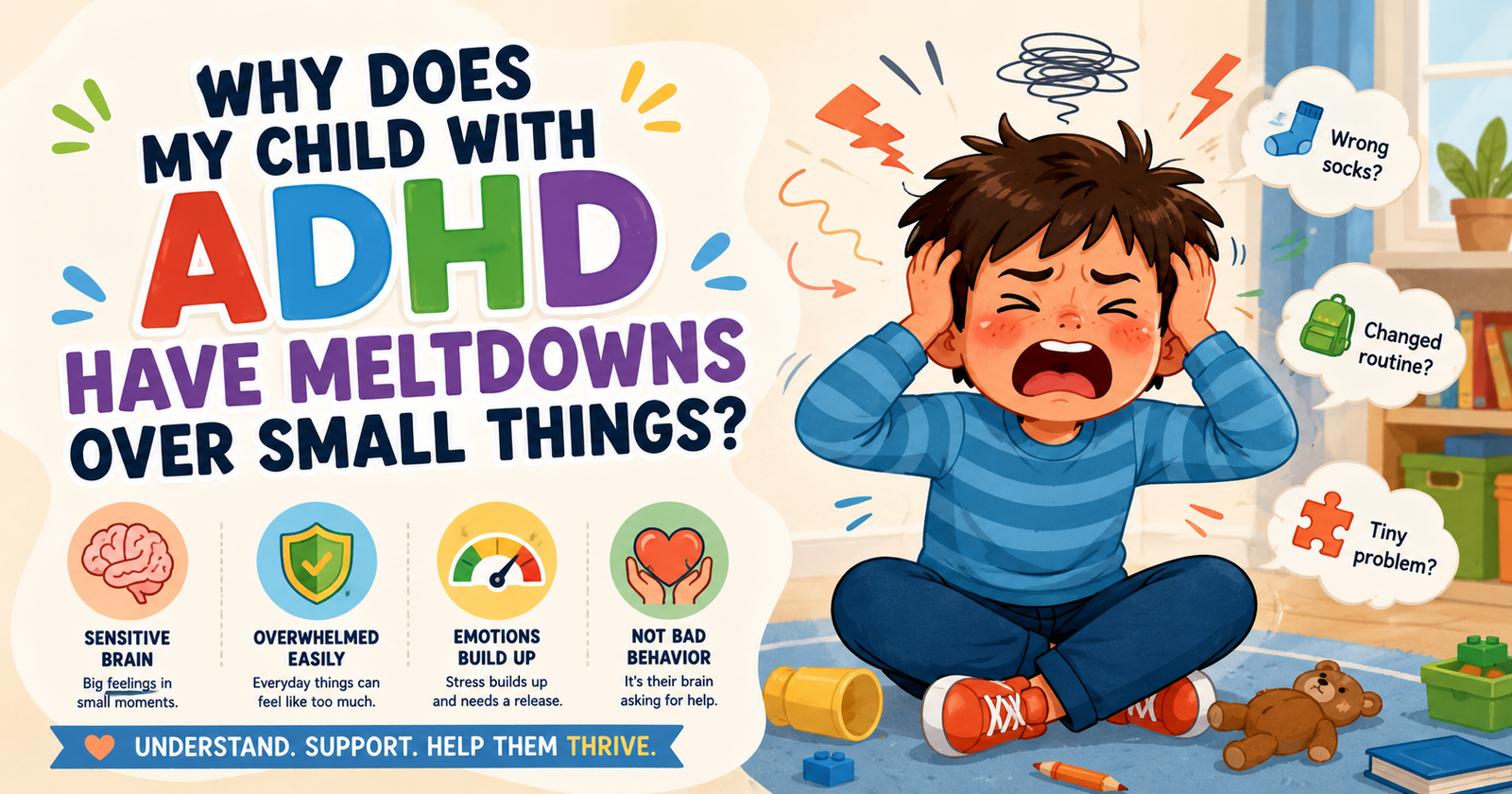
There are moments as a parent when I find myself thinking, How did we get from THAT to THIS?
A shoe doesn’t feel right. The wrong cup gets handed over. Homework has one problem that seems too hard. A sibling makes one annoying comment. It’s time to turn off a game.
Suddenly, what looked like a tiny problem from my perspective has turned into crying, yelling, anger, shutting down, or a full-blown meltdown.
If you’ve experienced this with a child who has ADHD, you’ve probably wondered the same thing I have: Why does my child with ADHD have meltdowns over such small things?
One of the biggest things I’ve learned is that the “small thing” we see isn’t always the whole problem.
Sometimes it’s simply the last thing.
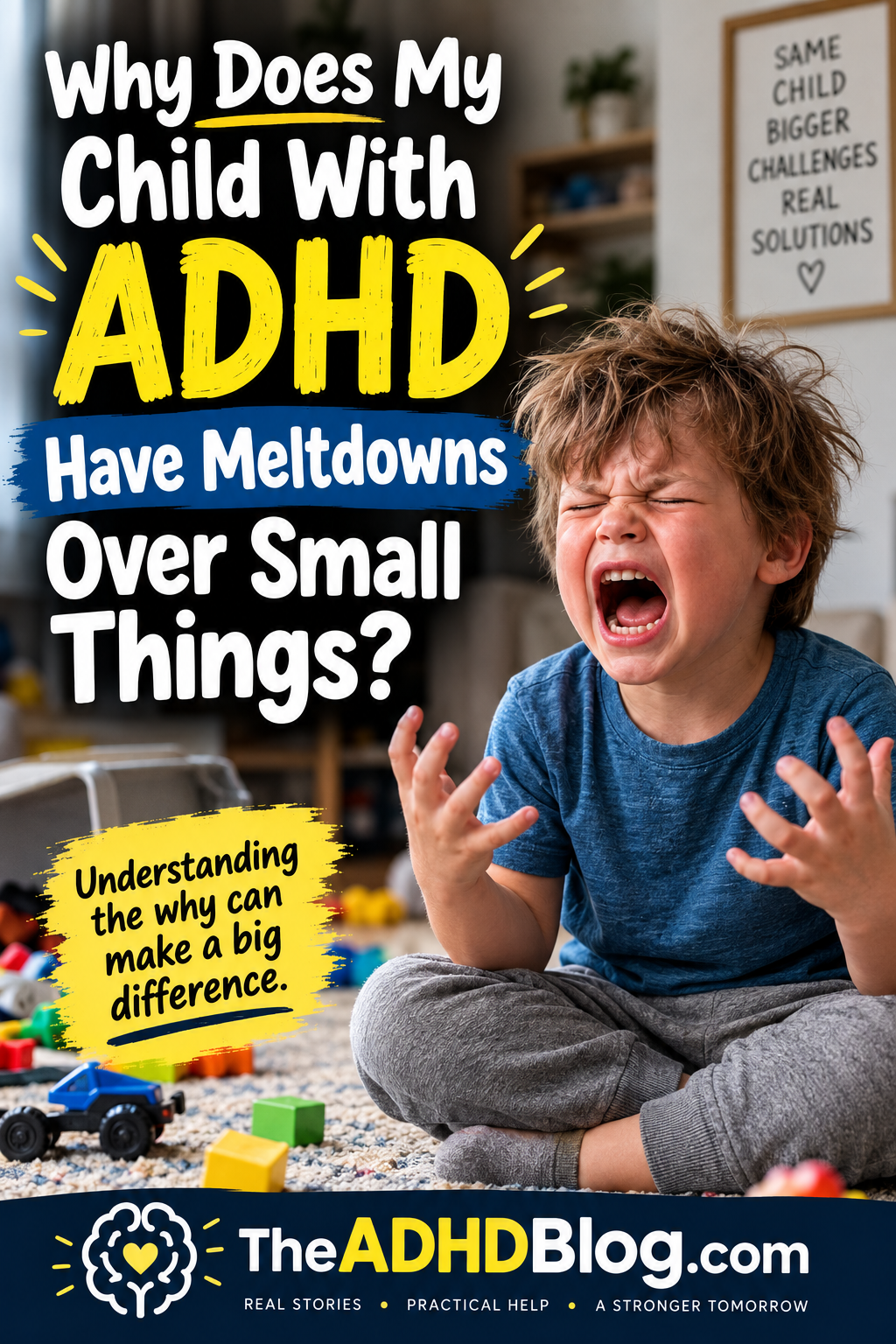
A child may already be carrying frustration from school, sensory overload, hunger, tiredness, disappointment, transitions, demands, and the exhausting effort of trying to control themselves all day. Then one little problem pushes everything past the point they can manage. Those accumulated pressures can also help explain what affects meltdown duration, even when the final trigger seems minor.
Understanding that changed the way I look at ADHD meltdowns.
It doesn’t mean every behavior should simply be accepted. It means I can respond much more effectively when I understand what’s happening underneath it.
Why ADHD Can Make Small Problems Feel Huge
ADHD gets talked about so much in terms of attention that it’s easy to think the condition is mainly about being distracted or hyperactive.
Real life can look much messier.
Kids with ADHD may also struggle with impulse control, frustration tolerance, shifting attention, stopping something enjoyable, handling disappointment, and regulating strong emotions.
That combination can make an ordinary frustration escalate incredibly fast.
Something that looks like:
“We’re out of your favorite cereal.”
to me may feel like:
“I expected one thing, now everything changed, I’m already tired, I’m hungry, I don’t like the other cereal, and I can’t get my brain to move past this.”
The reaction can seem completely out of proportion to the event.
But that’s why I try to look beyond the event itself.
If you’re seeing explosive reactions frequently, my guide to ADHD meltdowns vs tantrums and what’s actually happeninggoes deeper into an important distinction that can completely change how we respond as parents.

The Tiny Trigger Usually Isn’t the Whole Story
I think of it like a cup slowly filling with water.
One frustrating thing happens at school.
A little water goes into the cup.
The classroom is loud.
More water.
The child has to sit still longer than they want.
More water.
They forget an instruction and get corrected.
More water.
They’re hungry.
More water.
They come home and we ask them to put their backpack away.
And suddenly the cup spills everywhere.
From our perspective, it looks ridiculous.
“You’re screaming because I asked you to put away a backpack?”
But the backpack wasn’t necessarily the real problem.
It was simply what happened when there was no room left in the cup.
This is one reason I pay much more attention to what happened during the hour or two before a meltdown than I used to.
Patterns become much easier to see that way.
ADHD Emotional Regulation Can Be Part of the Problem
Emotional dysregulation isn’t one of the core diagnostic criteria used to diagnose ADHD, but difficulties regulating emotions are commonly reported in people with ADHD.
And you can absolutely see how that might play out in everyday family life.
An emotion doesn’t necessarily arrive gradually.
It can feel like:
Fine.
Fine.
Fine.
FURIOUS.
Or:
Okay.
Okay.
Okay.
DEVASTATED.
The emotional accelerator seems incredibly powerful while the brakes don’t always engage quickly enough.
That’s one reason saying things like “It’s not a big deal” usually hasn’t been very useful in the middle of a major reaction.
To us, it isn’t a big deal.
To the child experiencing that emotion, it may feel enormous at that exact moment.
Frustration Can Build Faster Than We Realize
One thing I think parents sometimes underestimate is just how many frustrating situations an ADHD child can encounter during an ordinary day.
Imagine constantly being told:
Pay attention.
Stop moving.
Remember your folder.
Don’t interrupt.
Put that down.
Finish this first.
Stop talking.
Where’s your homework?
Why didn’t you remember?
Hurry up.
Sit down.
Listen.
Don’t forget.
Now imagine hearing variations of those things over and over while genuinely trying.
That can be exhausting.
By the time a child gets home, the emotional gas tank may already be nearly empty.
This is especially important when you’re also dealing with ADHD focus problems and trying to understand why focusing can feel so difficult.
Sometimes what looks like refusal or laziness from the outside is a kid who has spent an incredible amount of energy trying to keep up.

Why ADHD Kids Sometimes Melt Down More at Home
This one can be incredibly confusing.
A teacher may say:
“They were great today!”
Then your child gets home and seems to completely fall apart.
That can make a parent wonder whether the behavior is intentional.
Why can they hold it together at school but not at home?
Sometimes home is simply where a child finally feels safe enough to release everything they’ve been holding in.
They’ve spent hours following directions, managing impulses, transitioning between activities, dealing with noise, completing schoolwork, interacting socially, and trying to meet expectations.
Then they walk through the front door.
The pressure releases.
This doesn’t mean every after-school meltdown is caused by ADHD, nor does it mean boundaries disappear.
But it does make me think differently about what happens immediately after school.
Sometimes the first thing a child needs isn’t:
“Get your homework out.”
It’s food, movement, quiet, connection, or simply a little time without another demand.
Transitions Can Trigger ADHD Meltdowns Over Surprisingly Small Things
Transitions are a big one.
Turning off a video game.
Leaving Grandma’s house.
Getting dressed.
Stopping play to eat dinner.
Going upstairs for bed.
Leaving the playground.
Starting homework.
Getting into the shower.
Even transitioning between two perfectly normal activities can be difficult.
The frustrating part for parents is that we often give plenty of warning.
“Ten more minutes.”
“Five more minutes.”
“Okay, it’s time.”
And the meltdown happens anyway.
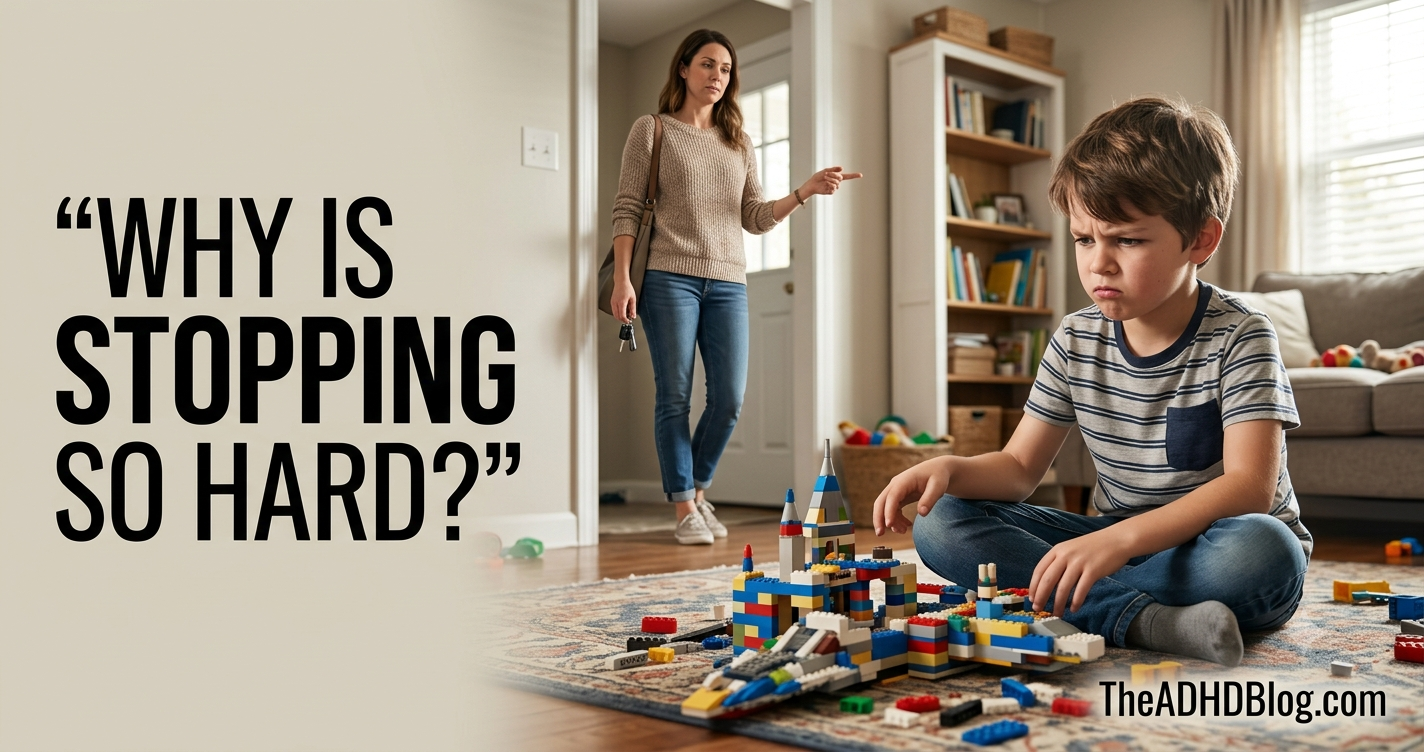
For some kids with ADHD, knowing a transition is coming doesn’t automatically make disengaging from the current activity easy.
This becomes especially obvious when they’re deeply interested in what they’re doing.
That brings us to another ADHD trait that can confuse people.
ADHD Isn’t Always an Inability to Focus
This is one of the biggest misconceptions about ADHD.
A child who struggles to finish a worksheet may somehow play a favorite game, build LEGO, draw, watch videos, or research something they love for an incredibly long time.
Then adults understandably think:
“See? You CAN focus.”
But ADHD isn’t simply an on/off switch for attention.
Attention can be much easier to sustain when something is interesting, novel, stimulating, urgent, or rewarding.
That’s why stopping a highly engaging activity to begin something boring can be such a rough transition.
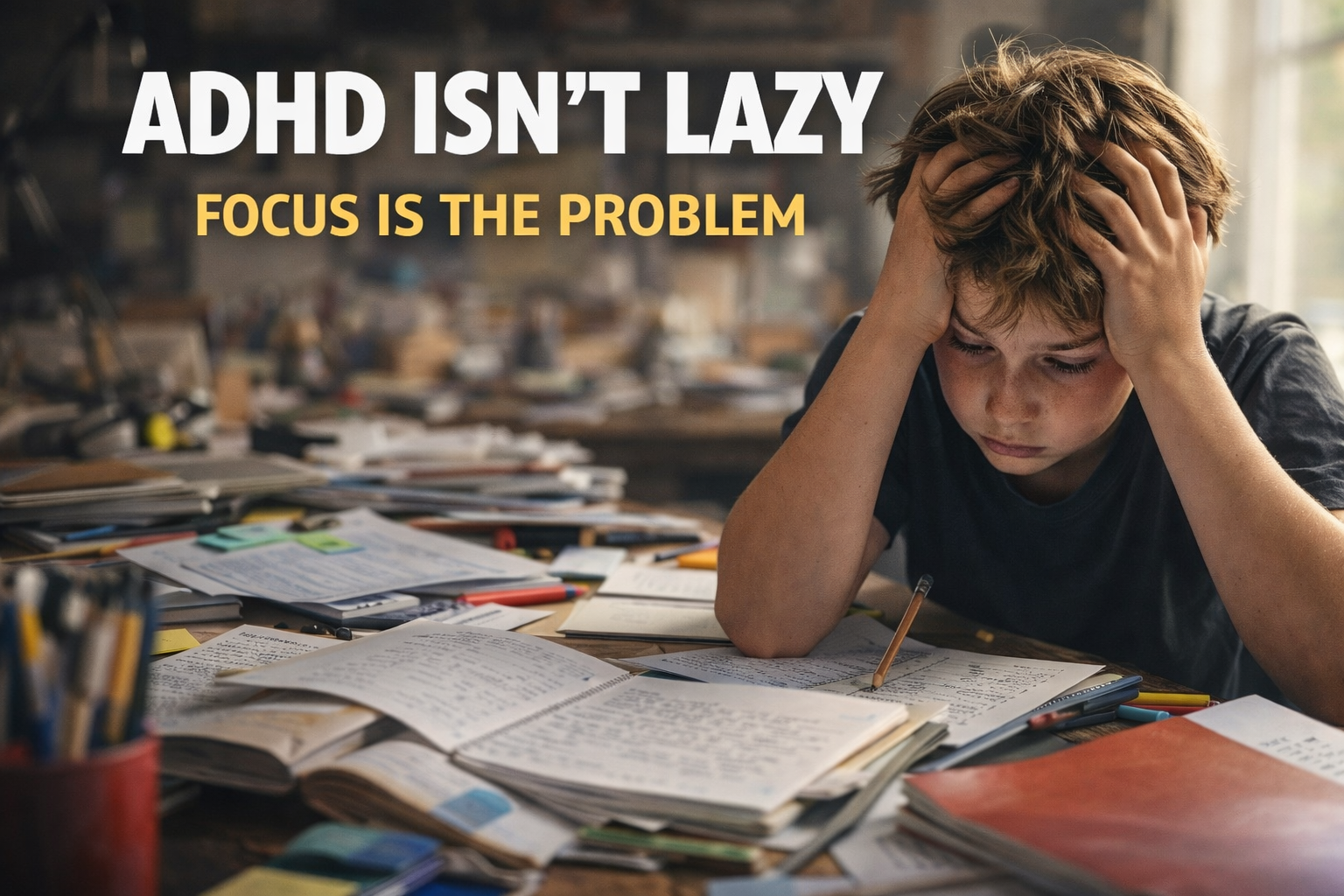
I’ve written more about why ADHD can feel like you simply cannot focus because understanding this difference can save parents and kids a lot of unnecessary frustration.
Homework Can Become the Perfect Storm
Homework deserves its own section because it combines several common ADHD challenges at once.
The child has already been at school all day.
Now they need to:
Remember the assignment.
Find the materials.
Sit down.
Ignore distractions.
Figure out where to start.
Sustain attention.
Handle mistakes.
Work through boring material.
Keep track of time.
And finish without the immediate structure of a classroom.
Then we wonder why question number three somehow results in tears.
I’ve found it much more useful to treat homework problems as something we need a system for rather than assuming the child simply needs more discipline.

Our ADHD homework tips for parents cover the strategies we’ve found more realistic for making homework manageable without turning every evening into a battle.
Hunger Can Make Everything Worse
This sounds almost too simple, but I wouldn’t overlook it.
A hungry child can be a cranky child even without ADHD.
Add an already difficult day, emotional regulation challenges, sensory irritation, and another demand, and hunger can be the final ingredient.
I’ve learned not to underestimate the value of a snack.
Especially after school.
Before jumping straight into:
Homework.
Chores.
Practice.
Bath.
Dinner expectations.
Sometimes I want to solve the most basic problem first.
Food.
Water.
A few minutes to decompress.
Then we see where we are.
Sleep Can Have a Huge Effect on ADHD Behavior
If meltdowns are dramatically worse later in the day, I would absolutely pay attention to sleep.
A tired brain doesn’t tend to become better at handling frustration.
For a child who already struggles with emotional control and impulsivity, being exhausted can make an ordinary inconvenience much harder to tolerate.
The unfortunate part is that ADHD and sleep problems can sometimes feed each other.
A child struggles during the day because they’re tired.
They’re dysregulated by evening.
Bedtime becomes difficult.
They don’t get enough sleep.
The next day is harder.
Repeat.
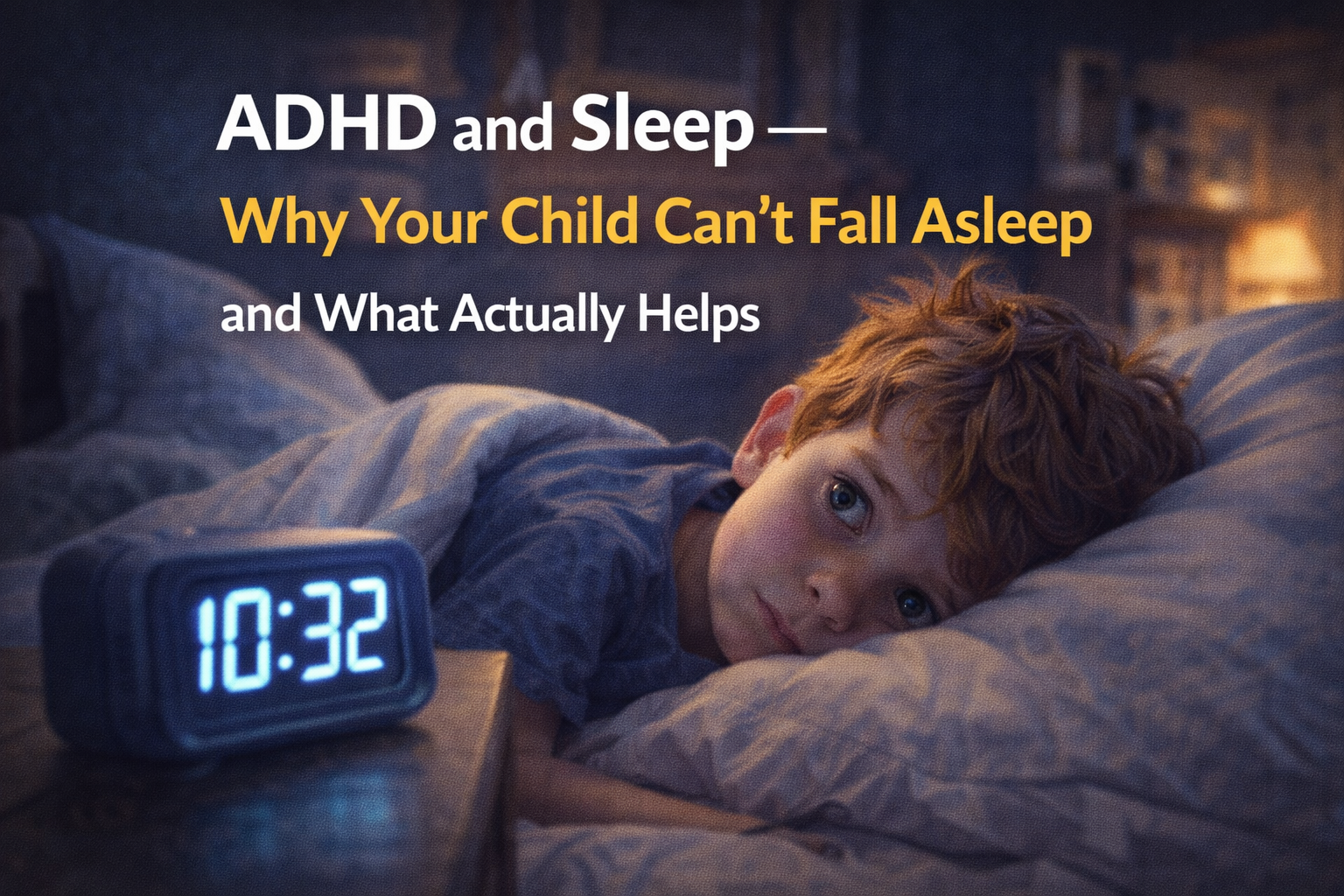
If that sounds familiar, our guide to ADHD and sleep problems in children explains why falling asleep can be such a struggle and some approaches parents can discuss and try.
We also went deeper into how we dealt with ADHD bedtime battles because bedtime can become its own exhausting daily conflict.
Sensory Overload Can Look Like Bad Behavior
This is another area worth watching closely.
Noise.
Bright lights.
Scratchy clothing.
Shoes that feel wrong.
Crowded rooms.
People talking over each other.
Strong smells.
Too much touching.
Too much movement.
A child may not always have the language to say:
“My nervous system feels completely overloaded right now.”
Instead, you may get:
“STOP!”
Crying.
Yelling.
Refusal.
Throwing something.
Running away from the situation.
That doesn’t mean every ADHD child has major sensory difficulties, and sensory processing issues aren’t the same thing as ADHD.
But if meltdowns repeatedly happen in loud, crowded, uncomfortable, or highly stimulating situations, I wouldn’t ignore that pattern.
Sometimes Movement Helps More Than Telling a Child to Sit Still
I used to think focus automatically meant stillness.
That’s not necessarily true for every ADHD child.
Some children appear to regulate attention better when they can move in an appropriate way.
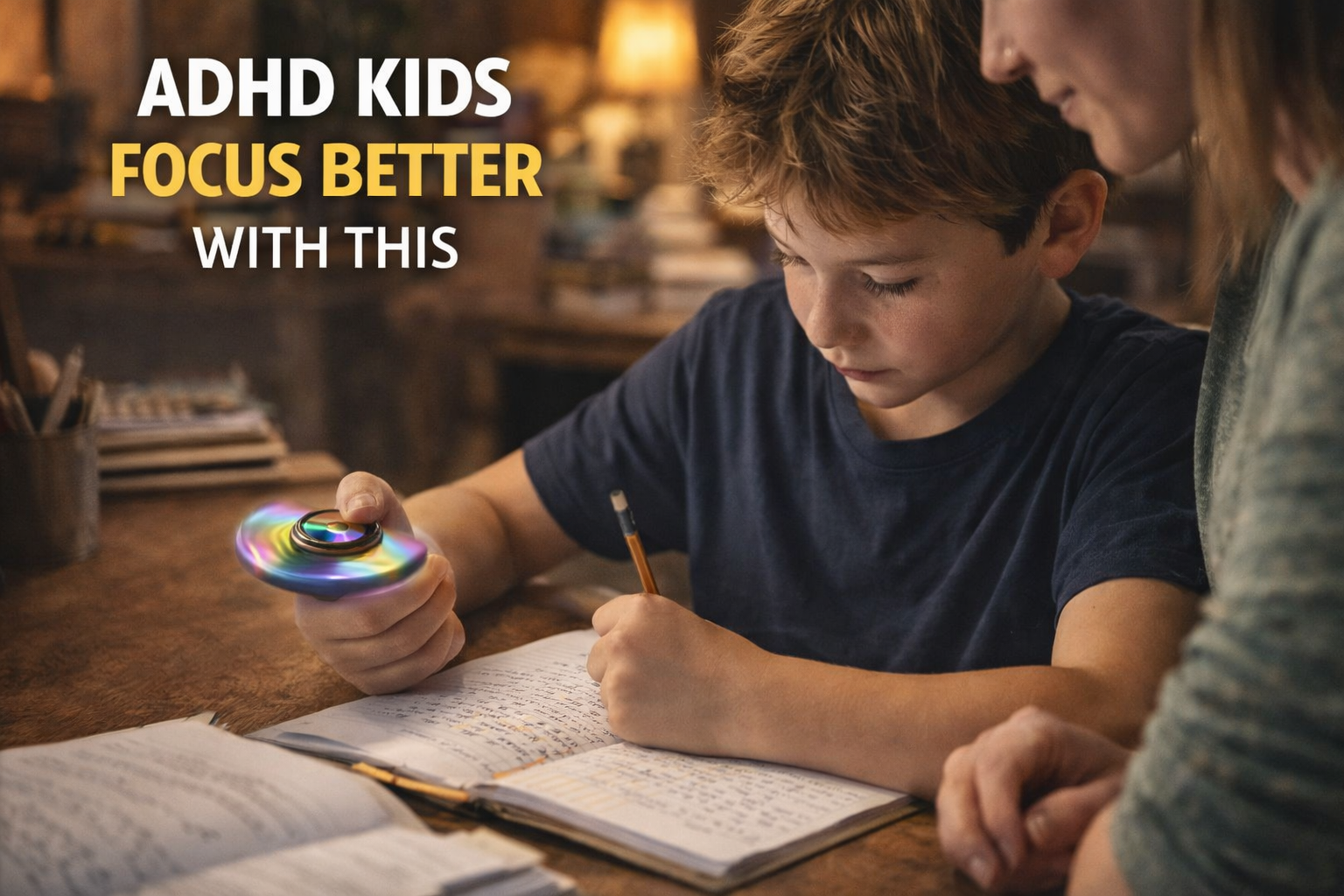
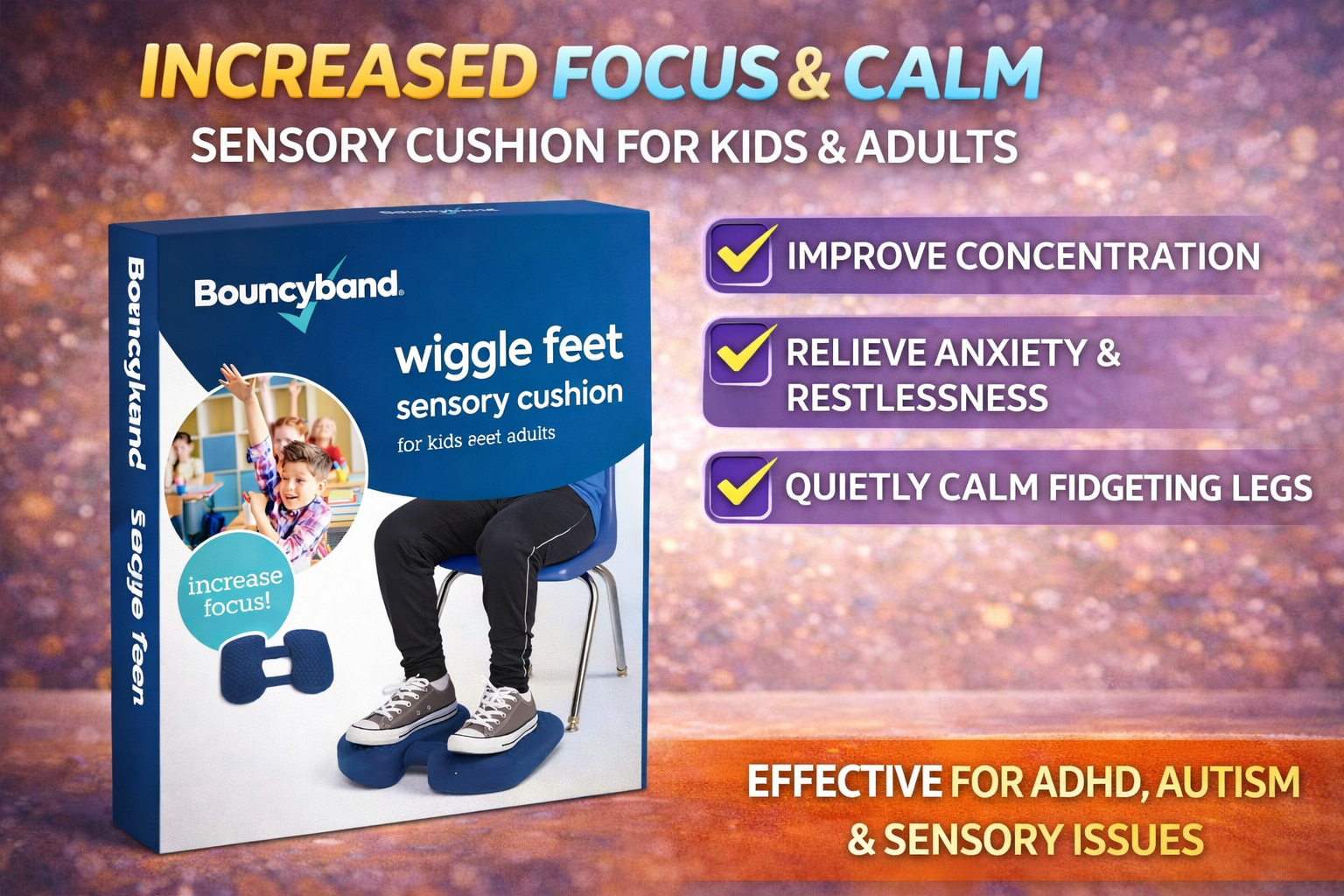
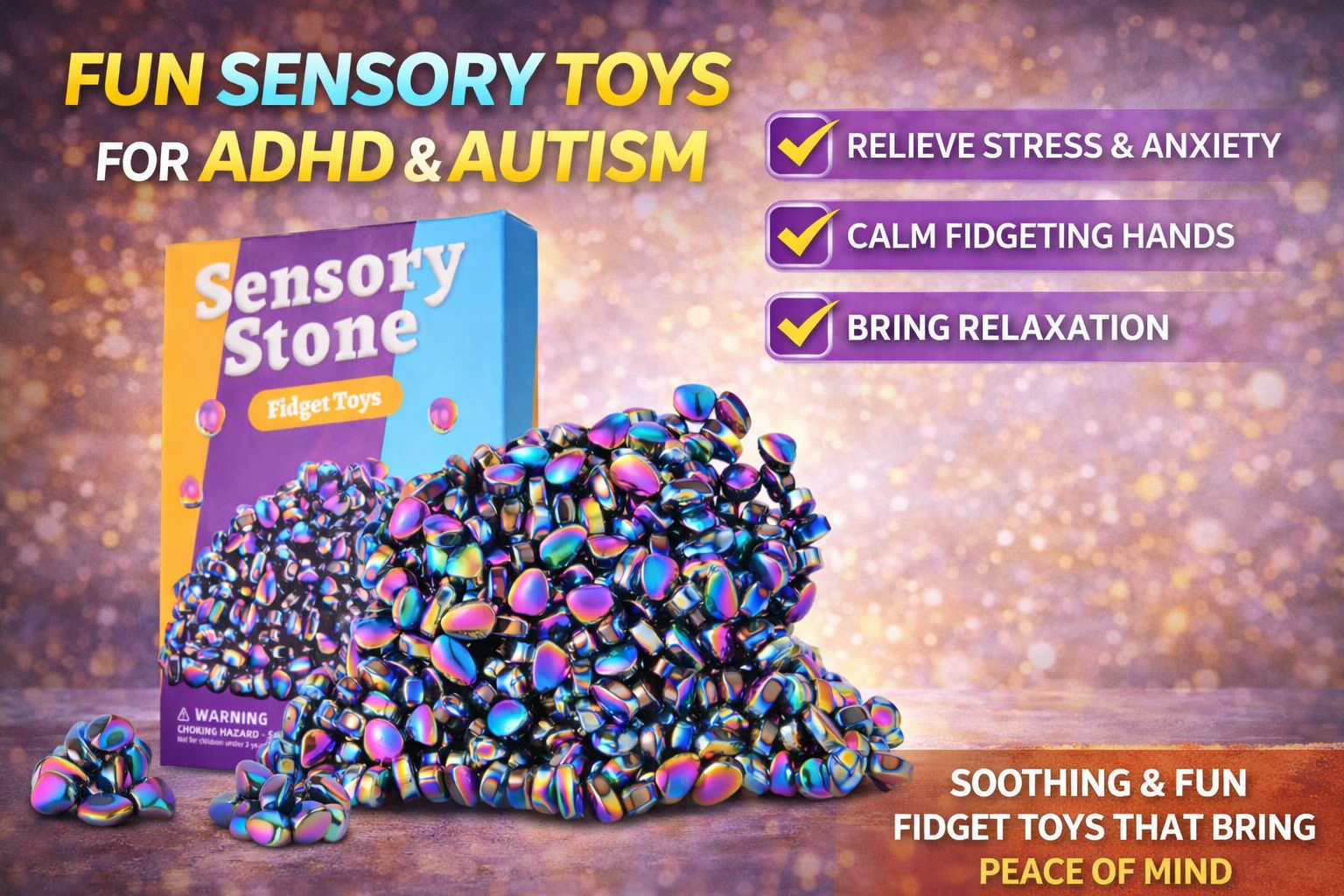
That might mean standing while doing something, taking short movement breaks, squeezing something in their hand, bouncing a foot, or using seating that allows controlled movement.
That’s why we’ve experimented with different ADHD tools instead of assuming every fidget is just another distraction.
Our guide to ADHD fidget toys that may actually help with focus is a good place to start if you’re trying to figure out which types make sense and which are basically just toys.
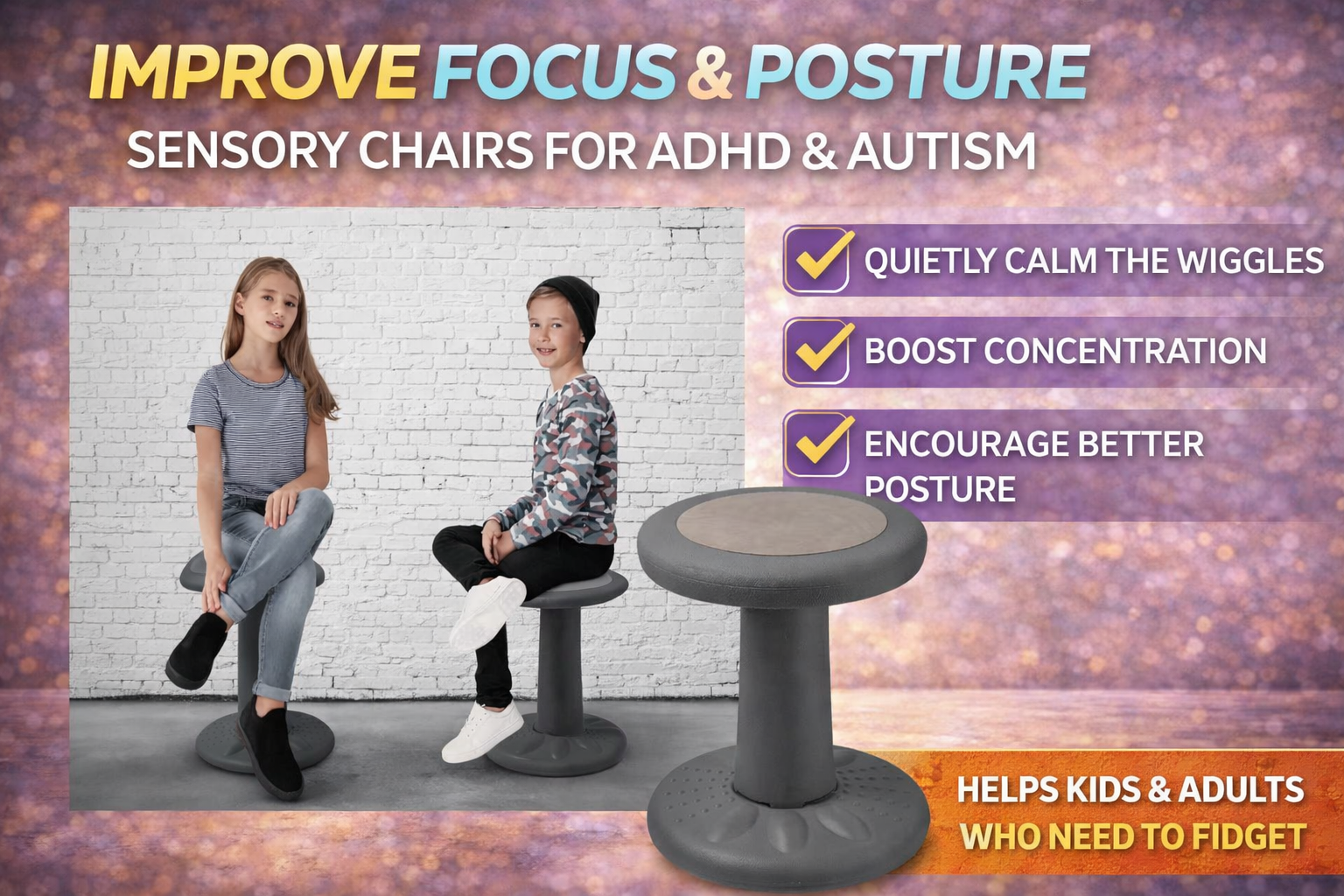
For school-age kids who constantly need to move while sitting, we’ve also looked at options such as a wobble stool for ADHD kids who struggle to sit still.
The goal isn’t to eliminate movement.
It’s to find ways to make movement less disruptive and more useful.
What I Try NOT to Do During an ADHD Meltdown
This was probably one of the harder lessons for me.
When a child is screaming over something that seems incredibly minor, my natural instinct can be to explain why the reaction doesn’t make sense.
Unfortunately, the middle of a meltdown is usually a terrible time for a long explanation.
I’ve learned that adding more words can sometimes add more fuel.
Questions.
Lectures.
Consequences.
Arguments.
Logic.
“Why are you acting like this?”
“You know better.”
“There’s absolutely no reason to be this upset.”
Even when those statements seem reasonable to me, they don’t necessarily help a child regain control.
There can be plenty of time to talk later.
First, I want to get through the storm safely.
What I Do Instead When a Small Problem Becomes a Huge Meltdown
My first goal isn’t winning the argument.
It’s reducing the intensity.
I try to lower my own voice rather than compete with theirs.
I simplify what I’m saying.
I remove unnecessary demands when appropriate.
I give physical space if that’s what the child needs.
I reduce noise and stimulation when possible.
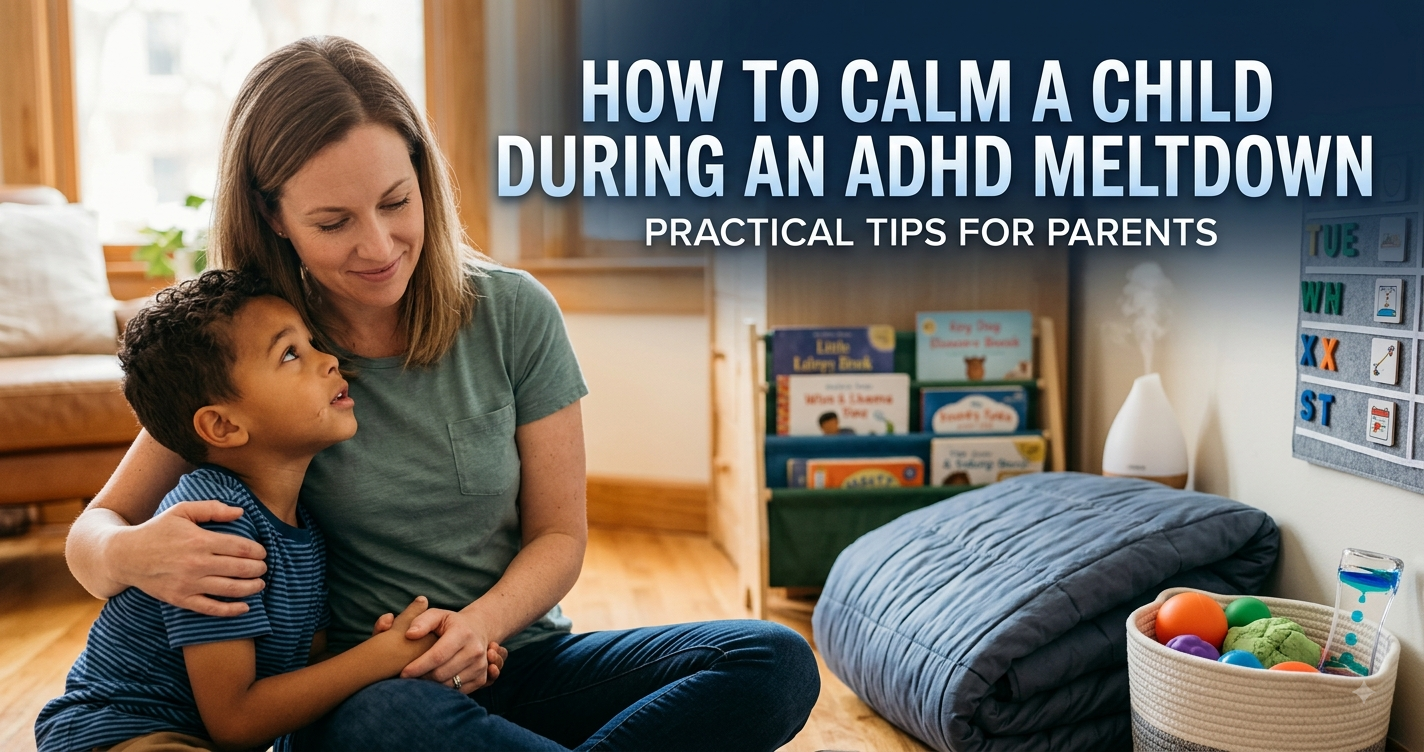
And if everyone is safe, sometimes I simply stop trying to solve the original problem for a few minutes. That safety-first approach is also central to how to pause problem-solving during meltdowns before trying to address the original trigger.
That last part is important.
If the meltdown started because a child couldn’t find a particular shirt, there may be absolutely no point discussing shirt choices while they’re completely overwhelmed.
We can solve the shirt problem after their brain is capable of solving problems again.
Calm First, Teach Later
This has become one of the simplest ways I think about ADHD meltdowns.
Calm first. Teach later.
That doesn’t mean ignoring behavior.
If something was thrown, we can deal with that.
If someone was hurt, we address it.
If an apology needs to happen, we can work on that.
If there’s a rule that needs reinforcing, the rule still exists.
But I don’t necessarily have to accomplish all of those things during the most emotionally explosive five minutes of the day.
Once everyone is calmer, the conversation can be much more productive.
Look for Patterns Instead of Individual Meltdowns
One of the most useful things I’ve done is stop treating every meltdown like an isolated event.
Instead, I look for patterns.
Does it usually happen after school?
Before dinner?
During homework?
When electronics are turned off?
At bedtime?
When plans suddenly change?
After a poor night’s sleep?
In crowded places?
When siblings are loud?
During rushed mornings?
That’s where useful information starts appearing.
You may realize the meltdowns aren’t actually random at all.
They’re incredibly predictable.
And predictable problems are much easier to work on.
Mornings Can Reveal the Same Pattern
If your house seems to explode before everyone even gets out the door, I’d look closely at how many transitions and demands are packed into the morning.
Wake up.
Get dressed.
Brush teeth.
Find shoes.
Eat.
Pack backpack.
Take medication if prescribed.
Find the missing water bottle.
Stop playing.
Get in the car.
Hurry.
Hurry.
HURRY.
That’s a lot for an ADHD brain before 8 a.m.
We’ve had much better luck thinking about mornings as a routine that needs to be engineered rather than something a child should simply “get better at.”
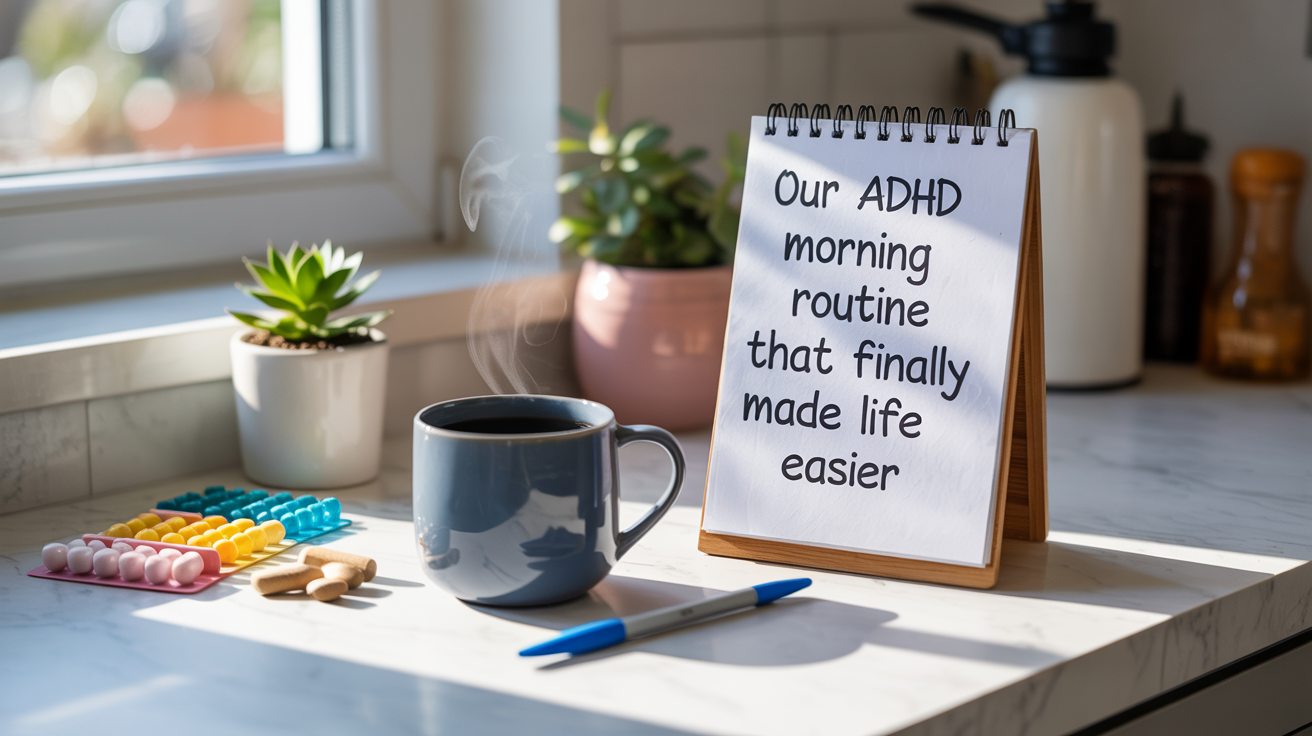
Our ADHD morning routine that made life easier goes into that approach in much more detail.
Visual Systems Can Take Pressure Off Parents Too
One thing I like about visual systems is that they can move some of the responsibility away from constant verbal reminders.
Instead of:
“Did you do this?”
“Now do this.”
“Don’t forget this.”
“How many times have I told you?”
the system itself can become the reminder.
That can be a written routine, checklist, timer, planner, picture schedule, or another simple tool the child can reference.
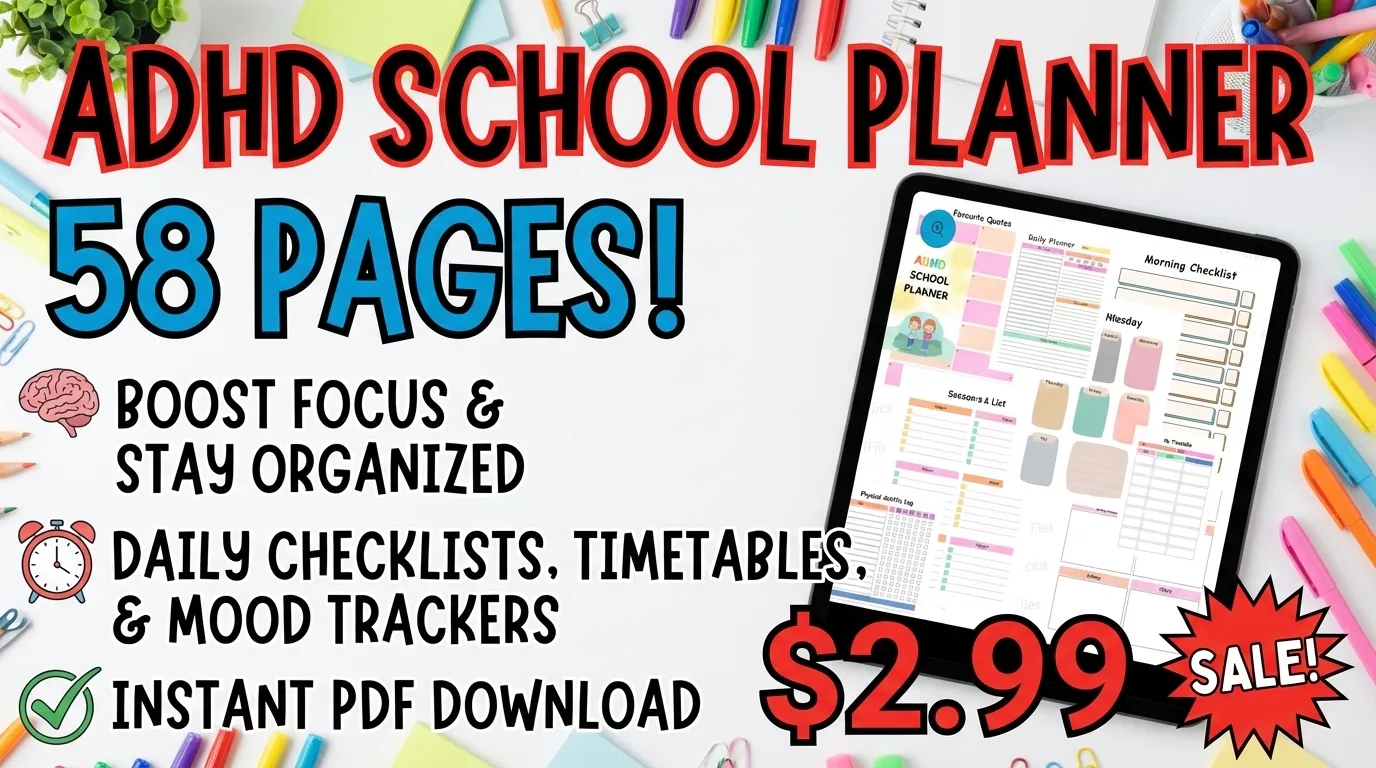
For school-age kids who need more structure keeping assignments and responsibilities organized, an ADHD student planner designed around organization and follow-through can be useful because the goal is to get some of those responsibilities out of the child’s head and onto something visible.
That same principle works for adults with ADHD too.
Chores Can Trigger Meltdowns for Similar Reasons
“Clean your room” sounds like one task.
It isn’t.
Look around the room and figure out where to begin.
Pick something up.
Decide where it belongs.
Notice something else.
Get distracted.
Remember what you were doing.
Make another decision.
Find another object.
Decide where that belongs.
Continue doing that dozens or hundreds of times.
Suddenly, clean your room makes more sense as an overwhelming instruction.
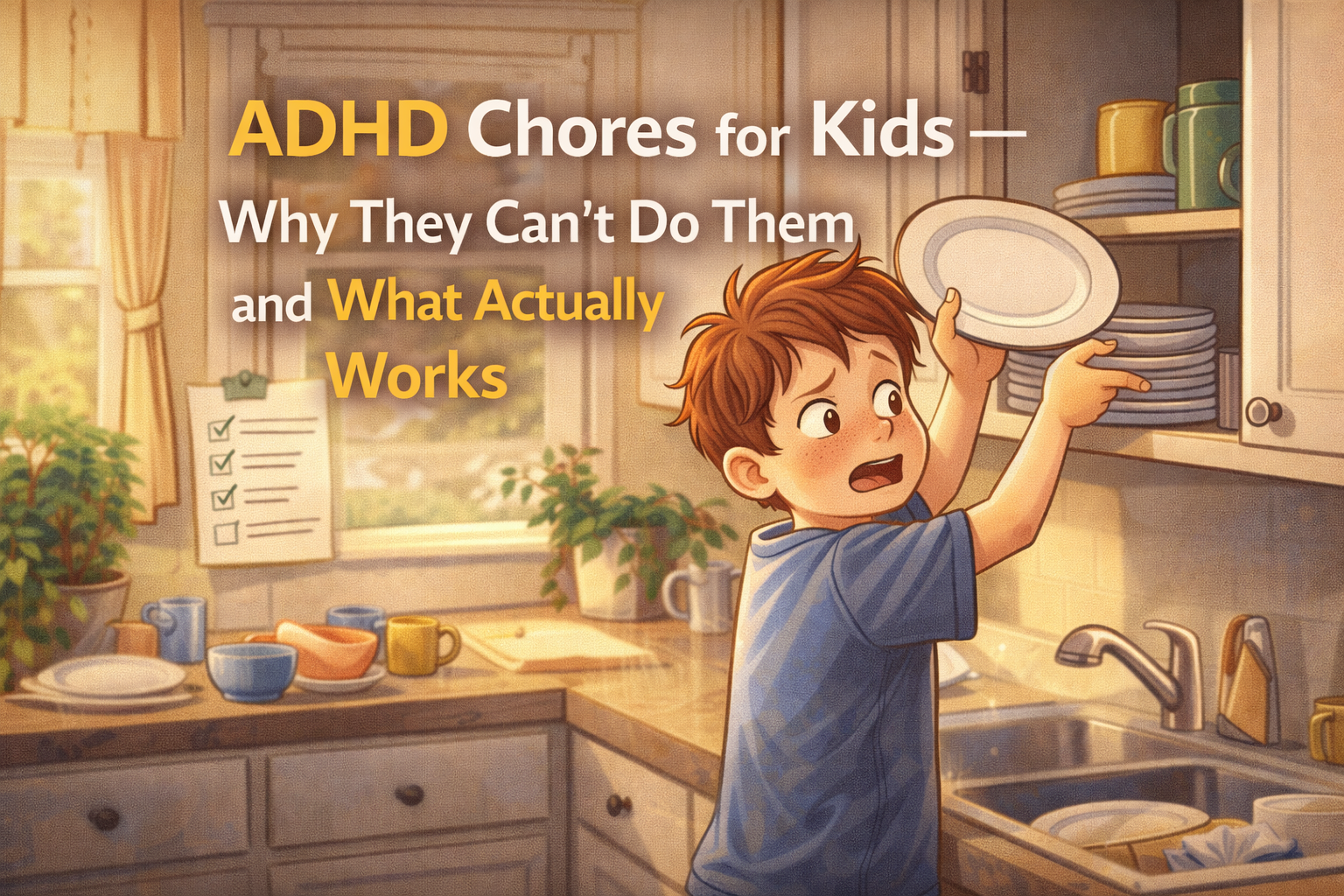
That’s why our approach to ADHD chores for kids and why ordinary chore systems can fail focuses more on making tasks concrete and manageable.
Breaking one giant demand into several visible, finishable tasks can make an enormous difference.
Don’t Accidentally Reward Every Meltdown
There’s an important balance here.
Understanding why a meltdown happened doesn’t mean a meltdown should become a guaranteed way to escape every unwanted task.
If every time homework causes an explosion we say:
“Okay, you never have to do homework.”
we may accidentally create another problem.
Instead, sometimes the better answer is:
We calm down.
We reset.
We make the task smaller.
Then we return to an appropriate version of the expectation.
Maybe instead of twenty straight minutes of homework, we try five.
Maybe instead of cleaning the whole bedroom, we start with dirty clothes.
Maybe instead of immediately leaving the birthday party, we find a quiet room for ten minutes.
The expectation can change without disappearing.
ADHD Meltdowns Aren’t Automatically Manipulation
I think this distinction matters enormously.
A child can absolutely learn that certain behaviors get certain results. Kids with ADHD are still kids.
But I wouldn’t automatically assume every intense reaction is calculated manipulation.
Sometimes a child is genuinely overwhelmed and has temporarily lost access to the coping skills we’re expecting them to use.
That’s why understanding the difference between a meltdown and more goal-directed behavior matters.
The response that works for one isn’t necessarily the response that works for the other.
Talk About the Meltdown After Everyone Is Calm
Later is when I want to become curious.
Not:
“What in the world was wrong with you?”
More like:
“That got really hard earlier. What happened?”
Sometimes the answer surprises me.
The child wasn’t really upset about the shoes.
Someone said something at school.
They were embarrassed about an assignment.
Their sibling had been irritating them for an hour.
They were starving.
Their sock genuinely felt unbearable.
They knew bedtime was coming and didn’t want the day to end.
Or maybe they don’t know.
That’s okay too.
Learning to identify emotions and triggers is a skill.
Kids aren’t born knowing how to explain everything happening inside their bodies and brains.
Teach Skills When There Isn’t a Crisis
We can’t expect a child to learn an entirely new coping strategy while they’re already at maximum frustration.
Practice works better during calm moments.
That could include learning to:
Ask for a break.
Say “I’m getting frustrated.”
Take a few minutes alone.
Get a drink.
Use movement.
Ask for help.
Break a task into smaller pieces.
Use a timer.
Move somewhere quieter.
Identify whether they’re hungry, tired, angry, embarrassed, or overwhelmed.
For younger children especially, these skills may need to be practiced repeatedly before they show up naturally during a difficult moment.
Tools can help here too. Something like ADHD skill cards for kids and parents can provide prompts for practicing focus, emotional regulation, and coping strategies when everyone is calm rather than trying to invent a strategy during the meltdown itself.
Don’t Forget How Much Positive Feedback ADHD Kids Need
Imagine going through a day constantly hearing about everything you forgot, interrupted, misplaced, didn’t finish, or did too loudly.
That wears on anybody.
I try to notice the small wins too.
You got frustrated and asked for help.
You remembered your backpack.
You stopped when I reminded you.
You calmed yourself down.
You finished something that was difficult.
You handled that disappointment much better than last time.
Those moments matter.
We want kids to develop an identity that goes beyond:
“I’m always the kid getting in trouble.”
When ADHD Meltdowns May Need More Help
Not every meltdown should automatically be blamed on ADHD.
If your child’s emotional outbursts are severe, becoming more frequent, causing injuries, involving threats of self-harm, creating major problems at school, destroying property, or making normal family life extremely difficult, it’s worth bringing the pattern to their pediatrician or qualified mental health professional.
Other conditions and challenges can overlap with ADHD, including anxiety, learning difficulties, autism, sleep problems, mood disorders, trauma, and other behavioral or developmental concerns.
That’s one reason I wouldn’t try to diagnose the cause of severe behavior based entirely on something I read online.
Our experiences and strategies can help you recognize patterns and find better questions to ask.
They can’t replace an evaluation of your particular child.
The Question I Ask Now Isn’t “Why Are They Freaking Out Over Nothing?”
This may be the biggest change in how I approach these situations.
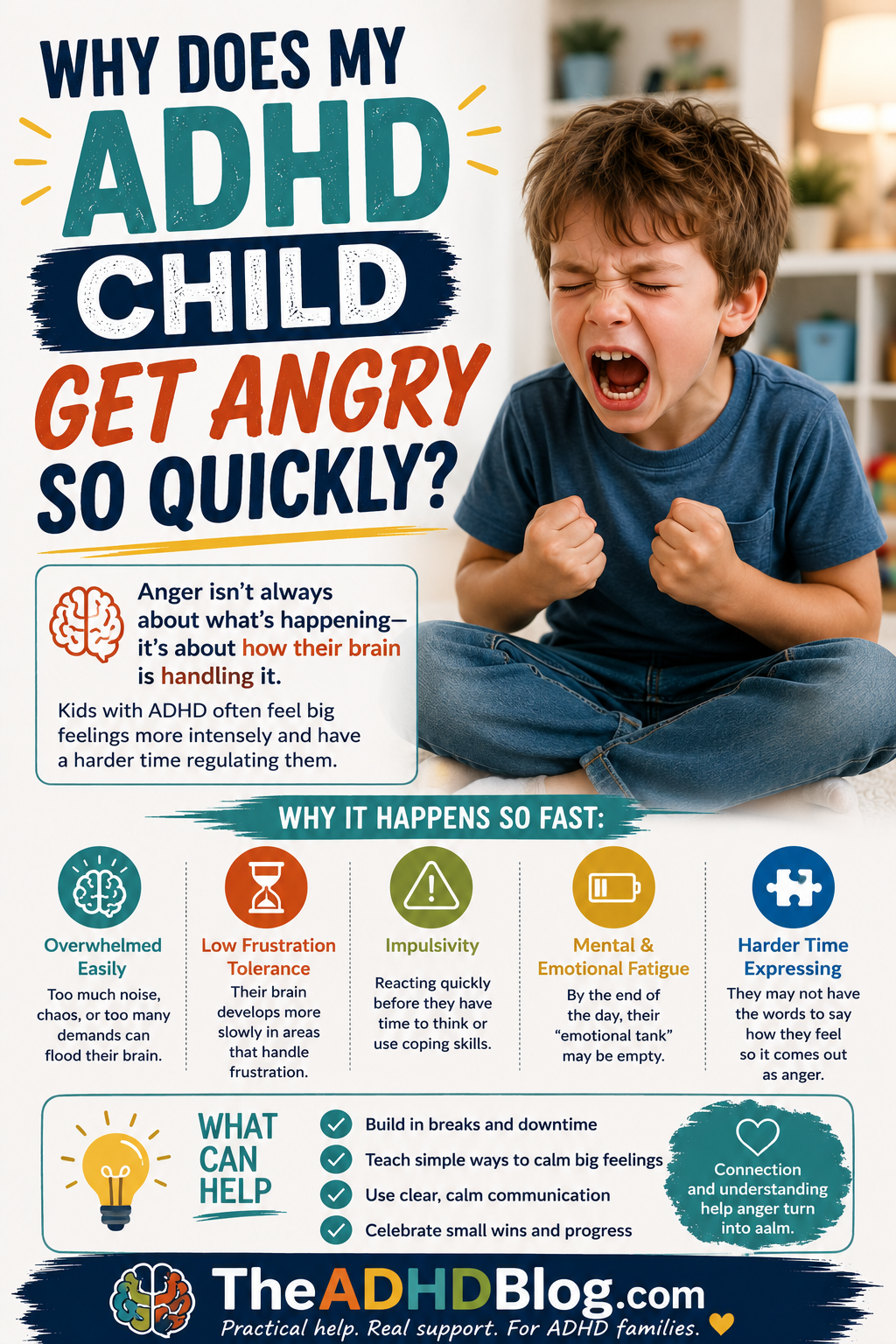
When an ADHD child has an enormous reaction to something that looks ridiculously small, I try not to immediately assume the child is reacting only to that one thing. Looking at the pattern behind sudden ADHD anger can help clarify why the visible trigger may not be the whole story.
Instead, I ask:
What filled the cup before this happened?
Maybe it was school.
Maybe it was poor sleep.
Maybe it was hunger.
Maybe it was sensory overload.
Maybe it was frustration.
Maybe it was an abrupt transition.
Maybe the task felt impossibly large.
Maybe several of those happened at once.
The spilled drink, wrong-colored cup, missing shoe, homework problem, or turned-off video game might simply have been the final drop.
Once I started looking for the pattern behind ADHD meltdowns instead of only the trigger in front of me, those reactions began making a lot more sense.
And when something makes more sense, it’s a whole lot easier to figure out what to try next.