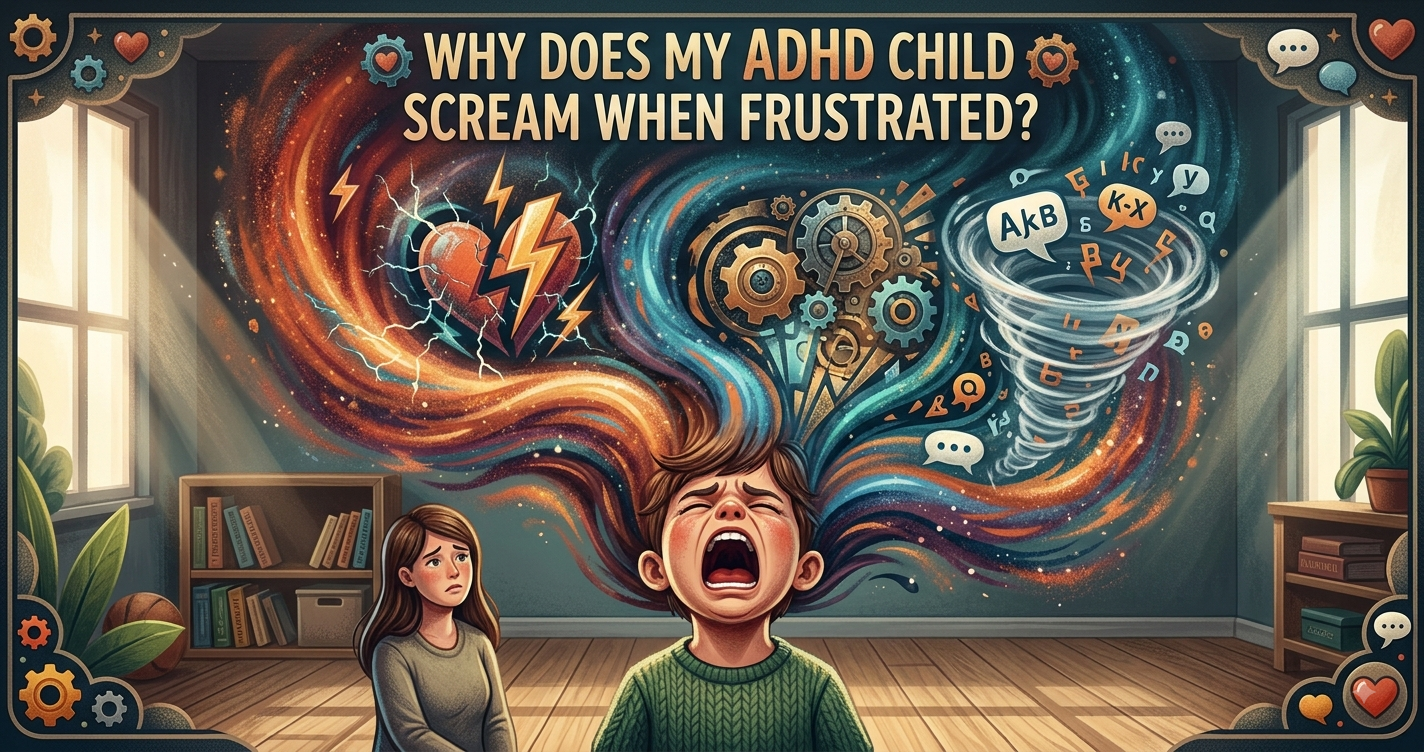
There are few things that can wear a parent down faster than constant screaming over frustration.
The game doesn’t work.
Screaming.
A sibling touches something.
Screaming.
Homework is difficult.
Screaming.
You say it’s time to leave.
Screaming.
You ask your child to do something they’ve done a hundred times before, and somehow you’re suddenly dealing with a voice loud enough for half the neighborhood to hear.
I’ve had moments where my first thought was:
Why can’t you just tell me you’re frustrated without screaming?
That’s actually the question that helped me understand this behavior better.
Because for some children with ADHD, the problem isn’t that they don’t know screaming is inappropriate.
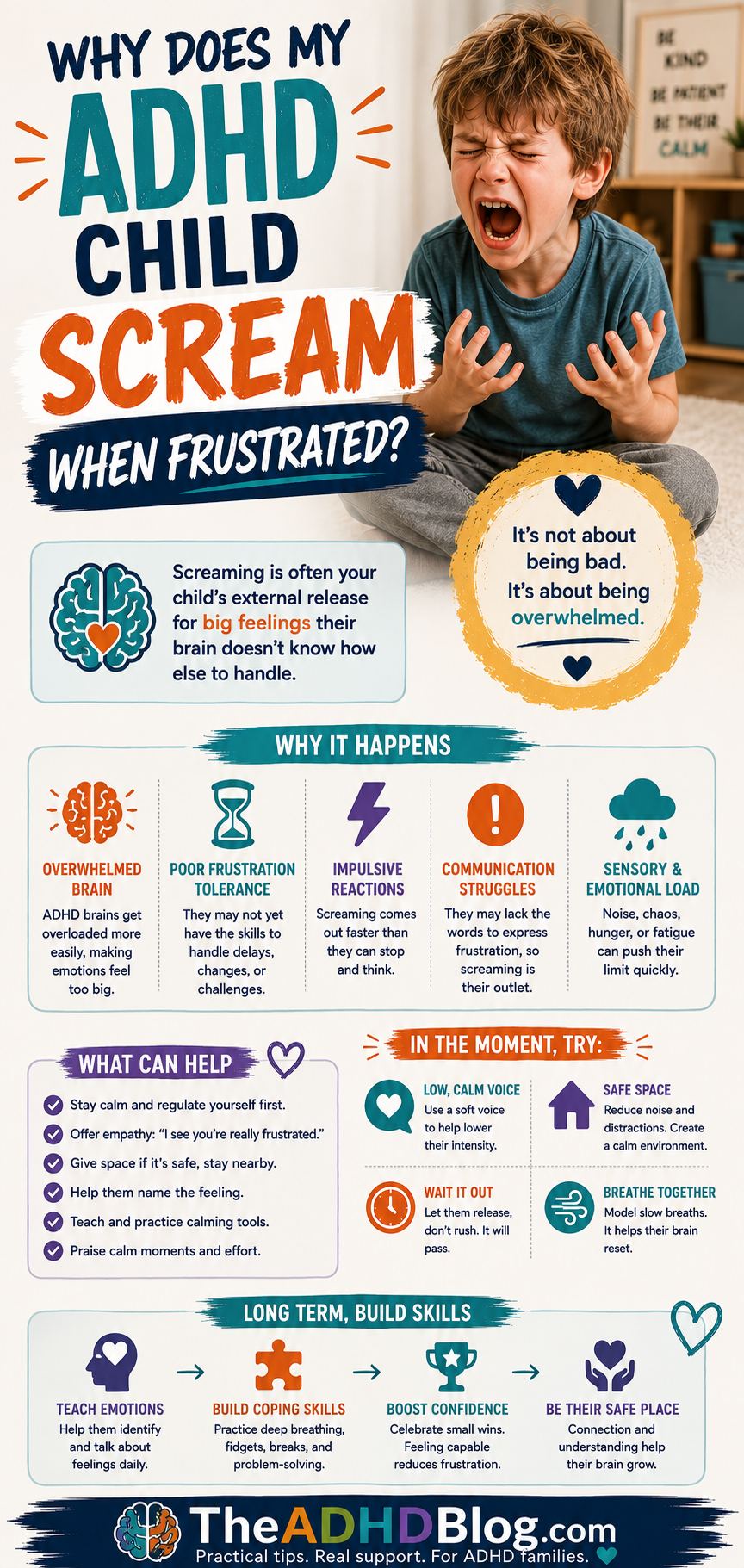
The problem can be that the emotional reaction happens incredibly fast, while the skills needed to pause, organize that feeling, and express it appropriately don’t always keep up.
That doesn’t mean screaming gets a free pass because a child has ADHD.
But repeatedly saying “stop screaming” without teaching another response hasn’t gotten me very far either.
ADHD Isn’t Just About Paying Attention
This is one of the biggest misunderstandings surrounding ADHD.
People hear ADHD and picture:
Can’t sit still.
Doesn’t listen.
Gets distracted.
Forgets things.
Those can certainly be part of ADHD.
But many families also deal with intense frustration and difficulty regulating emotions. The broader connection between frustration, impulse control, and emotional regulation also appears in discussions of toddler frustration and emotional regulation.
CHADD describes emotional dysregulation in ADHD as difficulty managing emotional responses, including reactions that can become unusually intense compared with the situation that triggered them.
That’s important when we’re trying to understand screaming.
Your child isn’t necessarily experiencing some emotion you’ve never experienced.
They’re frustrated.
We all get frustrated.
The difference may be how quickly that frustration becomes overwhelming and what happens in those few seconds before they react.


Sometimes the Screaming Seems Almost Instant
This is the part that catches me off guard.
There doesn’t always seem to be much build-up.
A child is trying to connect two LEGO pieces.
They won’t connect.
“AHHHHHHH!”
Or they’re looking for something.
Can’t find it.
Suddenly:
“WHERE IS IT?!”
You haven’t even had time to offer help.
That’s why the speed of ADHD anger and frustration matters.
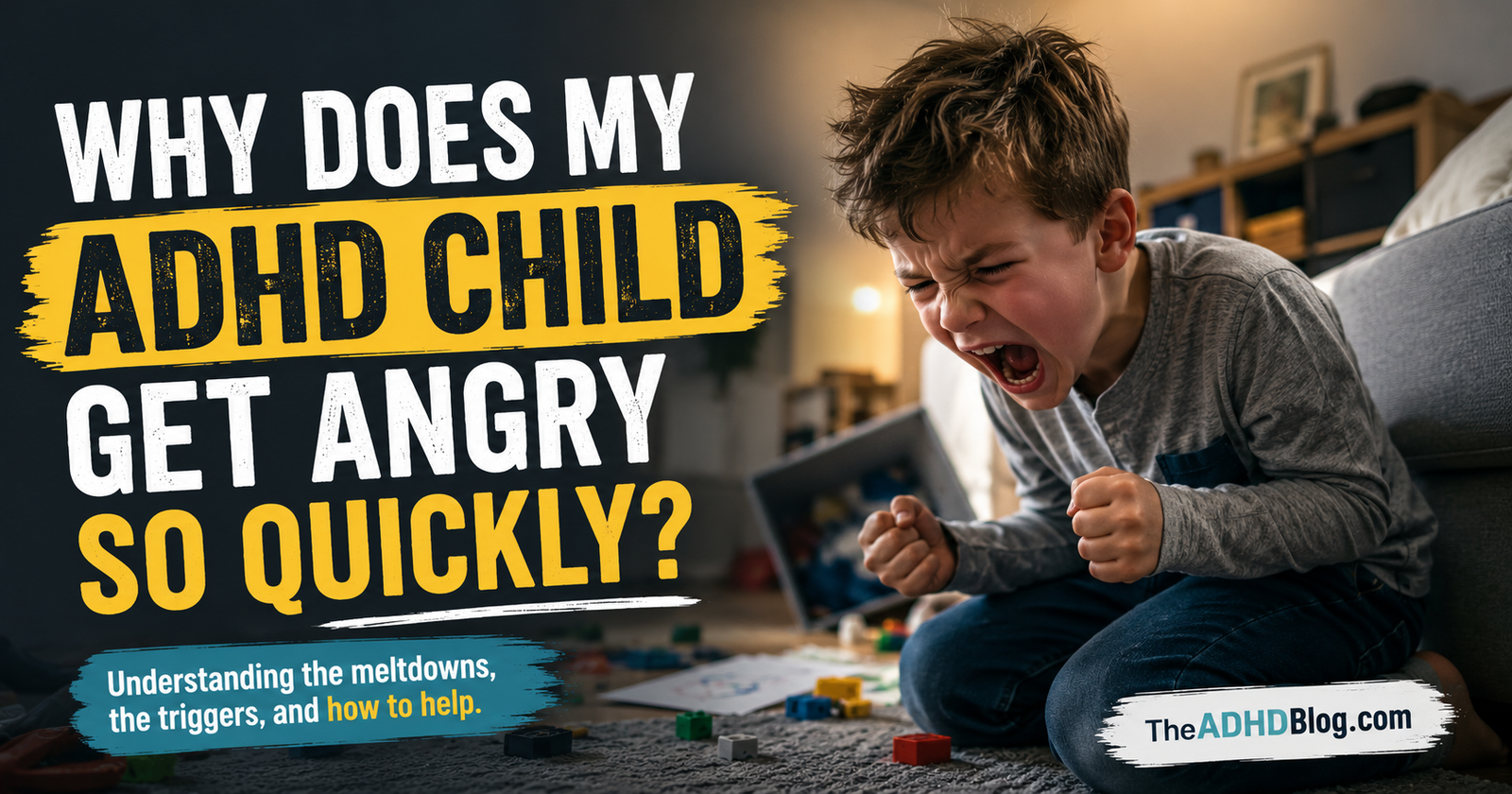
I’ve written much more about why an ADHD child can get angry so quickly because the anger and screaming often aren’t separate problems.
They can be different parts of the same difficulty regulating a strong emotional reaction.
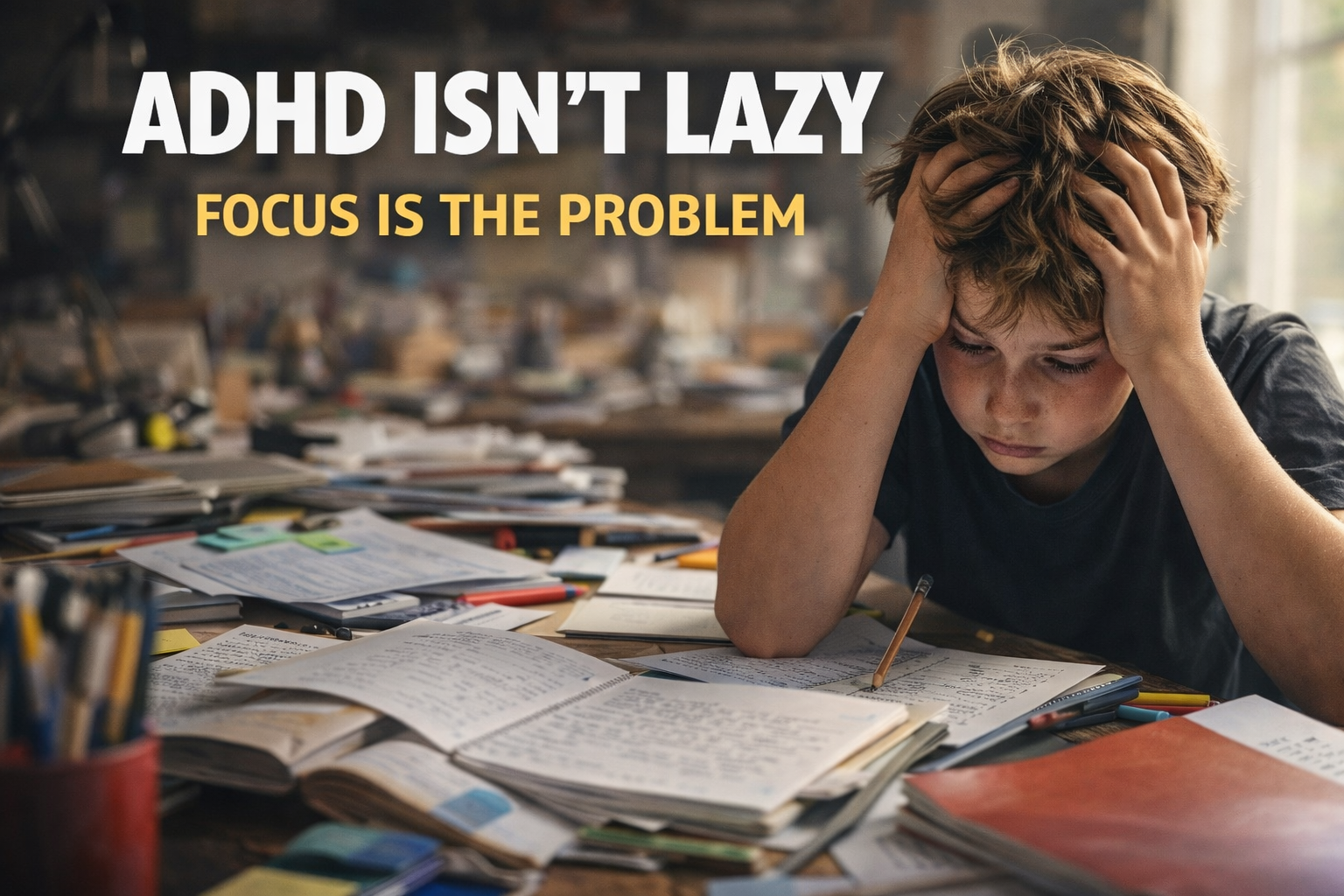
Low Frustration Tolerance Can Turn Little Problems Into Big Reactions
I think frustration tolerance is one of the most useful concepts for parents to understand.
Imagine your child is playing a video game.
They lose.
They try again.
Lose.
Try again.
Lose.
Another child might become annoyed and keep playing.
Your child might slam the controller down and scream:
“THIS GAME IS STUPID!”
The game isn’t necessarily producing a different amount of frustration.
Your child may simply reach their limit faster.
CHADD notes that children with ADHD can experience low frustration tolerance and explosive emotional reactions to relatively minor annoyances or disappointment.
That explains a lot of situations that otherwise look completely ridiculous from an adult perspective.
What Looks Small to Me May Not Feel Small to My Child
This is something I’ve had to remind myself repeatedly.
I see:
A broken pencil.
The child experiences:
One more thing going wrong.
I see:
Five more minutes of homework.
The child experiences:
More of something that already feels incredibly difficult.
I see:
Turning off a video game.
The child experiences:
Suddenly stopping the thing their brain was completely engaged in.
That doesn’t mean I have to agree that a broken pencil deserves screaming.
It means I want to understand why the frustration became so intense.
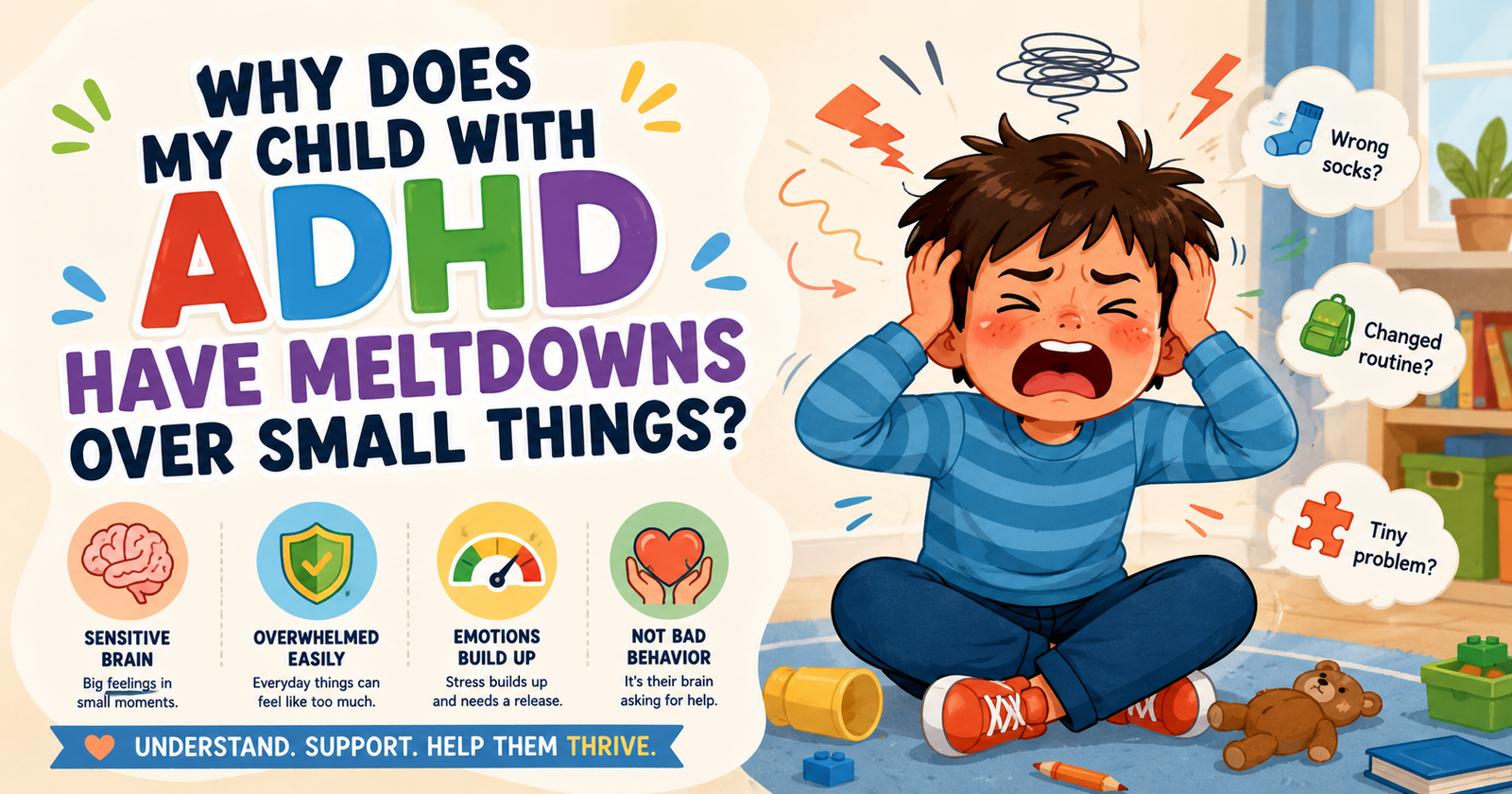
This is closely connected to why children with ADHD can have huge meltdowns over seemingly small things.
The final problem isn’t always the whole problem.
The Screaming May Be the Last Step in a Longer Chain
This is where I started finding patterns.
Instead of looking only at the scream, I work backward.
What happened before it?
Maybe the child:
Didn’t sleep well.
Barely ate lunch.
Had a difficult day at school.
Got corrected repeatedly.
Had trouble with a friend.
Couldn’t find something important.
Struggled with homework.
Was already irritated by a sibling.
Had to stop doing something enjoyable.
Then one more little thing happens.
Scream.
If I only look at that final trigger, the behavior seems completely irrational.
If I look at the previous six hours, sometimes it makes a lot more sense.
ADHD Impulsivity Can Show Up in What Comes Out of Their Mouth
We often talk about impulsivity as physical behavior.
Running when they shouldn’t.
Touching something.
Interrupting.
Doing something without considering what might happen next.
But that same lack of pause can matter when emotions show up.
Your child may feel frustration and immediately express it at full volume.
There isn’t always much space between:
feeling it
and
showing it.
That’s the space we’re eventually trying to build.
Not:
“Never get frustrated.”
But:
“I’m frustrated, and I know what I can do before I scream.”
That’s a much more realistic skill.
Why Does My ADHD Child Scream Over Homework?
Homework may be one of the most predictable places for this behavior.
Think about what’s being asked.
Remember the assignment.
Find the materials.
Get started.
Read directions.
Stay focused.
Ignore distractions.
Remember what you just read.
Tolerate mistakes.
Keep working even though something more interesting is nearby.
For a child with ADHD, that’s a lot.
Then we walk over and say:
“You’re still on question two?”
Now we’re adding frustration on top of frustration.
The CDC recommends making complicated tasks easier to manage by breaking them into shorter steps and allowing breaks during longer tasks.

That’s also why our ADHD homework strategies for parents focus on reducing the amount of friction surrounding the work itself.
If the task creates less frustration, there may be less screaming to manage afterward.
“I Can’t Do It!” Is a Phrase I Pay Attention To
This one can be a warning sign.
“I CAN’T DO IT!”
Sometimes adults immediately respond:
“Yes you can.”
And maybe that’s true.
But I want to know what the child actually means.
Does “I can’t” mean:
I don’t understand.
I don’t know where to start.
There are too many steps.
I’m afraid I’ll get it wrong.
I’m already exhausted.
I’ve tried three times.
I can’t focus.
I don’t remember what I’m supposed to do.
Those are very different problems.
If focus itself is creating constant frustration, our guide to why ADHD focus problems happen goes deeper into what may be happening underneath the behavior.
Sometimes “I can’t” needs investigation before correction.

Transitions Can Trigger Screaming Extremely Fast
This is another situation I watch carefully.
“Time to turn the tablet off.”
Scream.
“We have to leave the park.”
Scream.
“Come take a shower.”
Scream.
The child was completely happy seconds earlier.
So what happened?
We asked their brain to disengage from one activity and shift into another, often from something highly enjoyable to something much less interesting.
Transition warnings can help some kids.
I might give:
Ten minutes.
Five minutes.
Two minutes.
Then the transition.
That doesn’t guarantee a peaceful response.
But at least the change didn’t arrive completely out of nowhere.
Screaming After School Can Be Its Own Pattern
If your child screams and explodes much more at home than at school, I wouldn’t automatically decide:
“They can control it at school, so they’re choosing to do this to me.”
School can require hours of regulation.
Follow instructions.
Wait your turn.
Don’t interrupt.
Remember your stuff.
Finish the assignment.
Change activities.
Handle classmates.
Ignore distractions.
Stay organized.
Then the child gets home.
Sometimes home is where all that accumulated frustration finally spills out.
If this is happening regularly, I would pay very close attention to the first hour after school.
Maybe that isn’t the best time to immediately pile on chores, homework, questions, and another dozen instructions.


Hunger Is Such a Simple Thing to Check
Before I analyze a giant behavioral problem at 4:15 in the afternoon, I want to know whether the child ate.
That sounds almost too simple.
But hunger plus exhaustion plus ADHD frustration can be an ugly combination.
If your child takes ADHD medication and appetite has become a concern, that’s also worth discussing with their prescriber. The CDC notes that appetite changes can occur as a side effect of stimulant ADHD medications.
I’m not saying every screaming episode can be fixed with a snack.
I’m saying I don’t want to overlook the easy stuff.
Poor Sleep Can Make Frustration Much Harder to Handle
This is another pattern I wouldn’t ignore.
How did your child sleep last night?
How late were they awake?
Did they struggle to fall asleep?
Are the screaming episodes consistently worse in the evening?
A tired brain generally doesn’t become more patient.
We’ve covered ADHD and sleep problems in children because sleep problems can spill over into attention, behavior, mornings, school, and emotional regulation.
If nighttime itself becomes a constant fight, our article about ADHD bedtime battles tackles that specific problem.
Sometimes the behavior we’re trying to correct at 8 p.m. has been building since the night before.
Screaming Can Be a Warning Sign Before a Full Meltdown
Not every scream means a meltdown.
A child can yell because they’re frustrated and still remain capable of communicating, responding to choices, and recovering fairly quickly.
But sometimes screaming is one of the signs that the child is heading toward genuine emotional dysregulation.
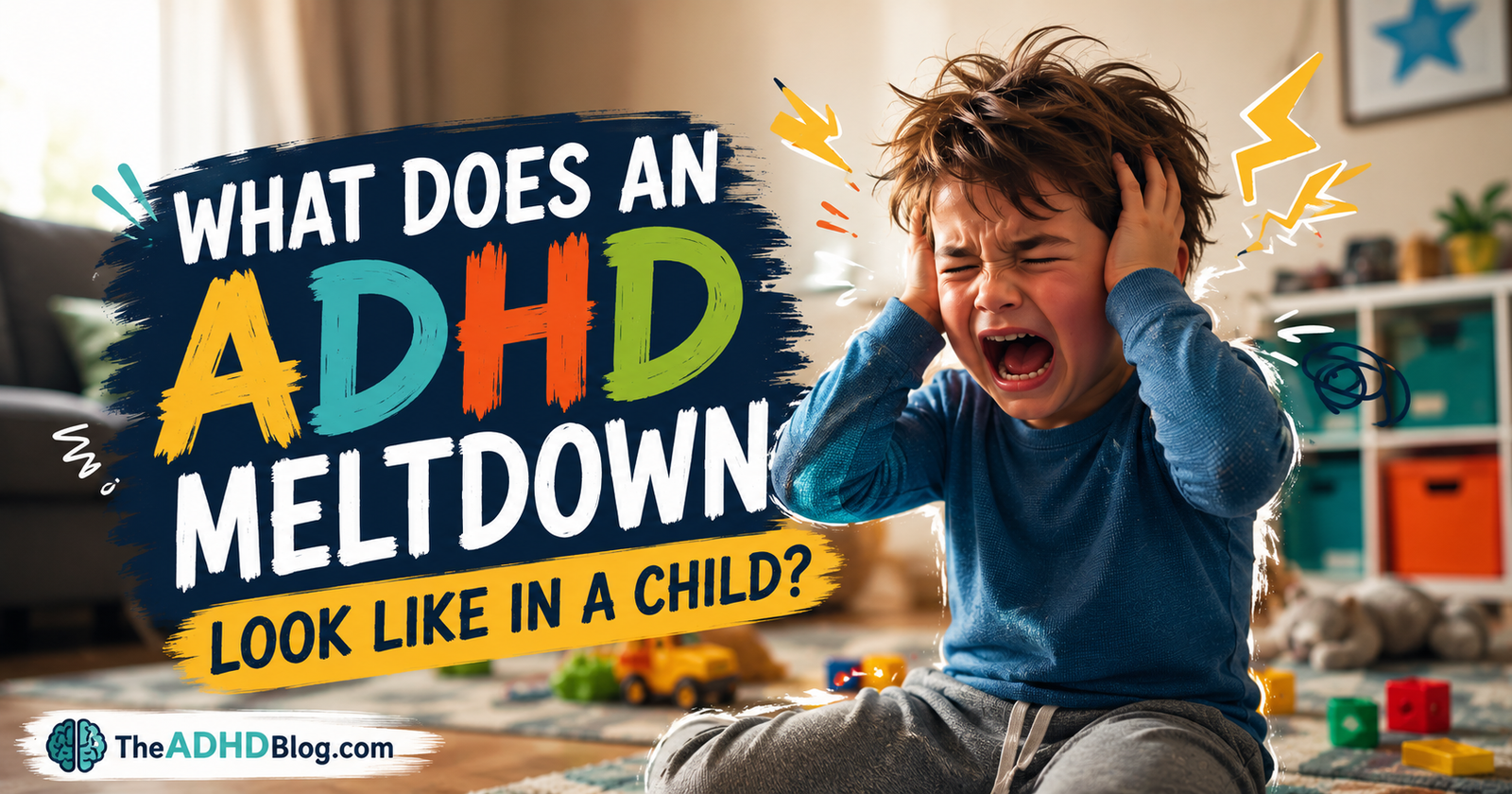
That’s where knowing what an ADHD meltdown looks like in a child becomes incredibly useful.
Maybe your child’s pattern is:
Frustration.
Louder voice.
Screaming.
Arguing.
Pacing.
Crying.
Complete meltdown.
If that’s the pattern, the scream isn’t just irritating behavior.
It’s also information.
We’re getting close to the edge.
This Is Where I Try to Intervene Earlier
If I know screaming often comes right before a meltdown, I don’t necessarily want to wait until the child is completely overwhelmed.
This might be the time for:
“You sound really frustrated. Do you need help or a break?”
That’s much different from:
“STOP SCREAMING!”

The first response helps identify the emotion and gives the child an option. Parents building that kind of response may also find a practical ADHD parenting guide useful for organizing everyday strategies.
The second tells them what not to do without giving them much of an alternative.
And yes, sometimes I still need to say:
“You need to lower your voice.”
I’m not pretending screaming is acceptable.
I just want to teach something alongside the correction.
What I Try Not to Do When My Child Starts Screaming
My first instinct can be to match the volume.
They’re screaming across the room.
I yell:
“STOP SCREAMING!”
Which is admittedly a strange way to teach someone not to yell.
If I can catch myself, I try to bring my own volume down.
That doesn’t mean becoming passive.
I can be calm and firm at the same time.
“I can hear you’re frustrated. I’m not going to let you scream in my face.”
Clear boundary.
No screaming competition required.
Don’t Give a Long Explanation While They’re Already Overwhelmed
This is another easy trap.
“You don’t need to scream because all I asked you to do was put your shoes on, and if you’d listened the first three times…”
We’ve now added another pile of language.
If the screaming has crossed into a genuine meltdown, I’ve found fewer words much more useful.
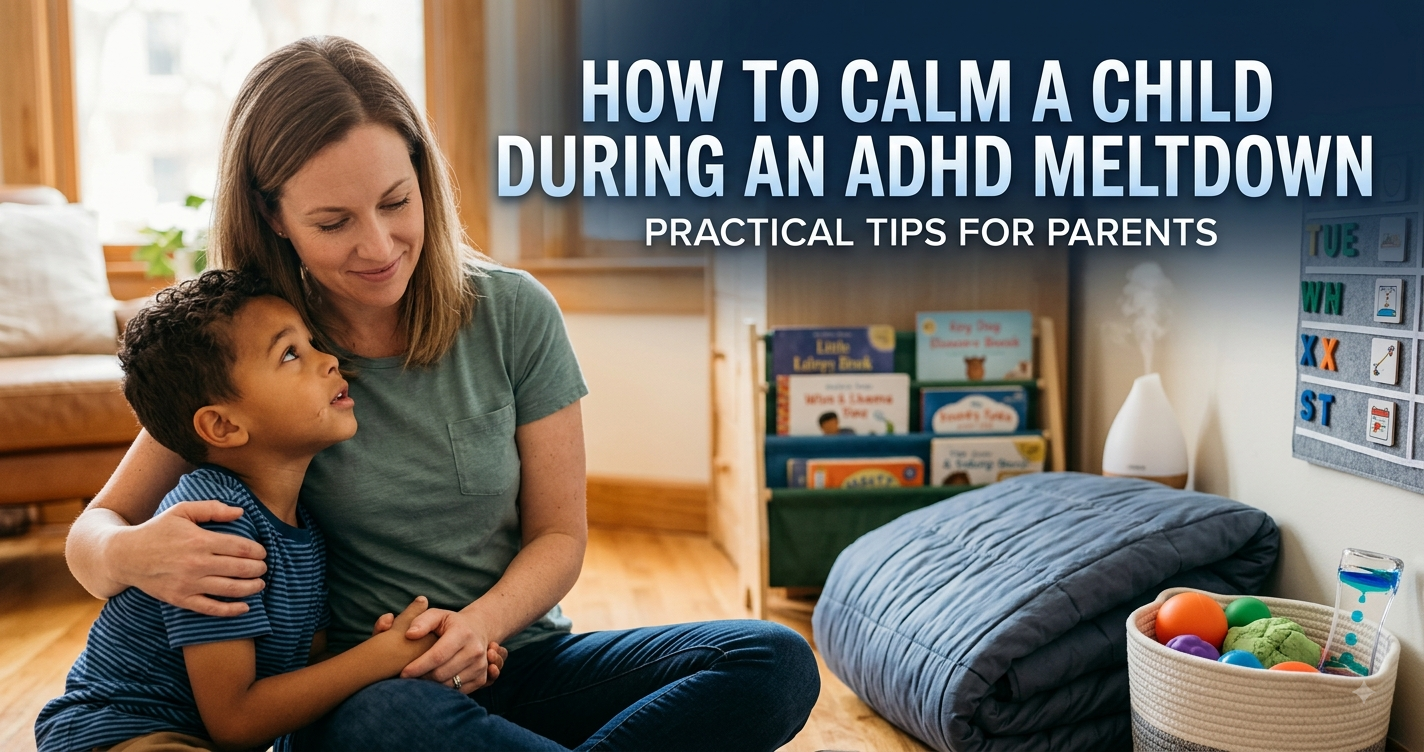
Our full guide on how to calm a child during an ADHD meltdown goes deeper into reducing language, lowering stimulation, giving appropriate space, maintaining safety, and waiting until the child’s ability to reason has returned.
During the peak isn’t when I need to deliver the lesson.
What Should I Say Instead?
I want simple language.
“You’re frustrated.”
“I can help.”
“Take a minute.”
“You can be mad. Lower your voice.”
“Do you need help or a break?”
“We’ll talk when you’re calmer.”
Not every phrase works for every child.
The point is that I’m not adding five more problems to an already overloaded brain.
Teach a Replacement for Screaming
This may be the most important part.
If I tell my child:
“Don’t scream when you’re frustrated.”
Okay.
What should they do?
That’s what we need to teach.
Maybe:
“Help me.”
“I need a break.”
“I’m getting mad.”
“I can’t do this yet.”
“Can you show me?”
“I need quiet.”
“Give me a minute.”
Those are replacement behaviors.
I don’t just want to remove screaming.
I want to replace it with something that actually works better.
Practice the Words When Nobody Is Frustrated
I wouldn’t wait for a child to be at a 9 out of 10 and then announce:
“Remember the emotional regulation phrase we discussed!”
Practice it when life is easy.
Maybe you’re playing a game together and something doesn’t work.
You can model it:
“Ugh, that’s frustrating. I’m going to try again.”
Or:
“I’m getting annoyed. I’m taking a minute.”
Kids hear us deal with frustration constantly.
That means we have a lot of opportunities to show them what regulated frustration sounds like.
Break the Task Down Before Frustration Explodes
This is especially useful with chores.
“Clean your room.”
That’s one sentence.
It can contain dozens of decisions.
Instead:
“Put the dirty clothes in the hamper.”
Finish.
Then:
“Put the toys in this bin.”
Finish.
The CDC recommends clear instructions and smaller steps for complicated tasks when helping children with ADHD manage everyday responsibilities.
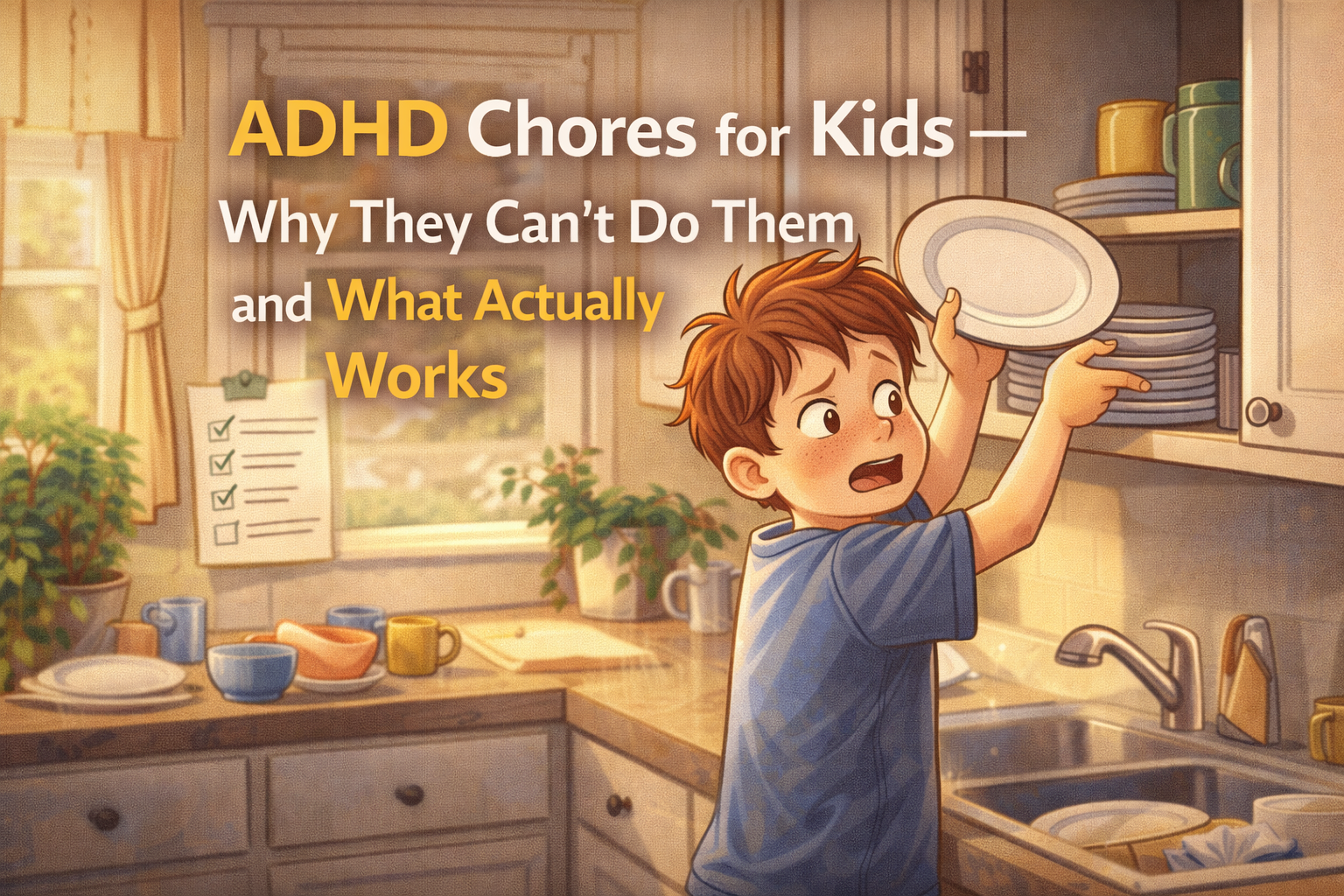
Our ADHD chores approach for kids is based heavily on this idea.
Sometimes we’re dealing with screaming because the child doesn’t know how to begin what sounds like a simple request.
Give Fewer Choices When They’re Already Frustrated
Too many choices can become another demand.
“What do you want to eat?”
That’s potentially endless.
“Do you want a turkey sandwich or chicken nuggets?”
Much easier.
The CDC recommends limiting choices to help prevent children with ADHD from becoming overwhelmed or overstimulated.
This doesn’t eliminate frustration.
It reduces unnecessary opportunities for it.
Routines Can Reduce the Number of Battles
I love routines for this reason.
A routine means I don’t have to invent a new demand every morning.
Wake up.
Bathroom.
Get dressed.
Breakfast.
Teeth.
Backpack.
Shoes.
Go.
Obviously every family’s routine looks different.
The important part is predictability.

That’s why our ADHD morning routine focuses on reducing reminders, decisions, and chaos.
Every unnecessary argument we remove is one less opportunity for frustration to turn into screaming.
Praise the Times Your Child Handles Frustration Better
This can be incredibly easy to miss.
The child screams nine times.
The tenth time, they say:
“I NEED HELP!”
We’re so used to chaos that we simply help them and move on.
But that’s exactly the moment I want to notice.
“You were getting really frustrated and asked for help instead of screaming. That was a much better way to handle it.”
Behavioral parent training for ADHD emphasizes positive reinforcement and consistent feedback for desired behaviors.
I want the child to understand exactly what they did that worked.
Don’t Expect the Screaming to Disappear Overnight
This is a skill-building problem.
If screaming has become the child’s automatic response to frustration, one conversation probably isn’t going to replace it.
We’re trying to create a pause where there wasn’t one before.
Frustration.
Pause.
Recognize it.
Use a strategy.
Ask for help.
Take a break.
Try again.
That little pause can take a lot of practice.
What Do I Do After My Child Screams or Melts Down?
Once everyone is actually calm, that’s when I want to revisit what happened.
Not shame.
Not a 30-minute lecture.
I want to know:
What happened?
When did you first start getting frustrated?
What could you have said instead?
What might help next time?
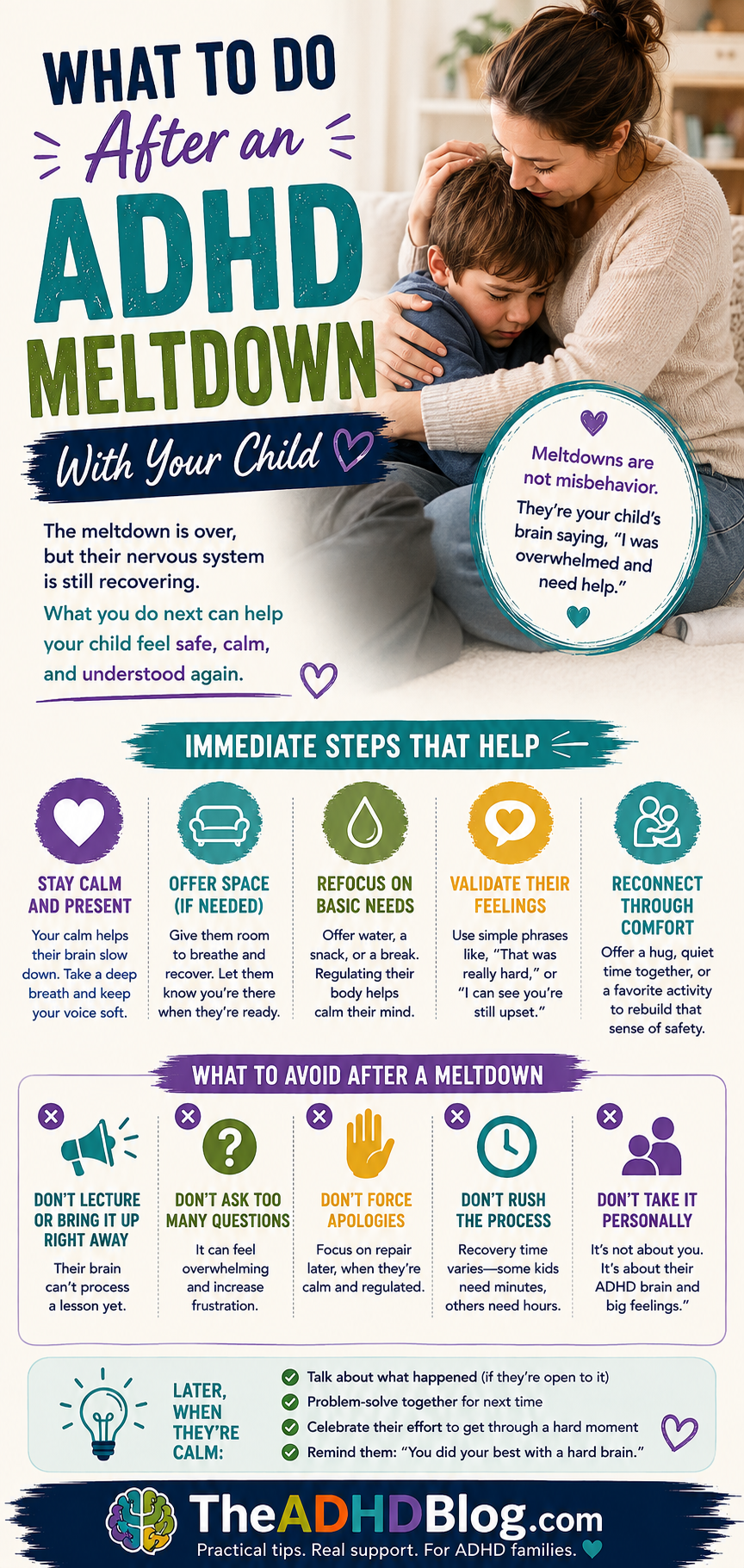
If the screaming turned into a larger emotional explosion, I’ve written a full guide on what to do after an ADHD meltdown with your child.
That’s where we can work on repair, accountability, recognizing triggers, and creating a better plan for next time.
When Screaming Isn’t Just ADHD Frustration
This is important.
I wouldn’t assume every difficult behavior is automatically ADHD because a child has an ADHD diagnosis.
Frequent screaming can occur for many reasons.
Anxiety.
Sensory overwhelm.
Communication difficulties.
Sleep problems.
Learning difficulties.
Stress.
Other behavioral or developmental conditions.
The CDC recommends that children being evaluated or treated for ADHD also be screened when appropriate for coexisting emotional, behavioral, developmental, and physical conditions.
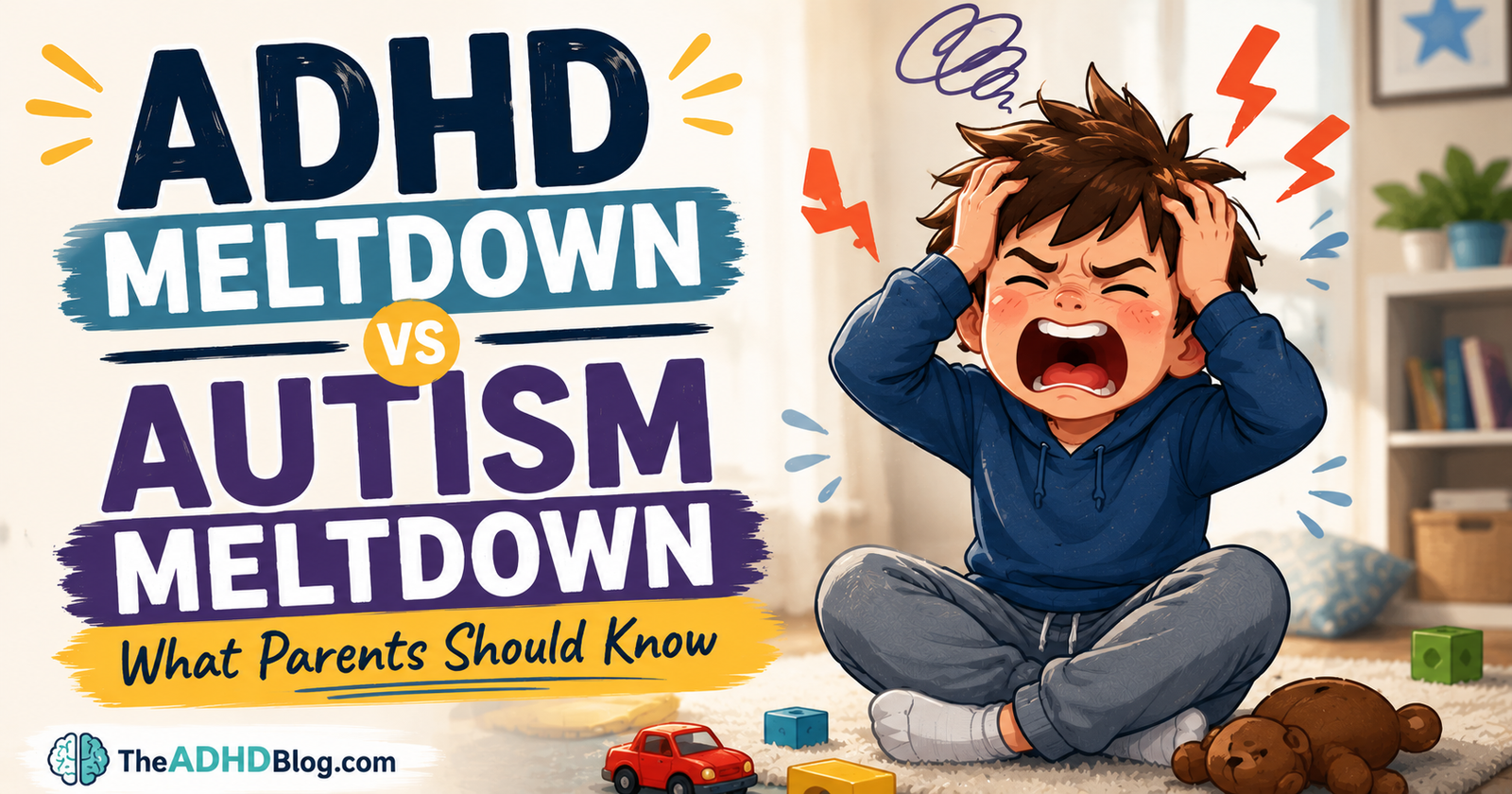
That’s one reason our comparison of ADHD meltdowns vs autism meltdowns looks beyond the meltdown itself.
The larger pattern matters.
When I’d Talk to the Pediatrician About the Screaming
I would bring it up if the screaming and emotional reactions are becoming extremely frequent, severe, worsening, or interfering significantly with everyday life.
I’d be especially concerned if the episodes involve serious aggression, self-harm, threats, major property destruction, significant school problems, or behavior that makes your home difficult to keep safe.
I’d also talk with a professional if something about the pattern simply feels different from your child’s usual ADHD struggles.
You don’t have to diagnose the reason yourself.
Bring the pattern.
Bring examples.
Bring information about triggers.
That’s much more useful.
Keep a Quick Frustration Log for a Couple of Weeks
If you feel like your child screams about absolutely everything, test that assumption.
Write it down.
Nothing fancy.
Time.
What happened.
What they were doing immediately beforehand.
How they slept.
Whether they’d eaten.
What triggered the scream.
How intense it became.
How quickly they recovered.
What helped.
After a couple of weeks, you may realize the screaming isn’t actually random.
Maybe it happens mostly:
After school.
During homework.
When screens end.
When siblings interrupt.
At bedtime.
When your child is hungry.
When they’re asked to switch activities.
When a task feels too difficult.
That’s valuable.
Because now we’re no longer dealing with:
“My child screams about everything.”
We’re dealing with:
“My child has a very hard time when X happens.”
And that is something we can work on.
I Want My Child to Recognize Frustration Before I Do
That’s really the long-term goal for me.
At first, I’m the one saying:
“You’re getting frustrated.”
Eventually, I want the child to say:
“I’m getting frustrated.”
At first, I’m offering:
“Do you need a break?”
Eventually:
“I need a break.”
At first, I’m reminding:
“Ask me for help instead of screaming.”
Eventually:
“Can you help me?”
That’s the progression I’m looking for.
Not a child who never gets mad.
Not a child who never feels overwhelmed.
Not a child who obediently smiles through every disappointment.
I want a child who gradually learns to recognize:
I’m getting frustrated, and I know what I can do with that feeling.
Because simply telling an ADHD child to stop screaming only tells them what we don’t want.
Teaching them what to do in those few seconds between frustration and explosion gives them something far more useful.
About the Author: Emily Parker
Emily Parker writes for TheADHDBlog.com about raising and supporting children with ADHD, with a special focus on emotional regulation, frustration, anger, meltdowns, family routines, and the difficult everyday behaviors parents are trying to understand. Her articles combine practical parent-focused strategies with established ADHD and pediatric guidance to help families recognize patterns, build useful skills, and know when additional professional support may be appropriate.