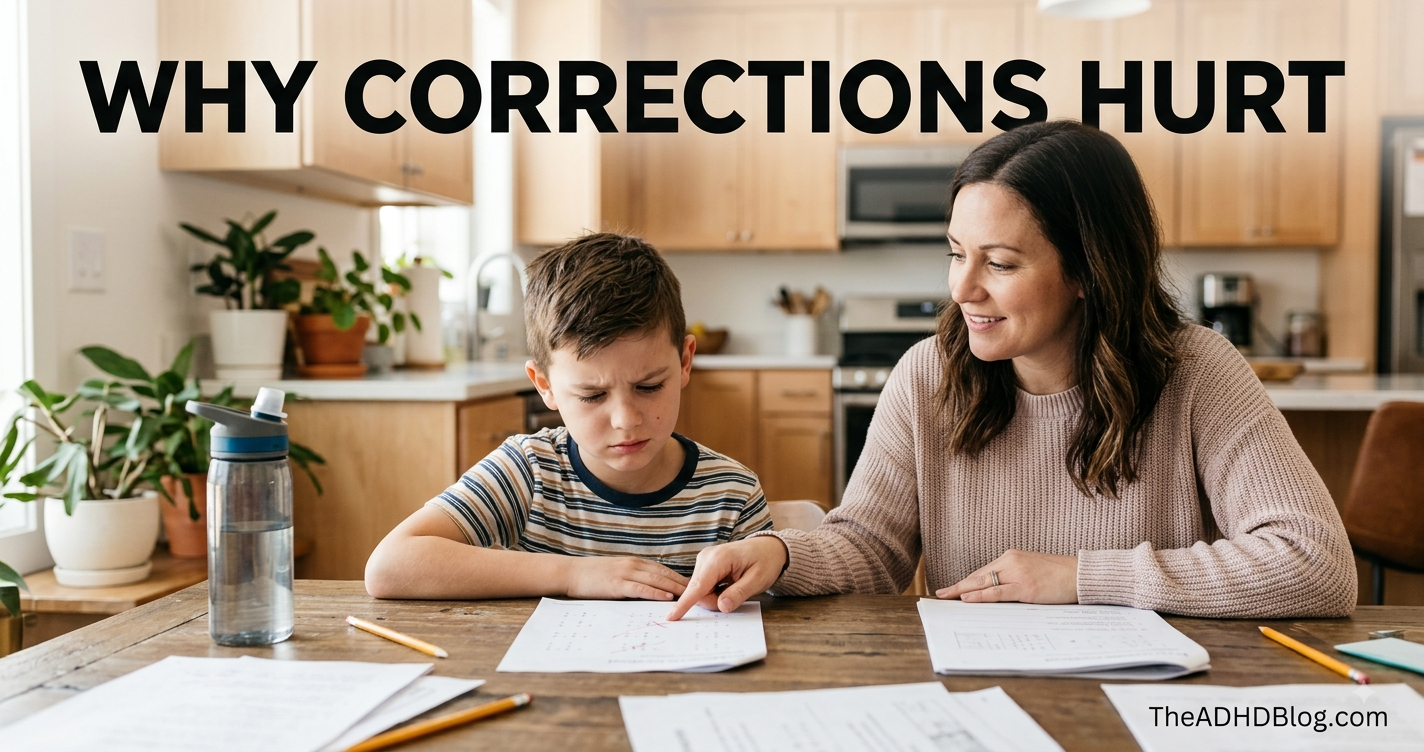
Sometimes I can correct one tiny thing and watch my child’s entire mood change.
Maybe I say, “You missed one question here,” or “Remember, your shoes go by the door.” I’m not yelling. I’m not trying to embarrass anyone. In my mind, I’m giving an ordinary reminder that should take about five seconds.
But the reaction can be enormous.
There may be tears, anger, arguing, shutting down, insisting they didn’t do anything wrong, or suddenly refusing to continue what they were doing. What I thought was a simple correction somehow landed like a much bigger criticism.
If you’ve experienced this enough times, you may start wondering, why does my ADHD child get so upset when corrected?
I’ve learned not to assume the answer is simply that my child “can’t handle being told no” or refuses to accept responsibility. For some children with ADHD, being corrected can collide with frustration, impulsive emotional reactions, repeated negative feedback, difficulty shifting gears, and feelings about making mistakes.
That doesn’t mean we stop correcting our kids.
It means how, when, and how often we correct them can matter more than I once realized.
ADHD Can Affect More Than Attention and Hyperactivity
When most people think about ADHD, they think about difficulty focusing, excessive activity, forgetfulness, or impulsivity.
Those are certainly important parts of ADHD, but they don’t always explain what family life actually looks like.
Emotional regulation can be difficult for some children with ADHD too. CHADD discusses emotional dysregulation as a significant issue for many people with ADHD, including difficulty regulating frustration and other strong emotional reactions. CHADD ADHD resources
That helps explain why a correction that seems minor to me can sometimes produce a reaction that seems completely out of proportion.
The correction may be small.
The emotion it triggers may not be.

Your Child May Hear Something Different From What You Said
Imagine I say:
“You forgot to put your homework in your backpack again.”
What I mean is straightforward. The homework needs to go into the backpack.
But depending on the child and what kind of day they’ve already had, what they emotionally hear may feel more like:
“You forgot again.”
“You messed up again.”
“You’re always doing something wrong.”
I didn’t actually say those things.
That distinction matters. I’m not suggesting parents are secretly insulting their children whenever they give a reminder. I’m saying the child’s emotional response can be influenced by much more than the literal words in that one sentence.
If they’ve already spent the day being redirected, reminded, corrected, and told what they forgot, one additional correction at home may hit harder than I expect.
Think About How Often a Child With ADHD Gets Corrected
This is one of the things that changed my perspective the most.
Consider an ordinary school day for a child who’s struggling with ADHD symptoms. They might hear reminders to sit down, stop talking, pay attention, wait their turn, find their pencil, finish their work, keep their hands to themselves, remember their folder, or stop looking out the window.
Then they come home.
Now I’m reminding them about their backpack, shoes, homework, chores, sibling behavior, dinner, shower, and bedtime.
None of those individual reminders may be unreasonable.
The problem is the accumulation.
By evening, what feels like my first correction may feel like their twentieth.
That doesn’t mean I eliminate expectations. It means I start thinking more carefully about which corrections actually matter and whether there’s a better system for some of the problems I’m correcting over and over. A practical ADHD parenting guide may offer additional ideas for setting expectations while reducing repeated correction.
Sometimes the Reaction Is Really About Making a Mistake
Some children have an incredibly hard time being wrong.
You point out one incorrect math answer and suddenly the worksheet is ruined.
They lose a game and don’t want to play anymore.
Their drawing doesn’t turn out the way they imagined and they crumple it.
You explain that they misunderstood the rules and now they’re arguing that the rules are stupid.
What looks like refusal to accept correction may sometimes begin with difficulty tolerating the feeling of making a mistake.
That’s an important distinction because telling a child, “Everybody makes mistakes,” is true, but it doesn’t automatically give them the ability to tolerate one.
That skill has to develop too.
Corrections Can Trigger Frustration Very Quickly
We’ve already talked about how quickly frustration can escalate for some children with ADHD.

A child may already be struggling with something. Then I point out the mistake, and instead of hearing helpful information, they experience the correction as one more frustrating thing going wrong. That shift in meaning is central to understanding why mistakes can feel deeply personal.
That can lead to yelling or arguing almost instantly.
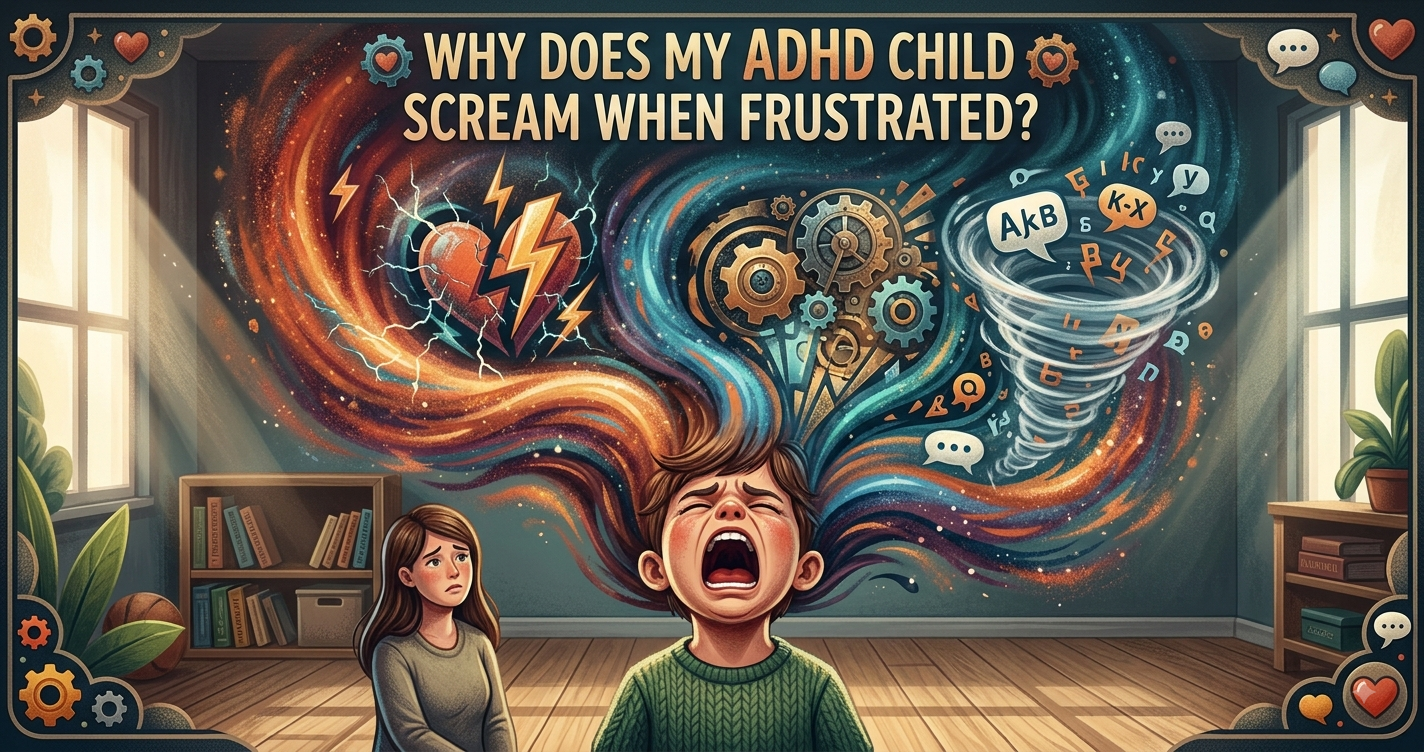
If that sounds familiar, our guide on why an ADHD child may scream when frustrated goes deeper into what can happen during those few seconds between frustration and an explosive response.
I find it helpful to remember that the correction may not have created all of the frustration. Sometimes it simply uncovered frustration that was already there.
Why Does My ADHD Child Cry When Corrected?
For some kids, the reaction isn’t anger at all.
It’s tears.
Maybe you calmly explain that an answer is wrong and their eyes immediately fill up. You remind them that they forgot something and they look devastated. You correct inappropriate behavior and suddenly they’re crying much harder than the situation seems to call for.
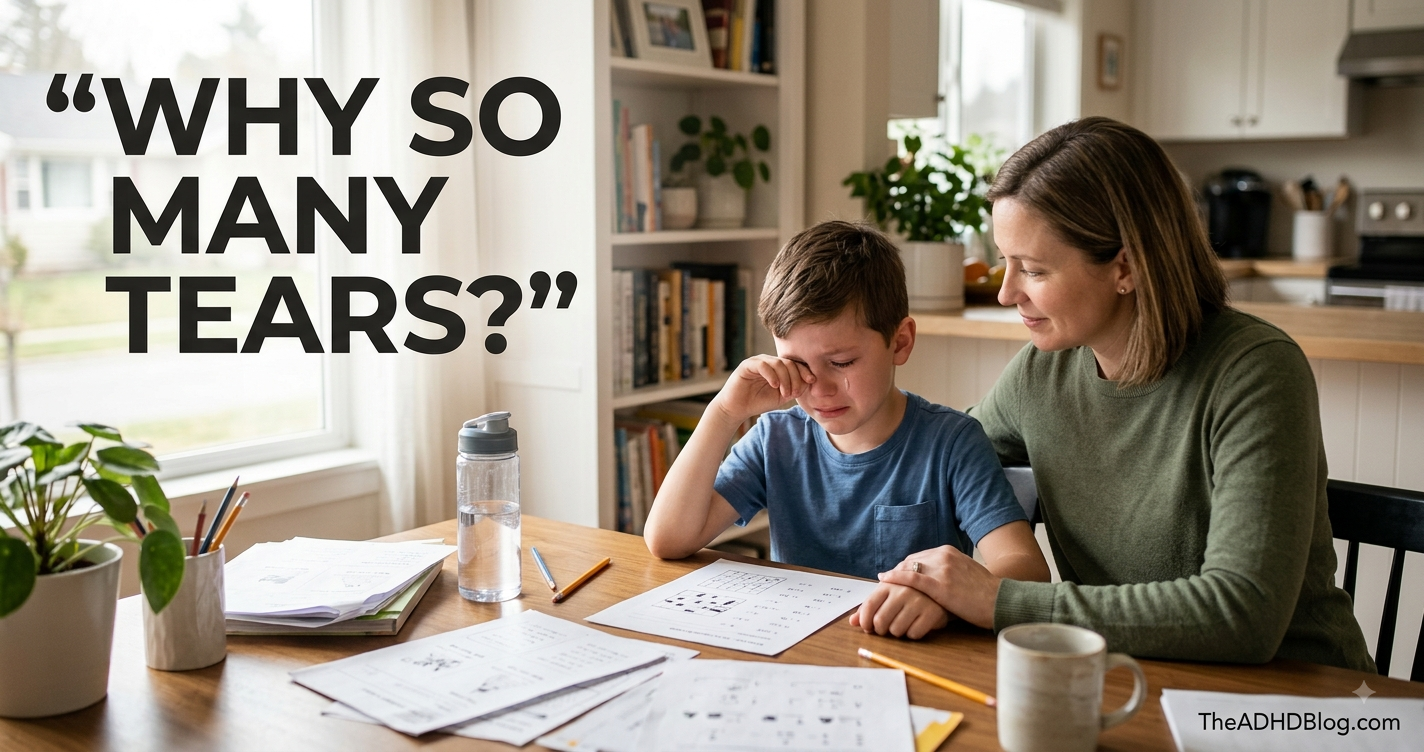
I’ve covered this broader pattern in why some ADHD children seem to cry over everything.
One of the things I try to separate is sadness from frustration.
A child who’s crying isn’t necessarily deeply sad about the correction. Tears may be how their body expresses embarrassment, frustration, disappointment, overwhelm, or even anger.
Asking what they’re feeling can sometimes tell me much more than assuming I already know.
Anger Can Be the Other Side of the Same Problem
Another child responds completely differently.
You correct them and they immediately argue.
“I DID DO IT!”
“THAT’S NOT WHAT HAPPENED!”
“I KNOW!”
“STOP TELLING ME!”
The defensiveness can be exhausting, especially when you’re correcting something obvious.
But once again, I want to look beneath the first reaction.
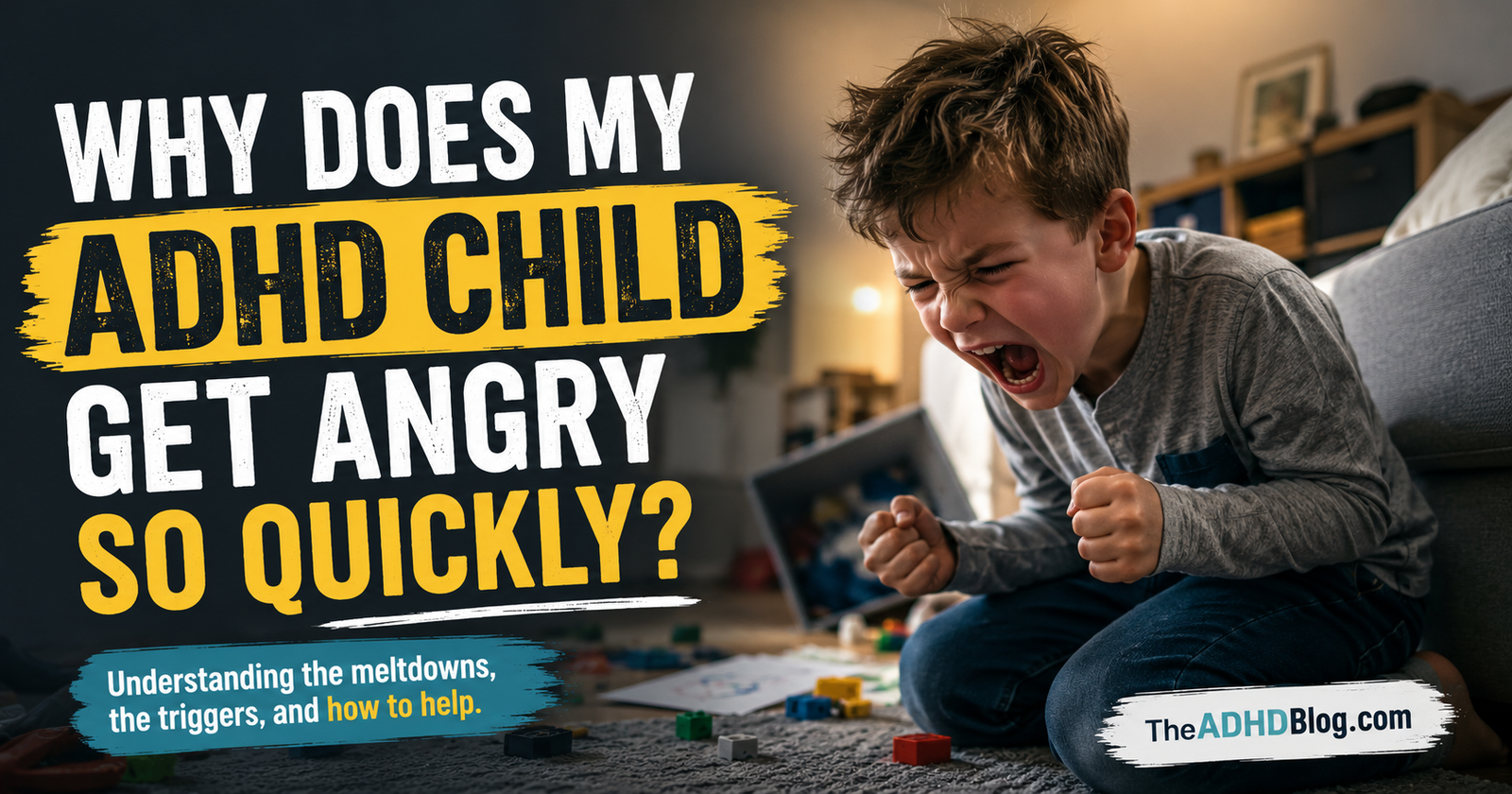
Our article about why ADHD children can get angry so quickly explores how frustration tolerance and rapid emotional reactions can contribute to these explosions.
Understanding where the anger comes from doesn’t mean accepting disrespectful behavior.
I can understand the reaction while still expecting my child to speak appropriately.
Sometimes “I Know!” Really Means “Please Stop Correcting Me”
I think most parents of kids with ADHD have heard this one.
You haven’t even finished the sentence.
“Remember that you need to…”
“I KNOW!”
Obviously, if they knew and consistently remembered, we probably wouldn’t be having the conversation.
But I’ve learned that arguing about whether they technically “know” isn’t very useful.
Sometimes “I know” isn’t really an answer to the information I’m giving them. It’s an emotional reaction to being reminded again.
The child may know the rule perfectly well and still have difficulty consistently remembering or carrying it out.
That’s where I start asking whether another verbal reminder is actually the best solution.
Repeated Problems May Need Systems Instead of Repeated Corrections
This is huge for me.
If I’m correcting the same behavior five times every morning, maybe the answer isn’t becoming better at correcting it.
Maybe we need a system.
If shoes constantly disappear, give shoes a permanent home.
If the backpack gets forgotten, establish one place for it.
If mornings involve ten verbal reminders, create a predictable sequence.

That’s one reason our ADHD morning routine focuses so much on making expectations predictable.
A system doesn’t eliminate responsibility.
It reduces how often I have to personally become the reminder system.
And that can reduce friction for both of us.
Homework Corrections Can Feel Especially Personal
Homework deserves special attention because correcting schoolwork can become an emotional minefield.
The child has already spent all day working.
Now they’re home doing more work.
They’re tired.
Maybe focusing is difficult.
They finally finish a problem and I say:
“That’s not right.”
Even if I say it gently, I may be stepping into a situation where frustration is already extremely high.
Instead of immediately focusing on the wrong answer, sometimes I need to understand why the problem went wrong.
Did they misunderstand the directions?
Lose track of a step?
Rush?
Become distracted?
Not understand the concept?

If homework regularly ends in tears or arguments, our ADHD homework tips for parents may help reduce some of the problems that keep creating those corrections in the first place.
Difficulty Focusing Can Create More Opportunities to Be Corrected
This is another piece of the puzzle.
A child struggling to maintain attention may need more redirection than another child.
That means more opportunities to hear:
“Focus.”
“Pay attention.”
“Finish what you’re doing.”
“Come back over here.”
Over time, even neutral reminders can become frustrating.
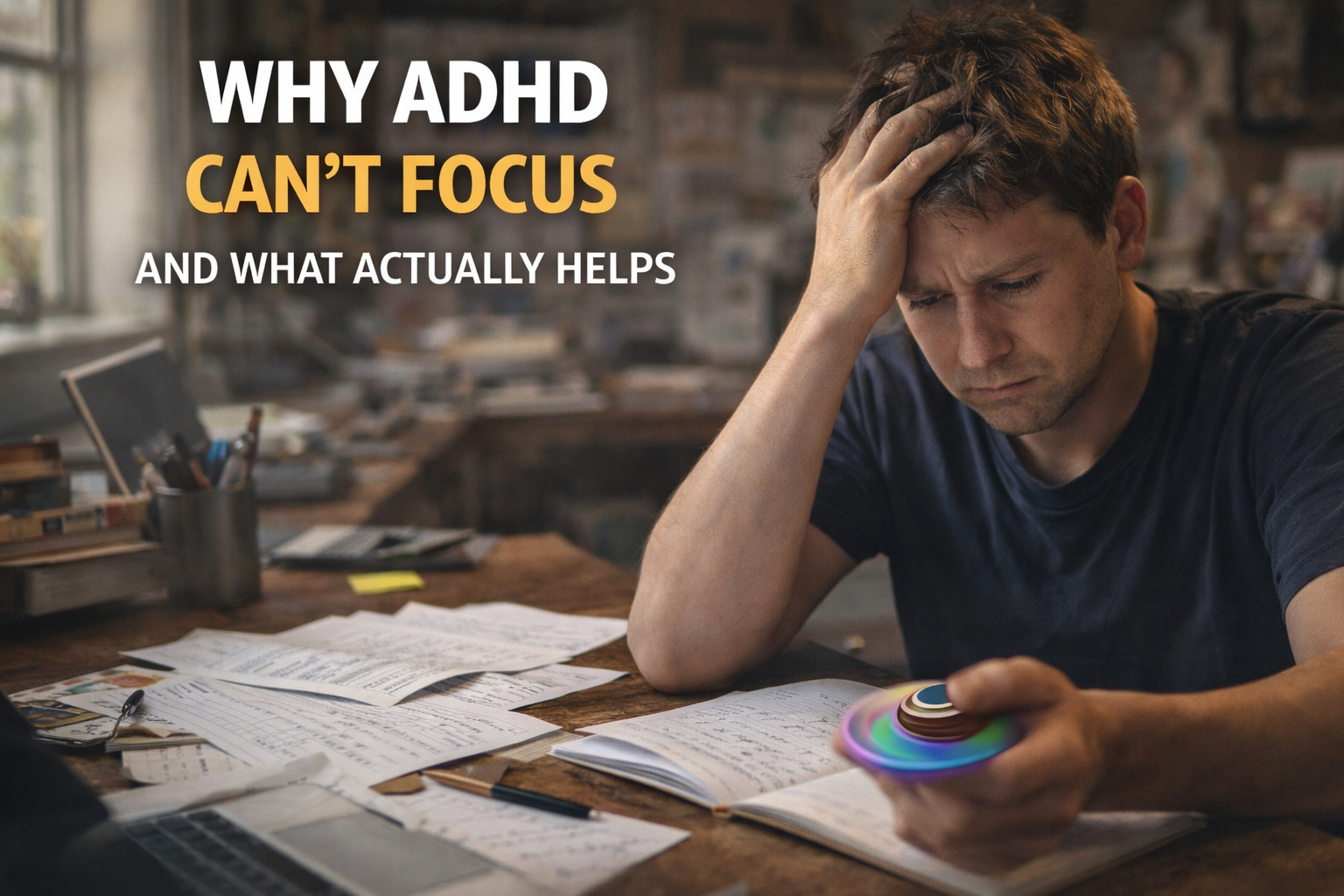
Our guide to ADHD focus problems and why they happen goes deeper into why simply demanding more focus isn’t always useful.
Whenever possible, I’d rather change the environment or task so successful focus becomes easier than spend the entire afternoon correcting a child for losing it.
Public Correction Can Feel Much Worse
This one applies to adults too.
Most of us would rather have someone quietly tell us we made a mistake than announce it in front of everyone.
Kids aren’t necessarily different.
If a sibling is standing there, friends are visiting, or we’re in a public place, I try to consider whether the correction needs to happen right there.
Safety issues are different, of course.
If something needs to stop immediately, I stop it.
But not every correction needs an audience.
Sometimes a quiet conversation later accomplishes far more with far less embarrassment.
Correct the Behavior Without Labeling the Child
This is a distinction I care about.
There’s a big difference between:
“You left your backpack on the floor.”
and:
“You’re so careless.”
One addresses what happened.
The other describes who the child supposedly is.
The American Academy of Pediatrics recommends clear expectations, positive reinforcement, predictable routines, and consistent behavioral approaches for children with ADHD. HealthyChildren ADHD behavior guidance
I want corrections to give useful information.
“Your plate goes in the sink.”
That’s actionable.
“You’re being lazy.”
What exactly is the child supposed to do with that?
Keep Corrections Shorter Than You Think They Need to Be
I’ve absolutely turned a five-second correction into a five-minute speech.
The child forgot something.
I explain what they forgot.
Then I explain why remembering matters.
Then I bring up the previous three times they forgot.
Then I explain how they could prevent forgetting.
Somewhere around minute three, nobody is listening anymore.
A shorter correction is often clearer.
“Shoes go by the door. Please put them there.”
Done.
If we need a larger conversation about a recurring problem, we can have it separately when everyone is calm.
I don’t need every forgotten shoe to become a seminar.
Try Not to Stack Corrections
This is another habit I watch in myself.
I notice one problem and suddenly remember five others.
“Pick up your backpack. And you left your cup upstairs. And your room is still messy. And you didn’t put your laundry away.”
That’s a lot.
Now instead of one manageable correction, the child feels like everything they’ve done all day is wrong.
When possible, I handle the thing in front of me.
One correction.
One expectation.
Then we move on.
Tell Them What to Do, Not Only What to Stop Doing
Consider:
“Stop messing around.”
What should the child actually do?
Compare that with:
“Put your math worksheet on the table and start question one.”
Much clearer.
The CDC recommends giving children with ADHD clear, specific directions and breaking complicated tasks into simpler steps. CDC ADHD treatment guidance
The more specific I am, the less room there is for confusion and another correction five minutes later.
Watch Your Timing
Sometimes the correction needs to happen immediately.
Other times, timing is flexible.
If my child just walked through the door after a rough school day and is visibly overwhelmed, maybe that’s not when I need to address every minor thing I noticed.
If they’re halfway into a meltdown, that’s definitely not when I need to introduce three unrelated corrections.
Timing doesn’t mean avoiding accountability.
It means asking:
When is my child actually capable of hearing this?
That’s a much more useful question.
Don’t Try to Reason Through a Full Meltdown
Sometimes a correction becomes the trigger for something much larger.
Now the child isn’t simply annoyed.
They’re crying intensely, screaming, pacing, throwing something, shutting down, or becoming unable to have a normal conversation.
At that point, I’ve moved beyond correcting the original behavior.
If you’re unsure where that line is, our guide to what an ADHD meltdown looks like in a child breaks down the escalation and recovery process.
Once we’re dealing with genuine dysregulation, continuing to explain why my correction was reasonable usually doesn’t get us anywhere.
Calm First, Then Return to the Issue
If a correction triggered a full meltdown, I don’t necessarily abandon the correction.
I postpone the conversation.
Our guide on how to calm a child during an ADHD meltdown explains why fewer words, less arguing, reduced stimulation, and appropriate space can be much more useful during the peak.
Once everyone is actually calm, we can return to what happened.
That might sound like:
“Earlier, I reminded you to turn the game off and everything got really hard. Let’s talk about what happened.”
Now we’re dealing with a brain that’s capable of participating again.
Don’t Let the Meltdown Erase Every Boundary
This is where understanding emotional dysregulation can sometimes become confusing for parents.
If the child becomes extremely upset when corrected, we may start avoiding correction because we’re afraid of another explosion.
I don’t think that’s the goal.
Children still need expectations.
They still need boundaries.
They still need to learn how their behavior affects other people.
The goal isn’t:
Never upset my child.
The goal is:
Correct effectively without creating unnecessary shame, conflict, or overwhelm.
Those are very different things.
Teach What to Do When a Correction Feels Bad
This is where I want to build a replacement response.
Instead of yelling:
“STOP TELLING ME!”
Maybe the child learns:
“I know. I’m frustrated.”
Instead of throwing the worksheet:
“Can I have a minute?”
Instead of immediately arguing:
“Can you show me what I did wrong?”
Those responses won’t appear magically.
We have to teach and practice them while everybody is calm.
That’s the same principle we’ve been using throughout this emotional-regulation cluster. I don’t only want to stop an unwanted behavior. I want to give the child something useful to do instead.
Model How I Handle Being Corrected
Kids get plenty of opportunities to watch adults make mistakes.
Maybe my spouse reminds me I forgot something.
Maybe my child points out that I said the wrong time.
Maybe I make a mistake while cooking.
Those moments are opportunities.
“You’re right. I forgot.”
“Oops, I got that wrong.”
“Thanks for reminding me.”
That’s powerful because I’m demonstrating that being corrected isn’t catastrophic.
I can be wrong without becoming ashamed.
I can make a mistake without defending it.
I can fix something and move forward.
Praise Them When They Handle a Correction Well
This is one of those tiny wins I don’t want to overlook.
Maybe I say:
“Your cup belongs in the sink.”
And they put it there without arguing.
That’s normal behavior, right?
Sure.
But if accepting correction has been difficult, that’s progress worth noticing.
“Thanks for fixing that when I reminded you.”
Or maybe they become visibly frustrated but don’t explode.
“I could tell that bothered you, but you handled it.”
Behavioral approaches for ADHD commonly use positive reinforcement to strengthen the behaviors parents want to see more often.
If my attention only becomes intense when things go badly, I’m missing opportunities when things go right.
What About Rejection Sensitive Dysphoria?
This is a phrase parents frequently encounter online when researching ADHD and emotional reactions.
You may see it shortened to RSD, particularly in discussions about extreme sensitivity to criticism or perceived rejection.
I think we need to be careful here.
Rejection sensitive dysphoria isn’t a formal diagnosis in the DSM-5-TR, and parents shouldn’t assume that a child has a separate condition simply because corrections upset them.
That doesn’t mean the emotional experience isn’t real.
It means I wouldn’t use an internet label as a substitute for understanding the individual child.
If criticism or perceived rejection produces severe reactions, that’s worth discussing with a qualified healthcare professional, particularly when it significantly affects school, friendships, family relationships, or the child’s self-esteem.
Sometimes the Problem Isn’t the Correction at All
This is why patterns matter.
Maybe your child becomes unusually upset when corrected because they’re exhausted.
Maybe they’re anxious.
Maybe school has become difficult.
Maybe they’re struggling academically and corrections remind them of it.
Maybe they’re being bullied.
Maybe sleep is poor.
Maybe something has changed socially.
Maybe the behavior is part of another emotional or developmental concern occurring alongside ADHD.
ADHD can coexist with other conditions, so I don’t automatically attribute every emotional difficulty to ADHD.
When I’d Bring Extreme Reactions to Corrections Up With the Doctor
I’d mention it if the reaction is severe, worsening, or interfering significantly with everyday life.
I’d be particularly concerned if ordinary feedback consistently triggers prolonged meltdowns, serious aggression, extreme withdrawal, persistent negative statements about themselves, major school refusal, or comments about self-harm.
The CDC recommends evaluating children with ADHD for coexisting emotional, behavioral, developmental, and physical conditions when appropriate. CDC clinical ADHD guidance
I don’t have to know what’s causing the problem before bringing it up.
That’s what evaluation is for.
After a Big Reaction, I Want Information Instead of Shame
If the correction did turn into a major meltdown, eventually I want to understand what happened.
But not during the worst part.
Later.
Maybe I ask:
“When I corrected the homework, what did that feel like?”
The answer might be:
“I thought you were mad.”
“I already knew I messed up.”
“I was trying really hard.”
“I felt stupid.”
“I was already having a bad day.”
Now we’re learning something.
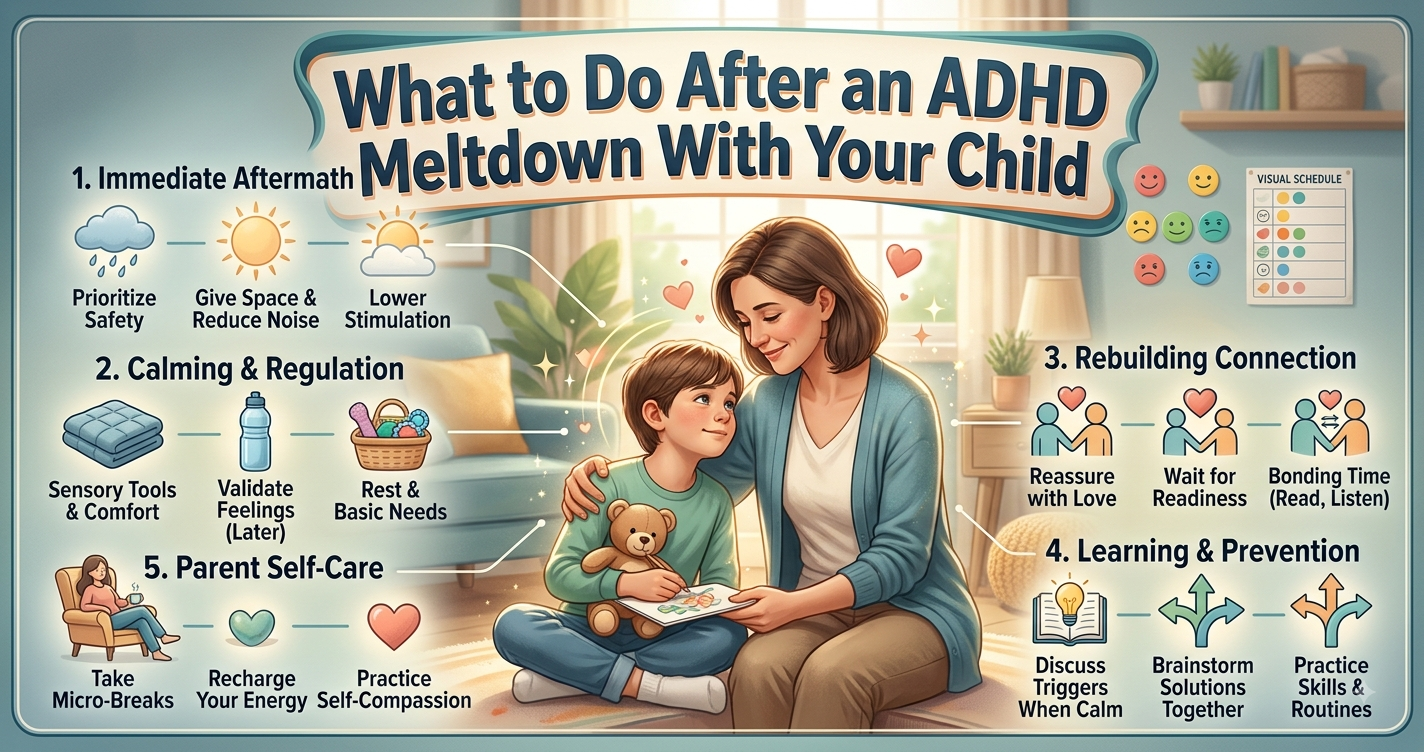
Our guide to what to do after an ADHD meltdown goes much deeper into having those conversations after everyone has recovered.
That’s where I can separate the emotion from the behavior, repair what needs repairing, and make a plan for next time.
I Still Correct My Child, I Just Think More About How I Do It
This is the balance I keep coming back to.
Understanding ADHD doesn’t mean pretending mistakes don’t happen.
It doesn’t mean allowing disrespect.
It doesn’t mean removing expectations because being corrected feels uncomfortable.
My child still needs feedback.
But I’ve become much more interested in effective correction than constant correction.
I ask myself whether the correction is necessary, whether I’m giving one clear instruction or piling on five complaints, whether the child understands what to do differently, and whether I’ve spent the entire day noticing mistakes without noticing anything they’ve done well.
I also look for recurring problems that could be solved with routines, visual reminders, smaller tasks, predictable places for belongings, or changes to the environment instead of another hundred verbal reminders. These practical supports can be especially useful when the limits of verbal reminders becomes part of the daily routine.
Because if my ADHD child gets incredibly upset when corrected, simply correcting them more forcefully probably isn’t the missing strategy.
I want them to gradually learn that making a mistake doesn’t mean they’re a failure, being reminded doesn’t mean they’re a bad kid, and hearing “you need to fix this” doesn’t have to turn into tears, anger, or a meltdown.
That’s a much bigger skill than simply learning to tolerate being told they’re wrong.
It’s learning that you can make a mistake, fix what needs fixing, and still be completely okay afterward.
About the Author: Emily Parker
Emily Parker writes for TheADHDBlog.com about raising and supporting children with ADHD, with a special focus on emotional regulation, frustration, meltdowns, family routines, school challenges, and the everyday behaviors that leave parents searching for practical answers. Her articles combine family-focused strategies with established ADHD and pediatric guidance to help parents recognize patterns, build useful skills, and know when additional professional support may be appropriate.