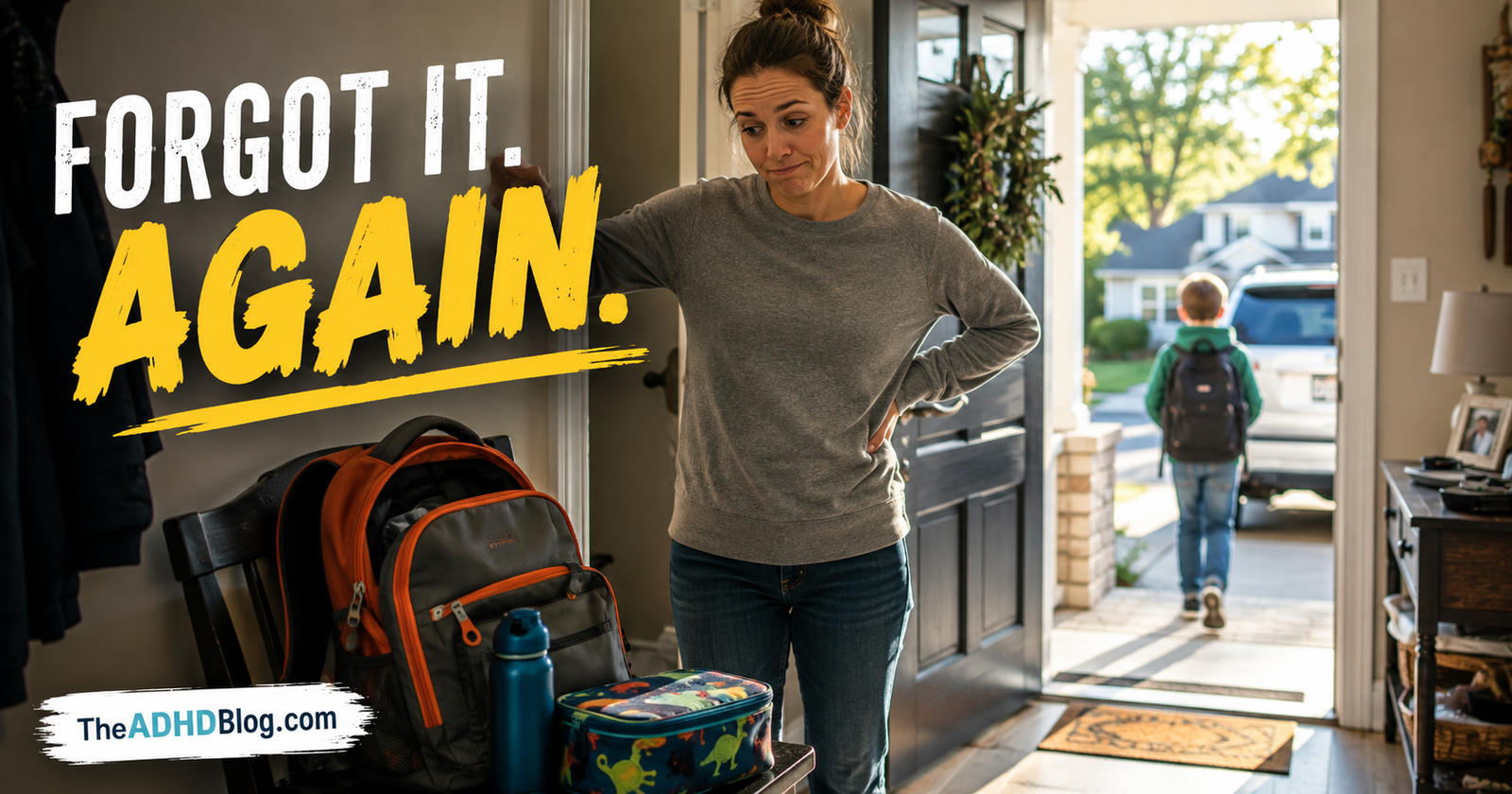
There are moments when ADHD forgetfulness almost doesn’t make sense.
My child can remember an incredibly specific detail about something that happened six months ago. They can tell me exactly what happens in a favorite game, remember a random fact they heard once, or remind me about something I promised we’d do next weekend.
Then I say:
“Go upstairs and get your sweatshirt.”
A few minutes later, they come back downstairs without the sweatshirt.
“Where’s your sweatshirt?”
They look at me like this is completely new information.
Or I say:
“Put your homework in your backpack before you go play.”
Twenty minutes later, the homework is still on the table and my child genuinely seems surprised when I point it out.
After enough of these moments, it’s easy to start thinking:
How can you remember all that other stuff but forget something I told you two minutes ago?
That’s one of the most frustrating things about ADHD forgetfulness. It can look incredibly selective.

But I’ve found that understanding why my ADHD child forgets everything I tell them changes how I handle it. Memory isn’t one single ability, and a child remembering something interesting from last month doesn’t mean they’ll automatically hold onto a verbal instruction long enough to complete it. A parenting guide for ADHD may be useful alongside this effort to understand the difference between remembering interesting information and following a verbal instruction.
ADHD Forgetfulness Isn’t the Same as Having a Bad Memory
This distinction helped me tremendously.
When I say my child “forgets everything,” that’s obviously not literally true.
They have memories.
Sometimes excellent ones.
The problem often shows up with the information they need to hold onto and use right now.
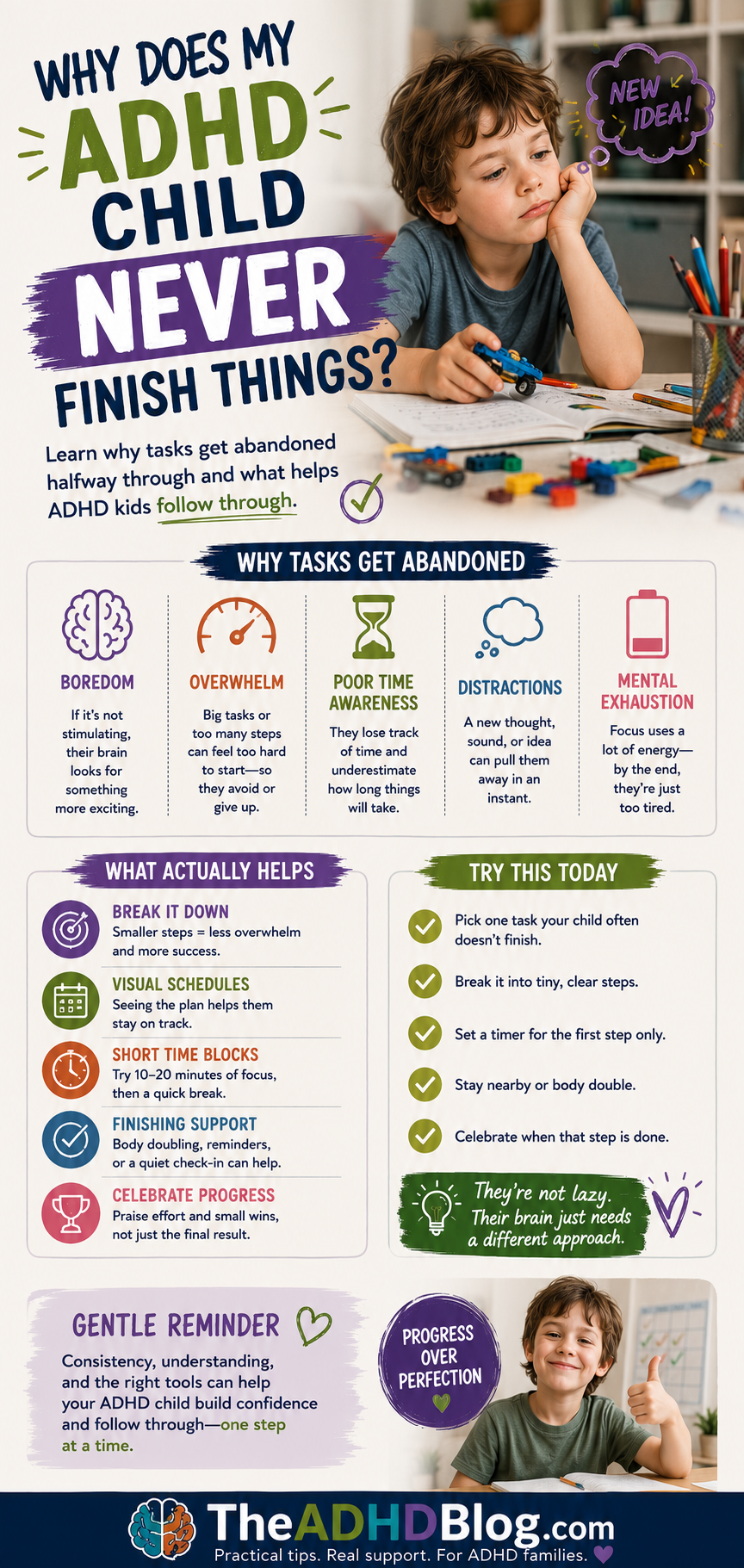
A simple instruction might require the child to hear what I said, keep it active in their mind, resist distractions, move to another location, remember why they went there, complete the task, and possibly return to whatever they were doing before. That chain also helps explain why ADHD tasks go unfinished, even when a child genuinely intends to complete the assignment.
That’s very different from remembering the plot of a favorite movie.
The American Academy of Pediatrics discusses ADHD as involving difficulties with organization, attention, and remembering information, and recommends external supports such as routines, written lists, and structured environments.
So when my child remembers every dinosaur fact imaginable but forgets their shoes, I don’t automatically assume they’re choosing what to remember.
Those are different demands on the brain.

Working Memory Can Be Where Things Fall Apart
You’ll often hear the term working memory when researching ADHD.
I think of working memory as the mental space we’re using to temporarily hold information while doing something with it.
Imagine I tell my child:
“Go upstairs, get your blue sweatshirt, put your dirty socks in the hamper, and bring your library book down.”
That’s not one instruction.
That’s a little mental shopping list.
The child has to carry that list upstairs while ignoring everything else that grabs their attention.
If part of that information falls out along the way, I may get a sweatshirt but no library book. Or the socks get picked up and the original reason for going upstairs disappears completely.
That’s why I increasingly ask myself whether the problem is really forgetfulness, or whether I’ve given my child more information than they can successfully carry through the task.


I Can Make Forgetting Worse by Talking Too Much
This one is on me.
Sometimes I’m trying to be helpful and actually make the instruction harder.
Instead of:
“Put your lunchbox in your backpack.”
I say:
“Put your lunchbox in your backpack because yesterday we almost forgot it, and while you’re there make sure your folder is inside because I think your teacher sent something home, and don’t forget your water bottle either.”
Now I’ve buried the original task inside a paragraph.
The American Academy of Pediatrics recommends keeping communication brief and focused for children with ADHD. It also suggests having the child repeat information back when necessary and writing down things they need to remember.
I’ve found that shorter isn’t just easier for the child.
It’s easier for me too.
I can immediately tell whether the direction worked.
Sometimes My Child Never Really Registered What I Said
This is different from forgetting.
I’m cooking dinner and call into another room:
“Put your shoes away!”
My child says:
“Okay!”
Nothing happens.
Did they forget?
Maybe.
But maybe their attention was so wrapped up in something else that my instruction never fully registered in the first place.
That’s why I don’t always trust an automatic “okay” as proof that the message landed.
For something important, I get closer and make sure I actually have enough of their attention before giving the instruction.
Sometimes I’ll simply ask:
“What are you doing next?”
If they can tell me, I know we at least started with the same information.
That doesn’t guarantee they’ll remember it five minutes from now, but it removes one major source of confusion.
This Is Closely Connected to Needing Constant Reminders
Forgetfulness and repeated reminders obviously overlap.
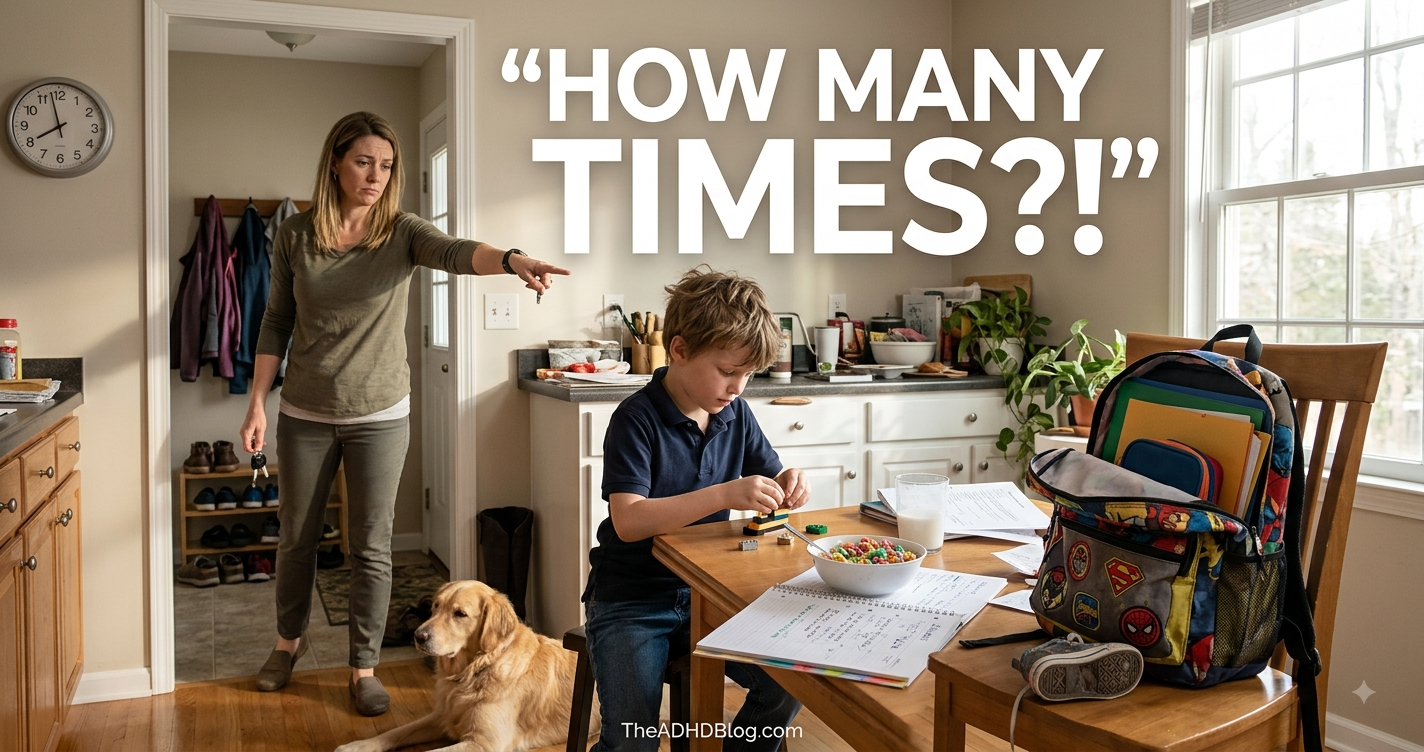
If my child forgets the instruction, I repeat it. If they forget again, I repeat it again. Before long, I’m wondering why my ADHD child has to be told everything 10 times.
But I don’t want these two problems to become one endless cycle.
If the child repeatedly forgets the same predictable things, I eventually want something other than my voice doing the remembering.
That’s where routines and external reminders become so useful.
Why Can My ADHD Child Remember Video Games but Not Chores?
This is probably one of the most common parent frustrations.
They know every character.
Every level.
Every item.
Every obscure detail.
But apparently remembering to put dirty clothes in the hamper is impossible.
It can look ridiculous from the outside.
But the comparison isn’t entirely fair.
One activity is highly interesting and repeatedly reinforces attention. The other is an ordinary task the child may find boring and has to remember at exactly the right moment.
ADHD involves difficulty regulating attention, not simply an inability to pay attention to anything.

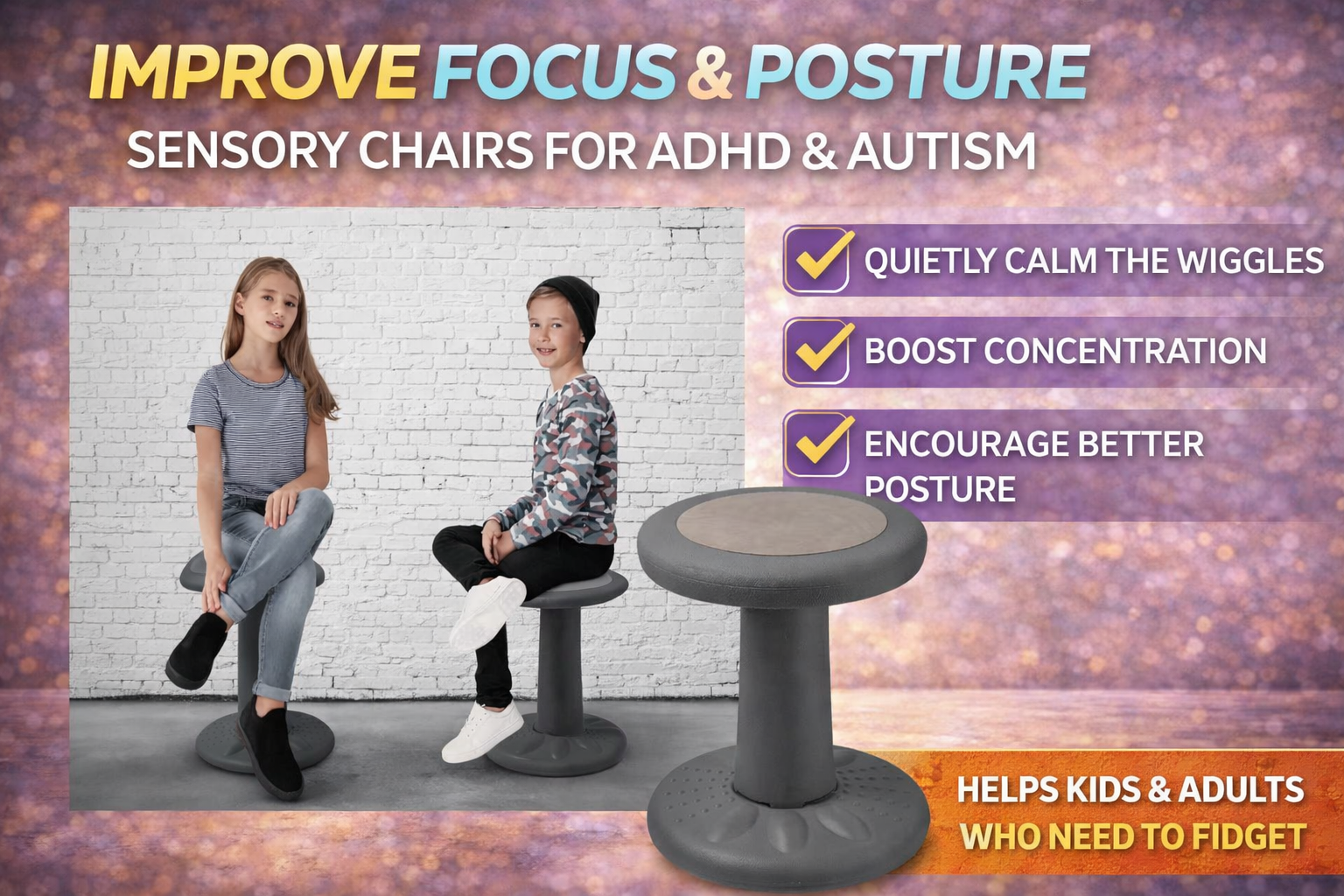
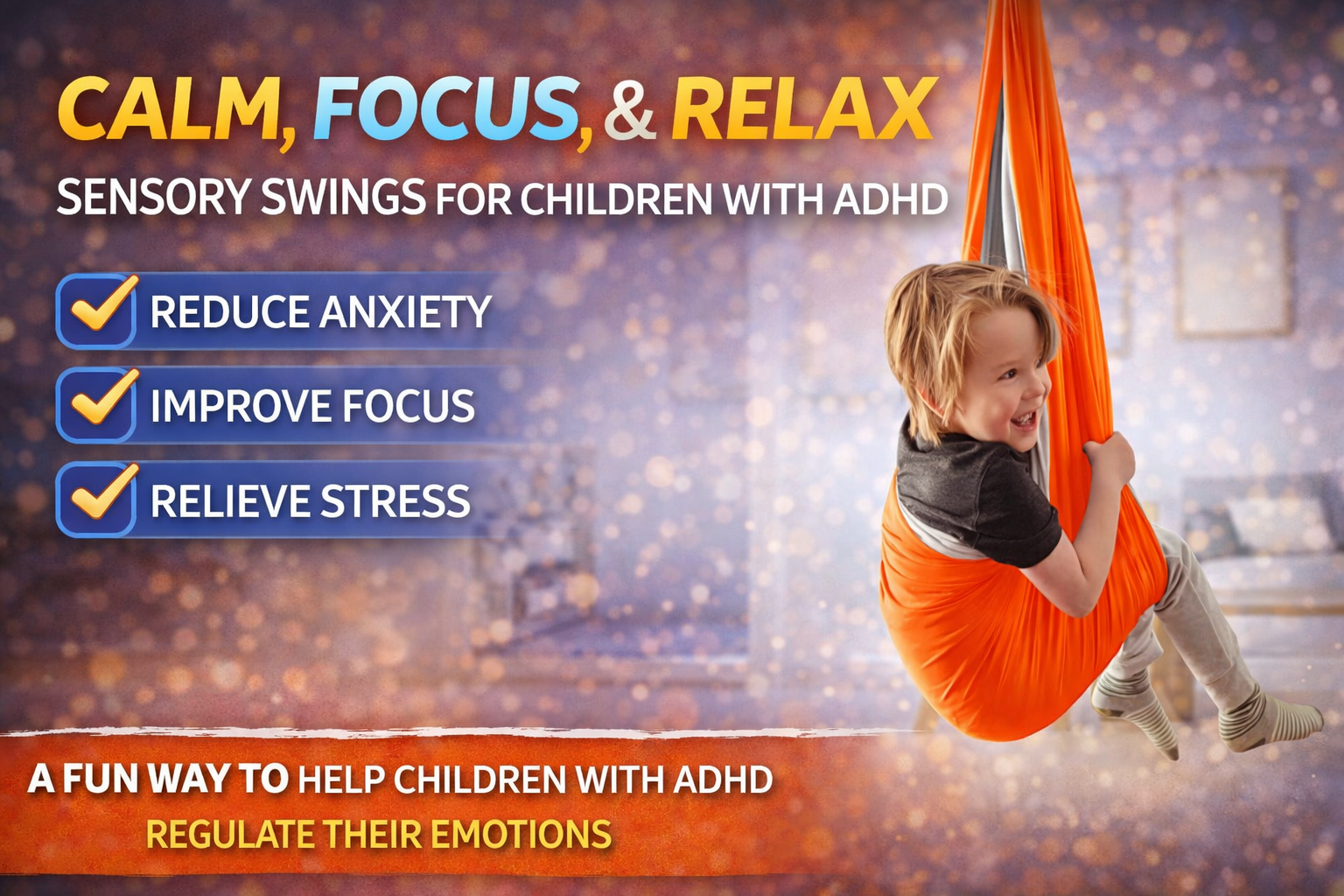
That helps explain why some children can become deeply absorbed in highly engaging activities while struggling to hold onto mundane instructions. A tactile focus option like a tactile focus option may help provide the right kind of engagement during routines that otherwise feel difficult to hold onto.
It doesn’t mean chores become optional.
It means “You remembered your game, so you can remember this” may not be the useful argument I once thought it was.

Interest Can Make Memory Look Better Than It Really Is
Think about your own memory.
I can remember something I’m excited about much more easily than a random errand somebody mentions while I’m distracted.
Adults compensate for this constantly.
We use phone reminders.
Calendars.
Shopping lists.
Sticky notes.
Alarms.
Automatic payments.
To-do apps.
I don’t consider myself morally defective because I need my phone to remind me about an appointment.
So I don’t want to treat external memory supports for a child as cheating.
I want to teach them how to build systems they’ll eventually be able to manage themselves.
Stop Expecting the Child to Remember Predictable Things From Scratch Every Day
This is where routines become incredibly powerful.
If every morning I have to tell my child:
“Get dressed.”
“Eat breakfast.”
“Brush your teeth.”
“Get your backpack.”
“Put your shoes on.”
then I’m asking them to rely heavily on verbal instructions every morning.
What if the sequence is simply what mornings always look like?
The American Academy of Pediatrics says daily routines can be particularly important for children with ADHD and recommends written lists to help children track daily responsibilities.

That’s one reason our ADHD morning routine became so useful.
A routine turns a series of things the child has to remember into a familiar sequence.
Put Memory Outside the Child’s Head
This may be the most practical change I can make.
If something keeps getting forgotten, I don’t just keep saying:
“Remember!”
I ask:
Where can we put this information so the child doesn’t have to hold it entirely in their head?
A checklist by the door can remember what goes to school.
A dry-erase board can remember the morning routine.
A timer can remember when something needs to stop.
An alarm can remember when it’s time to start.
A basket by the stairs can remember what needs to go upstairs.
A hook by the door can remember where the backpack belongs.
The American Academy of Pediatrics specifically recommends written lists, designated places for belongings, routines, and an organized environment to support children with ADHD.
That’s not lowering expectations.
It’s creating a better path toward meeting them.
Give Important Objects a Permanent Home
This is especially useful for things that constantly disappear.
Backpack.
Shoes.
Homework folder.
Coat.
Lunchbox.
Sports equipment.
If those things can be anywhere in the house, finding them requires remembering where they were last used.
That’s another unnecessary memory demand.
If the backpack always goes on one hook near the door, eventually I don’t have to ask:
“Where did you put your backpack?”
The location answers the question.
This is one of those ADHD strategies that honestly makes life easier for everybody in the house.

A Checklist Can Work Better Than Five Reminders
Let’s say the child needs five things before leaving:
Shoes, backpack, lunchbox, water bottle, coat.
I can personally announce all five every morning.
Or the child can check a simple list by the door.
At first, I may still need to say:
“Check your list.”
That’s okay.
The important difference is that I’m not remembering each item for them.
We’re gradually shifting responsibility toward a system they can eventually use independently.
The American Academy of Pediatrics recommends charts and checklists as practical supports for keeping children with ADHD on task.
That’s exactly what I’m trying to accomplish.
Make the Reminder Hard to Miss
Sometimes I need the environment to practically trip over the reminder.
If something absolutely has to leave the house tomorrow, maybe it goes directly in front of the door tonight.
If a paper needs signing, maybe it goes somewhere I can’t ignore.
If the library book needs returning, maybe it goes into the backpack immediately instead of sitting on the counter with the expectation that somebody will remember it tomorrow.
I’m trying to remove opportunities for memory to fail.
That’s very different from constantly rescuing the child after they’ve forgotten something.
I’m teaching prevention.
Preparing the Night Before Can Save the Morning
Morning is probably the worst possible time for me to discover that nobody knows where anything is.
We’re tired.
We’re watching the clock.
Everybody has somewhere to be.
Now the missing library book becomes a household emergency.
Whenever possible, I like moving some of that work to the night before.
Backpack packed.
Papers inside.
Clothes ready.
Anything unusual placed by the door.
HealthyChildren recommends preparing as much as possible the night before to help weekday mornings run more smoothly.
Ten calmer minutes at night can save 20 frantic minutes in the morning.
Transitions Are Prime Time for Forgetting Things
Think about when stuff disappears.
We’re leaving the house.
Coming home.
Going from school to sports.
Moving from playtime to homework.
Getting ready for bed.
These are all transitions.
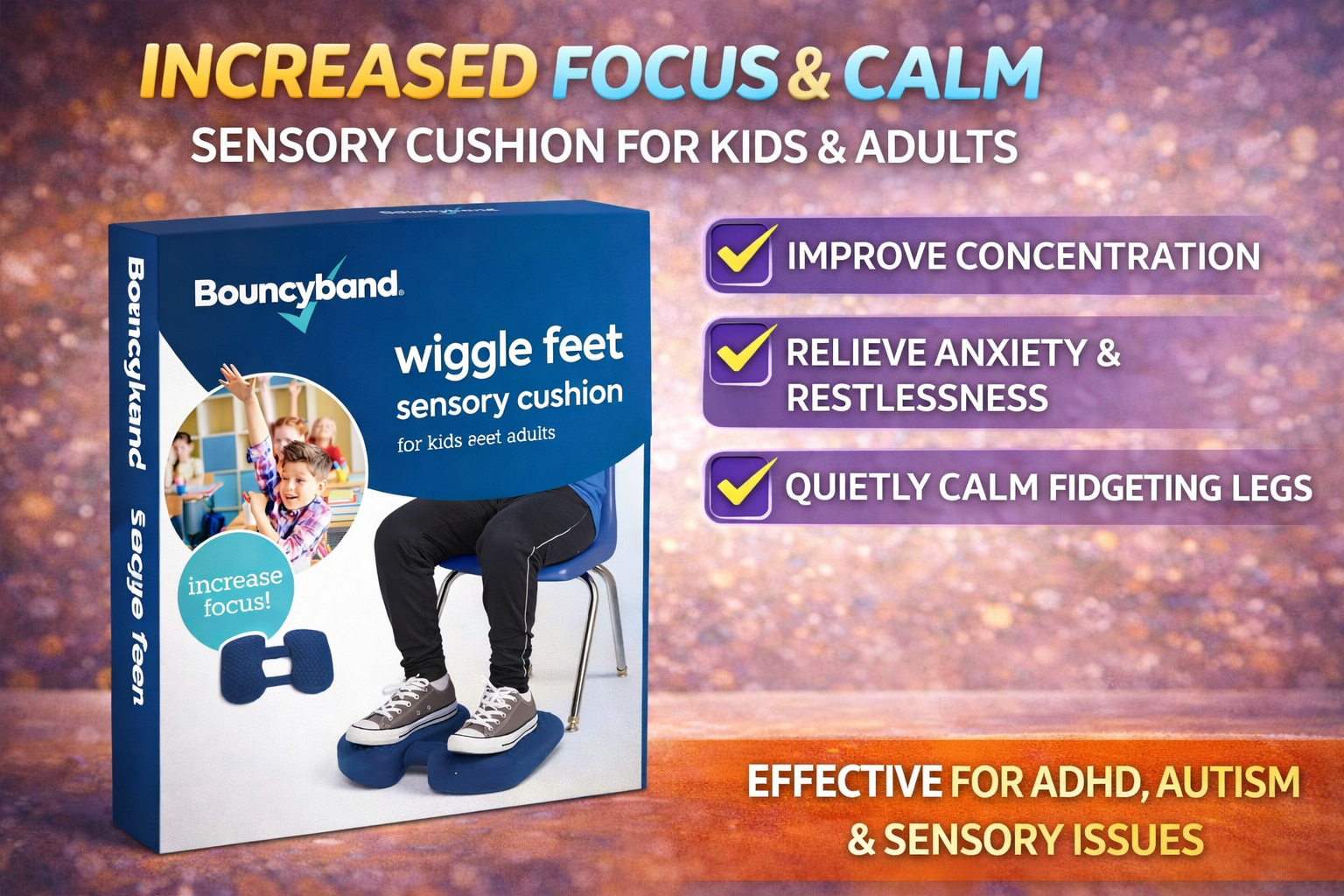
The child’s attention has to shift from one activity and set of information to another. For children who need a quiet physical outlet during transitions, a sensory foot cushion may be one option to consider alongside clear cues and routines.
That’s why our article on why transitions are so hard for kids with ADHD connects so closely with forgetfulness.
Sometimes what looks like a memory problem is partly a transition problem.
The child isn’t calmly standing there thinking about everything they need.
They’re trying to disengage from one activity while moving into another.
Don’t Sneak Important Instructions Into a Transition
I’ve done this countless times.
My child is walking out the door and I suddenly say:
“Oh, and remember when you get home you need to put your clothes away and bring me that paper your teacher gave you.”
That’s exactly the kind of instruction most likely to disappear.
There are already too many things happening.
If it’s important later, I want it written down, placed somewhere visible, or attached to a predictable routine.
I don’t want to depend on a rushed sentence surviving inside a distracted child’s brain for six hours.
Homework Creates Its Own Memory Problems
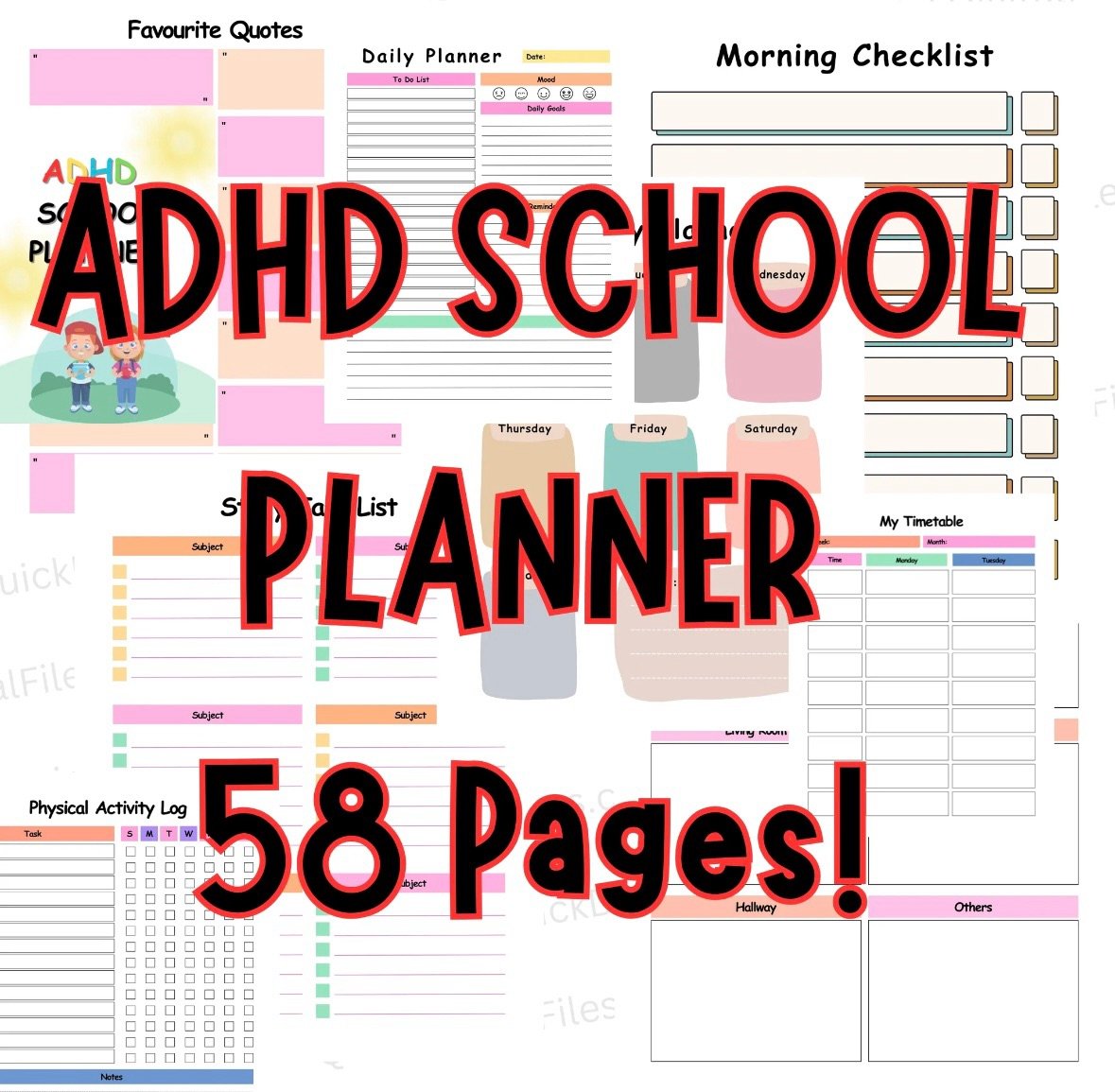
Homework isn’t only about completing the assignment. A school homework planner can give the homework process a visible place for tracking materials, steps, and submission.
The child has to remember that there is homework, know where the worksheet is, bring home the right materials, complete it, put it back in the folder, put the folder in the backpack, and actually turn it in.
That’s a long chain.
A child can complete the homework perfectly and still receive a zero because the paper never makes it out of the backpack.

Our ADHD homework tips for parents cover this broader problem because sometimes the academic ability isn’t the biggest obstacle.
The system surrounding the work is.
Chores Can Fail for the Same Reason
“Take the trash out after dinner.”
The child agrees.
Dinner ends.
They see something interesting.
The trash disappears from their mind.
An hour later, I assume they deliberately ignored me.
Maybe they did.
But if this happens constantly, I want to stop depending on remembering a delayed instruction.

Our guide to ADHD chores for kids looks at how making chores specific, predictable, and connected to routines can reduce some of these battles.
“After dinner, trash goes out” is easier to build into a habit than a random instruction delivered hours beforehand.
Attach New Habits to Things That Already Happen
This is one of my favorite ways to reduce remembering.
Instead of asking the child to remember something at an arbitrary time, connect it to an existing event.
After breakfast, brush teeth.
When you come inside, shoes go on the rack.
After homework, the folder goes directly into the backpack.
Before the tablet turns on, the room gets checked.
The existing event becomes a cue.
I’m not asking the child to suddenly remember something out of nowhere.
I’m building one behavior onto something that’s already happening.
Don’t Turn Every Forgotten Thing Into a Character Judgment
This is especially important because forgetting gets old fast.
After the hundredth lost water bottle, it’s easy to say:
“You’re so irresponsible.”
But that’s not very actionable.
The child can’t go upstairs and become “more responsible” before breakfast.
They can put the water bottle beside the backpack.
That’s concrete.
I want to correct the problem without turning the problem into the child’s identity.
This matters even more for a child who already gets extremely upset when corrected.
We can hold kids accountable without making every mistake a statement about who they are.
Forgetting Can Become Emotional Very Quickly
The child forgets something.
I become frustrated.
They feel criticized.
They become defensive.
I point out that this happens constantly.
They become even more upset.
Now we’re arguing about tone, fairness, and what happened last Tuesday while the original issue was a missing lunchbox.

For children who tend to take everything personally, repeated forgetfulness can create a painful cycle because they may feel like they’re constantly disappointing someone.
That’s another reason I want systems handling as many predictable problems as possible.
Fewer failures can mean fewer corrections.
Natural Consequences Can Sometimes Teach Better Than Lectures
I don’t want to rescue every forgotten item forever.
If I repeatedly drive back to school with something my child forgot, the system may never become their responsibility.
Of course, age and circumstances matter. I’m not going to let a young child go without something essential just to prove a point.
But for reasonable, low-stakes situations, experiencing the inconvenience of forgetting can sometimes make the need for a system more obvious.
Then later we can ask:
“What could help you remember tomorrow?”
Now we’re problem-solving instead of lecturing.
Praise the System, Not Just the Memory
If my child remembers the backpack because they checked the list, that’s a success.
I don’t care that they needed the list.
Adults use systems constantly.
I might say:
“You checked your list and caught the water bottle before we left. Nice.”
That’s exactly the behavior I want to reinforce.
The CDC describes behavior therapy for ADHD as encouraging positive behaviors and teaching parents and caregivers strategies that provide structure and support.
Using a tool successfully is progress.
Gradually Let the Child Own Their System
At first, I may create the checklist.
Then we create it together.
Eventually, maybe the child updates it themselves.
The same applies to alarms, calendars, backpack routines, homework systems, and other reminders.
The American Academy of Pediatrics describes these supports almost like scaffolding. As children develop more self-management skills and routines become established, some supports can gradually be removed.
That’s exactly how I think about it.
Support isn’t supposed to permanently replace independence.
It’s supposed to help build independence.
What If the Forgetfulness Is Much Worse Some Days?
I’d look for patterns before assuming something dramatic has changed.
Is the child exhausted?
Hungry?
Rushed?
Overwhelmed?
Has the routine changed?
Are we asking more than usual?
Did they have an unusually difficult day at school?

For children taking ADHD medication, parents may also notice changes in attention or behavior as medication takes effect or wears off. The American Academy of Pediatrics recommends observing these daily patterns and discussing medication-related concerns with the child’s clinician rather than adjusting treatment on your own. The relationship between ADHD medication timing and sleep is explained in ADHD medication timing and sleep.
Patterns give us useful information.
When I’d Bring Forgetfulness Up With the School
If my child isn’t only forgetting things at home but also regularly losing assignments, leaving materials behind, forgetting instructions, failing to turn in completed work, or struggling to keep track of classroom responsibilities, I’d want the teacher involved.
The school may already be seeing the same pattern.
Classroom strategies for ADHD can include consistent routines, shorter assignments, breaking work into sections, positive cues, and other organizational supports.
I want home and school solving the same problem rather than each assuming the other is handling it.
When Forgetfulness Deserves a Conversation With the Doctor
ADHD commonly involves forgetfulness and distractibility, but I don’t want to assume every memory concern is automatically explained by ADHD.
If forgetfulness seems dramatically worse than usual, suddenly appears, is affecting many areas of functioning, or comes with other significant changes in behavior, learning, mood, sleep, or development, I’d bring it to the child’s pediatrician.
I’d also bring it up if the child’s existing ADHD treatment doesn’t seem to be adequately helping everyday functioning.
A clinician can look at the whole picture rather than us trying to determine the cause from one symptom.
I Don’t Want “Remember!” to Be My Entire ADHD Strategy
This is probably the biggest change I’ve made in how I think about ADHD forgetfulness.
If my child consistently forgets something, telling them to remember harder isn’t much of a plan.
I want to find where memory is failing.
Was the instruction too long? Did I actually have their attention? Was there too much time between the instruction and the task? Did a transition interrupt them? Is the responsibility predictable enough to become a routine? Could a checklist, alarm, visual cue, or permanent location do some of the remembering?

Once I start asking those questions, forgetfulness becomes something we can actually work with. Adding engaging focus activities to a routine may also give a child a satisfying way to practice staying engaged.
And my long-term goal isn’t to become the parent standing behind my child forever saying:
“Don’t forget your backpack.”
“Don’t forget your homework.”
“Don’t forget your shoes.”
I want my child to eventually recognize where their own memory tends to fail and know what to do about it.
Maybe they become the teenager who uses phone reminders.
Maybe they’re the adult who lives by a calendar.
Maybe they always keep their keys in exactly the same place because they know what happens otherwise.
That’s not failure.
That’s self-management.
And teaching a child with ADHD how to build a life that doesn’t depend on remembering everything at exactly the right moment may be far more useful than simply telling them, once again, not to forget.
About the Author: Emily Parker
Emily Parker writes for TheADHDBlog.com about raising and supporting children with ADHD, focusing on executive-function challenges, emotional regulation, routines, transitions, school struggles, and the everyday behaviors that can leave families searching for practical answers. Her work combines real-world parenting strategies with established ADHD and pediatric guidance to help families understand the behavior underneath the frustration and build supports that encourage greater independence.