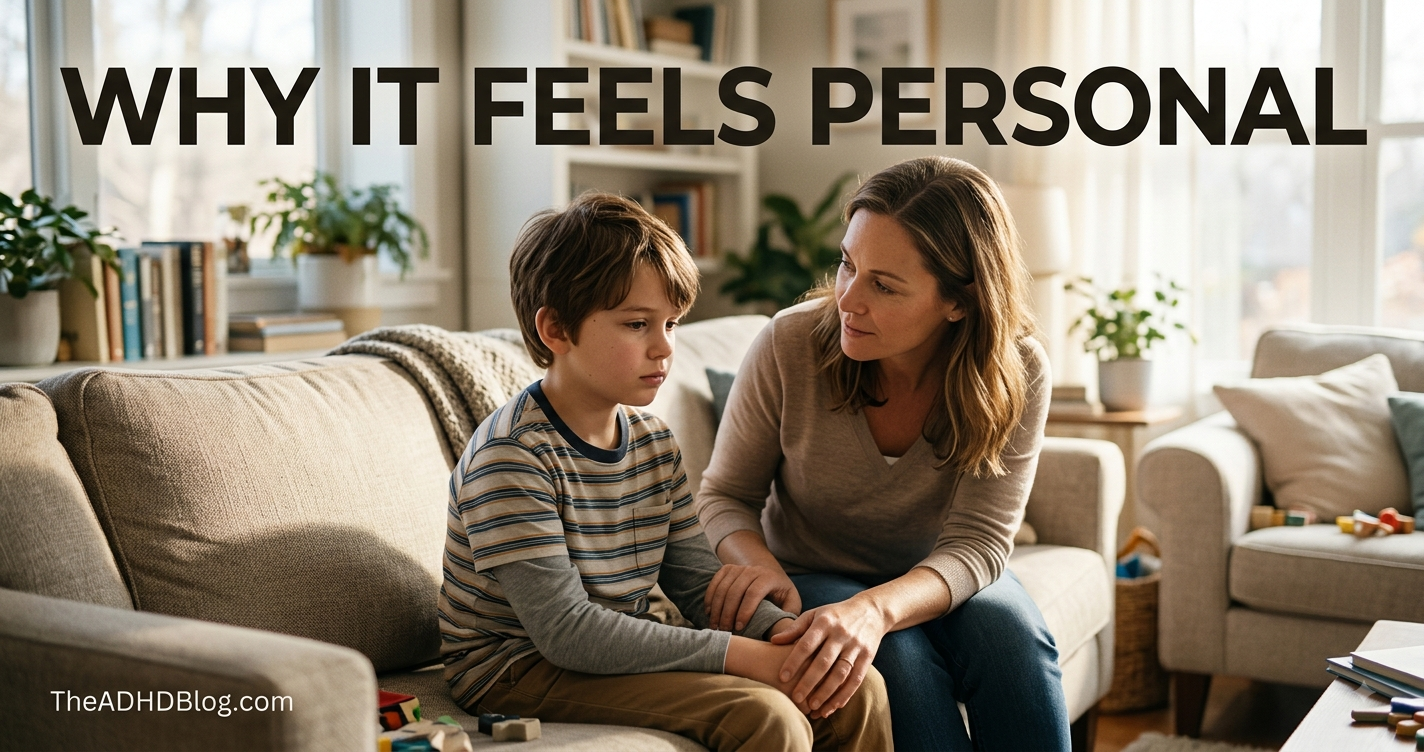
Sometimes I can make what seems like the most harmless comment in the world and somehow end up with a child who thinks I’m angry, disappointed, or criticizing them.
I might say, “Hey, don’t forget your water bottle.”
The response sounds like I just accused them of ruining the entire morning.
“I KNOW! You don’t have to keep telling me!”
Or maybe a sibling makes a joke that everyone else forgets about 30 seconds later, but my child is still thinking about it an hour later. A friend doesn’t sit beside them at lunch and suddenly they’re convinced the friend doesn’t like them anymore. A teacher corrects something on an assignment and the rest of the day feels ruined.
If you’ve seen enough of these reactions, you’ve probably wondered the same thing I have:
Why does my ADHD child take everything so personally?
There’s no single explanation that fits every child, and I don’t think it’s helpful to label every emotional reaction as “just ADHD.” But ADHD can involve difficulties with emotional regulation, and some people with ADHD describe particularly intense reactions to criticism, rejection, mistakes, or the feeling that they’ve disappointed someone. Research on rejection sensitivity in ADHD is still developing, so I think it’s important to separate what we know from some of the much stronger claims you’ll find online. When emotional overload becomes a loss of control, recognizing an an ADHD meltdown in a child can help distinguish it from ordinary frustration.
For me, the useful question isn’t whether my child is too sensitive.
It’s figuring out what they’re hearing, feeling, and assuming in these moments, and then helping them develop better ways to handle it.
Taking Things Personally Can Look Very Different From One ADHD Child to Another
When I say a child “takes everything personally,” I don’t necessarily mean crying.
One child may cry immediately after being corrected. Another becomes defensive and starts arguing. Another gets angry. Some children shut down, walk away, or refuse to talk. Others replay the interaction repeatedly and want reassurance that nobody is mad at them.
You might even see different reactions from the same child depending on the day.
That’s one reason I don’t want to focus only on the outward behavior. I want to understand what happened immediately before it.
Was there criticism?
A mistake?
A joke?
A change in someone’s tone?
Feeling excluded?
Losing a game?
Being corrected in front of somebody?
Thinking a parent was disappointed?
Those patterns tell me much more than simply deciding my child is “overly sensitive.”
Emotional Regulation Can Be Part of the ADHD Picture
ADHD is usually discussed in terms of inattention, hyperactivity, and impulsivity. Those are central to the diagnosis, but emotional regulation difficulties are also commonly discussed in ADHD research and clinical literature. When those regulation difficulties overflow into intense behavior, it helps to distinguish ADHD emotional regulation difficulties from an ordinary tantrum.
The important nuance is that emotional dysregulation is not itself one of the core diagnostic criteria for ADHD, and not every child with ADHD experiences it in the same way. Research does, however, show an association between ADHD symptoms and greater emotional lability or difficulty regulating reactions.
That distinction matters to me because I don’t want to tell parents:
“Your child has ADHD, therefore every big emotion is ADHD.”
That’s too simple.
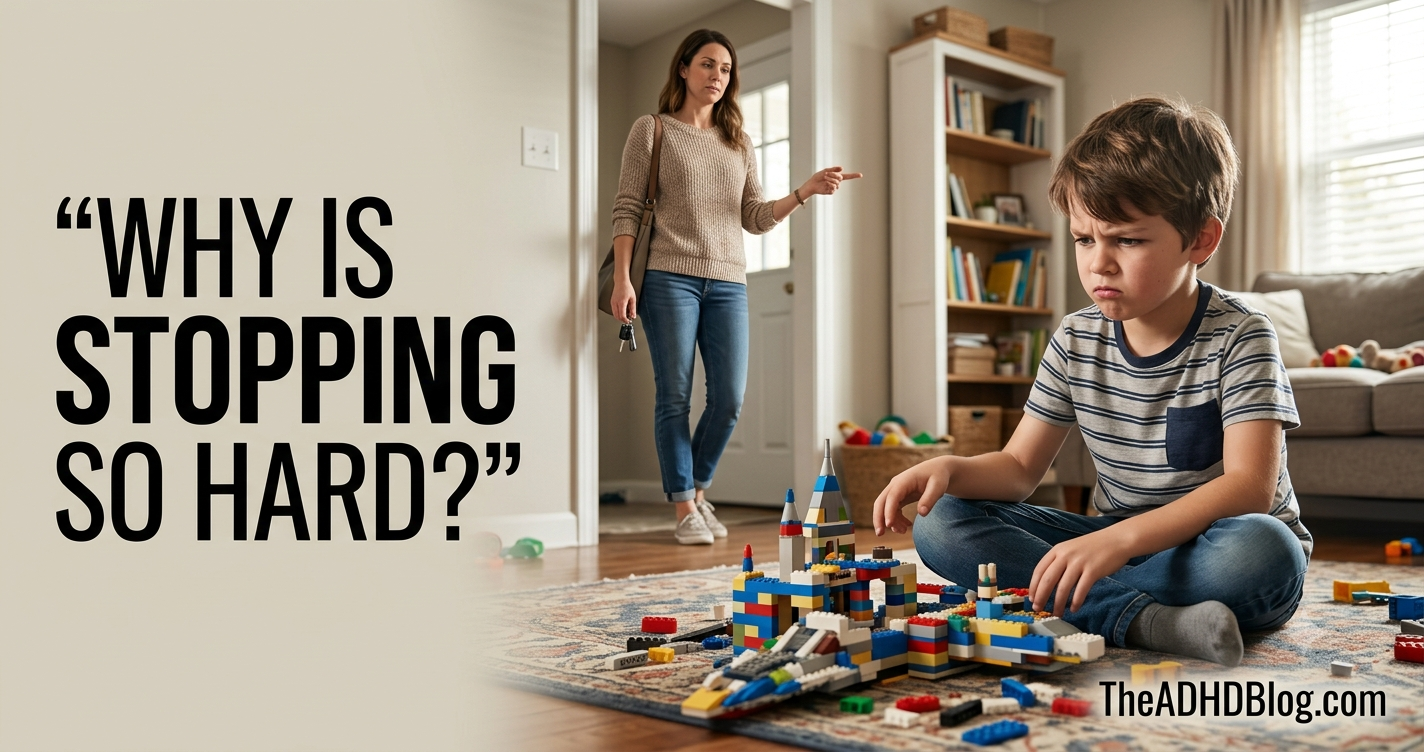
What I can say is that when a child already has difficulty slowing an impulsive response, shifting attention, tolerating frustration, or regulating emotion, a negative comment may hit quickly and intensely. The same difficulty shifting attention can also help explain why shifting attention can be difficult.
By the time I’m explaining what I actually meant, my child may already be upset.
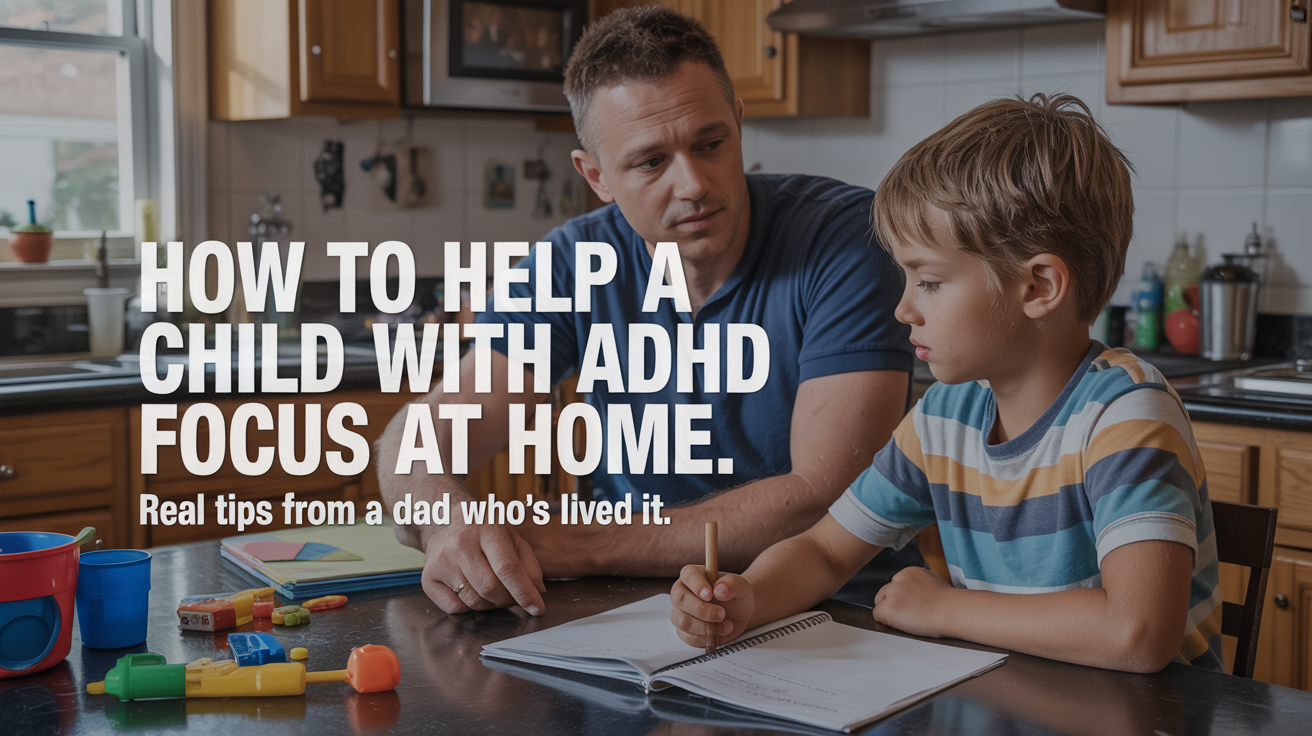
Sometimes My Child Hears Criticism That I Didn’t Intend
This is where these interactions get tricky.
Suppose I say:
“Your room still needs to be picked up.”
I mean exactly that. The room needs to be picked up.
My child may hear something closer to:
“You didn’t do what you were supposed to do.”
Then emotionally:
“I’m always messing up.”
And eventually:
“Mom or Dad is disappointed in me.”
Notice how far we’ve traveled from my original sentence.
I didn’t say most of those things.
But emotions aren’t always neat transcripts of what another person literally said.
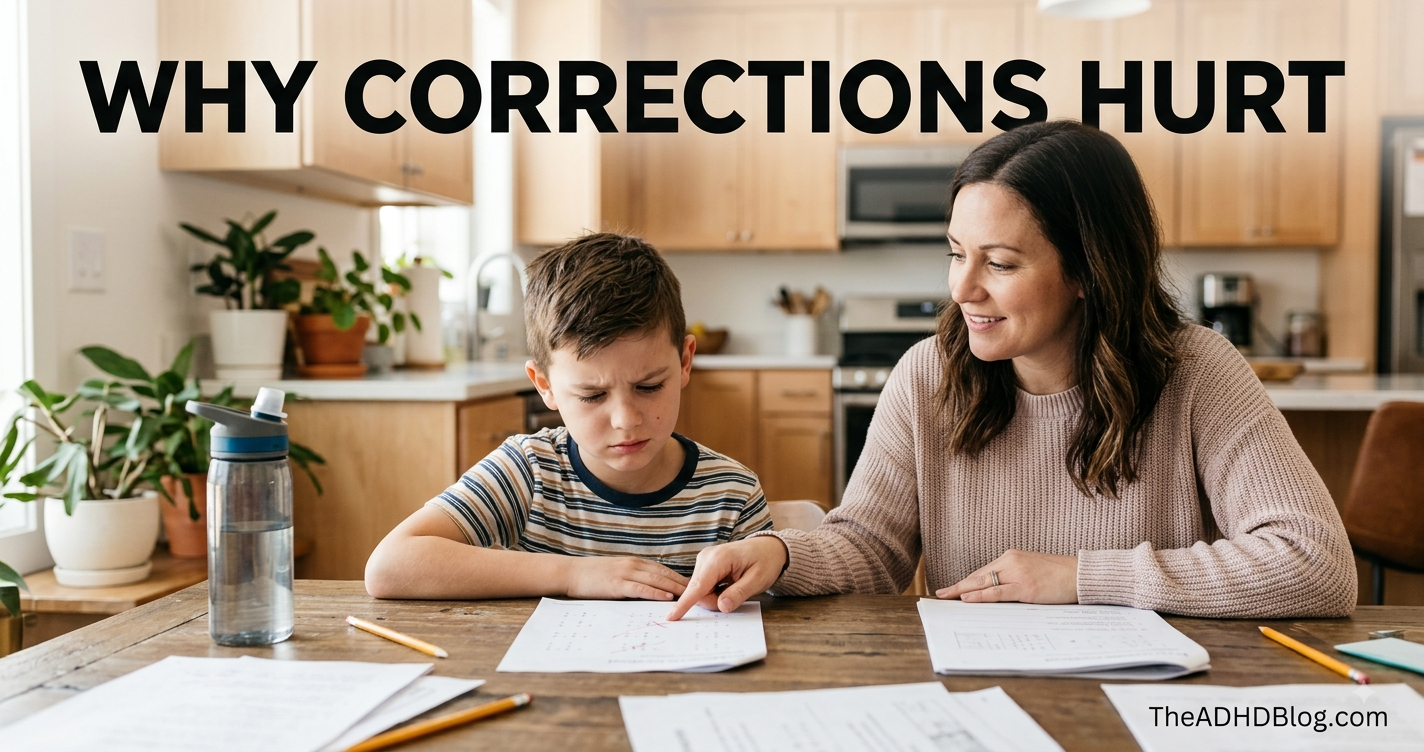
That’s why the article we just published on why an ADHD child can become so upset when corrected fits so closely with this problem.
Sometimes the reaction isn’t really about the reminder itself. It’s about what the child believes that reminder means about them.
A Long History of Corrections May Matter
I think parents sometimes underestimate how much corrective feedback a child struggling with ADHD can receive.
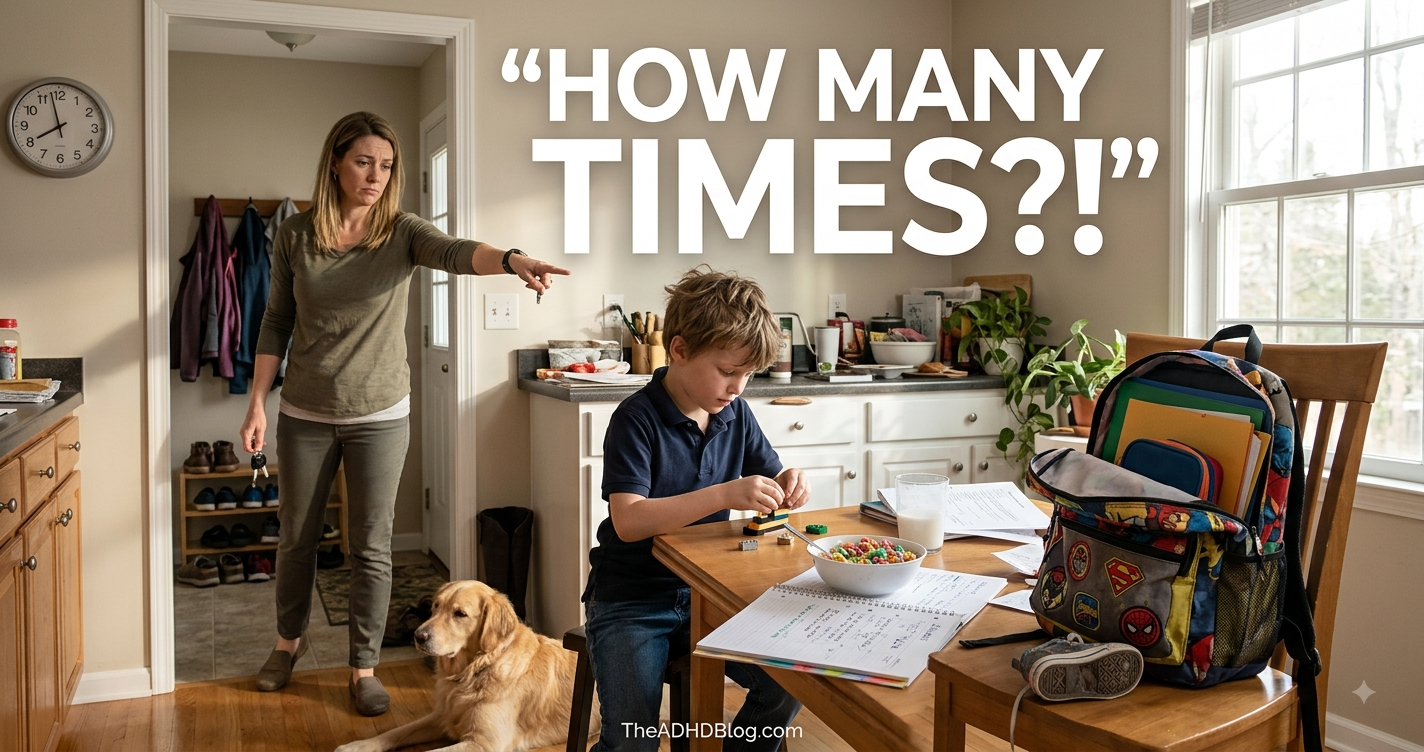
A school day may involve reminders about talking, moving, listening, assignments, belongings, interrupting, transitions, organization, and finishing work. Then the child gets home and we’re reminding them about homework, shoes, chores, backpacks, siblings, dinner, showers, and bedtime. That exhausting pattern is closely connected to the cycle of repeated reminders, especially when remembering and carrying out instructions are separate challenges.
Again, none of those expectations are automatically unreasonable.
But imagine being the person receiving them.
Eventually, a neutral reminder may start feeling less neutral.
The CDC notes that children with ADHD may have difficulty following rules even when they’re trying, may be punished more frequently, and can experience negative effects on self-image.
That’s something I want to keep in the back of my mind when a child reacts to one more correction like it was much bigger than I intended.
Why Does My ADHD Child Think I’m Mad at Them?
This can become a repeating conversation.
“Are you mad at me?”
“No.”
Five minutes later:
“Are you sure you’re not mad?”
Sometimes I’ve barely changed my tone.
For a child who’s highly sensitive to signs of disapproval, small changes in facial expression, wording, or tone may feel important. They may interpret an ordinary response more negatively than I intended.
I don’t want to spend the child’s entire life reassuring them that nobody is ever upset with them. People will sometimes be upset with them.
Instead, I want to help them get better at checking their interpretation.
“You think I’m mad because I sounded serious. I’m not mad. I was reminding you about your shoes.”
Now we’re separating the child’s interpretation from what actually happened.
That’s a skill they’ll need with friends, teachers, coworkers, partners, and plenty of other people later in life.
Rejection Can Feel Enormous
Being left out hurts.
That isn’t an ADHD thing. It hurts almost everyone.
But some people with ADHD report unusually intense emotional responses to real or perceived rejection or criticism. Research into rejection sensitivity specifically in ADHD remains limited, although recent qualitative research has documented experiences involving embarrassment, anxiety, withdrawal, and intense distress around perceived rejection.
For a child, rejection may be something as simple as:
A friend choosing another partner.
Not being invited somewhere.
Someone not answering them.
A sibling wanting to play alone.
A friend sitting somewhere else.
Another child disagreeing with them.
The situation may be ordinary.
The emotional meaning the child attaches to it can become enormous.

Be Careful With the Term Rejection Sensitive Dysphoria
If you’ve searched online for ADHD and taking things personally, you’ve probably encountered the term rejection sensitive dysphoria, usually shortened to RSD.
It’s often used to describe intense emotional pain related to perceived criticism, rejection, or failure.
I think parents should know the term because they’re going to encounter it, but we also need to be accurate about what it means.
RSD is not currently an official medical or psychiatric diagnosis. It’s a popular term within ADHD discussions, but research into rejection sensitivity and ADHD is still developing.
So I wouldn’t diagnose my child with RSD because they cried when a friend didn’t invite them over.
I would pay attention to the underlying pattern.
How often does this happen? How intense is it? What situations trigger it? How long does it affect them? Is it hurting friendships, school, family life, or their self-esteem?
Those questions are much more useful than attaching a label ourselves.
Mistakes Can Feel Personal Too
Sometimes there isn’t another person rejecting the child at all.
They simply get something wrong.
A math answer is incorrect and they immediately say they’re stupid. They lose a game and decide they’re terrible at it. A drawing doesn’t look right and suddenly they want to throw the entire thing away.
This is where frustration and perceived failure can become tangled together.
Instead of:
“I got this problem wrong.”
the child jumps to:
“I’m bad at math.”
That’s a major difference.
One describes an event.
The other describes the child’s identity.
I want to catch those statements because that’s exactly the thinking I don’t want one mistake reinforcing.
I Try to Separate What Happened From Who My Child Is
This is useful even when I’m the one doing the correcting.
Instead of:
“You’re so careless with your stuff.”
I can say:
“Your backpack got left at school.”
Instead of:
“You’re being lazy.”
I can say:
“The clothes still need to be put away.”
Instead of:
“You’re always rude to your brother.”
I can address the actual behavior that happened.
Specific feedback gives the child something they can change.
Character labels don’t.
If a child already tends to take criticism personally, describing the behavior rather than labeling the child becomes even more important.
Crying May Be How This Sensitivity Comes Out
For some kids, hurt feelings turn into tears almost immediately.
The correction is small, but they’re crying.
A sibling makes a comment and they’re crying.
They lose a game and they’re crying.
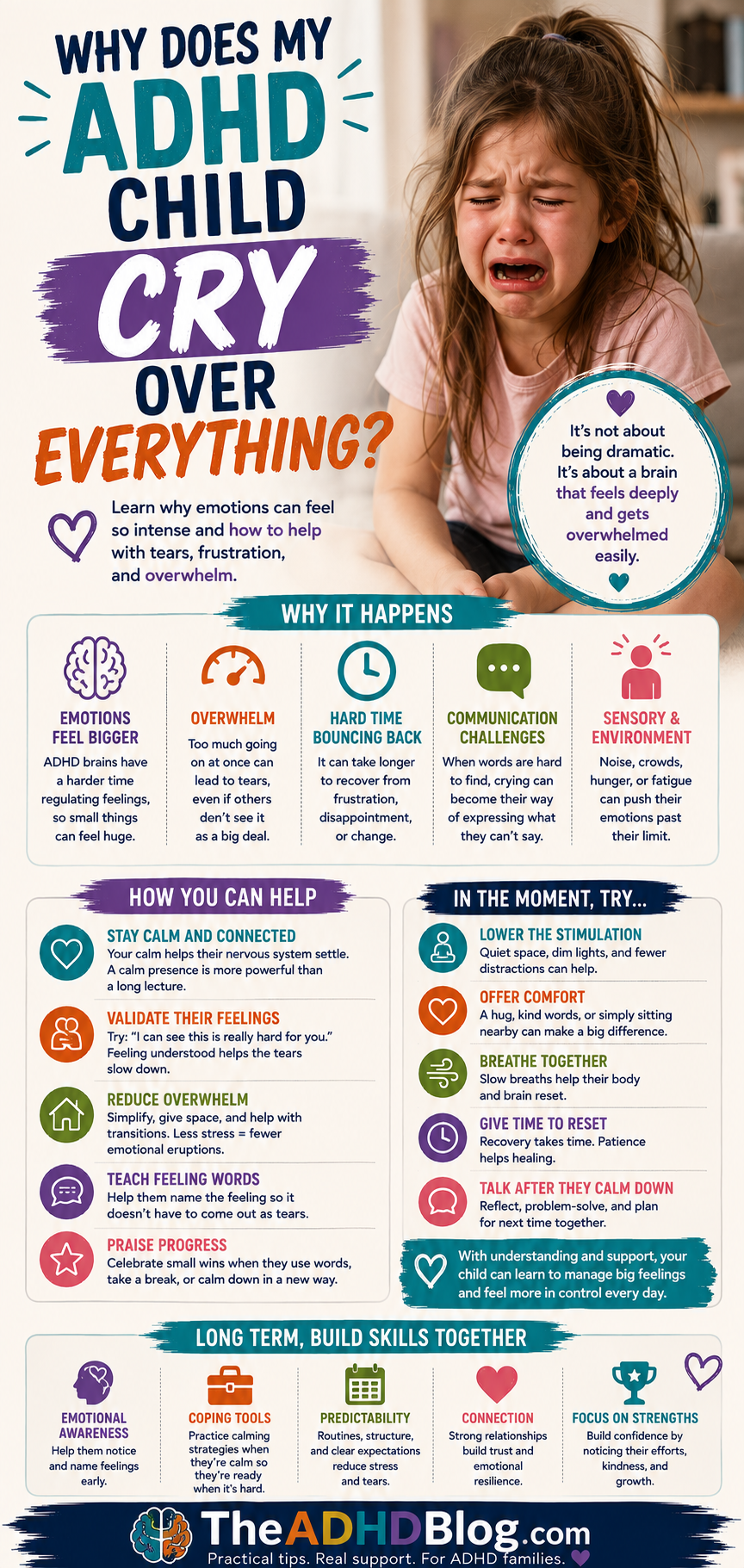
I’ve gone much deeper into this pattern in why some ADHD children seem to cry over everything.
What looks like sadness may sometimes be frustration, embarrassment, disappointment, or overwhelm coming out through tears.
Instead of immediately telling the child there’s nothing to cry about, I want to know what the tears are telling me.


Other Kids Go Straight to Anger
This is the reaction that can make sensitivity harder to recognize.
A child who feels criticized may not look hurt at all.
They look furious.
You correct them and they snap back. A sibling jokes with them and they scream. A friend disagrees and they storm off.
Underneath that anger may be embarrassment or the feeling that they’ve been attacked.
That doesn’t excuse aggressive or disrespectful behavior, but it changes how I understand what’s happening.
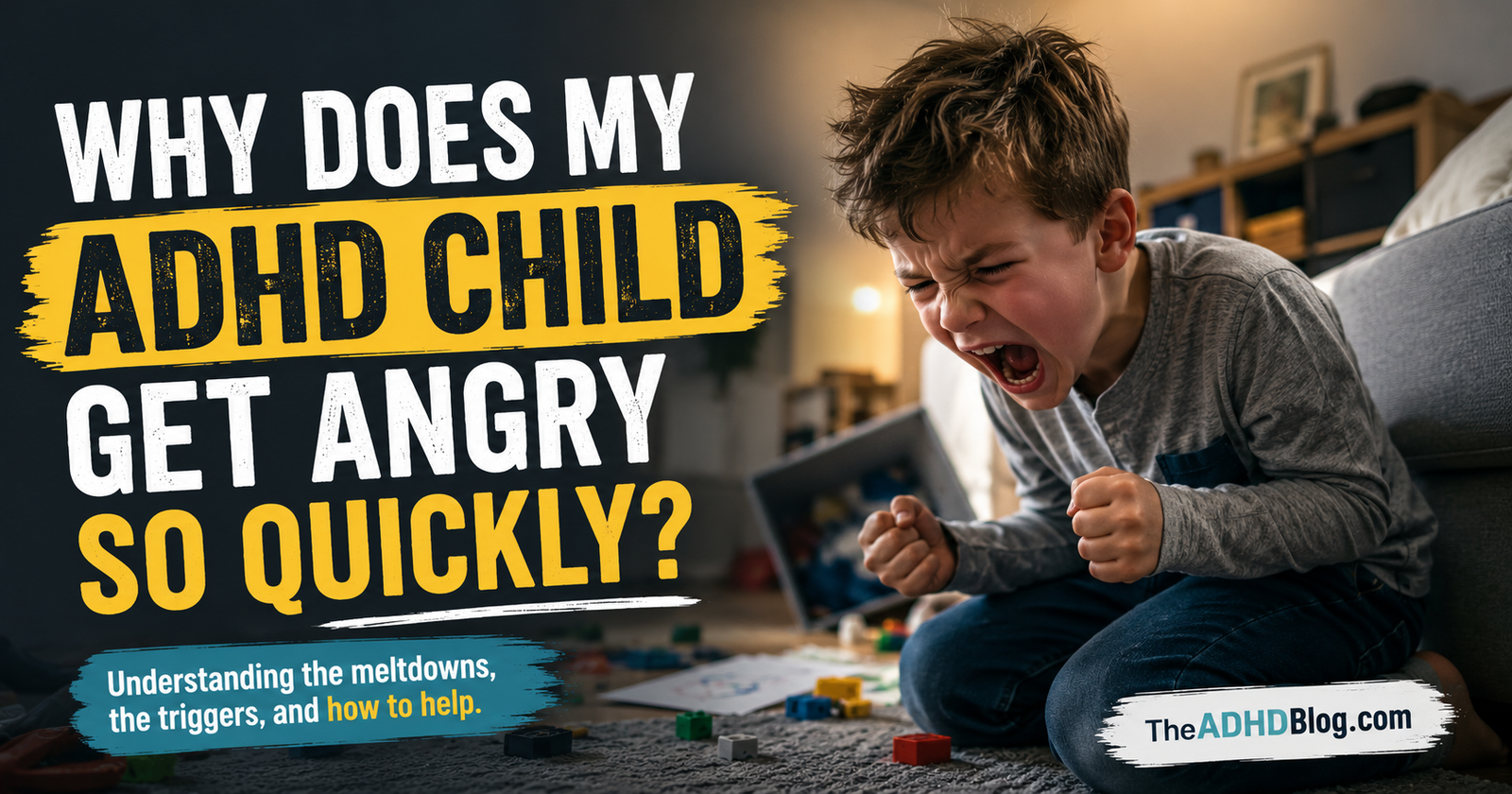
Our guide on why ADHD children can get angry so quickly looks much more closely at those rapid emotional reactions.
I can validate the feeling while still holding the boundary around the behavior.
Sometimes Defensiveness Is an Attempt to Escape the Feeling of Being Wrong
This one can drive parents crazy.
You know what happened.
Your child knows what happened.
Yet suddenly they’re arguing every tiny detail.
“I didn’t do that!”
“He did it first!”
“That’s not what I meant!”
“You always blame me!”
My instinct is to prove the facts.
Sometimes that’s necessary.
But sometimes we’re having a ten-minute courtroom trial because the child is desperately trying to escape the uncomfortable feeling of being wrong.
I don’t need to win every side argument.
I need to keep the correction clear.
“I understand you’re upset. You still can’t throw the controller.”
Now we’ve stopped debating six unrelated things and returned to the behavior that actually matters.
Sibling Teasing Can Become a Huge Trigger
Siblings are exceptionally good at finding each other’s emotional buttons.
A joke that sounds harmless to me may genuinely bother my child.
My first instinct might be:
“They’re just teasing you. Ignore it.”
Sometimes that’s reasonable.
But if the same teasing repeatedly produces a huge reaction, I want to teach more than ignoring.
Can my child say:
“I don’t like that.”
Can they walk away?
Can they recognize when the sibling is deliberately trying to get a reaction?
Can the other child learn when a joke needs to stop?
I don’t want one child controlling the entire family with emotional reactions, but I also don’t want “you’re too sensitive”becoming permission for everybody else to keep poking at them.
Friendship Problems Can Feel Like Full Rejection
Childhood friendships change constantly.
Best friends argue.
Kids play with somebody different.
Someone doesn’t get invited.
Plans change.
For a child who takes these situations personally, one ordinary friendship problem can become:
“Nobody likes me.”
That’s where I want to slow down the interpretation.
Instead of immediately saying:
“That’s ridiculous. Of course people like you.”
I might ask:
“What actually happened?”
Maybe the answer is that one friend played soccer with somebody else at recess.
That’s the event.
“Nobody likes me” is the conclusion.
Helping children learn to separate those two things can be incredibly valuable.
Don’t Immediately Fix Every Rejection
This is difficult because seeing your child hurt is awful.
If another child doesn’t invite them somewhere, my instinct may be to solve it.
Call the parent.
Arrange something.
Explain why my child should have been included.
But children also have to gradually learn how to survive ordinary disappointment and social uncertainty.
That doesn’t mean ignoring bullying, repeated exclusion, or serious social problems.
It means I don’t want to unintentionally teach:
If rejection feels terrible, somebody must immediately remove the rejection.
Sometimes the skill we’re building is:
“That hurt. I can handle feeling hurt, and I’ll still be okay.”
Validation Doesn’t Mean Agreeing With the Interpretation
This distinction has helped me tremendously.
My child says:
“My teacher hates me.”
I don’t need to say:
“Yes, she does.”
I also don’t have to say:
“That’s ridiculous.”
I can say:
“It sounds like you felt really embarrassed when she corrected you.”
I’ve validated the emotion without confirming something I don’t know to be true.
Then we can investigate.
“What did she actually say?”
That’s a much better conversation.
Try to Avoid “You’re Too Sensitive”
I understand why parents say it.
Sometimes the reaction genuinely seems enormous.
But what information does:
“You’re too sensitive”
actually give the child?
It mostly tells them their emotional response is wrong.
I’d rather help them understand the response.
“That comment really bothered you.”
Then:
“What did you think he meant?”
Now we’re getting somewhere.
Maybe the child completely misunderstood.
Maybe they didn’t.
Either way, we have something specific to work with.
Help Your Child Check the Story Their Brain Created
This is one of my favorite strategies for these situations.
Something happens.
Then our brain creates a story about what it means.
Event: My friend didn’t answer me.
Story: She’s mad at me.
There could be ten other explanations.
Maybe she didn’t hear.
Maybe she was distracted.
Maybe someone else was talking.
Maybe she was having a bad day.
I want my child to learn that their first interpretation isn’t automatically a fact.
That doesn’t mean teaching them to distrust their feelings.
It means teaching them to investigate the story attached to those feelings.
Ask One Simple Question
A question I like is:
“What else could that mean?”
The teacher sounded serious.
What else could that mean besides she’s mad at you?
Your friend didn’t sit with you.
What else could that mean besides they don’t like you anymore?
Dad reminded you about homework.
What else could that mean besides he’s disappointed in you?
At first, the child may not have another explanation.
That’s okay.
I can offer possibilities.
Over time, I want them generating those possibilities themselves.
Don’t Over-Reassure Every Single Time
This is a balance.
Of course I reassure my child.
But if every uncertain social situation leads to 30 minutes of:
“Are you sure they like me?”
“Yes.”
“But are you really sure?”
“Yes.”
“How do you know?”
we may not actually be building confidence.
I want to help the child tolerate some uncertainty too.
“I don’t know exactly why she didn’t answer you. One moment doesn’t tell us what she thinks about you. Let’s see what happens tomorrow.”
That’s different from promising something I can’t actually know.
Praise Recovery, Not Just the Absence of Emotion
I don’t expect my child to stop caring what people think.
That’s not the goal.
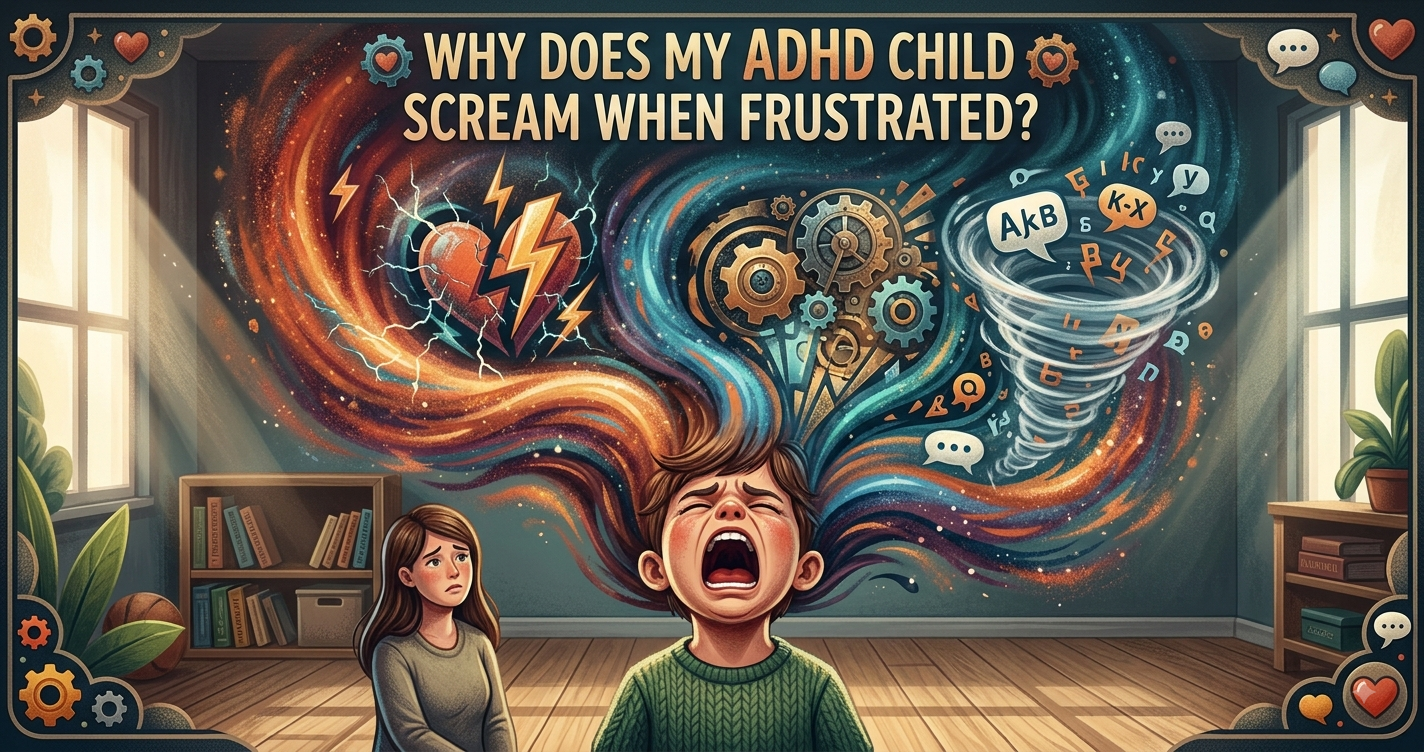
Maybe they become upset but eventually reconsider what happened. Maybe they accept a correction without arguing. Maybe they tell a sibling, “That bothered me,” instead of screaming. For more context on what can trigger an ADHD child’s screaming, it helps to look at what happens when frustration moves faster than a child’s ability to explain it.
Those are the moments I want to notice.
The CDC recommends clear communication, realistic goals, praise, positive reinforcement, and consistent behavioral strategies for children with ADHD.
If my child handles a difficult emotional moment even slightly better than before, that’s something worth reinforcing.
Watch What Happens at School Too
If your child constantly thinks teachers are angry with them or peers don’t like them, I’d want to know what’s actually happening at school.
Talk with the teacher.
Not:
“Why are you always criticizing my child?”
Instead:
“We’re noticing they seem very sensitive to correction lately. Are you seeing that too?”
Maybe the teacher has noticed the same pattern.
Maybe something else is happening socially.
Maybe your child is receiving much more correction than you realized.
The CDC recommends close collaboration among families, schools, and healthcare providers for children with ADHD, and specifically notes that schools should consider ADHD’s influence on emotions and self-esteem.
The more consistent the adults are, the easier it is to figure out what the child actually needs.
Taking Everything Personally Can Turn Into a Meltdown
Sometimes hurt feelings don’t stay hurt feelings.
The child feels criticized, becomes defensive, starts arguing, gets angrier, begins crying or screaming, and suddenly we’re in a full meltdown.
At that point, continuing to debate what somebody meant usually isn’t productive.
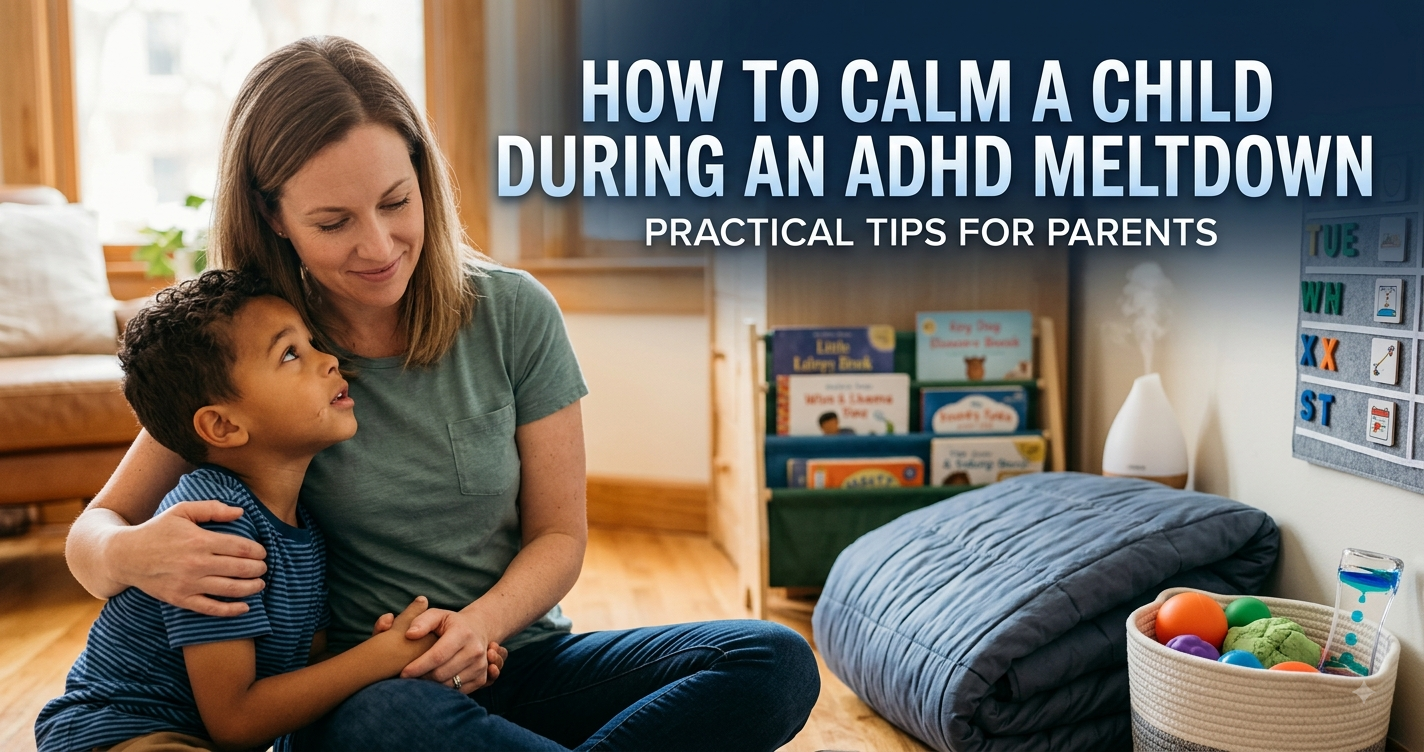
Our guide on how to calm a child during an ADHD meltdown covers what I focus on once the child is already overwhelmed.
The discussion about whether the sibling’s comment was actually insulting can wait.
Calm comes first.
Afterward Is When I Want to Understand What Happened
Once everyone is genuinely calm, I can return to the situation.
“Earlier, when I reminded you about your homework, you got really upset. What did you think I meant?”
That question can reveal a lot.
Maybe:
“I thought you were mad.”
“I thought you thought I was stupid.”
“I already knew I forgot.”
“I thought you were making fun of me.”
Now we’re finally talking about the real issue.
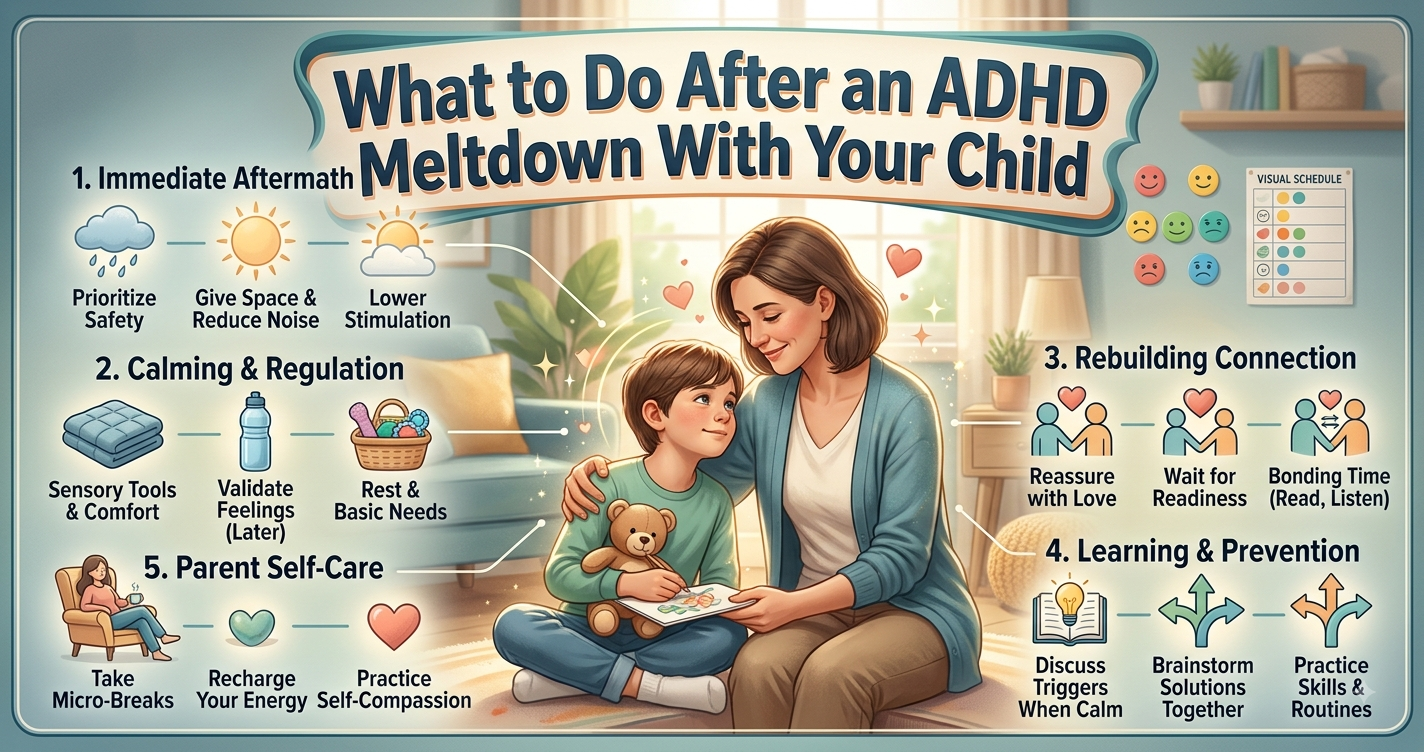
I’ve written a separate guide on what to do after an ADHD meltdown with your child because these calm conversations can help us identify triggers and create better responses for next time.
I Also Look at How I Give Feedback
This doesn’t mean blaming myself for every reaction.
It means asking whether I can make feedback easier to use.
Am I correcting the behavior or criticizing the child?
Am I bringing up five old mistakes while addressing one new one?
Am I correcting them in front of siblings when I could do it privately?
Am I using sarcasm?
Am I giving long lectures?
Am I noticing positive behavior too?
Am I correcting the same problem repeatedly when a routine or visual reminder could solve it better?
Those questions are worth asking even if my child didn’t have ADHD.
Behavior Therapy Can Help Families With These Patterns
If these reactions are creating constant conflict at home, parents don’t necessarily have to invent every strategy themselves. A practical ADHD parenting resource may give parents another starting point for handling these recurring moments.
Parent training in behavior management is an evidence-based ADHD treatment. It teaches parents strategies that can improve behavior, self-control, communication, and family interactions. For young children with ADHD, it is a particularly important part of recommended treatment.
That’s different from someone simply telling you to “be more patient.”
Parents can learn concrete ways to communicate expectations, reinforce positive behavior, and respond consistently when difficult behavior occurs.
Taking Things Personally Isn’t Always ADHD
This is where I want to be careful.
A child with ADHD can also have anxiety.
They can be bullied.
They can struggle with self-esteem.
They can have learning difficulties.
They can experience depression.
They can be autistic.
They can be dealing with stress or something happening within their friendships or family.
A child’s ADHD diagnosis shouldn’t become an explanation for every emotional problem they ever experience. For parents who recognize similar lifelong patterns in themselves, adult ADHD diagnosis can help explain what ADHD may look like beyond childhood.
If the sensitivity is severe, new, worsening, or interfering significantly with school, friendships, or family life, I would bring the pattern to the child’s pediatrician or another qualified professional rather than assuming we know the cause.
Pay Attention to How Your Child Talks About Themselves
This is one area I take seriously.
There’s a difference between:
“I’m mad that I got that wrong.”
and:
“I’m stupid.”
There’s a difference between:
“She didn’t play with me today.”
and:
“Nobody likes me.”
There’s a difference between:
“Dad got mad at what I did.”
and:
“Dad hates me.”
Those statements tell me the child isn’t only reacting to an event. They’re turning the event into a much broader judgment about themselves or their relationships.
That’s something I want to address early rather than assuming they’ll simply grow out of it.
When I’d Ask for More Help
I’d talk with a professional if these reactions are becoming intense enough that the child is regularly avoiding school, friendships, activities, sports, or anything where they might make a mistake or be judged.
I’d also seek help if there’s persistent sadness, major withdrawal, severe anxiety, extreme aggression, significant changes in sleep or eating, repeated statements that nobody likes them or that they’re worthless, or any talk about self-harm. Because disrupted sleep can worsen emotional regulation, how sleep affects ADHD emotions offers practical context on the connection.
Those aren’t situations where I’d settle for an internet explanation about ADHD sensitivity.
I’d want the whole child evaluated.
My Goal Isn’t to Make My Child Stop Caring
I don’t actually want to raise a child who doesn’t care what anyone thinks.
Caring about other people’s feelings is important. Being able to recognize when we’ve disappointed somebody matters. Feeling hurt when a friendship goes badly is normal.
The skill I’m trying to build is perspective.
A correction doesn’t mean I’m a failure.
A mistake doesn’t mean I’m stupid.
One friend being busy doesn’t mean nobody likes me.
Someone sounding irritated doesn’t mean they hate me.
Losing doesn’t mean I’m terrible at everything.
And feeling rejected doesn’t mean that feeling will last forever.
For a child who seems to take everything personally, that perspective may take a lot of repetition to build.
But that’s what I want to work toward.
Not a child who stops feeling deeply, but a child who gradually learns that every uncomfortable interaction doesn’t have to become a judgment about who they are.
About the Author: Emily Parker
Emily Parker writes for TheADHDBlog.com about raising and supporting children with ADHD, with a special focus on emotional regulation, frustration, sensitivity, meltdowns, family routines, and the everyday situations that leave parents looking for practical answers. Her articles combine family-focused strategies with established ADHD and pediatric guidance to help parents recognize patterns, build useful skills, and know when additional professional support may be appropriate.