The screaming has stopped.
Nobody is arguing anymore.
Your child is finally calm.
And you’re standing there thinking:
Now what?
Honestly, I think what happens after an ADHD meltdown can be almost as important as what we do during one. The same emotional regulation challenges may appear before a meltdown as frustration-driven screaming, which I explore in why frustration can lead to screaming.
It’s also where I’ve made plenty of mistakes.
I’ve wanted an immediate apology.
I’ve wanted to explain exactly what went wrong.
I’ve wanted to make sure the child understood why the behavior wasn’t okay.
And sometimes, if I’m being completely truthful, I’ve wanted to say:
“Do you realize what you just put everyone through?”
The problem is that the end of the screaming doesn’t necessarily mean a child is completely regulated and ready for a serious conversation.
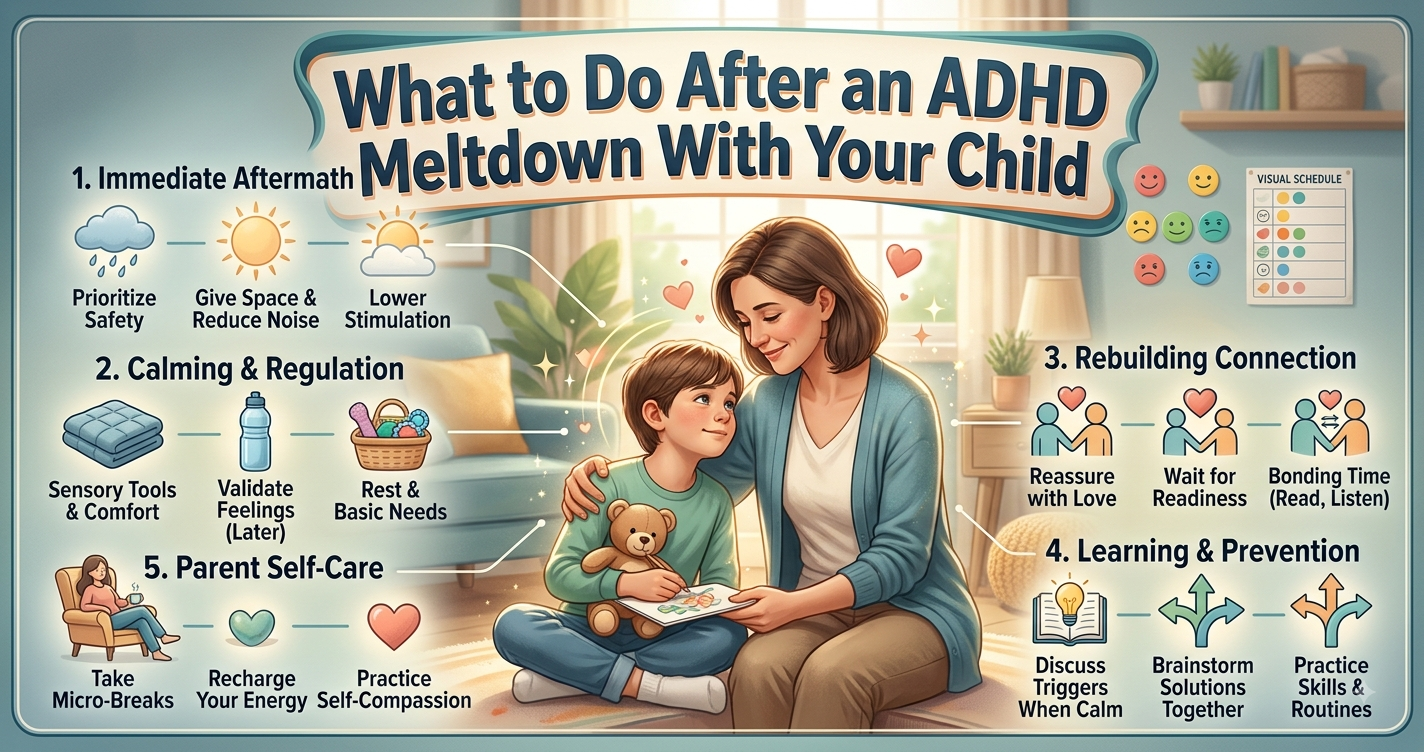
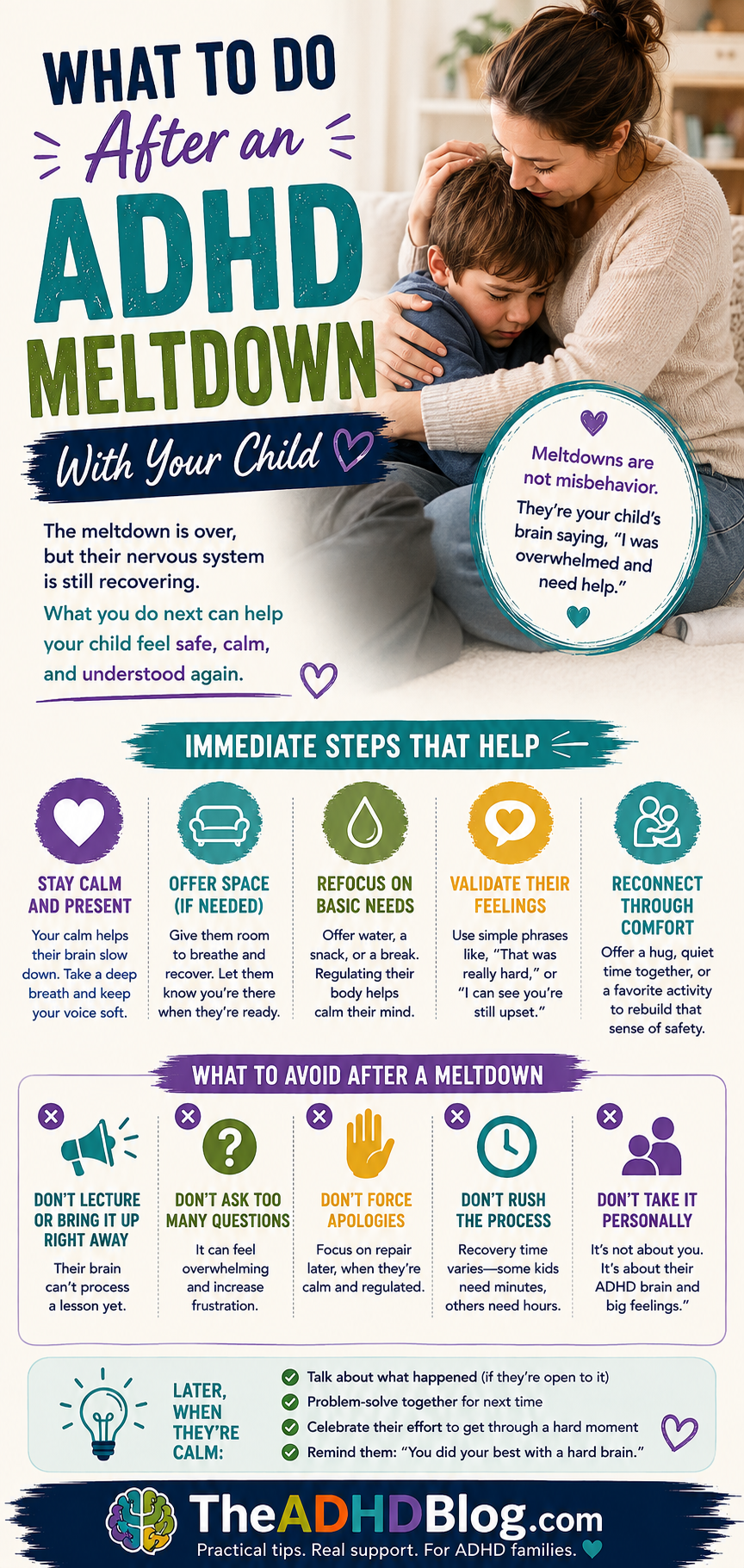
After an intense ADHD meltdown, I think there are really two separate jobs.
First, we recover.
Then, when everyone is actually calm, we learn from what happened.
That distinction has made these situations much easier for me to understand.
Don’t Rush Into a Lecture the Second the Meltdown Ends
This is probably the biggest thing I would change if I could go back and handle some difficult moments differently.
A child finally stops yelling.
There’s a little silence.
And immediately:
“Okay, now let’s talk about what you just did.”
We’re barely 30 seconds into calm.
Sometimes that’s simply too soon.
CHADD recommends waiting until after a child has calmed before discussing the episode, rather than trying to teach or reason while intense emotional dysregulation is still happening.
I think the same principle applies to the very beginning of recovery.
I don’t want to restart the fire while the last few flames are still going out.
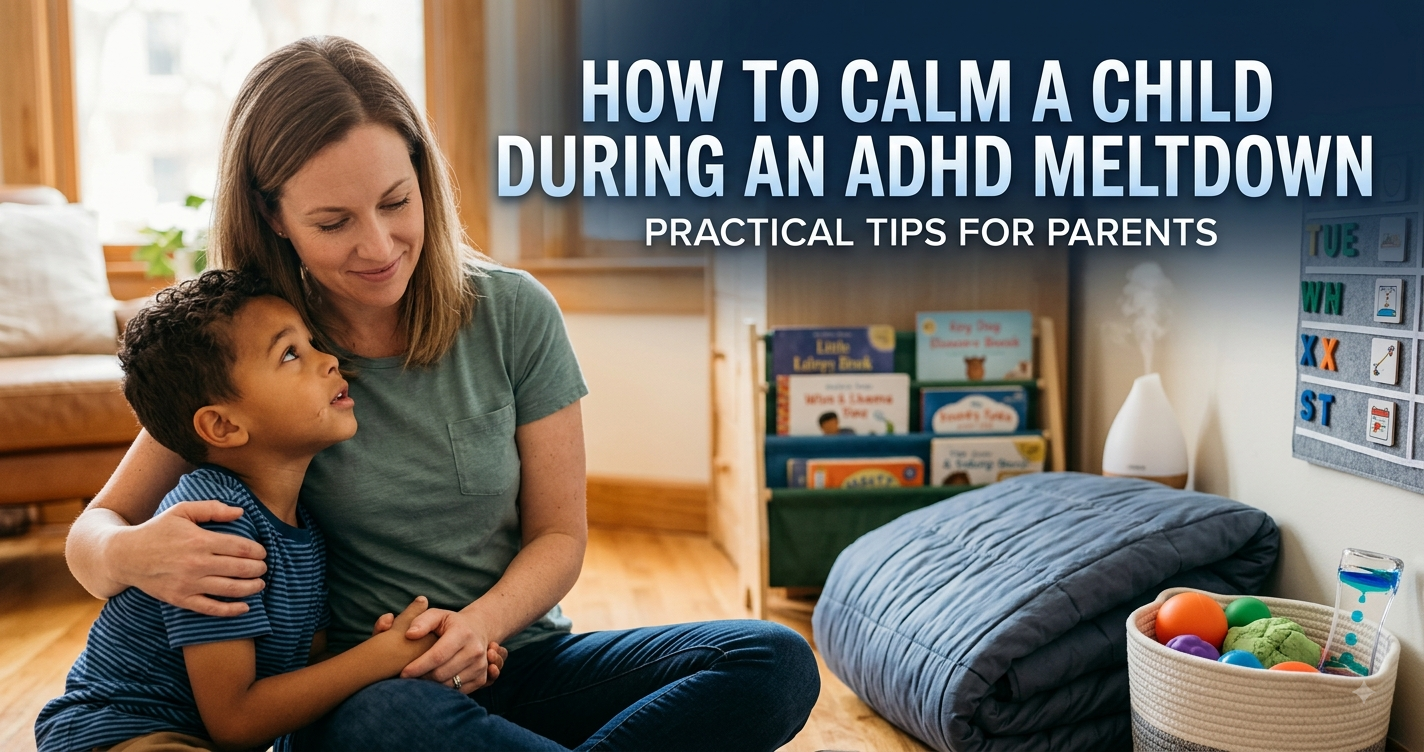
If you’re still struggling with the actual de-escalation part, I wrote a separate guide on how to calm a child during an ADHD meltdown.
That comes first.
This article starts once we’re coming out the other side.

First, Make Sure Your Child Is Actually Calm
“Not screaming anymore” isn’t necessarily the same as calm.
I look at the whole child.
Has their breathing slowed down?
Is their body less tense?
Can they answer a simple question?
Are they listening again?
Can they make a small choice?
Does their voice sound more normal?
Are they still pacing, crying, or visibly agitated?
Some kids need considerably longer than others.
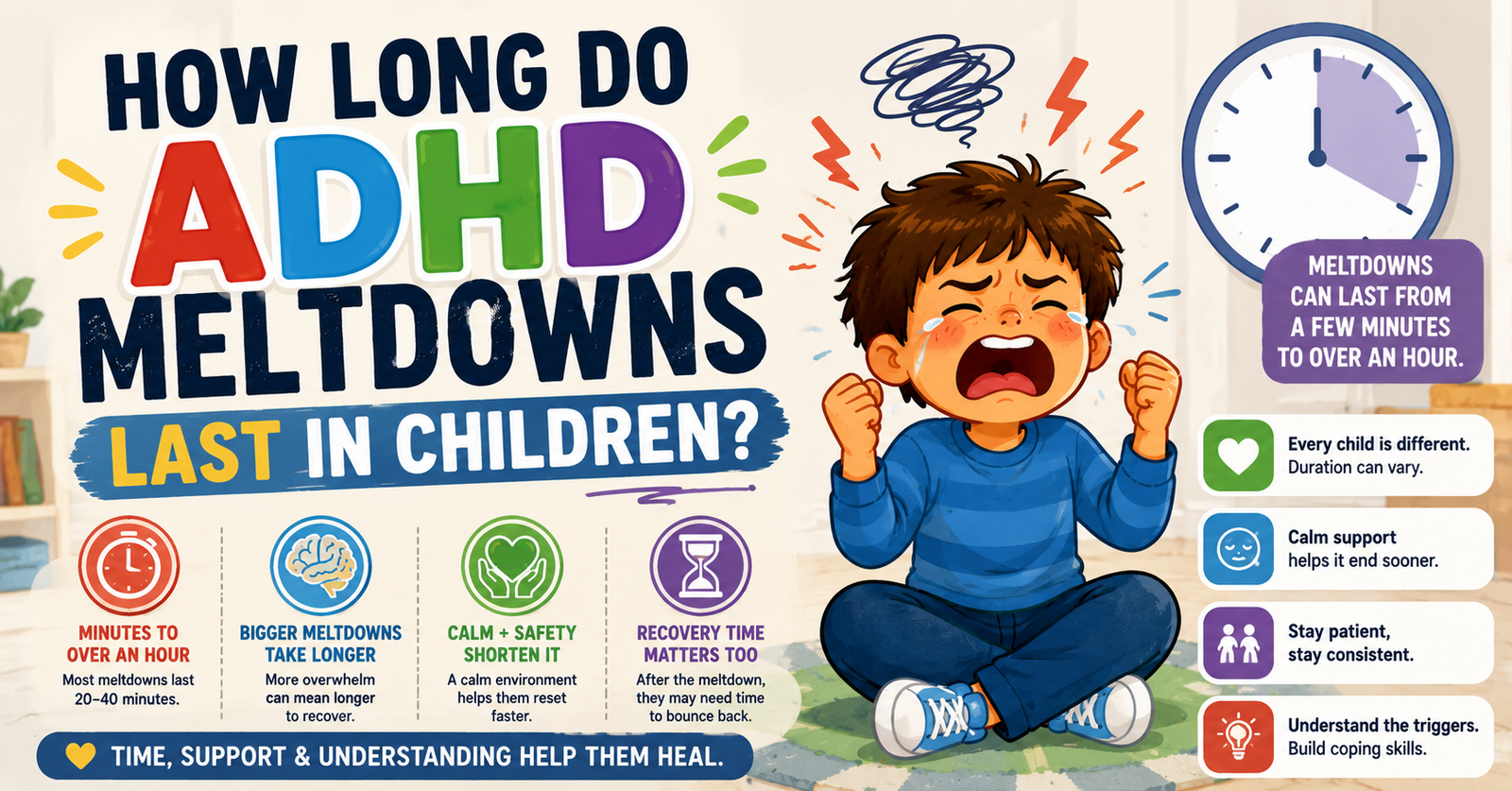
That’s one reason I don’t think parents should become obsessed with a stopwatch. I’ve covered how long ADHD meltdowns can last in children because the peak and the recovery period aren’t necessarily the same thing.
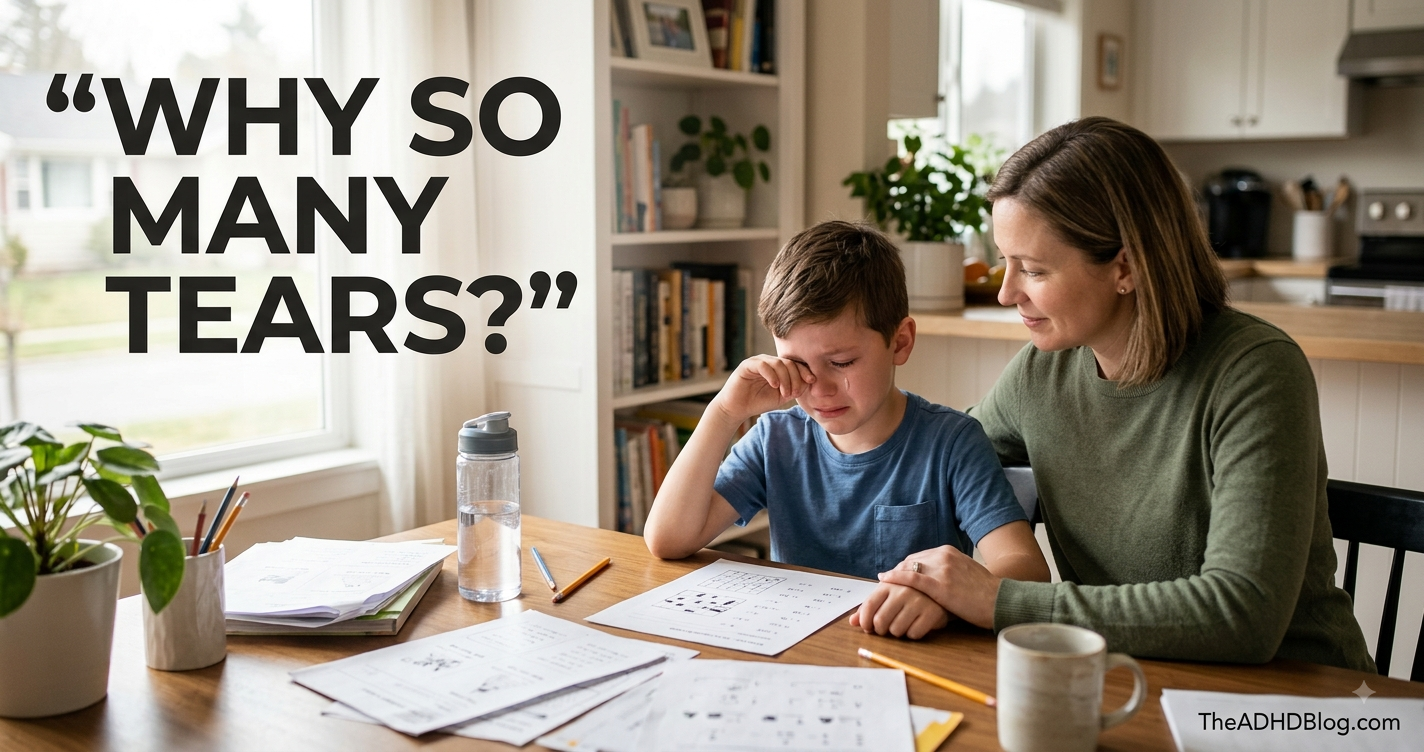
Sometimes the explosion is finished, but the child is still emotionally exhausted.
Your Child May Be Completely Worn Out Afterward
This is something I think we underestimate.
A serious emotional explosion takes a lot out of a person.
Think about how you feel after an intense argument.
Even after the argument technically ends, your body doesn’t immediately feel like nothing happened.
A child may be:
Tired.
Quiet.
Embarrassed.
Clingy.
Hungry.
Thirsty.
Irritable.
Emotionally sensitive.
Or simply wanting to be left alone.
I don’t necessarily interpret that as more bad behavior.
Sometimes it’s recovery.
And Sometimes Your Child Acts Completely Normal
This one can almost be more irritating.
Twenty minutes ago, your house sounded like everything was falling apart.
Now your child is happily playing.
Meanwhile, you’re still mad.
I’ve experienced situations where the child’s ability to move on feels almost insulting.
How can you possibly be laughing right now?
But I’ve had to remind myself that my emotional recovery doesn’t necessarily happen at the same speed as theirs.
If I’m still furious, maybe I’m not ready for the conversation yet either.
That’s okay.
The post-meltdown talk doesn’t have to happen immediately.
Parents Need Time to Regulate Too
We spend so much time talking about helping ADHD kids regulate that we sometimes pretend parents are robots. A practical ADHD parenting guide can also give parents ideas to draw on when they are trying to support regulation without ignoring their own limits.
We’re not.
A meltdown can be exhausting.
Especially if you’ve been yelled at, kicked, hit, insulted, or dealing with chaos for half an hour.
I may need a few minutes too.
As long as everyone is safe, there’s nothing wrong with waiting until both of us are in a better state to talk.
I don’t want my post-meltdown conversation to become:
“Let’s calmly discuss why screaming isn’t appropriate,”
while I’m obviously still furious.
Children notice that contradiction pretty quickly.
Don’t Pretend Nothing Happened Either
Waiting doesn’t mean forgetting.
This is the other extreme.
Everyone is relieved the meltdown ended, so nobody ever talks about it.
I don’t love that approach either.
If the child screamed, hit, threw something, broke something, or behaved inappropriately, we still need to address it.
Understanding ADHD doesn’t mean eliminating boundaries.
What changes for me is when and how I address what happened.
I want the conversation to accomplish something.
I don’t want it to become punishment disguised as a conversation.


Start With Curiosity Instead of Accusation
Compare these two openings:
“What was WRONG with you earlier?”
versus:
“That got really hard earlier. What happened?”
They’re asking about essentially the same event.
But they don’t feel remotely the same.
I want information.
What was going on?
When did the child first start getting upset?
What did they think was happening?
Was something bothering them before the obvious trigger?
Did they feel overwhelmed?
Did the task seem impossible?
Were they angry about something else?
The goal isn’t to convince the child that their feelings were stupid.
The goal is to understand the chain of events.
Your Child Might Not Know Why the Meltdown Happened
This is important.
Sometimes you ask:
“What happened?”
And the answer is:
“I don’t know.”
That can sound evasive.
But sometimes they genuinely don’t know.
Kids aren’t automatically skilled at identifying:
Frustration.
Embarrassment.
Overstimulation.
Anxiety.
Disappointment.
Mental exhaustion.
Hunger.
Sensory discomfort.
Feeling rushed.
Difficulty transitioning.
They may only know:
I felt terrible and then I exploded.
Identifying the steps that happened before the explosion is a skill we may need to teach over time.
Work Backward From the Trigger
This is one of my favorite ways to understand a meltdown afterward.
Let’s say the meltdown happened when you turned off the video game.
Start there.
What happened immediately before that?
Had you given a warning?
Was the child in the middle of something?
How long had they been playing?
What happened before they started playing?
Had homework already been difficult?
How was school?
Had they eaten?
How did they sleep?
Suddenly the meltdown may look completely different.
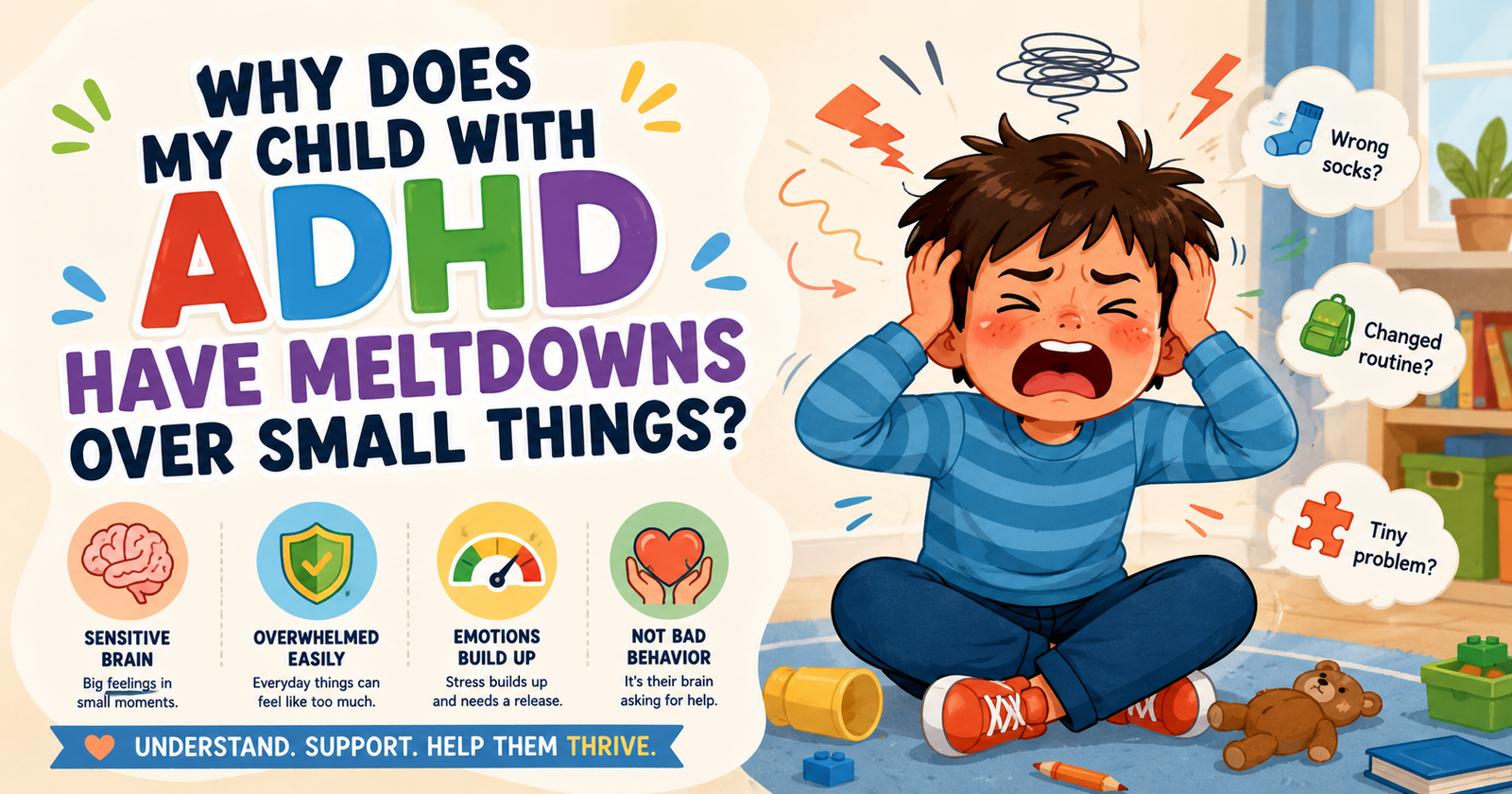
That’s why I keep returning to the idea from why ADHD children can have meltdowns over small things.
The final trigger may not explain the entire reaction.
Ask Your Child What They Noticed First
This is where the conversation becomes useful for next time.
Instead of only discussing what went wrong, I want to identify the earliest warning sign.
Maybe your child says:
“My stomach felt weird.”
“Everything was annoying me.”
“I couldn’t think.”
“You kept talking.”
“My brother wouldn’t stop.”
“The homework was too hard.”
“I didn’t want to stop playing.”
“It was too loud.”
Now we have something.
Because eventually, I want the child to recognize:
Something is starting to happen.
That’s much more useful than recognizing the meltdown only after we’re already at maximum intensity.

Talk About the Feeling and the Behavior Separately
This distinction is huge.
Your child can be incredibly angry.
That’s allowed.
Your child can be disappointed.
Allowed.
Frustrated?
Allowed.
Overwhelmed?
Absolutely.
But that doesn’t automatically make every behavior acceptable.
So I might say:
“I understand that you were really angry when we turned the game off.”
Then:
“It’s okay to be angry. It’s not okay to hit your brother.”
I don’t have to argue about whether the child should have felt angry.
I’m teaching what they can do with that anger.
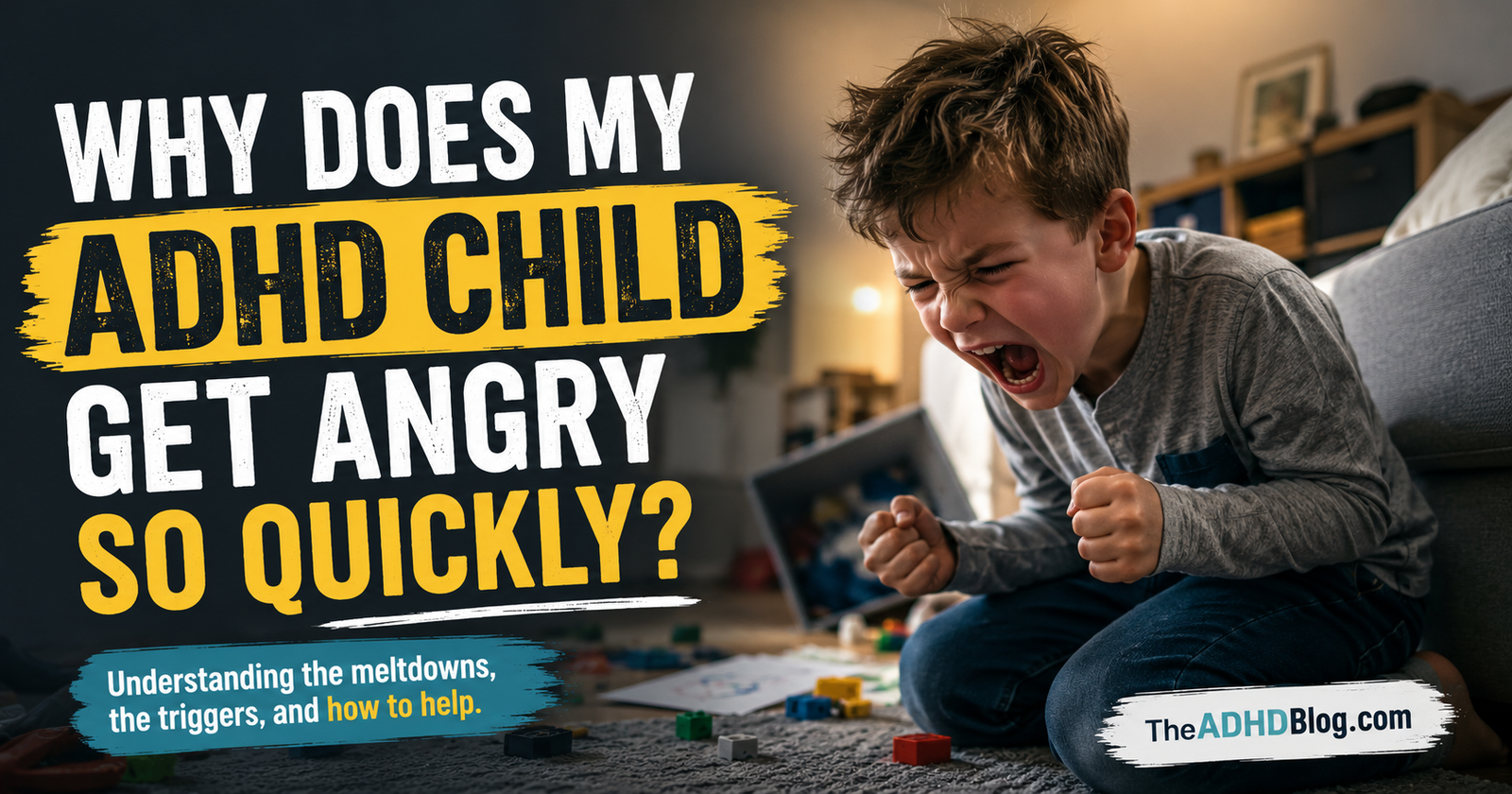
That’s especially important if your child tends to go from ordinary frustration to intense anger extremely quickly. I wrote much more about why ADHD children can get angry so fast because anger itself can be an important part of the meltdown pattern.
Don’t Shame Your Child After an ADHD Meltdown
I understand the temptation.
Especially after a really bad one.
But statements like:
“You’re too old to act like that.”
“What is wrong with you?”
“That was embarrassing.”
“Normal kids don’t behave like this.”
aren’t teaching the skill we’re trying to build.

CHADD emphasizes helping children identify emotions and develop strategies for managing them, while parents model appropriate emotional regulation themselves. Before choosing a strategy, it can help to understand the emotional meaning behind reactions.
Shame doesn’t tell a child what to do the next time frustration starts climbing.
We need something more useful than:
Don’t ever do that again.
Your Child May Already Feel Bad About What Happened
This is easy to miss when we’re still upset ourselves.
A child might be embarrassed.
They may know they went too far.
They might worry you’re angry with them.
Some kids apologize immediately.
Others avoid talking about it because they’re uncomfortable.
And some act completely normal because they don’t know how to approach what happened.
I don’t want to turn one difficult episode into:
“I’m a terrible kid.”
The behavior can be unacceptable without the child becoming unacceptable.
That distinction matters.
Should a Child Apologize After an ADHD Meltdown?
If someone was hurt or treated badly, yes, I think repairing the situation matters.
But I care more about a meaningful repair than forcing an angry child to mutter:
“Sorry.”
while clearly not ready.
Maybe later they apologize to a sibling.
Maybe they help pick up something they threw.
Maybe they replace or help repair something they damaged.
Maybe they acknowledge what they said.
The point isn’t humiliation.
The point is learning:
When my behavior affects somebody else, I help make it right.
That’s a life skill that goes far beyond ADHD.
Consequences Should Make Sense
If a controller was thrown because video game time ended, there may be a reasonable consequence related to the controller or gaming.
If a mess was created, helping clean it up makes sense.
What I try to avoid is creating a giant punishment pile while everyone is still angry.
No television for a month.
No friends this weekend.
No dessert.
Give me every electronic device you own.
You’re grounded forever.
When consequences become enormous and unrelated, sometimes we’ve moved from teaching into simply expressing how angry we are.
Consistency and clear expectations are central parts of behavior management for children with ADHD. The CDC describes parent behavior training as an approach that uses structure, positive reinforcement, and consistent discipline to help children manage behavior.
I want consequences that teach something and that I can realistically follow through on.
Don’t Accidentally Reward the Meltdown Either
Compassion and boundaries can coexist.
Suppose the meltdown happened because your child didn’t want to do homework.
We calm down.
We reconnect.
We understand what happened.
Great.
That doesn’t automatically mean:
“Okay, you never have to do homework now.”
Maybe we make the assignment smaller.
Maybe we take a break.
Maybe we help with the first question.
Maybe we need to talk with the teacher if homework is consistently unreasonable or overwhelming.
But if every meltdown permanently removes every unwanted task, we can create another problem.

Our ADHD homework tips for parents are built around making the work more manageable rather than simply fighting harder about it.
Ask What Could Help Next Time
This is where I really want the conversation to go.
Not:
“Promise me you’ll never do that again.”
That’s not much of a plan.
Instead:
“What could we do when you start feeling like that next time?”
Maybe:
Take a break.
Ask for help.
Go somewhere quieter.
Get some water.
Walk around.
Say they’re getting angry.
Break the task into smaller pieces.
Use a timer.
Ask for five minutes.
Tell me the noise is bothering them.
We’re giving the child an exit ramp before the emotional highway reaches full speed.
Create a Phrase Your Child Can Actually Use
I love simple phrases because they’re easier to remember when emotions start climbing.
Something like:
“I need a break.”
“I’m getting mad.”
“This is too much.”
“I need help.”
“I need quiet.”
Those five words may eventually prevent a 30-minute meltdown.
But I wouldn’t wait until the next meltdown to introduce them.
Practice when everybody is calm.
Make the phrase familiar.
Then when you see the warning signs, you can prompt it.
“Are you getting frustrated? Do you need a break?”
Over time, hopefully you don’t have to ask.
Look at What You Could Change Too
This can be uncomfortable because it’s easy to interpret it as blaming parents.
That’s not what I mean.
I’m asking:
Was there anything about the situation we can make easier next time?
Maybe I gave seven instructions at once.
Maybe we rushed the transition.
Maybe homework started immediately after an exhausting school day.
Maybe bedtime has gotten too late.
Maybe I continued arguing after it was obvious the conversation wasn’t productive.
Maybe the environment was chaotic.
That doesn’t mean the meltdown was my fault.
It means I’m willing to change something if changing it gives my child a better chance of succeeding.
Write Down the Trigger While You Still Remember It
You don’t need a complicated journal.
A note on your phone is enough.
Something like:
Thursday, 4:20 p.m.
Bad meltdown when tablet ended.
Didn’t eat much after school.
Slept poorly Wednesday.
No transition warning.
Calmed faster after going to bedroom alone.
That’s useful.
One note doesn’t tell me much.
Ten notes might.
Suddenly I notice that seven of the ten meltdowns happened between 4 and 6 p.m.
Now we’re onto something.
Look for After-School Patterns
After school is one of the first times I’d investigate.
Kids with ADHD can spend an enormous amount of energy navigating school.
Attention.
Organization.
Directions.
Social interaction.
Impulse control.
Transitions.
Classroom expectations.
The CDC notes that school can create significant challenges for children with ADHD and recommends behavioral classroom management, organizational training, accommodations, and coordinated support when appropriate. (cdc.gov)
If your child repeatedly falls apart after school, I’d look at what you’re asking them to do during that first hour home.
Maybe they need food.
Movement.
Quiet.
A little decompression.
Then we move into homework and responsibilities.
Look at Sleep Before Assuming It’s Purely Behavior
If the worst meltdowns happen late in the day, sleep belongs on my list.
A tired child has less emotional fuel available.
And ADHD and sleep can become tangled together.
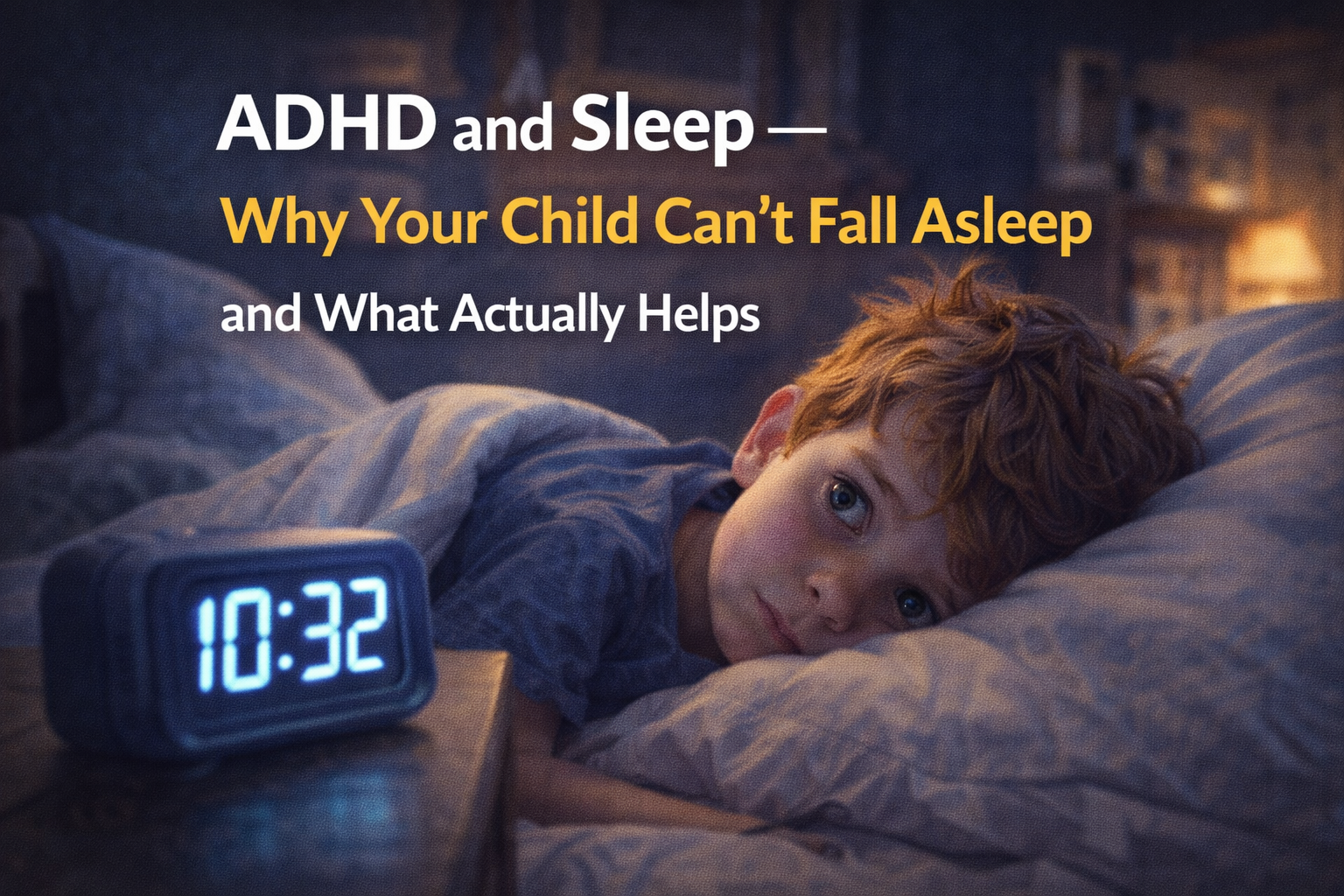
We’ve already covered why children with ADHD can struggle to fall asleep because poor sleep can spill into attention, behavior, mornings, school, and emotional regulation.
If bedtime itself is the meltdown trigger, our article about ADHD bedtime battles goes much deeper into that problem.
Sometimes preventing tomorrow’s meltdown starts tonight.
Look at Routines and Transitions
If the meltdowns consistently happen when it’s time to:
Leave.
Get dressed.
Stop playing.
Start homework.
Take a bath.
Go to bed.
Get ready for school.
Then transitions are giving you valuable information.
Predictability can remove some of that friction.
That’s why our ADHD morning routine isn’t about creating a perfect Instagram morning.
It’s about reducing how many surprises, decisions, reminders, and arguments we cram into one hour.
Learn What an ADHD Meltdown Looks Like Before the Explosion
One of the best things we can do after a meltdown is use it to recognize the next one sooner.
What happened five minutes before this one?
Did your child start pacing?
Did their voice change?
Did everything suddenly annoy them?
Did they become rigid?
Did they start saying:
“I CAN’T!”
Did they cover their ears?
Did they begin arguing about things that normally wouldn’t bother them?
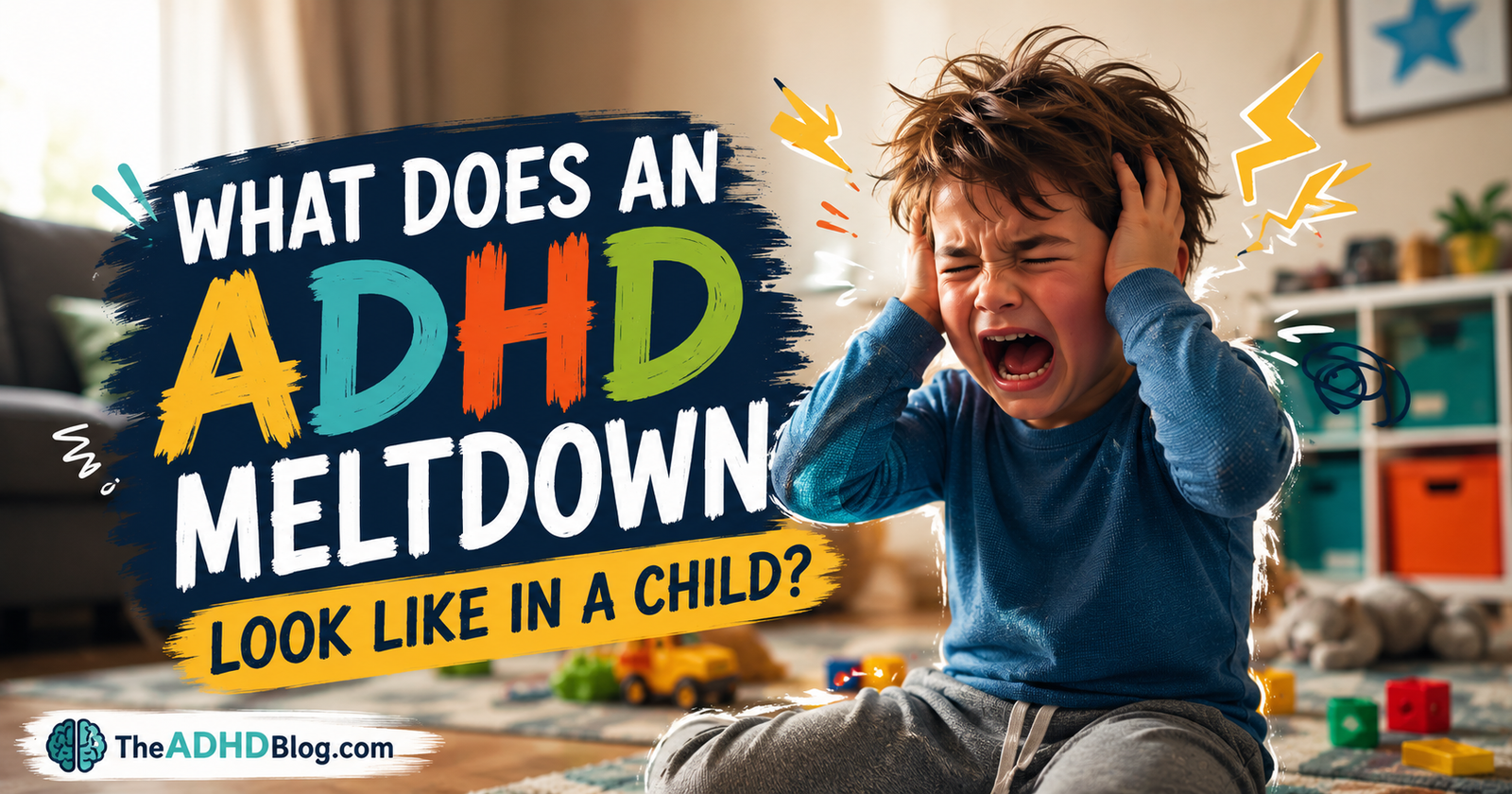
I’ve broken these signs down much more in what an ADHD meltdown can look like in a child.
The goal isn’t becoming amazing at surviving meltdowns.
The goal is eventually recognizing them earlier.
Don’t Diagnose Everything From the Meltdown
This is another reason the post-meltdown period is useful.
We’re looking for patterns, not jumping to conclusions.
An ADHD diagnosis doesn’t mean every emotional explosion is caused entirely by ADHD.
And a sensory-related meltdown doesn’t automatically mean autism.
We’ve covered the overlap in ADHD meltdown vs autism meltdown because the outward behavior alone doesn’t reliably tell parents what’s underneath it.
The bigger developmental and behavioral pattern matters.
What If My Child Refuses to Talk About the Meltdown?
I don’t force an immediate deep conversation.
Maybe:
“We don’t have to talk about it right this second. We do need to talk about what happened later.”
Then actually return to it.
For younger children, the conversation may only need to be a few minutes.
We’re not conducting an investigation.
We want to identify:
What happened.
What feeling showed up.
What behavior wasn’t okay.
What might help next time.
That’s enough to start.
What If My Child Says Everything Was My Fault?
This can happen too.
“You made me mad!”
“You shouldn’t have turned it off!”
“You made me scream!”
I don’t need to argue about every word.
I can acknowledge the first part.
“You were really mad when I turned it off.”
Then keep the boundary:
“You’re allowed to be mad. You’re still responsible for not hitting.”
That separates trigger from responsibility.
Someone else can trigger an emotion.
We’re still learning how to handle what we do with it.
Praise the Part They Handled Better
Even in a difficult episode, there may be something worth reinforcing.
Maybe the child went to their room instead of hitting.
Maybe they eventually asked for help.
Maybe they told you they needed space.
Maybe they picked up what they threw.
Maybe this meltdown lasted much less time than the last one.
Maybe they recognized afterward that they were hungry.
I want to notice progress.
The CDC describes positive reinforcement as an important part of behavior therapy for ADHD.
We’re not pretending the bad behavior didn’t happen.
We’re strengthening the better behavior we want to see again.
Don’t Expect the Next Meltdown to Be Perfect
This is something I have to remind myself of.
You can have the greatest post-meltdown conversation ever.
Your child understands everything.
They know what they should do.
They promise they’ll ask for a break next time.
Then three days later:
Another meltdown.
That doesn’t necessarily mean the conversation failed.
Emotional regulation is a skill.
Skills take practice.
I don’t expect a child to learn to ride a bike because I explained balance once.
Why would I expect perfect emotional regulation after one conversation?
Progress May Look Smaller Than You Expect
Maybe success isn’t:
No more meltdowns.
Maybe it’s:
The child recognized frustration earlier.
They asked for a break once.
The meltdown didn’t become physical.
Recovery took 15 minutes instead of 40.
They apologized without being forced.
They told you what triggered it afterward.
They accepted help.
You stayed calmer yourself.
Those are meaningful changes.
And small changes repeated enough times can eventually make family life feel very different.
When Repeated ADHD Meltdowns Need Professional Support
If you’re constantly doing all of this and the meltdowns remain severe, I’d stop thinking that you simply haven’t found the perfect parenting trick yet.
Some families need more support.
I would talk with your child’s pediatrician or qualified mental health professional if meltdowns are extremely frequent, worsening, causing injuries, involving serious aggression or self-harm, causing major school problems, destroying property, or making your home difficult to manage safely.
ADHD can also occur alongside anxiety, autism, learning disorders, sleep problems, disruptive behavior disorders, and other conditions. The CDC recommends screening children with ADHD for coexisting emotional, behavioral, developmental, and physical conditions when appropriate. (cdc.gov)
Sometimes changing the treatment plan or identifying another problem changes the entire picture.
The Meltdown Can Give Us Information for Next Time
I don’t enjoy ADHD meltdowns.
I don’t think any parent does.
But once one has happened, I want to get something useful from it.
Not guilt.
Not shame.
Information.
What filled the cup?
What was the final trigger?
What did the child look like before losing control?
What made the meltdown worse?
What helped it come down?
What could we change?
What skill does the child need? For a concrete way to practice that skill between difficult moments, ADHD skill-building cards may give you a starting point.
What could I do differently?
And what went even slightly better than last time?
That’s what I want to take away after an ADHD meltdown.
Because the most productive thing we can do afterward isn’t spend the rest of the day replaying how terrible it was.
It’s use what happened to give both ourselves and our child a better chance of catching the next one before it gets that far.
About the Author: Emily Parker
Emily Parker writes for TheADHDBlog.com about raising and supporting children with ADHD, with a special focus on emotional regulation, anger, meltdowns, family routines, and the difficult everyday situations parents face at home. Her articles combine practical parent-focused strategies with established ADHD and pediatric guidance to help families recognize patterns, strengthen emotional skills, and know when additional professional support may be useful.