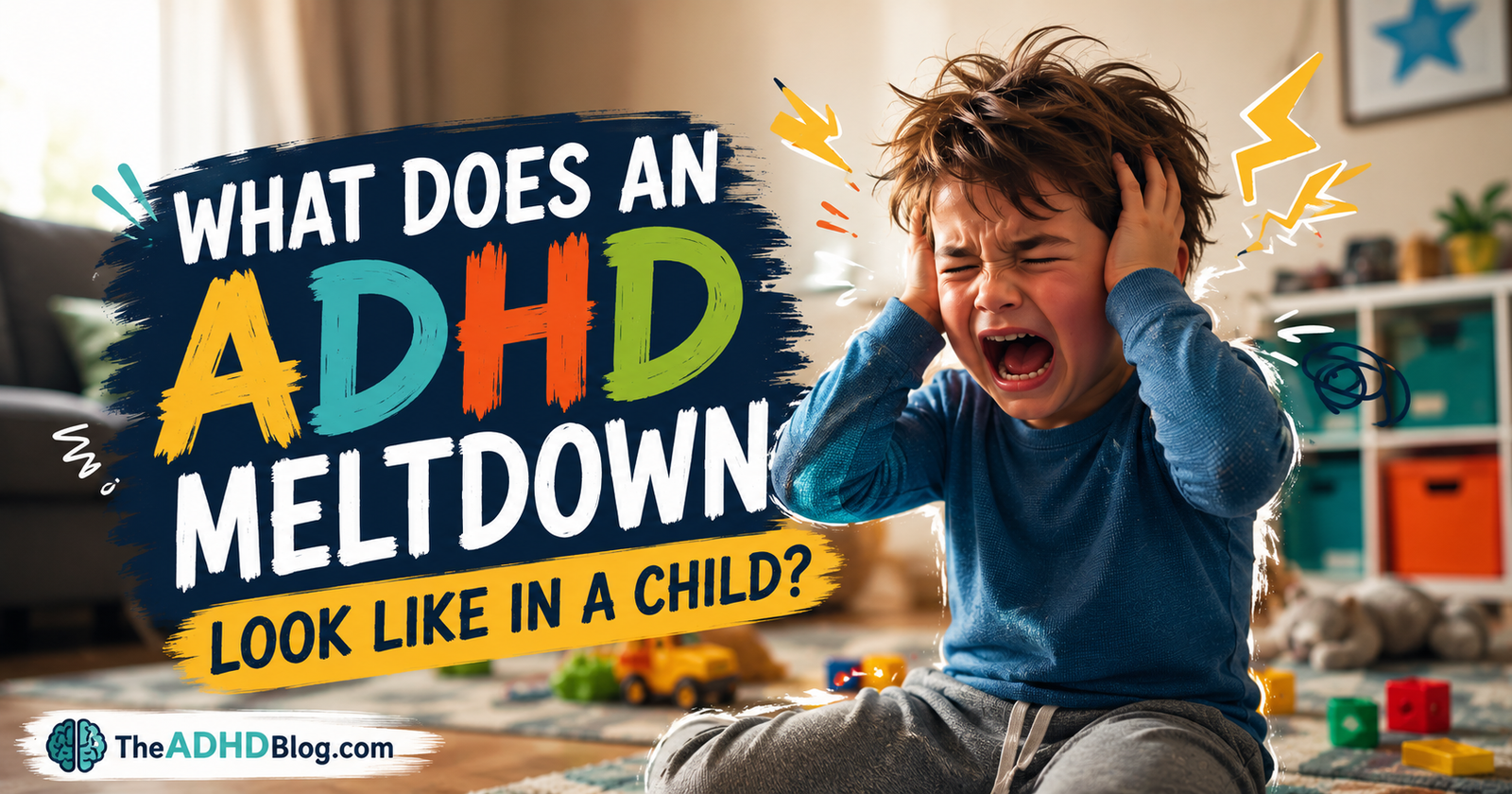
There was a time when I thought a meltdown had to look obvious.
Screaming. Crying. Throwing something. A child completely losing control.
And yes, an ADHD meltdown absolutely can look like that.
But I’ve learned that it isn’t always that simple.
One child might scream and slam a door. Another might drop to the floor crying. Another gets incredibly angry and argumentative. Another runs to their bedroom, hides under a blanket, and refuses to speak.
That’s part of what makes ADHD meltdowns so confusing for parents.
What does an ADHD meltdown actually look like in a child, and how do I know whether I’m seeing a meltdown, a tantrum, ordinary frustration, or something else entirely? Understanding how long toddler tantrums last can provide useful context when comparing tantrums with meltdowns.
The biggest thing I look at now isn’t one specific behavior.
I look at the loss of emotional control surrounding the behavior.
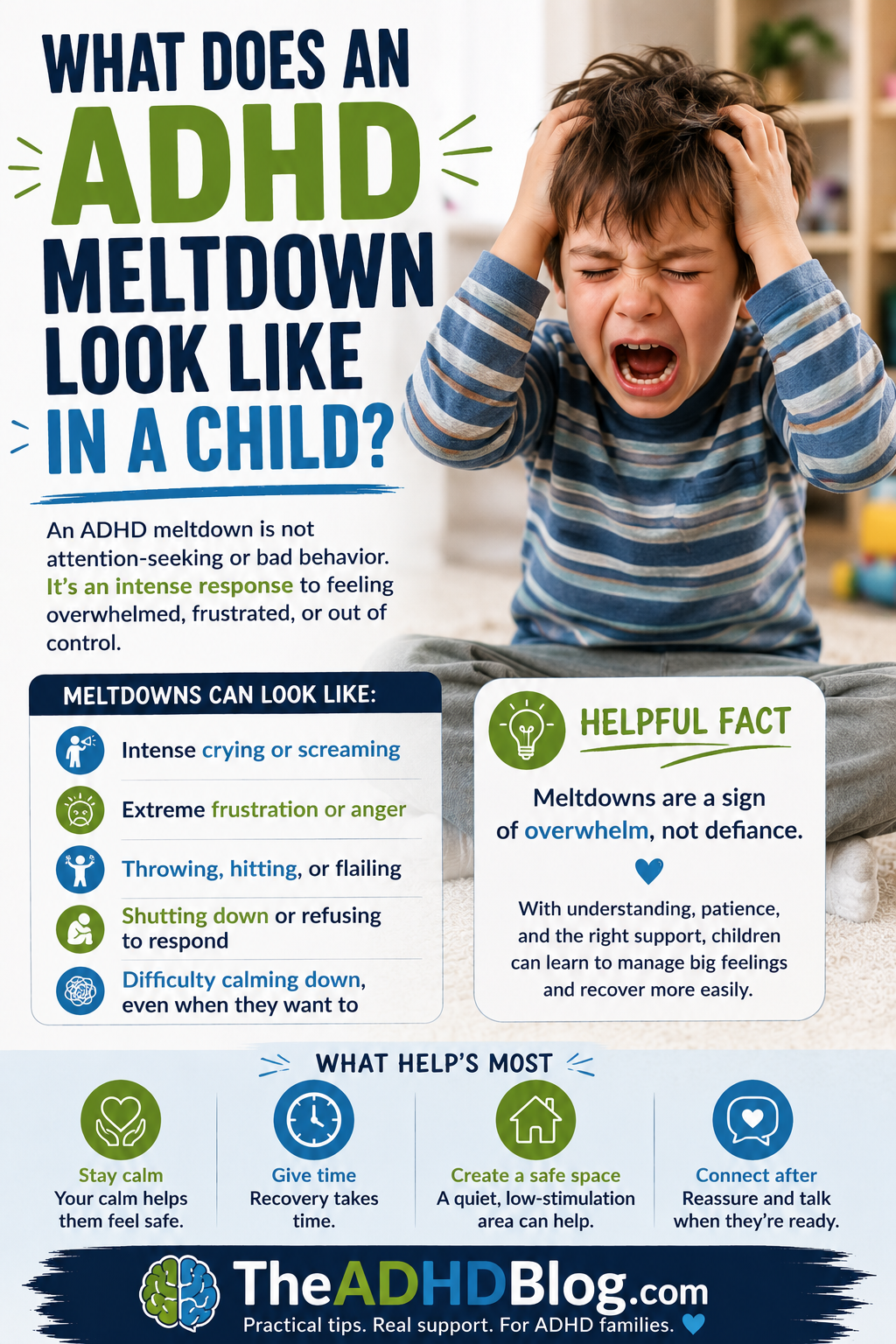
A child who is genuinely overwhelmed may reach a point where reasoning, negotiating, explaining, and even solving the original problem doesn’t immediately bring them back down.
CHADD describes emotional dysregulation as a significant challenge for many children and teens with ADHD, particularly when everyday difficulties lead to intense emotional reactions that become difficult for the child to control.
And once you’ve seen that happen in real life, you understand why calling it simply “bad behavior” can miss a huge part of what’s going on.
An ADHD Meltdown Can Look Different From One Child to Another
There’s no single behavior that automatically means:
This is an ADHD meltdown.
You might see crying.
You might see yelling.
You might see anger.
You might see a child become extremely argumentative.
You might see them cover their ears, hide, pace around the room, slam a door, or desperately try to get away from whatever is happening.
Some children become physically restless.
Some say things they wouldn’t normally say.
Some repeatedly insist that they can’t do something.
Some seem almost impossible to reach verbally for a while.
CHADD notes that meltdowns in children with ADHD can involve yelling, slamming doors and other intense behaviors during a significant loss of emotional control.
But I think there’s another part parents need to know.
A meltdown doesn’t always have to be loud.
A child can become so overwhelmed that they essentially shut down instead.
That’s why I wouldn’t try to identify an ADHD meltdown based on whether the child screamed loudly enough or cried long enough.
I want to understand what happened before, during, and after the reaction.

ADHD Meltdowns Can Seem to Come Out of Nowhere
This is probably one of the most frustrating parts.
Everything appears fine.
Then:
“It’s time to turn the game off.”
Explosion.
Or:
“We have to leave in five minutes.”
Explosion.
Or:
“You still have two homework problems left.”
Explosion.
It can look like the child went from zero to one hundred over something incredibly small.
But I’ve stopped assuming that means the trigger was actually small to them.
The trigger we see may be only the final piece.
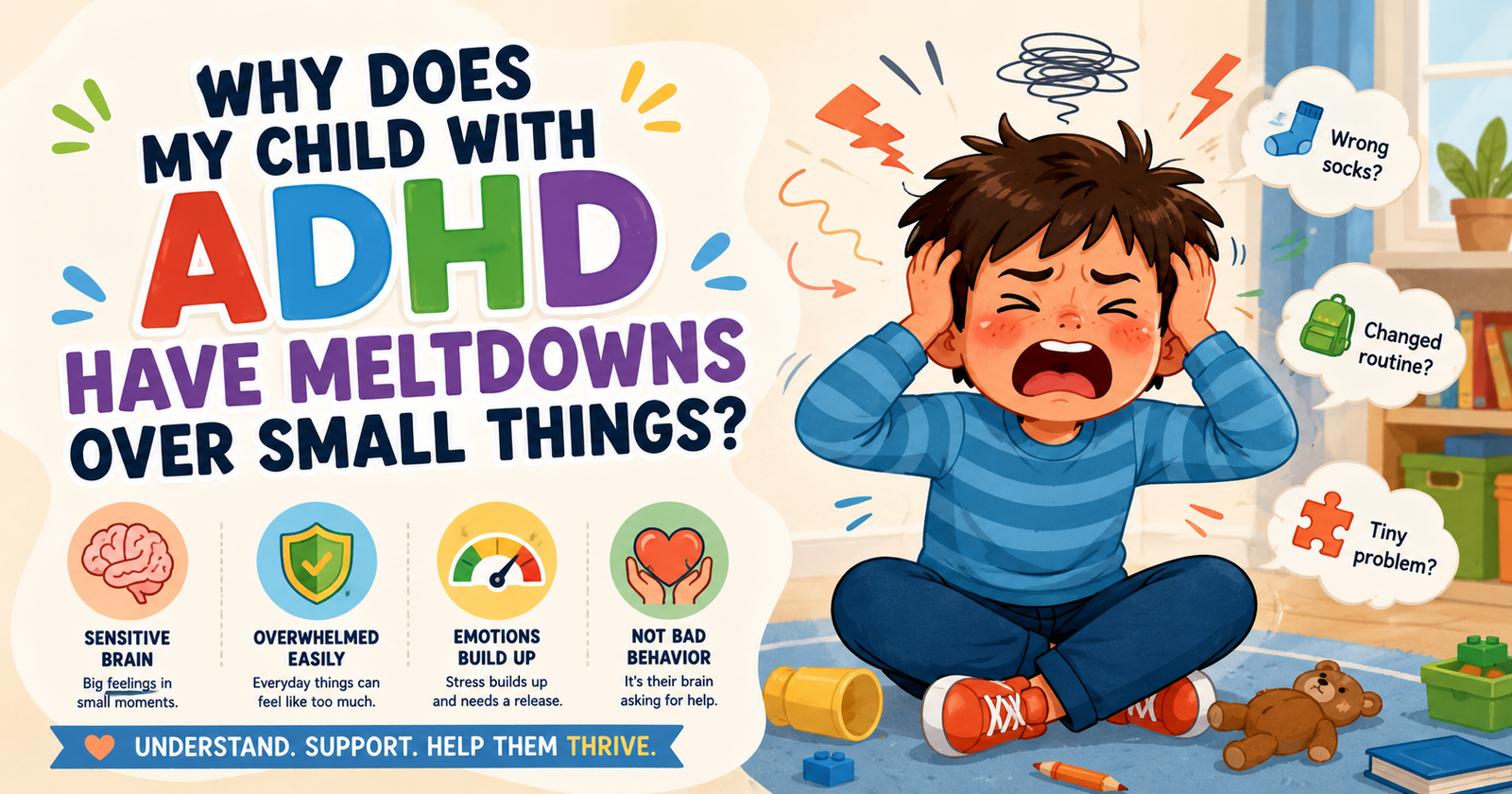
If this happens frequently in your house, read my guide on why a child with ADHD can have meltdowns over seemingly small things.
That’s one of the most important concepts in this entire cluster.
The missing pencil might not really be about the pencil.
What Happens Before an ADHD Meltdown?
This is where I’ve found some of the most useful information.
Instead of studying only the explosion, start watching the build-up.
You might notice that your child becomes:
More argumentative.
More sensitive to noise.
Restless.
Short-tempered.
Whiny.
Repeating the same complaint.
Unable to make a simple decision.
Frustrated by tiny mistakes.
Increasingly loud.
Unusually rigid about what they want.
Unable to move on from something disappointing.
Maybe you’re thinking:
“Yep. I know EXACTLY what you’re talking about.”
Those little changes can be incredibly valuable.
They’re sometimes the warning lights before everything boils over.
CHADD recommends that parents learn their child’s individual “tells” that indicate they’re beginning to struggle with emotional control, then use proactive strategies before the situation escalates further.
That makes a lot of sense to me.
The earlier I recognize what’s happening, the more options I have.
What Does the Peak of an ADHD Meltdown Look Like?
This is usually the part parents mean when they say their child “had a meltdown.”
The child has moved beyond being mildly frustrated.
They may be crying intensely.
They might scream.
They may repeatedly yell the same thing.
They might refuse to move.
They might stomp away.
They could throw or hit objects.
Some children may become aggressive toward other people.
Others desperately want everyone to leave them alone.
And some children seem unable to even explain why they’re so upset anymore.
This is where I think parents can get trapped.
We keep trying to solve the original problem.
“Your shoe is right here!”
“I already said you can finish it tomorrow!”
“Your brother apologized!”
“We’re not even leaving anymore!”
And somehow the child is still upset.
Why?
Because once the meltdown has reached that point, we’re no longer necessarily dealing with only the missing shoe.
We’re dealing with an overwhelmed child who needs time to regulate.
What Does an ADHD Meltdown Sound Like?
Sometimes the words themselves can be alarming.
You may hear:
“I CAN’T DO IT!”
“LEAVE ME ALONE!”
“THIS IS STUPID!”
“I HATE THIS!”
“NO!”
“STOP TALKING!”
Or the child may keep repeating the same thing over and over even though you’ve already answered.
I try to remember that the words coming out during the peak of an emotional explosion aren’t always a thoughtful explanation of what’s happening.
Sometimes they’re simply the language of overwhelm.
That doesn’t mean I ignore threatening or dangerous statements.
Those always deserve appropriate attention.
But I also don’t expect a child at maximum emotional intensity to suddenly provide a beautifully reasoned explanation of their feelings.
Some ADHD Meltdowns Look More Like Anger Than Sadness
This is important because parents sometimes associate “meltdown” primarily with crying.
ADHD emotional dysregulation can show up as anger too.
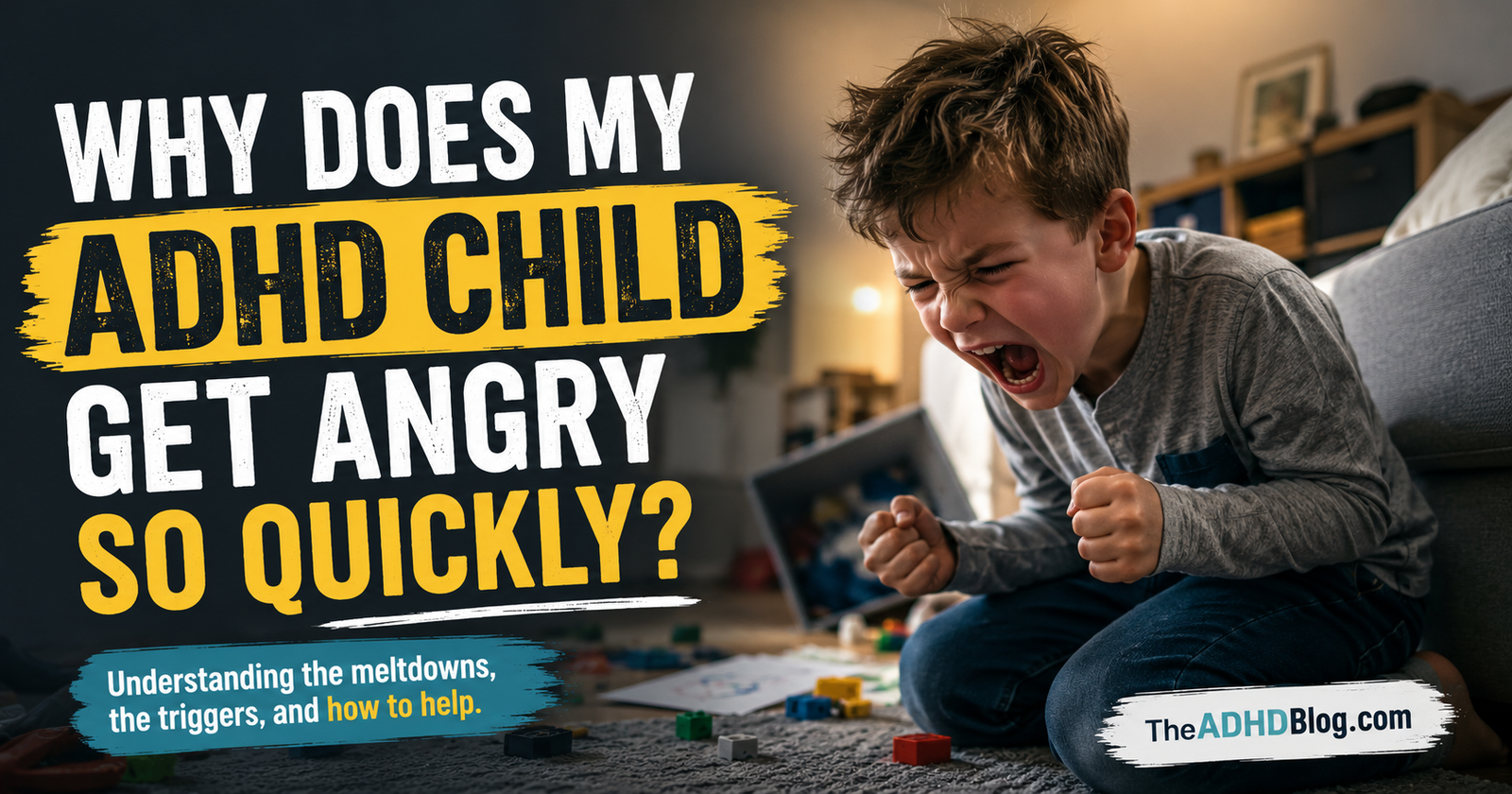
CHADD notes that children with ADHD may experience low frustration tolerance, explosive reactions to seemingly minor annoyances, irritability, and intense responses to disappointment. These patterns help explain why ADHD anger can escalate quickly when an ordinary frustration suddenly becomes overwhelming.
So instead of tears, you may see:
A red face.
A louder voice.
Clenched fists.
Pacing.
Arguing.
Door slamming.
Throwing something down.
An incredibly fast escalation from annoyed to furious.
That speed can be startling.
One minute you’re discussing putting away laundry.
Two minutes later you’re wondering how laundry became the biggest crisis your family has faced all week.

ADHD Meltdowns Can Also Look Like Crying Over Everything
Then there’s the opposite presentation.
Everything seems to cause tears.
The socks don’t feel right.
Tears.
The cereal is gone.
Tears.
They can’t find something.
Tears.
Their sibling looked at them wrong.
Tears.
One homework answer is incorrect.
More tears.
From the outside, it can look like an extreme emotional response to ordinary childhood frustrations.
But again, I start looking at the whole day.
Did the child sleep well?
Have they eaten?
Was school difficult?
Have they been trying to hold themselves together for hours?
Are we at the end of a long day?
Is the environment overwhelming?
Sometimes the tenth “tiny” problem is hitting a child whose ability to cope is already almost gone.
A Child May Melt Down After Holding It Together at School
This one can make parents feel like they’re losing their minds.
The teacher says:
“He had a great day!”
Then he gets into your car and falls apart.
Or everything is fine until you walk through the front door.
Then suddenly:
Shoes are flying.
Someone is crying.
A sibling said something.
The backpack is on the floor.
Nobody wants to do homework.
You’re thinking:
How was this supposedly the child who had a great day?
The two things don’t necessarily contradict each other.
School requires an enormous amount of regulation.
Listening.
Waiting.
Following directions.
Changing activities.
Remembering things.
Managing frustration.
Dealing with other children.
Ignoring distractions.
Sitting when you’d rather move.
Keeping track of belongings.
Doing work you may not particularly enjoy.
By the time home arrives, there may not be much self-regulation left in the tank.
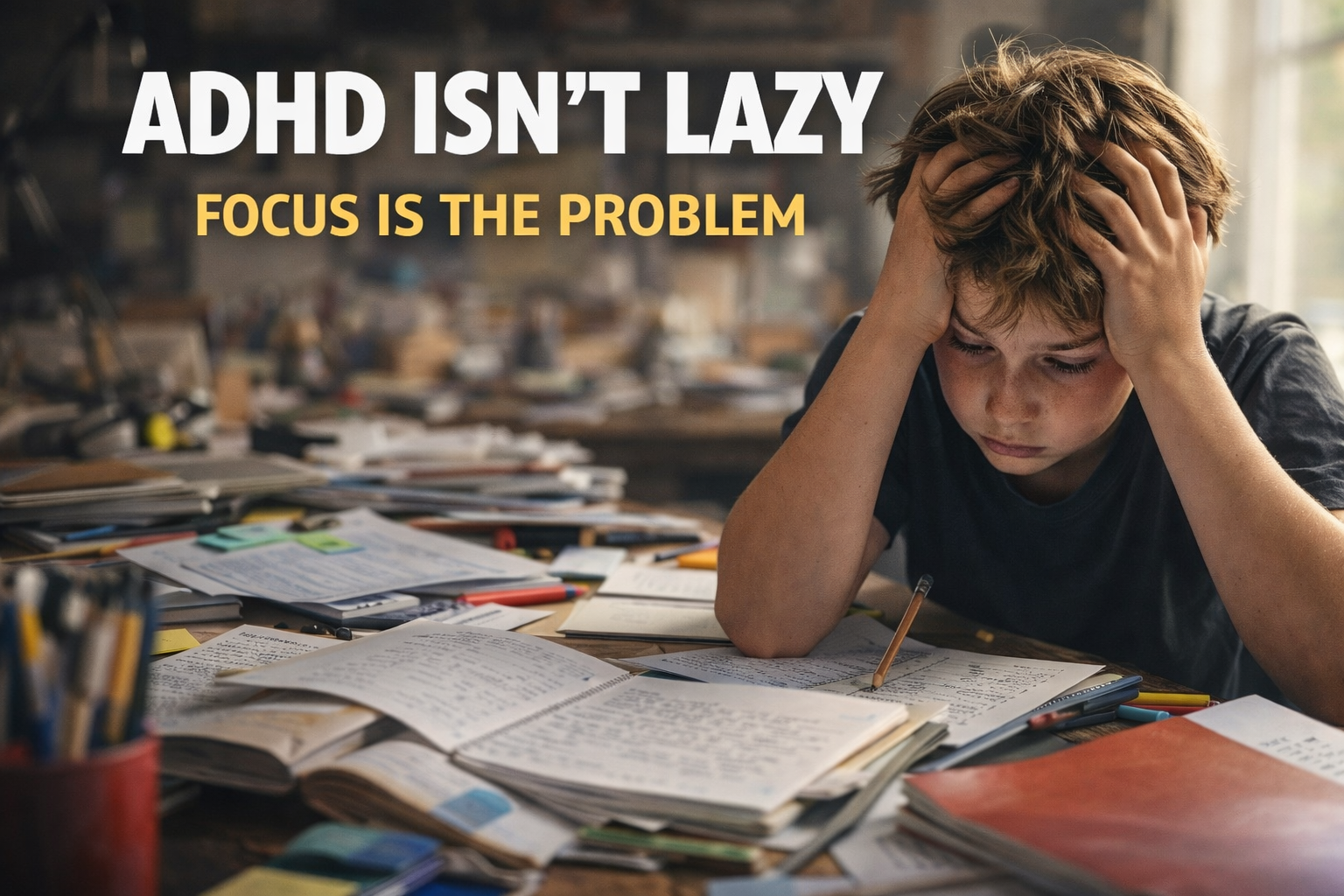
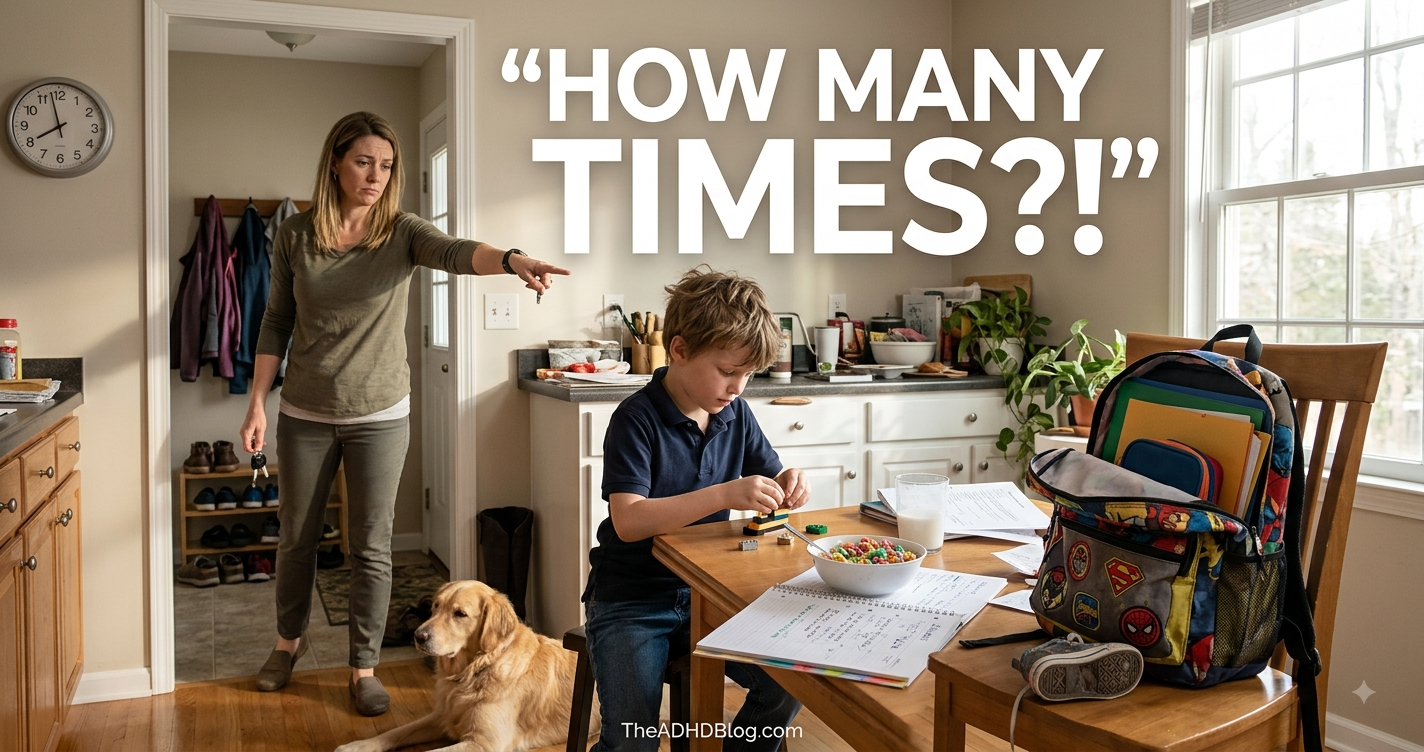
Homework Meltdowns Have a Very Recognizable Pattern
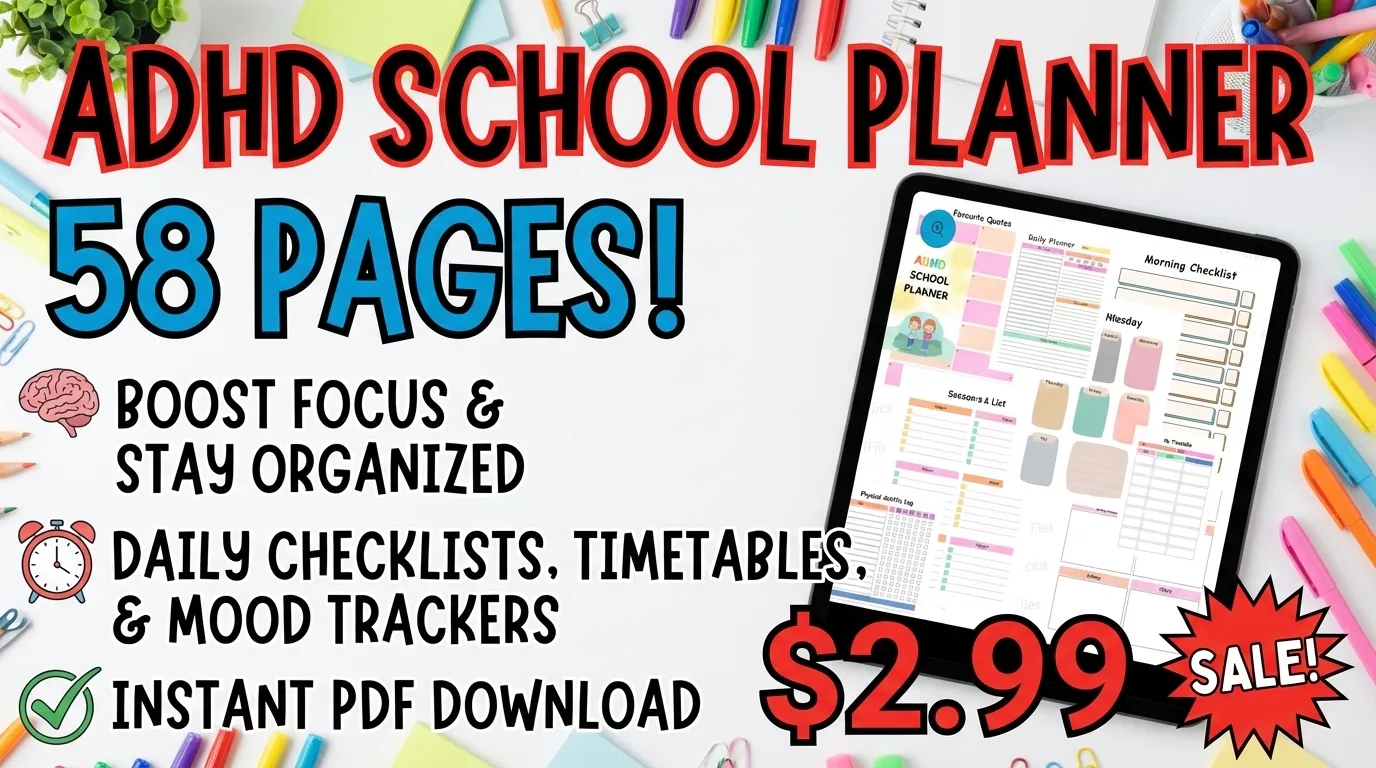
Homework is one of those situations where ADHD struggles can pile on top of each other. For children who struggle with organizing assignments, an ADHD homework planner may provide a more concrete structure for getting started.
Your child sits down.
Can’t find the pencil.
Gets distracted.
Finally starts.
Doesn’t understand question two.
You explain it.
They say they don’t understand.
You explain again.
They insist they can’t do it.
Their voice gets louder.
You become frustrated.
They become more frustrated.
And suddenly nobody cares about question two anymore.
Now it’s an emotional battle.
That’s why I don’t like treating ADHD homework problems as simply a motivation problem.

If evenings regularly fall apart around schoolwork, our ADHD homework tips for parents go much deeper into making homework manageable without turning the kitchen table into a nightly battleground.
Focus Problems Can Turn Into Emotional Problems
This connection is easy to overlook.
Imagine trying really hard to do something that everyone around you seems to think should be easy.
You lose your place.
Forget the instruction.
Start over.
Get distracted.
Make a mistake.
Someone reminds you to focus.
You try again.
Then someone says:
“You’re not even trying.”
I’d probably get frustrated too.
ADHD is much more complicated than simply “not paying attention.”
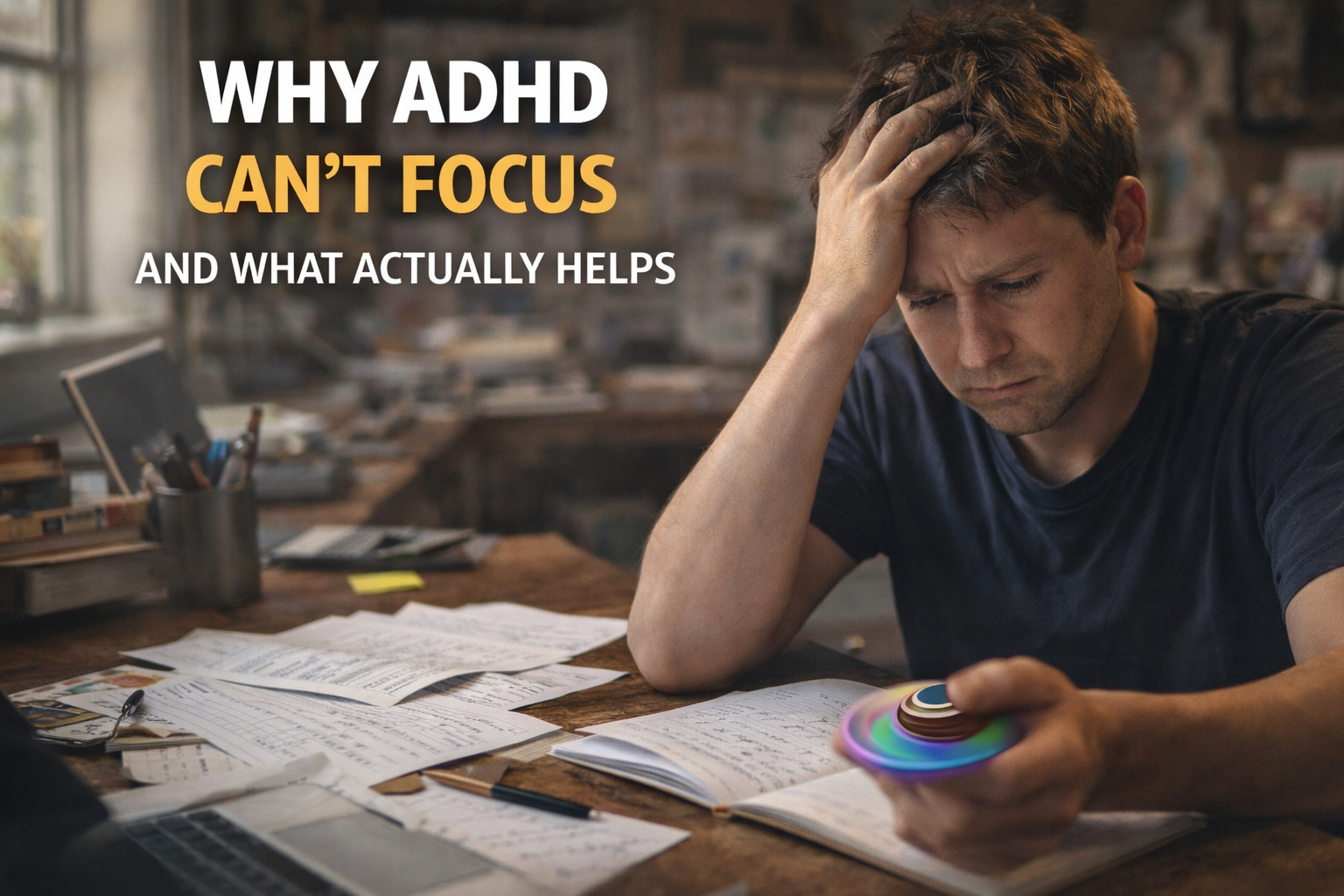
If that part is causing problems in your house, I’ve explained more about why ADHD focus problems happen and what may actually help.
Sometimes improving the situation causing the frustration prevents the emotional explosion that follows.


Transitions Are Another Huge Meltdown Trigger
If I were looking for ADHD meltdown patterns, transitions would be near the top of my list.
Stop playing.
Come eat.
Turn off the TV.
Leave the playground.
Put away the tablet.
Get dressed.
Take a bath.
Start homework.
Go to bed.
Those sound like simple instructions.
But every one requires a child to stop doing one thing, disengage from it, shift attention, and begin something else.
That becomes especially difficult when the first activity is highly enjoyable and the second isn’t.
This is why a warning can help some kids:
“Ten minutes until we’re leaving.”
Then:
“Five minutes.”
Then:
“Two minutes.”
It isn’t guaranteed to prevent a meltdown.
But it removes some of the surprise.
Bedtime ADHD Meltdowns Can Be Especially Intense
Bedtime is almost a perfect storm.
The child is tired.
The parent is tired.
Medication effects may have changed depending on the child’s treatment plan.
Everyone has spent all day dealing with demands.
And now we’re asking the child to stop doing something interesting and begin doing something they may actively dislike.
It’s not surprising that bedtime can become explosive.
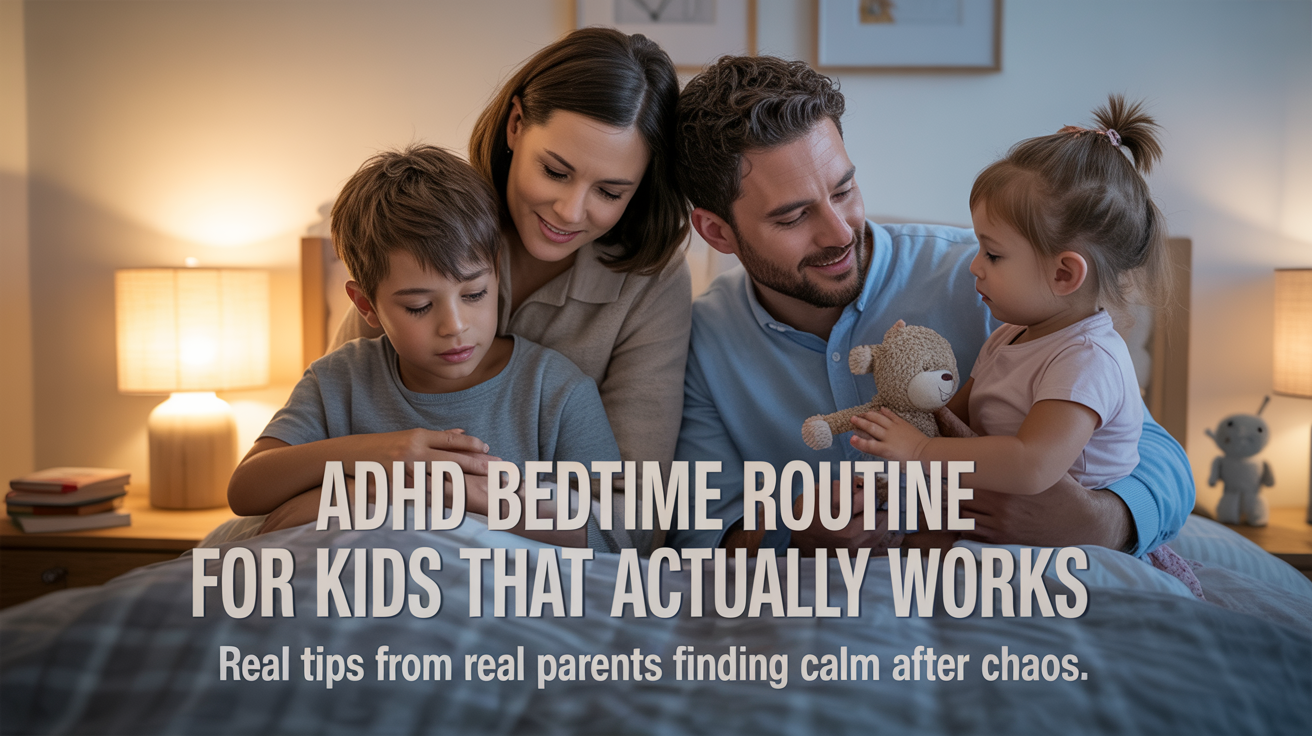
Our experience with ADHD bedtime battles and what finally helped goes deeper into that exact problem.
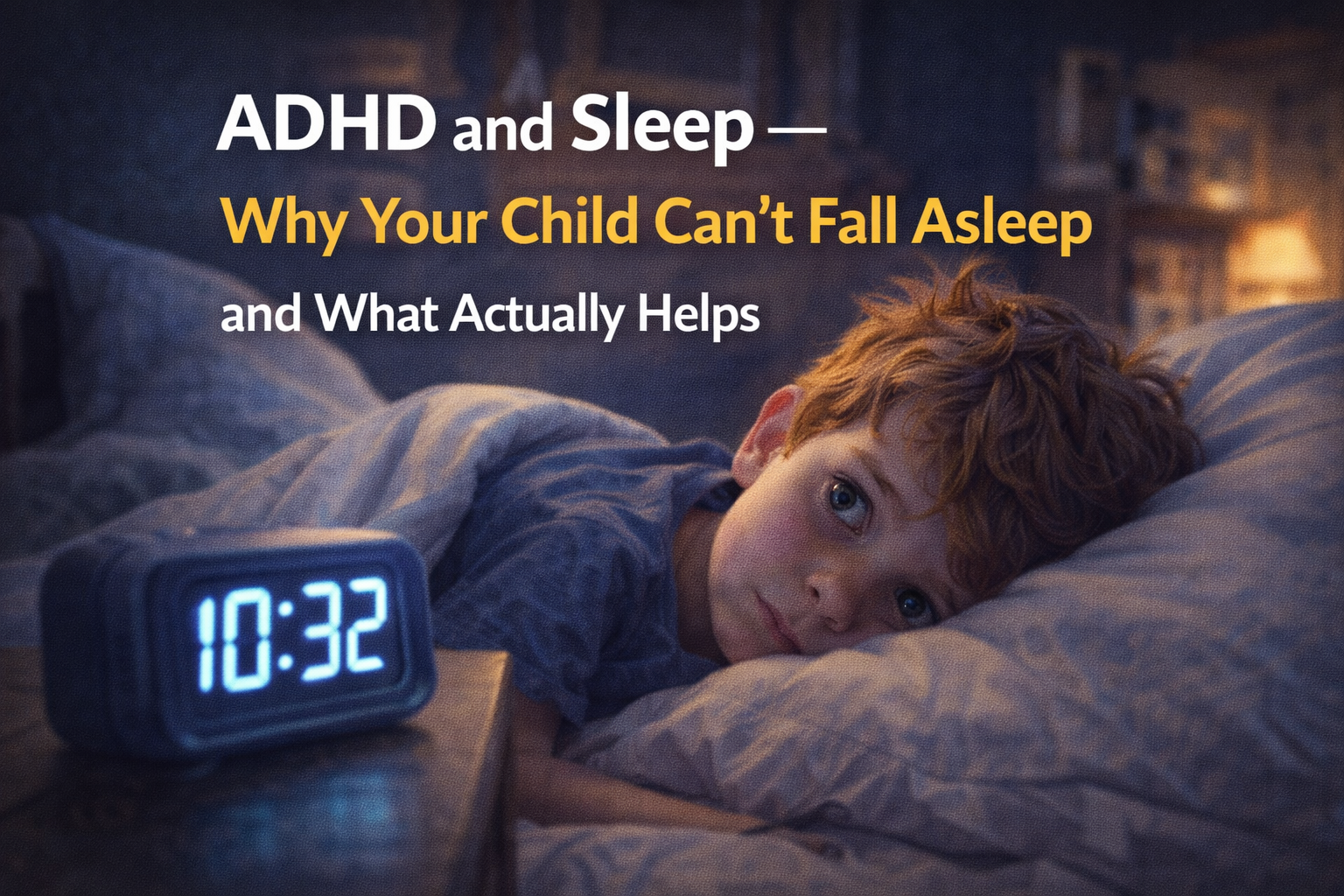
There can also be a bigger sleep issue underneath the behavior. Our guide to ADHD and sleep in children explains why sleep deserves attention instead of treating every nighttime struggle strictly as a discipline issue.
How Long Does an ADHD Meltdown Usually Last?
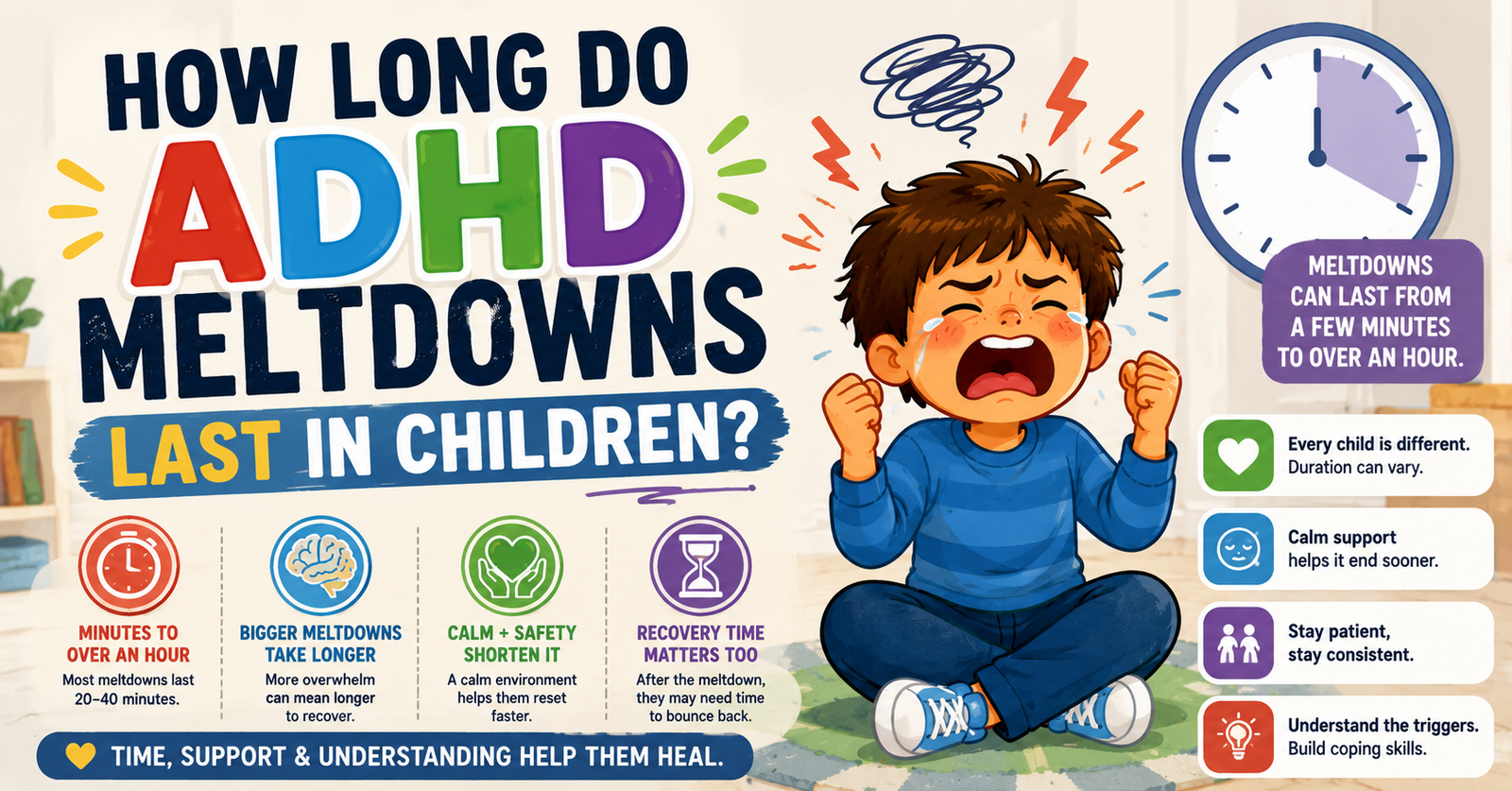
This was important enough that I wrote an entire separate guide about how long ADHD meltdowns can last in children.
There’s no universal timer.
Some reactions settle fairly quickly.
Others can continue much longer, particularly if the child is exhausted, overstimulated, hungry, still being exposed to the original trigger, or repeatedly pulled back into the argument.
I pay more attention to whether the intensity is gradually coming down than whether a particular number of minutes has passed.
What Does Recovery From an ADHD Meltdown Look Like?
This part can be just as revealing as the meltdown itself.
Afterward, a child may look completely exhausted.
Some get quiet.
Some want affection.
Some want to be alone.
Some seem embarrassed.
Some remain irritable for a while.
And occasionally a child seems to bounce back surprisingly quickly while the parent is still standing there wondering what on earth just happened.
That last one can be particularly frustrating.
You’ve spent 30 minutes dealing with chaos.
Five minutes later they’re playing with LEGO like it’s Tuesday.
Meanwhile, you’re still emotionally recovering.
I’ve learned that my recovery and the child’s recovery don’t necessarily happen at the same speed.
An ADHD Meltdown and a Tantrum Aren’t Necessarily the Same Thing
This distinction matters.
A tantrum can involve a child attempting to get a particular outcome.
A genuine meltdown is more about becoming overwhelmed and losing emotional control.
Real life isn’t always perfectly divided into two boxes, either.
A child can start out angry because they didn’t get what they wanted and then become genuinely dysregulated.
That’s why looking at only one behavior can be misleading.
I’ve covered this much more thoroughly in ADHD meltdowns vs tantrums and how I tell the difference.
It’s one of the most useful distinctions to understand before deciding how to respond.
What Should I Do During an ADHD Meltdown?
My first priority is safety.
If a child is doing something dangerous, obviously that changes the situation.
Otherwise, I try to make things simpler, not more complicated.
Fewer words.
Less arguing.
Less stimulation.
A calmer voice.
More physical space when appropriate.
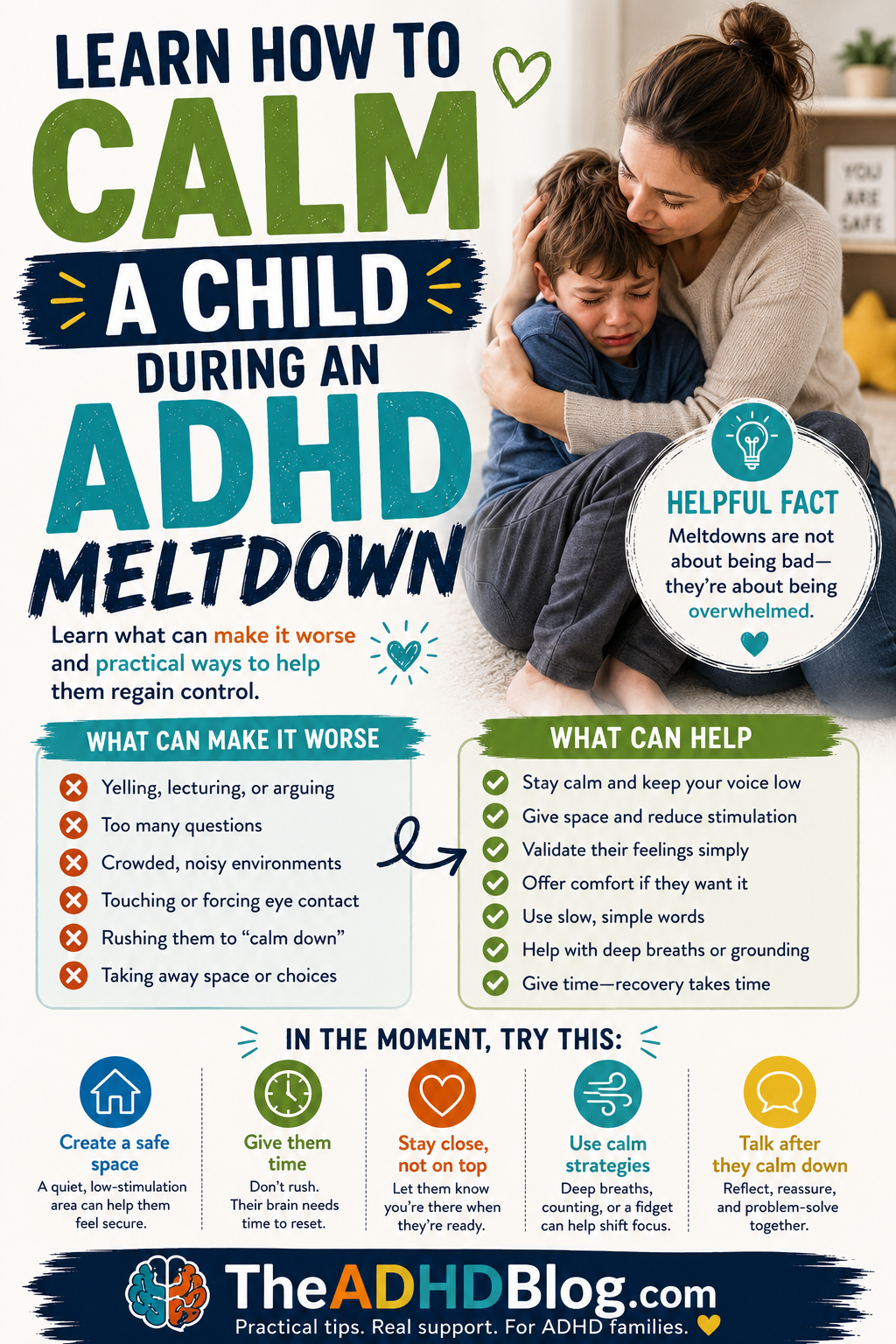
CHADD specifically recommends a calm voice, limited words, simple choices and appropriate physical space when a child is in a full intense emotional episode. Those practical responses are explained in more detail in calm a child during an ADHD meltdown.
The American Academy of Pediatrics also recommends calm discipline, brief instructions, predictable routines, limited choices, small reachable goals, and positive reinforcement as useful behavioral approaches for children with ADHD.
Notice how none of that involves winning an argument while the child is screaming.
There’s a reason for that.
Trying to Reason During the Peak Usually Doesn’t Get Me Far
This was a big lesson.
When emotions are extremely high, that isn’t when I want to deliver my greatest parenting speech.
CHADD’s guidance on helping children regulate emotions similarly notes that reasoning and lecturing during the middle of a meltdown are unlikely to be effective.
So I don’t need to explain:
Why the rule exists.
Why the child is wrong.
What they should have done.
What they’re going to do next time.
What consequence might happen.
Why their sibling didn’t technically do anything wrong.
All of that can wait.
Calm first. Conversation later.
What I Look for After Everyone Calms Down
Afterward is when I become much more interested in figuring out what happened.
I don’t want an interrogation.
I want information.
What happened right before you got upset?
Were you already having a bad day?
Were you hungry?
Were you tired?
Was it too loud?
Did you think something different was going to happen?
Did the homework feel too difficult?
Were you upset about something else?
Sometimes the child knows.
Sometimes they don’t.
That’s okay.
We’re still teaching them to recognize what’s happening inside themselves.
ADHD Meltdowns Can Sometimes Be Prevented Earlier Than We Think
I don’t believe every meltdown can be prevented.
Kids are going to have difficult moments.
Adults do too.
But recognizing the build-up gives us opportunities we don’t have once everything has exploded.
Maybe homework needs to be broken into smaller pieces. Parents looking for more ways to adapt daily demands may also find an ADHD parenting strategies guide useful alongside smaller homework steps.
Maybe there’s a snack before anything else happens after school.
Maybe the child needs 20 minutes without demands.
Maybe screen transitions need warnings.
Maybe mornings need more structure.
Maybe the bedroom routine needs to begin earlier.
Maybe a loud environment needs a quieter alternative.
Maybe the child needs movement before being asked to sit.
These aren’t excuses for inappropriate behavior.
They’re ways of changing the environment so the child has a better chance of succeeding.
Routines Can Remove a Surprising Number of Triggers
I love routines for ADHD because they reduce how many instructions need to be invented every day.
Instead of constantly saying:
“Go get dressed.”
“Did you brush your teeth?”
“Where’s your backpack?”
“Put your shoes on.”
“You need to eat.”
“We’re going to be late!”
the routine starts becoming predictable.
We’ve had enough experience with chaotic mornings that I put together our ADHD morning routine that made life easier.
It’s not about making mornings perfect.
It’s about removing unnecessary friction.
ADHD Chore Meltdowns May Really Be Task-Overwhelm Meltdowns
“Clean your room.”
Four words.
Massive task.
Where do I start?
Clothes?
Toys?
Trash?
Bed?
Desk?
What belongs where?
What do I do with this?
Oh, here’s a toy I haven’t seen in six months.
Twenty minutes later, the room looks exactly the same.
Then the parent walks in frustrated.
Now the child is frustrated.
And there we go.
Breaking tasks into small, reachable goals is also consistent with the American Academy of Pediatrics’ behavioral guidance for ADHD.
That’s why our approach to ADHD chores for kids focuses so heavily on making the task smaller and clearer.
Don’t Assume Every Meltdown Is ADHD
This is extremely important.
A child having ADHD doesn’t mean every difficult behavior comes from ADHD.
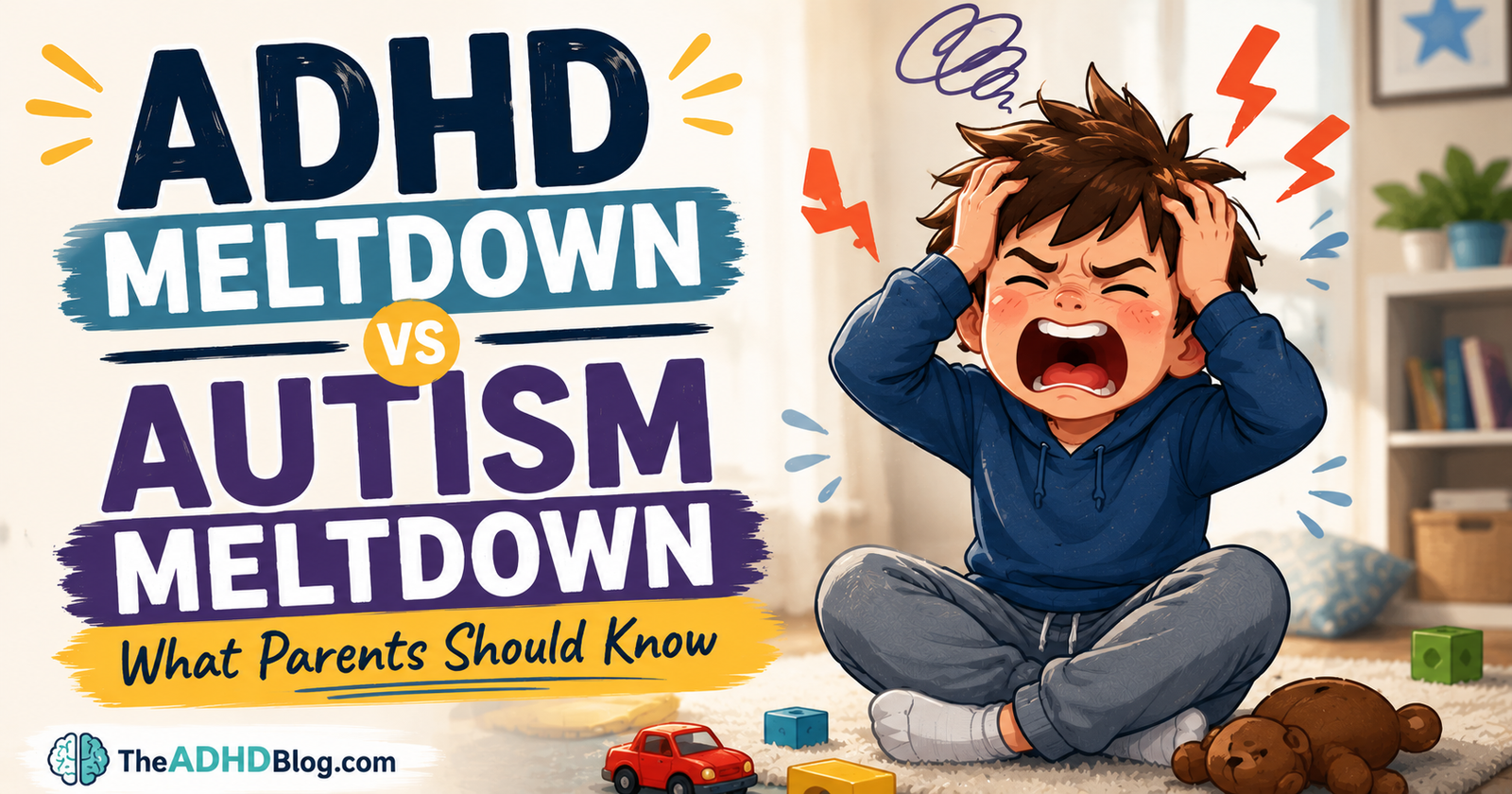
Children with ADHD can also have anxiety, learning problems, autism, sleep disorders, oppositional behaviors, mood problems, and other conditions or challenges. Because autism can also occur alongside ADHD, ADHD and autism meltdowns offers useful context for parents comparing these patterns.
CHADD notes that persistent irritability, intense meltdowns, aggression, arguing, and significant difficulty managing emotions can also occur with disruptive behavior disorders that sometimes coexist with ADHD.
So if something seems unusual, severe, or dramatically different from your child’s normal pattern, I wouldn’t simply shrug and say:
“That’s ADHD.”
When ADHD Meltdowns Need Professional Help
I’d especially want professional guidance if meltdowns are becoming extremely frequent, causing injuries, involving serious aggression, creating major school problems, involving self-harm or threats of self-harm, destroying property, or making everyday family life feel unsafe.
CHADD recommends professional help when emotional dysregulation remains severe despite supportive strategies or when episodes involve frequent threatening or dangerous behavior.
Your child’s pediatrician can be a good starting point and can help determine whether further evaluation or behavioral or mental health support makes sense.
The Biggest Sign I Watch for Is Loss of Control
If you’re still wondering what an ADHD meltdown looks like in a child, I wouldn’t search for one perfect visual definition.
I would look at the bigger pattern.
A child encounters frustration, disappointment, overload, a difficult transition, exhaustion, hunger, or another trigger.
Their emotional intensity begins climbing.
The ability to reason and adapt seems to drop.
The reaction becomes much larger than we’d expect from the immediate situation.
And eventually, after enough time and regulation, the child comes back down.
That’s very different from simply deciding:
“My kid screams when they don’t get what they want.”
Understanding what’s underneath the behavior gives us something much more useful to work with.
And once you begin recognizing what your child’s meltdown looks like before it reaches the explosive stage, you may finally start spotting those few precious minutes when there’s still a chance to change where things are headed.
About the Author: Emily Parker
Emily Parker writes for TheADHDBlog.com about raising and supporting children with ADHD, with a special focus on emotional regulation, difficult behavior, routines, school struggles, and the everyday situations that don’t always fit neatly into clinical descriptions. Her work is designed to help parents better understand what they may be seeing at home while knowing when professional guidance matters.