One of the hardest parts of an ADHD meltdown isn’t always how it starts.
It’s not knowing when it’s going to end.
I’ve seen how quickly a child can go from seemingly okay to completely overwhelmed. One minute you’re dealing with homework, getting ready for bed, leaving somewhere fun, or asking them to turn off a screen. A few minutes later, you’re in the middle of crying, yelling, anger, refusal, or a child who seems completely unable to pull themselves back together. That rapid shift is explored further in why ADHD anger erupts so suddenly, including why small triggers can produce such intense anger.
And when you’re standing there in the middle of it, five minutes can feel like thirty.
So how long do ADHD meltdowns actually last?
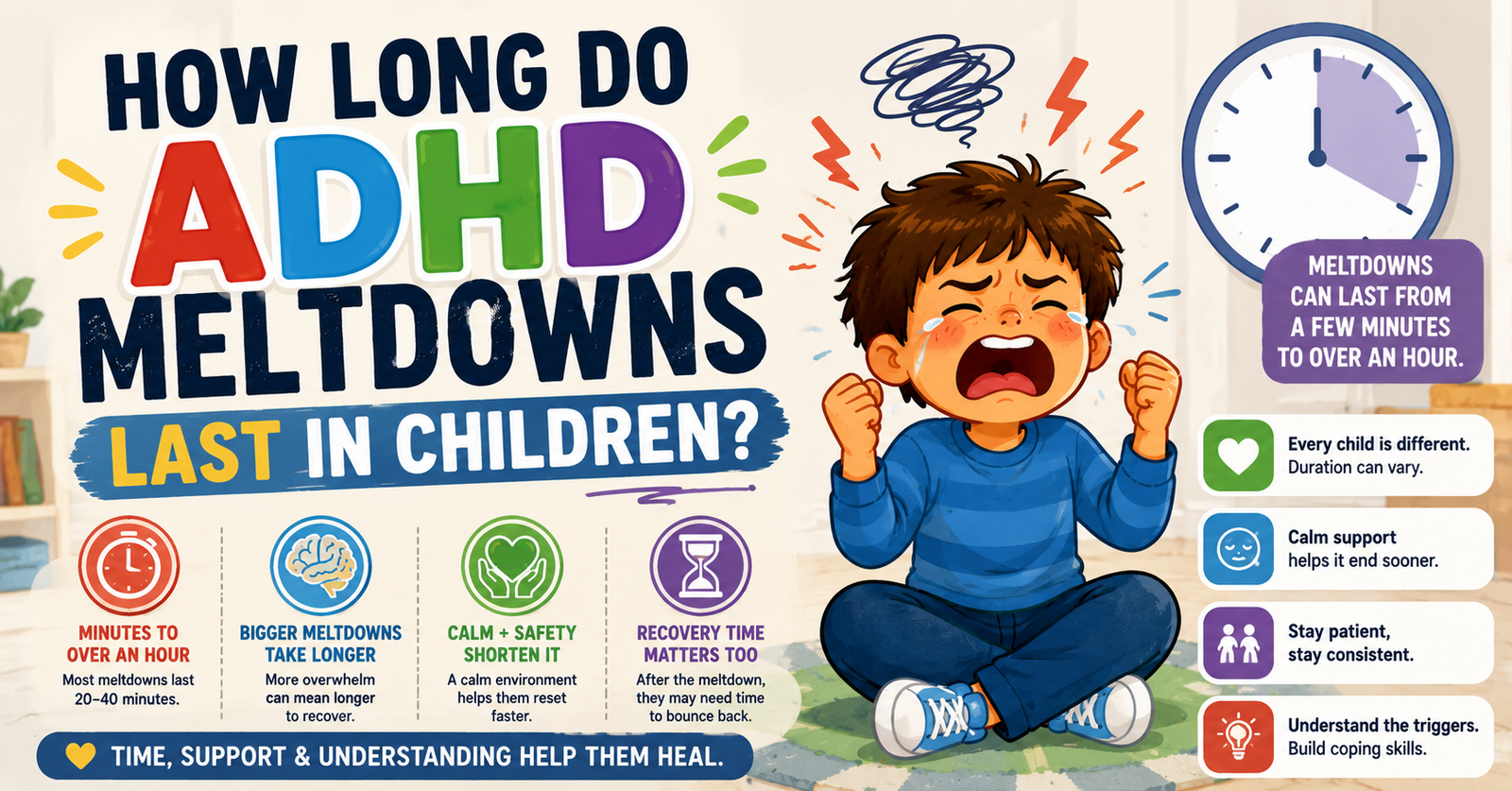
There isn’t one exact amount of time. Some ADHD meltdowns may pass within several minutes, while others can last 20, 30, 45 minutes or longer, especially when a child is exhausted, overstimulated, hungry, repeatedly confronted about the original problem, or simply having an unusually difficult day.
What matters even more than watching the clock is understanding why some meltdowns burn out fairly quickly while others seem to keep restarting.
That’s where things started making much more sense to me.
There Isn’t a Normal ADHD Meltdown Length
I wish there were a simple answer like:
“An ADHD meltdown lasts exactly 15 minutes.”
There isn’t.
Every child is different, and even the same child can have completely different meltdowns on different days.
One might last five or ten minutes.
Another might take much longer.
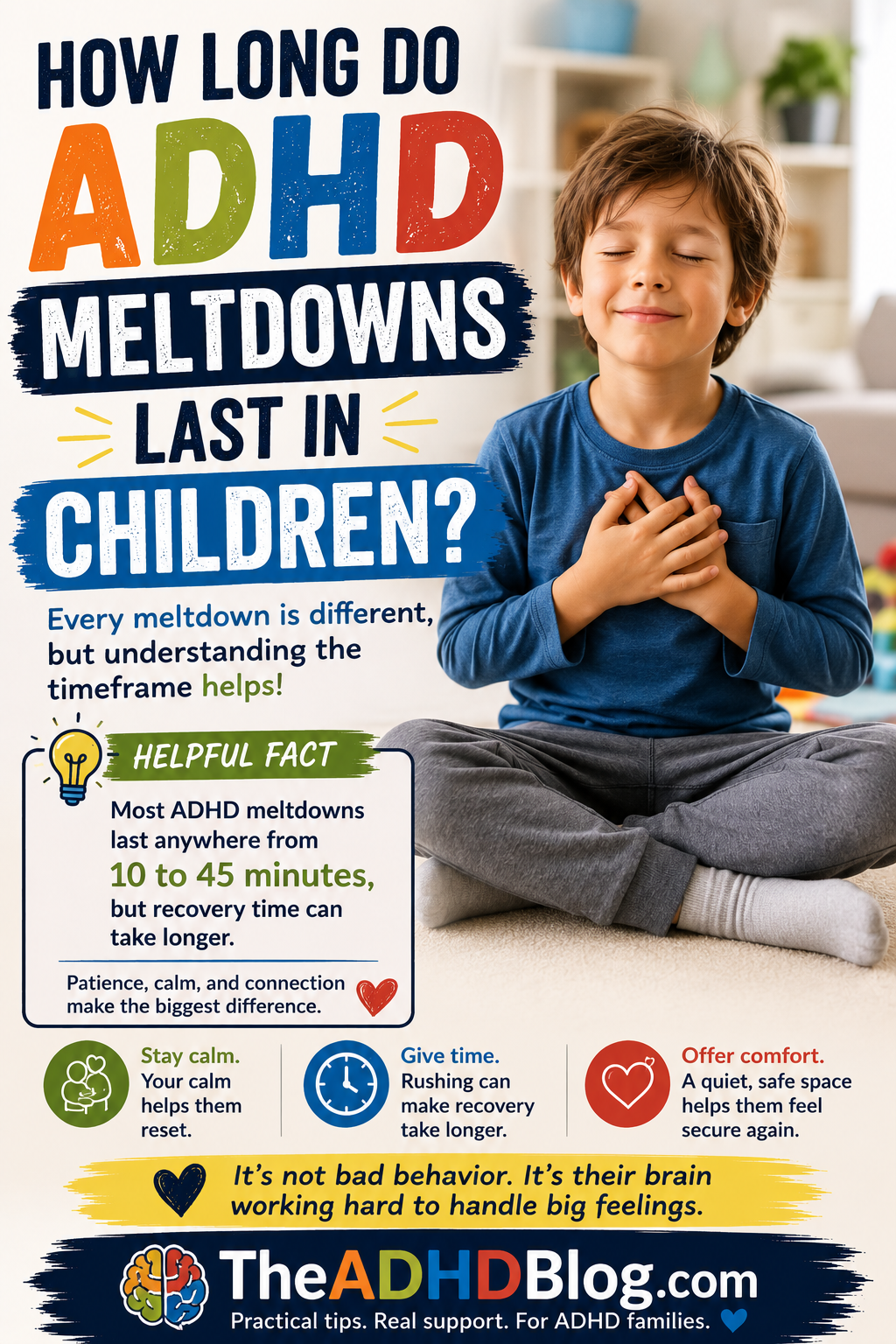
Sometimes the most intense part passes quickly, but the child remains upset, exhausted, irritable, or sensitive for quite a while afterward.
That’s because we’re not dealing with a timer that starts when a meltdown begins.
We’re dealing with a child’s ability to regulate an extremely strong emotional response.
Emotional regulation difficulties are increasingly recognized as a significant challenge for many children and teens with ADHD. Executive-function skills such as flexibility, working memory, self-monitoring, planning, and stopping before reacting can all play a role in managing strong emotions.
And those abilities aren’t identical every hour of every day.


A Meltdown Can Be Short One Day and Long the Next
This is where parents can drive themselves crazy trying to find consistency.
Yesterday, turning off the tablet caused five minutes of complaining.
Today, the exact same thing causes a 30-minute disaster.
What changed?
Possibly a lot more than we realize.
Maybe the child slept poorly.
Maybe school was unusually difficult.
Maybe lunch barely got eaten.
Maybe they had an argument with a friend.
Maybe the classroom was loud all day.
Maybe they’ve already dealt with ten frustrating situations before walking through your front door. The same accumulated strain can help explain after-school meltdown patterns, especially when a child has been holding things together throughout the day.
That’s why I don’t think the size of the final trigger tells us very much about how intense the reaction will become.
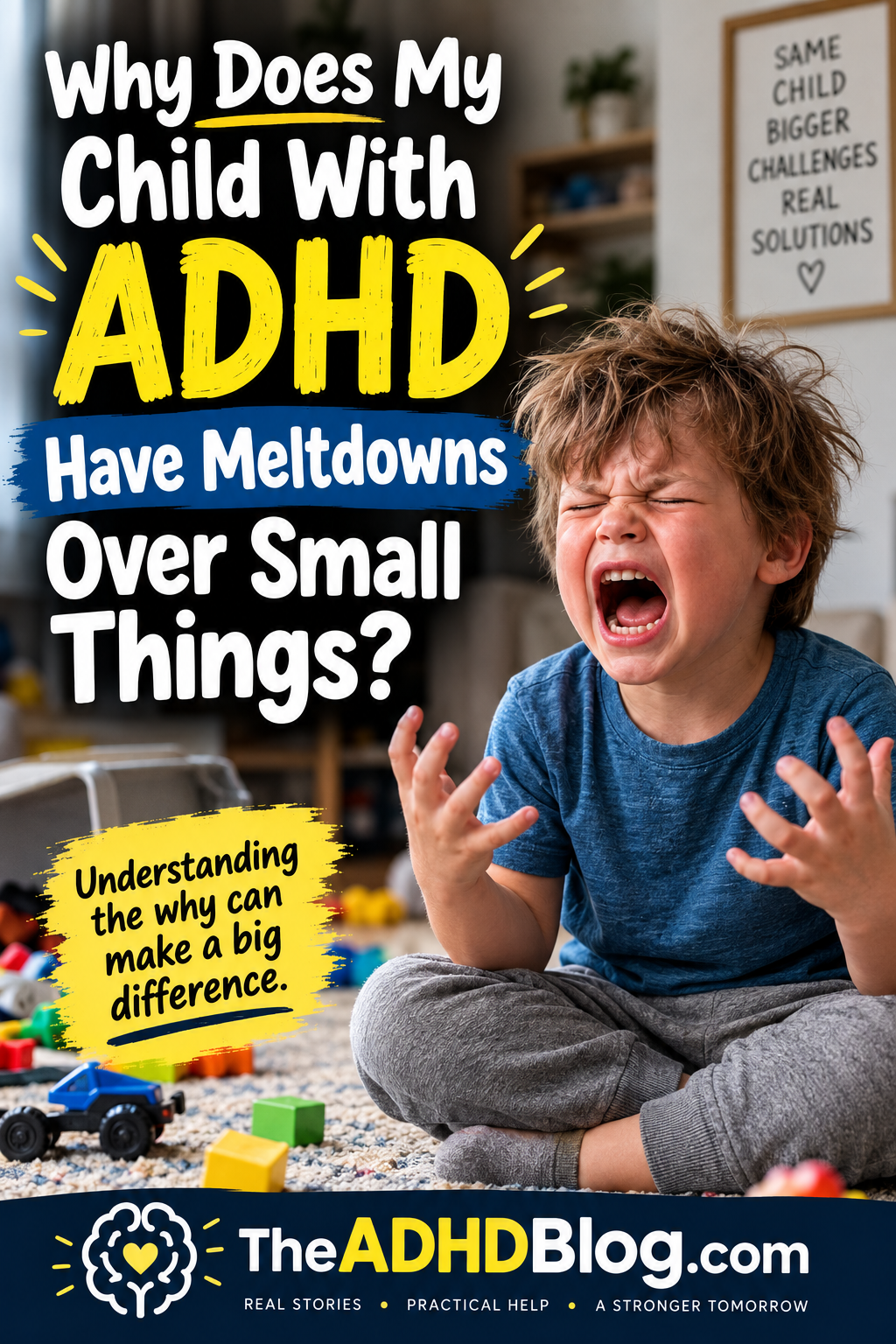
I explained this in more detail in why children with ADHD can have huge meltdowns over seemingly small things.
The little problem you witnessed may simply have been the final drop in an already-full cup.

What Does an ADHD Meltdown Actually Look Like?
Not every child melts down the same way.
For one child, it might be screaming.
Another may cry uncontrollably.
Another might slam a bedroom door and refuse to speak.
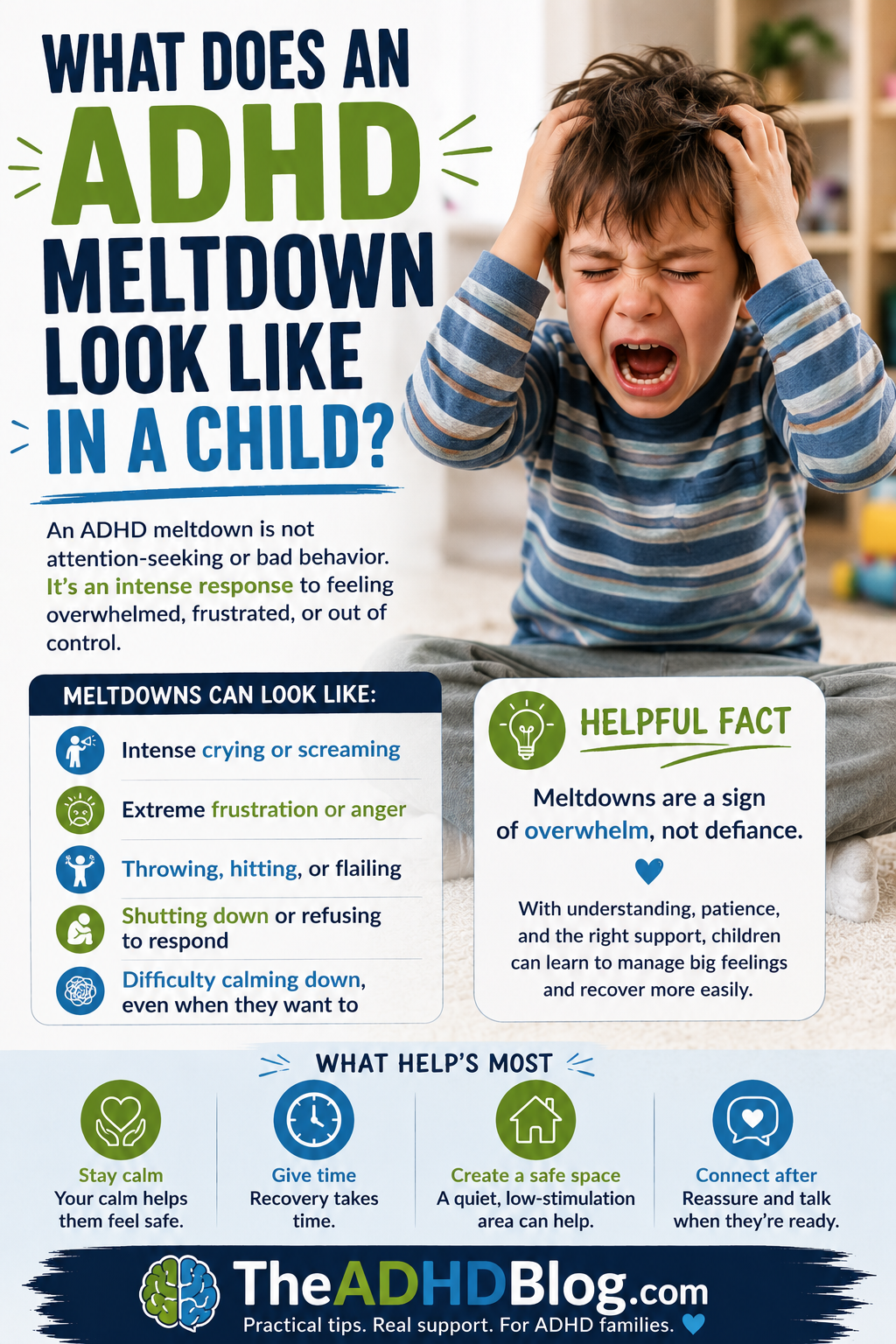
You might see pacing, throwing things, arguing, hitting, kicking, hiding, covering the ears, dropping to the floor, or desperately trying to escape whatever situation triggered the reaction. These are among the common ADHD meltdown behaviors parents may notice when a child becomes overwhelmed.
Some kids become incredibly loud.
Others almost shut down.
And this is where terminology can get messy.
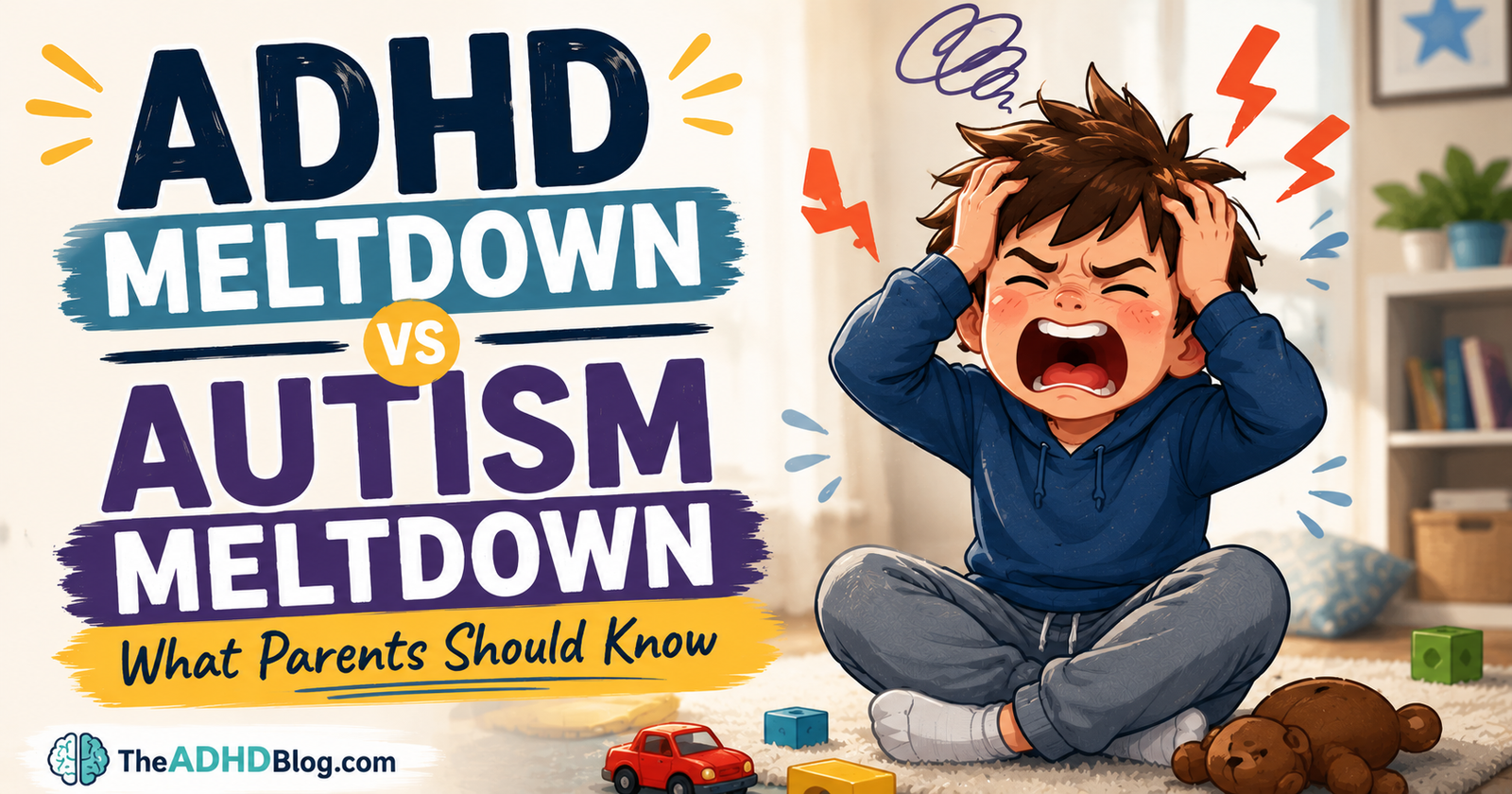
A meltdown and a tantrum can look remarkably similar from the outside even though what is driving the behavior may be different. When the behaviors look similar, how ADHD and autism meltdowns differ can help clarify what may be driving them.
Our guide to ADHD meltdowns vs tantrums goes much deeper into that difference.
For this article, the important thing is understanding that once a child is genuinely overwhelmed and highly dysregulated, simply telling them to stop may accomplish very little.
Why Can’t My Child Just Calm Down?
I’ve asked some version of this question before.
Especially when the original problem has already been solved.
The blue cup wasn’t available.
Okay, we found another cup.
Problem solved.
Except the child is still melting down.
That’s because solving the original trigger doesn’t necessarily instantly switch off the emotional reaction that has already started.
Once emotions become extremely intense, the body and brain aren’t necessarily in the best state for reasoning, planning, negotiating, or listening to a long explanation.
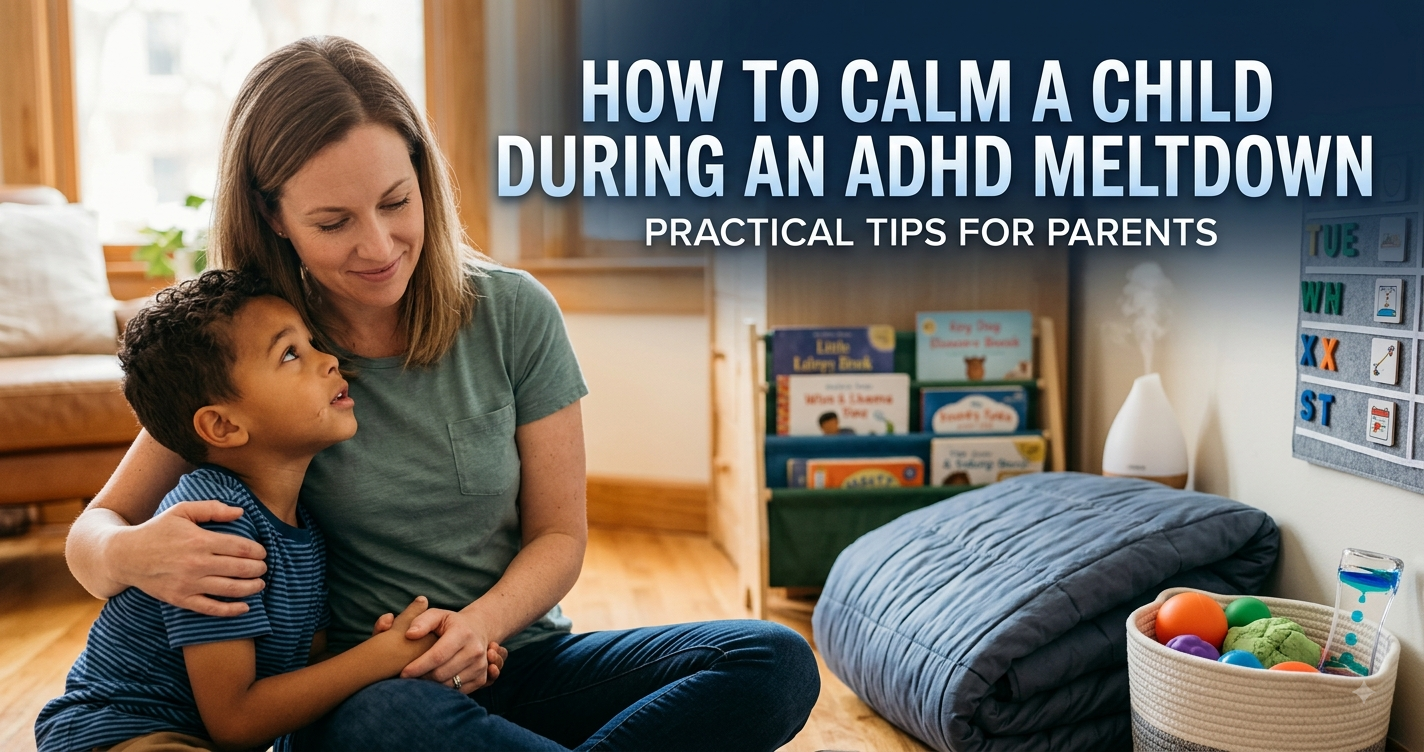
CHADD recommends that during intense dysregulation, parents focus on a calm voice, fewer words, appropriate choices, and physical space when it can be provided safely. Parents can apply those principles with the safety-focused approach in what to do during a child’s meltdown.
That has been one of the most useful concepts for me.
Sometimes the fastest way through a meltdown isn’t trying harder to talk a child out of it.

Talking Too Much Can Keep the Meltdown Going
This one is difficult because talking is what adults naturally want to do.
We want to explain.
We want to correct.
We want to understand.
We want the child to understand.
So we start asking questions.
“Why are you acting like this?”
“What is wrong?”
“I already told you why you can’t have it.”
“You need to stop screaming.”
“You’re making this so much worse.”
“If you would just listen to me…”
Meanwhile, the child’s brain is already overwhelmed.
Now we’re adding another stream of information for them to process.
CHADD notes that reasoning and lecturing during the middle of a meltdown are unlikely to help because the child is already emotionally flooded.
I’ve found it much more useful to save the bigger conversation for later.
The Peak of the Meltdown Isn’t the Whole Meltdown
This is another distinction worth making.
A meltdown can have something of a beginning, middle, and recovery.
The Build-Up
You might notice:
Irritability.
Complaining.
Restlessness.
Arguing.
Getting increasingly loud.
Becoming unusually sensitive.
Repeating the same complaint.
Refusing simple requests.
This is often where I have the best chance of changing the direction things are headed.
The Peak
This is the part everyone remembers.
The crying.
Screaming.
Anger.
Refusal.
Running away.
Throwing things.
Or whatever a particular child’s intense reaction looks like.
At this point, I’m much less interested in teaching a lesson and much more interested in keeping everyone safe and lowering the intensity.
The Recovery
Eventually the intensity begins coming down.
But that doesn’t necessarily mean the child immediately returns to normal.
They may be exhausted.
Quiet.
Embarrassed.
Clingy.
Irritable.
Hungry.
Or they may want to act as though nothing happened.
The recovery period matters too.


Why Some ADHD Meltdowns Last Longer Than Others
I’ve noticed several things that can make a bad situation stretch much longer than it otherwise might.
The Child Is Exhausted
Tired kids generally don’t become better at handling frustration.
And ADHD can already complicate sleep for some children.
If your biggest meltdowns consistently happen in the evening, I would pay close attention to the connection.
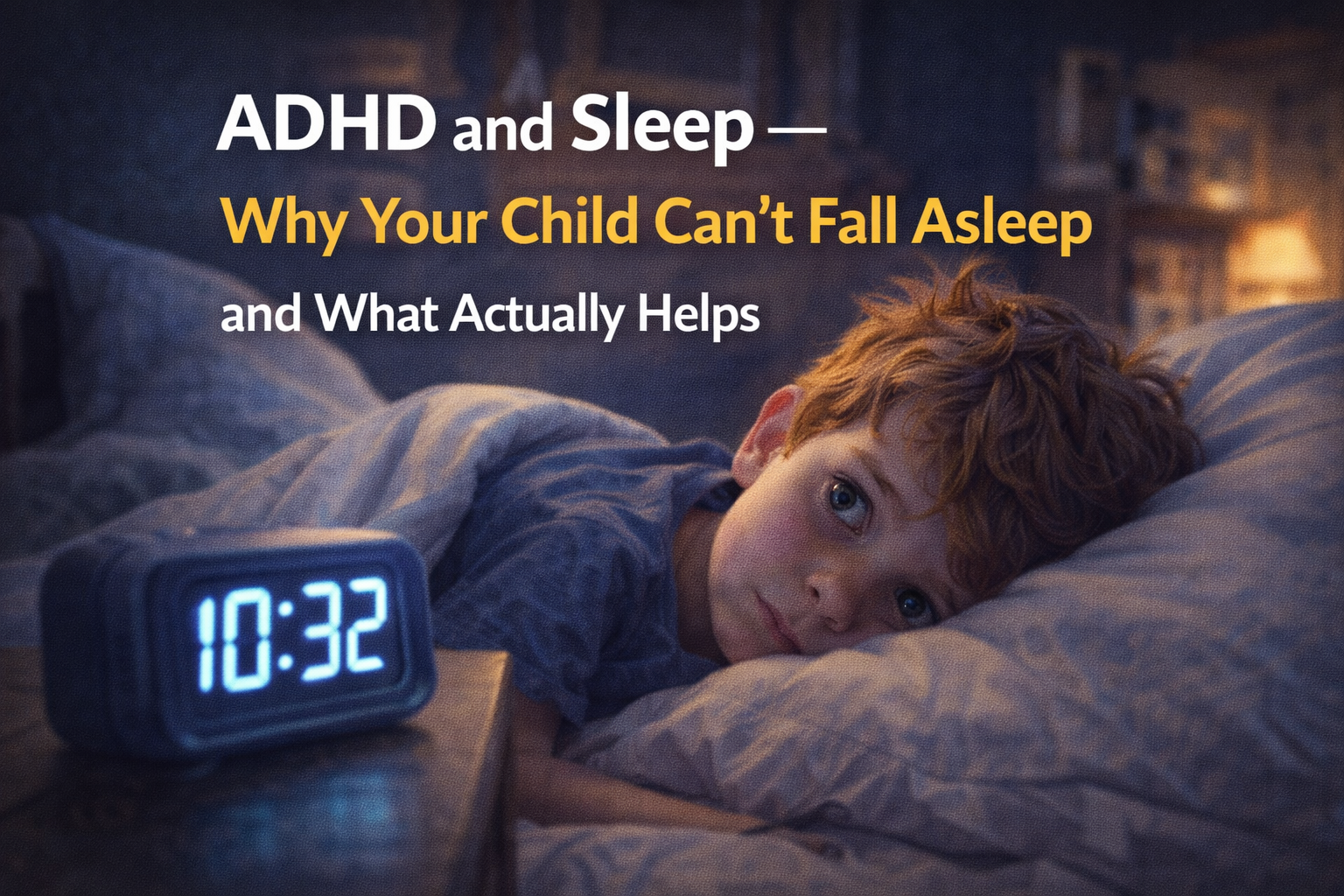
We have an entire guide explaining ADHD and sleep problems in children because sleep can become intertwined with behavior, attention, mornings, school, and emotional regulation.
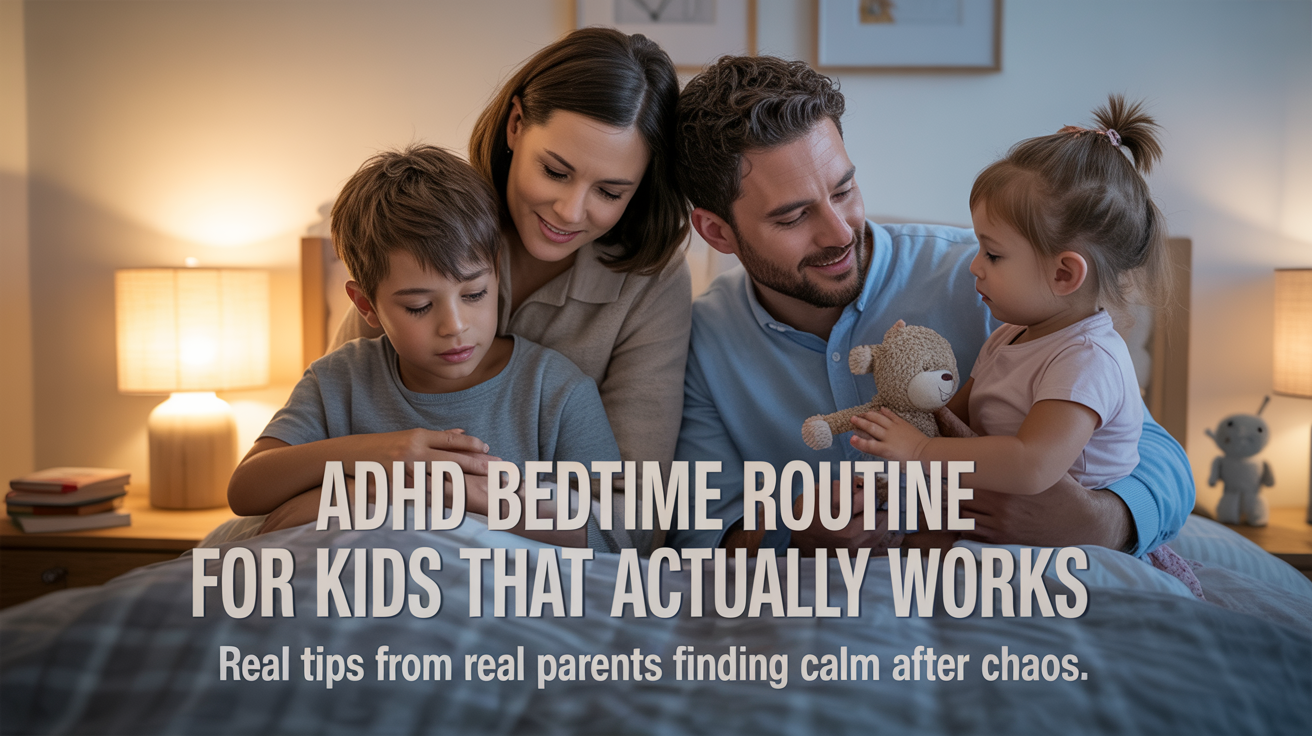
And if bedtime itself is where everything falls apart, our experience with ADHD bedtime battles may sound very familiar.
They’re Hungry
This sounds almost laughably simple until you’ve seen the difference food can make.
A child walks through the door after school already exhausted and frustrated.
Then we immediately start asking about:
Homework.
Chores.
Backpacks.
Shoes.
School papers.
And suddenly everything explodes.
Sometimes I want to address the basics first.
Food.
Water.
Bathroom.
A few minutes without another demand.
Then we move forward.
The Environment Is Still Overwhelming
Imagine trying to calm yourself while:
The TV is playing.
A sibling is yelling.
Someone keeps asking questions.
The dog is barking.
People are walking around.
The lights are bright.
You’re being told to hurry.
That’s not exactly an ideal reset environment.
Reducing unnecessary distractions and providing predictable routines are among the strategies recommended for helping children with ADHD manage behavior.
Sometimes less really is more.
We Keep Returning to the Argument
This is a big one.
The meltdown starts because screen time ends.
The child becomes extremely upset.
Things finally begin settling.
Then we say:
“And this is exactly why you shouldn’t get so much screen time!”
Boom.
We’re right back in it.
There will be time to discuss what happened.
I don’t need to restart the argument the second the child begins calming down.
Transitions Can Be Especially Difficult
A lot of ADHD meltdowns seem to happen around stopping one thing and starting another.
Stop playing.
Start homework.
Stop watching TV.
Take a shower.
Leave the playground.
Get in the car.
Go upstairs.
Go to bed.
Switching activities requires the brain to disengage from one task and redirect itself toward something else.
For a child who is deeply engaged in something enjoyable, that transition can feel enormous.
Giving advance notice before transitions, keeping expectations clear, and using structure can help some children with ADHD manage those changes more successfully.
That doesn’t mean the five-minute warning magically prevents every meltdown.
But predictability gives us a better starting point.
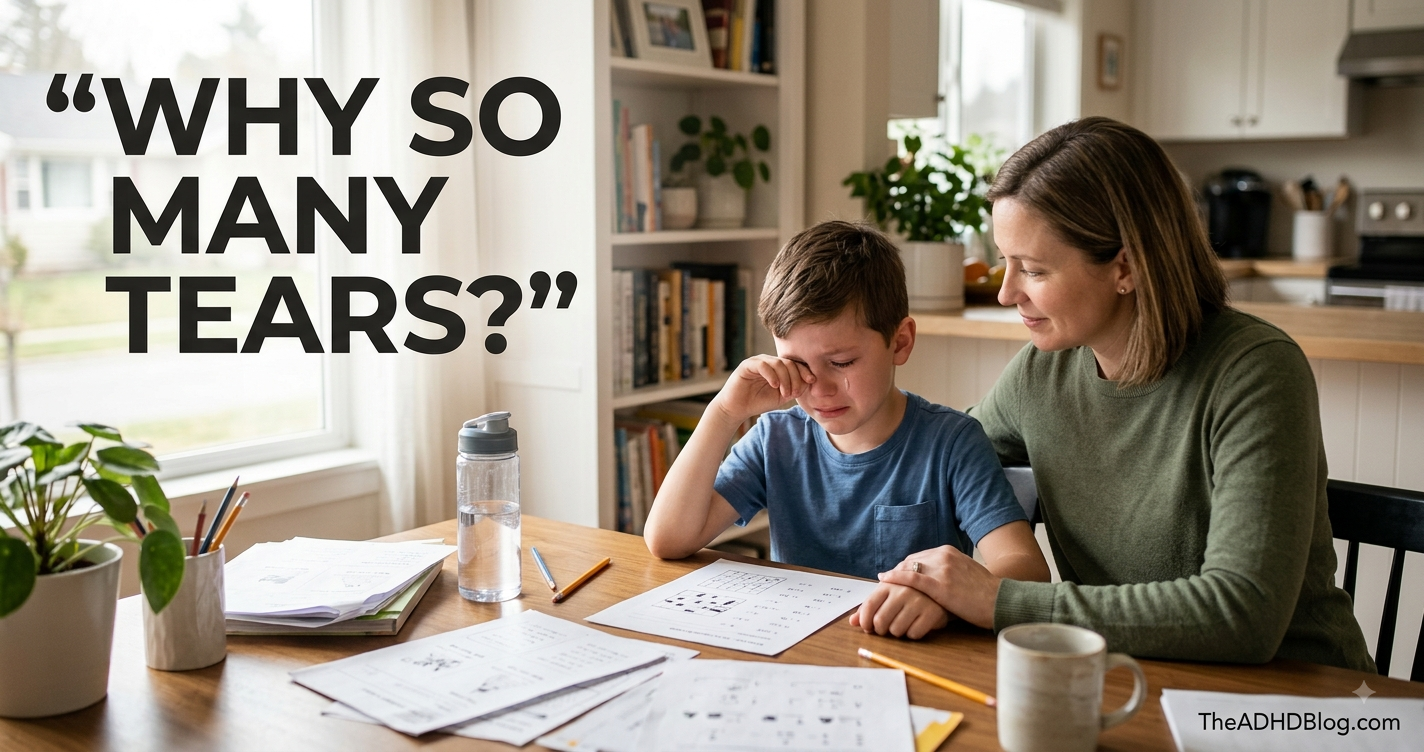
Homework Meltdowns Can Feel Like They Last Forever
Homework is almost perfectly designed to expose ADHD struggles.
Think about everything involved.
The child needs to remember the assignment, find the correct materials, determine where to begin, sustain attention, tolerate mistakes, ignore distractions, manage time, and continue doing something that may not be particularly interesting. A structured ADHD homework planner may give families a practical way to make those homework steps more visible and manageable.
And they’re often doing all of this after spending an entire school day doing similar things.
That’s why I’ve stopped looking at homework struggles simply as:
“My child won’t do the work.”
There’s usually much more going on.

Our ADHD homework tips for parents explain how we’ve approached making the process more manageable instead of allowing homework to consume the entire evening.
Sometimes Breaking the Task Changes Everything
One thing I really like with ADHD is turning vague, enormous instructions into small, concrete ones.
Consider:
“Clean your room.”
That could mean 100 different decisions.
Now compare it with:
“Put all the dirty clothes in the hamper.”
That’s clear.
It’s measurable.
There’s an obvious ending.
Once that’s finished:
“Now put the stuffed animals on the bed.”
Another finish line.
The American Academy of Pediatrics recommends setting small, reachable goals, keeping instructions brief, and using tools such as charts and checklists to help children with ADHD stay on task.
That’s also why I think our ADHD chores approach for kids works better than repeatedly shouting the same giant instruction from another room.
What I Do When a Meltdown Has Already Started
Once we’re truly in it, my priorities change.
I’m not trying to prove that I’m right.
I’m not trying to get an apology.
I’m not trying to finish the original argument.
First, I want everyone safe.
Then I want to lower the amount of stimulation rather than adding to it.
I keep what I’m saying short.
I try to keep my own voice calm.
If appropriate, I provide some space.
And I wait.
Sometimes that’s incredibly difficult.
It can feel like doing nothing.
But standing there giving a ten-minute lecture hasn’t exactly produced magical results either.
Don’t Put a Stopwatch on Your Child
Knowing how long ADHD meltdowns can last is useful.
Actually timing every meltdown and getting frustrated because it’s taking too long probably isn’t.
If I start thinking:
“It’s been 17 minutes. Why aren’t you calm yet?”
I’m probably going to become more irritated myself.
And now we have two dysregulated people instead of one.
I’d rather pay attention to direction.
Is the screaming becoming less intense?
Is breathing slowing?
Are they starting to respond to me?
Are they willing to sit down?
Are they beginning to accept comfort?
Those are signs we’re moving in the right direction even if the meltdown isn’t technically “over.”
What Happens After an ADHD Meltdown?
This part doesn’t get discussed enough.
Some children seem completely drained afterward.
That’s understandable.
An intense emotional episode is exhausting.
I don’t necessarily want to launch straight into:
“Okay, now let’s discuss everything you did wrong.”
Sometimes a little recovery needs to happen first.
Once we’re both calm, though, I do want to revisit what happened.
Not to shame the child.
To learn something.
“What made that so hard?”
“When did you first start getting upset?”
“Was something bothering you before that?”
“What could we try next time?”
Those conversations are far more useful to me than demanding an explanation during the peak of the meltdown.
Look for the Moment Before the Meltdown
This is where I think parents can eventually make the biggest progress.
Preventing every ADHD meltdown probably isn’t realistic.
Recognizing the earliest warning signs can be.
Maybe your child starts pacing.
Maybe their voice changes.
Maybe they repeat themselves.
Maybe they become argumentative.
Maybe every little noise suddenly bothers them.
Maybe they say:
“I CAN’T DO THIS!”
That’s information.
If we recognize that stage early enough, sometimes we can intervene before reaching the peak.
A snack.
Movement.
A short break.
A quieter room.
A smaller task.
Help getting started.
A clear choice.
Five minutes alone.
Whatever fits that particular child and situation.
Routines Can Reduce Some of the Daily Friction
Predictability is one of my favorite ADHD tools because it eliminates unnecessary decisions and arguments.
If every morning requires twenty new instructions, that’s twenty opportunities for things to derail.
A routine makes tomorrow resemble yesterday.
Wake up.
Bathroom.
Get dressed.
Breakfast.
Teeth.
Backpack.
Shoes.
Out the door.
The exact routine will obviously vary by family.
But when everyone knows what’s coming next, I don’t have to verbally direct every single movement.

That’s a major reason we put together our ADHD morning routine.
It’s not about creating a Pinterest-perfect morning.
It’s about reducing unnecessary chaos.
How Can I Help My Child Calm Down Faster?
There isn’t one magic ADHD calming trick.
If there were, every parent reading this would already own it.

What I’ve found more useful is figuring out what makes this particular child more regulated. Parents looking for a broader framework for identifying helpful supports may also find this ADHD parenting guide useful.
For one child, that may be quiet.
For another, movement.
For another, sitting close to a parent.
For another, being left alone for a few minutes.
For another, reducing the number of choices.
And sometimes what worked yesterday doesn’t work today.
That’s frustrating, but it’s also why I don’t want a giant toolbox containing only one tool.
The American Academy of Pediatrics recommends strategies such as clear routines, limited choices, brief instructions, positive reinforcement, reachable goals, and calm discipline as part of behavior management for children with ADHD.
Those aren’t instant meltdown cures.
They’re ways to create an environment that makes successful regulation a little easier.
Teach Calming Skills When Your Child Is Already Calm
Trying to introduce a complicated breathing exercise while someone is screaming isn’t my favorite strategy.
I’d rather practice skills when nobody desperately needs them.
That’s when we can work on recognizing:
“I’m getting frustrated.”
“I need a break.”
“This is too loud.”
“I need help.”
“I’m getting angry.”
Those sentences are powerful.
A child who can recognize the early stages of overwhelm has a much better chance of doing something about them.
Emotion coaching can also involve helping children identify and name what they’re feeling, validating the emotion while still keeping appropriate limits on behavior.
We’re building a skill, not flipping a switch.
When Should I Worry About How Long the Meltdowns Last?
This is where I care less about an exact number of minutes and more about the bigger picture.
An occasional difficult meltdown after an exhausting day is very different from severe episodes happening constantly.
I’d talk with your child’s pediatrician or another qualified professional if the meltdowns are becoming unusually frequent or severe, are creating serious problems at home or school, involve dangerous aggression, self-harm, threats, major property destruction, or simply feel far beyond what your family can safely manage.
Persistent or dangerous dysregulation deserves professional attention rather than assuming everything is “just ADHD.” CHADD similarly recommends seeking help from a mental health clinician or behavioral specialist when dysregulation remains severe or includes frequent threatening or dangerous behavior.
ADHD can also occur alongside other conditions, so patterns that concern you are worth discussing with someone who can actually evaluate your child.
Start Watching Patterns Instead of Minutes
If you’re wondering how long ADHD meltdowns last, I wouldn’t get too hung up on whether your child’s meltdown lasted 8 minutes, 18 minutes, or 38 minutes.
I’d start writing down what happened around it.
What time was it?
How had they slept?
Had they eaten?
What were they doing immediately beforehand?
Was there a transition?
Was homework involved?
Had they just gotten home from school?
Was the environment unusually loud or busy?
What seemed to help?
What seemed to make things worse?
And how long did it roughly take before they were themselves again?
After a handful of meltdowns, you may notice something incredibly useful.
They’re not as random as they seemed.
Maybe the worst ones happen after school.
Maybe they’re almost always around bedtime.
Maybe stopping screens is the major trigger.
Maybe hunger is involved constantly.
Maybe homework starts them.
Maybe poor sleep practically guarantees a difficult day.
That’s the information I want.
Because once I understand when the cup tends to overflow, I have a much better chance of keeping it from getting completely full in the first place.
About the Author: Emily Parker
Emily writes for TheADHDBlog.com about the everyday side of raising and supporting children with ADHD, with a focus on emotional regulation, routines, behavior, school struggles, and the practical situations families deal with at home. Her goal is to turn confusing ADHD behaviors into understandable problems parents can approach with more useful strategies and better questions. You can learn more about the blog's firsthand perspective and the experience behind these practical family-focused articles.