
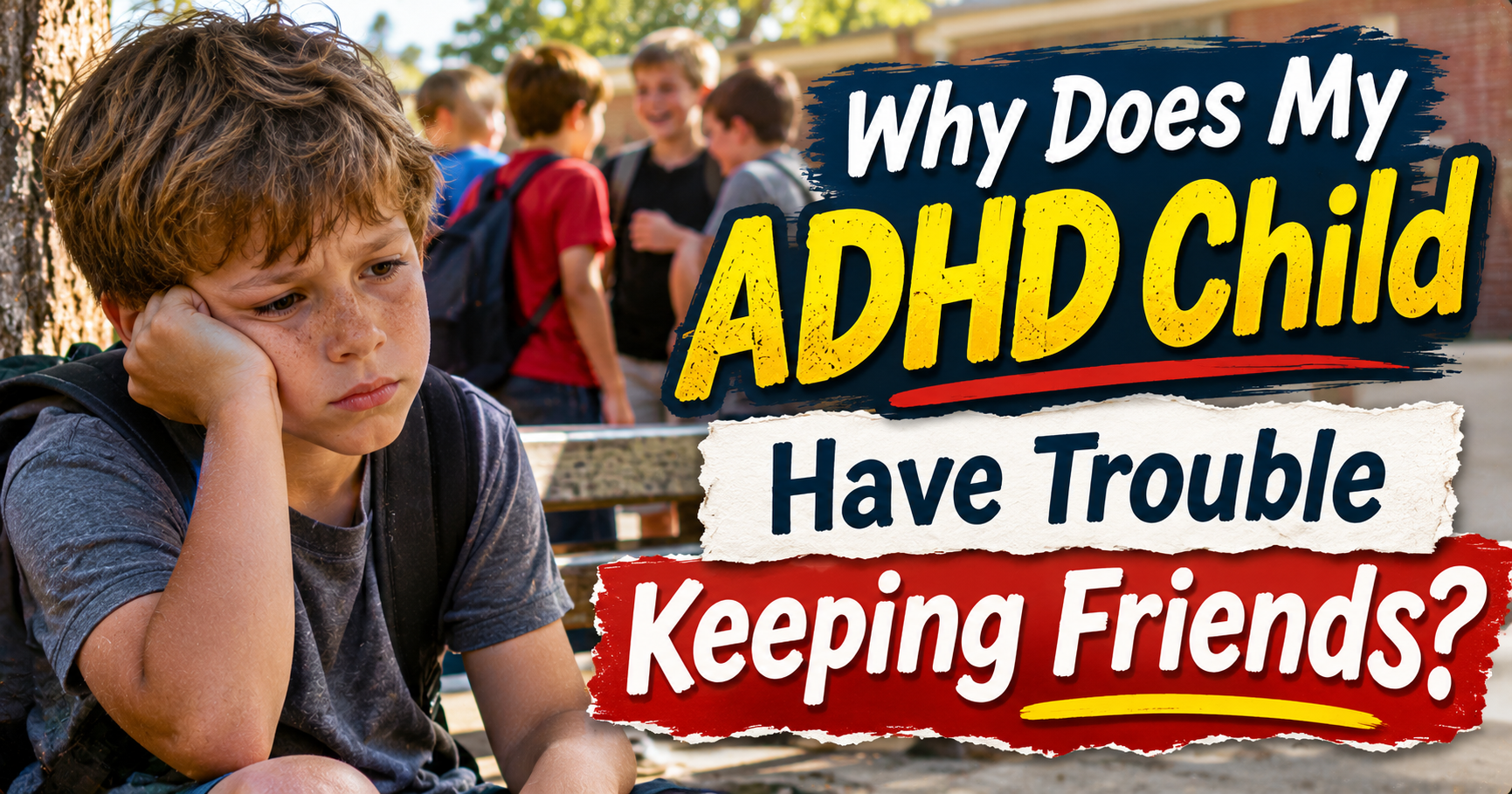
Watching your ADHD child struggle to make or keep friends can be heartbreaking. You want them to have someone to play with, laugh with, and look forward to seeing at school. But ADHD can make friendships more complicated than most people realize.
As parents raising a 7-year-old with ADHD, my wife and I know how much this condition can affect a child’s everyday life. Our son struggles significantly with attention, remembering instructions, managing frustration, and handling situations that other kids might find easier.
We haven’t figured everything out, either. Even with medication and regular care from his mental health doctor, ADHD remains a major challenge for him.
And while I don’t want to pretend every child with ADHD has friendship problems, it’s something parents need to understand.
ADHD doesn’t mean a child can’t have wonderful friendships. But certain symptoms can make meeting other kids, playing together, and keeping those friendships going more difficult.
The good news is that there are practical ways to help, and they don’t involve trying to change your child’s entire personality.
Why Does My ADHD Child Have Trouble Keeping Friends?
One of the most frustrating things about ADHD is that a child can genuinely want to do the right thing and still struggle to do it.
They might want to take turns.
They might know they shouldn’t interrupt.
They might even understand that grabbing another child’s toy will upset them.
But knowing what to do and being able to stop yourself in the moment are two different things.
That’s where ADHD can make friendships tricky.
ADHD Can Affect More Than Attention
When most people hear ADHD, they picture a child who can’t sit still or pay attention in class.
But there’s a lot more to it.
ADHD can affect impulse control, emotional regulation, working memory, and the ability to shift attention between activities.
Those skills are important for friendships.
Think about what happens during a typical game on the playground.
Kids have to agree on rules, take turns, listen to each other, handle losing, and sometimes change what they’re doing because another child has a different idea.
That’s quite a bit to manage.
For a child who struggles with impulse control, even a simple game can become frustrating.
Small Social Mistakes Can Add Up
Here are some ways ADHD symptoms can affect friendships:
- Interrupting conversations. A child gets excited and blurts something out before their friend finishes speaking.
- Struggling to take turns. Waiting can feel especially difficult when they’re eager to participate.
- Getting upset when losing. A game that starts out fun can quickly become overwhelming.
- Missing social cues. A child might not notice when someone wants to change activities or needs personal space.
- Talking too much about one subject. They may become so excited about something they love that they forget to let the other child speak.
- Reacting before thinking. An impulsive comment or action can hurt someone’s feelings without that being the child’s intention.
None of these behaviors automatically means a child has ADHD. And not every child with ADHD experiences them.
But when several happen repeatedly, making and keeping friends can become harder.
Why This Matters So Much to Us as Parents
My wife has mild ADHD, and I grew up struggling with it myself.
Mine is much better managed as an adult, although anxiety and depression have been part of my experience.
Our son’s ADHD affects him more significantly, particularly when it comes to school, focus, and emotions.
That’s why we try to remember that the behaviors other people see aren’t necessarily the whole story.
Sometimes a child needs help developing a skill rather than another lecture about what they did wrong.
We’ve talked more about our family’s challenges in our article about what living with ADHD really looks like in our home.
And I think that understanding matters just as much when we’re talking about friendships.

Can ADHD Make Other Kids Not Want to Play With Your Child?
Unfortunately, yes. Some children with ADHD experience peer rejection or difficulty maintaining friendships.
That doesn’t mean they’re unlikeable, and it certainly doesn’t mean every child with ADHD will have this experience.
But children notice how other children behave.
If someone repeatedly interrupts their games, gets upset when things don’t go their way, or has trouble respecting boundaries, other kids may become reluctant to play with them.
That’s a painful possibility for any parent to think about.

Kids Don’t Always Understand Why Someone Acts Differently
Imagine two children building something together.
One child carefully stacks blocks while the other gets excited and starts changing the design.
The first child becomes frustrated.
The second child doesn’t understand why their friend is upset.
Before long, they’re arguing.
Neither child necessarily intended to cause a problem.
But if those disagreements happen repeatedly, the friendship may become strained.
Children are still learning patience, cooperation, and emotional regulation. ADHD can make some of those skills especially challenging.
What About Kids Who Seem Quiet or Shy?
Not every child with ADHD is loud or hyperactive.
Some children have predominantly inattentive symptoms.
They might miss parts of conversations, become distracted during games, or seem uninterested when they’re actually trying to pay attention.
Other children might mistake that behavior for not wanting to be friends.
A child who also struggles with anxiety may hesitate to join group activities because they’re worried about doing something wrong.
That’s one reason it’s important not to assume every friendship problem comes from impulsivity.
How Do We Know Whether Our Child Is Being Excluded?
Sometimes children tell their parents directly.
Other times, the signs are less obvious.
You might notice:
- Your child frequently says nobody wants to play with them.
- They seem upset about recess or group activities.
- They rarely mention spending time with the same friend.
- They become anxious about birthday parties or playdates.
- Their teacher notices repeated disagreements with classmates.
These signs don’t prove that a child is being rejected or bullied.
But they’re good reasons to ask questions.
Rather than immediately saying, “Why don’t you have any friends?” try something gentler.
“Who did you have fun with today?”
Or:
“Was there anything about recess that made you feel sad?”
Those questions give your child room to talk without making friendships feel like another thing they’re failing at.
Why Do Kids With ADHD Get So Upset With Their Friends?
Friendships involve disappointment.
Someone doesn’t want to play the same game.
A friend chooses a different partner.
Another child says something that hurts their feelings.
Most kids have trouble handling those situations occasionally.
But for children with ADHD who struggle with emotional regulation, the reaction can be especially intense.
The Problem Isn’t Always What Happened
Let’s say two children are playing a board game.
One child loses.
They become disappointed, which is completely normal.
But instead of saying, “Aw, man,” and moving on, they might start yelling, crying, or refusing to play anymore.
From the outside, it can look like an overreaction.
But the child may be having genuine difficulty managing frustration.
That’s something my wife and I understand from raising our son.
He can become upset easily, and helping him work through those emotions is an ongoing part of parenting him.
We can’t expect him to develop emotional regulation overnight.
Why Correcting Them in Front of Friends Can Backfire
Imagine you’re seven years old.
You’re already embarrassed because you lost a game or got upset.
Then an adult starts explaining everything you did wrong while your friends are watching.
That probably won’t make you feel any better.
We have to remember that children have pride, too.
If a situation isn’t dangerous, it may be better to calmly interrupt the problem and discuss it privately.
For example:
“Let’s take a little break from the game.”
Then, once your child is calmer, you can talk about what happened.
You might ask:
“What made you upset?”
“What do you think your friend was feeling?”
“What could we try differently next time?”
The goal isn’t to excuse hurtful behavior.
It’s to help your child recognize what happened and practice responding differently.
What If the Anger Is Getting Worse?
This is where I think parents need to pay particularly close attention.
ADHD can contribute to emotional difficulties, but it shouldn’t become the automatic explanation for every behavioral change.
Our family has spent more than a year working through different ADHD medications for our son.
Some medications didn’t help enough. Others were associated with emotional reactions that concerned us.
We’ve documented those experiences in our child’s ongoing ADHD medication case study.
If your child’s anger, anxiety, or behavior changes significantly, especially around medication adjustments, it’s important to discuss those changes with their prescribing clinician.
Sleep problems, anxiety, bullying, learning difficulties, and other concerns can also affect how a child interacts with friends.
How Can I Help My ADHD Child Make Friends?
This is the part I think parents really want.
Understanding why friendships are difficult is helpful, but what can we actually do about it?
The answer isn’t to force our children into every social activity we can find.
It’s to give them opportunities to practice friendship skills in ways that feel manageable.
Start With One Child Instead of a Big Group
Big groups can be overwhelming.
There are more conversations, more distractions, more rules, and more opportunities for disagreements.
For some children with ADHD, spending time with one friend can be easier.
A short playdate with one child gives parents an opportunity to provide support without trying to manage an entire group.
You could start with something simple, such as:
- Building with Legos together.
- Playing outside.
- Working on a small craft project.
- Playing a cooperative board game.
- Doing an activity both children already enjoy.
The activity matters less than whether both children can participate comfortably.
Keep Playdates Short at First
There’s no rule saying a playdate needs to last three hours.
Sometimes 30 to 60 minutes is plenty, especially for younger children who are still learning to manage frustration.
Ending an activity while everyone is having fun can be better than pushing through until someone becomes overwhelmed.
If your child handles short visits well, you can gradually try longer ones.
Practice Taking Turns Without Making It Feel Like Homework
Kids don’t necessarily want to sit down for a formal lesson about friendship after spending all day at school.
Fortunately, they can practice social skills during ordinary family activities.
Board games are a good example.
They involve waiting, following rules, handling unexpected outcomes, and sometimes losing.
When your child gets frustrated, you can help them practice a simple response.
“That was disappointing. Want to try again?”
Or:
“Let’s take a break and come back to it.”
You don’t need to turn every game into a teaching moment.
Sometimes it’s enough to model the behavior you want your child to learn.
Help Them Find Kids With Similar Interests
A child who loves building, animals, sports, art, or video games may find it easier to connect with another child who enjoys the same thing.
Shared interests give children something to talk about and something to do together.
That can take some pressure off the conversation.
And while ADHD can make social situations difficult, it doesn’t mean your child lacks the ability to be a thoughtful, caring friend.
Don’t Forget to Ask the Teacher
Teachers may notice things parents never get to see.
They might know which classmates your child gets along with, when disagreements happen, or whether certain activities are especially challenging.
You could ask:
“Is there anyone he seems to enjoy playing with?”
“Are there certain times when friendships become difficult?”
“Is there a classmate who might be a good match for a playdate?”
That information can help you make better decisions instead of guessing.
And if your child has ongoing social difficulties, their teacher and mental health professional may be able to help identify additional support.

How Can I Help My ADHD Child Handle Friendship Rejection?
One of the hardest things about parenting is knowing that we can’t protect our children from every disappointment.
We can help them learn, encourage them, and be there when things go wrong. But we can’t make every child at school want to be their friend.
And when your child has ADHD, friendship rejection can be especially difficult to work through.
Some children with ADHD struggle with emotional regulation, which means a disappointing social experience can trigger a much bigger reaction than parents expect.
Imagine your child comes home and says, “Nobody wanted to play with me today.”
Your first instinct might be to fix the situation immediately.
I know how tempting that can be. When you already spend so much time helping your child through ADHD challenges, the last thing you want is another problem making their life harder.
But sometimes the most helpful thing we can do is listen before trying to solve everything.
Don’t Immediately Tell Them It’s No Big Deal
Children don’t always see friendship problems the way adults do.
To us, not getting invited to play one afternoon might seem like a small disappointment.
To a seven-year-old, it might feel like the worst thing that happened all week.
Instead of saying, “Don’t worry about it,” try acknowledging how they’re feeling.
You could say:
“That probably hurt your feelings. Do you want to tell me what happened?”
This gives your child an opportunity to explain without feeling embarrassed.
And it helps us understand whether they experienced an ordinary disagreement, repeated exclusion, or something more serious.
Help Them Understand That One Bad Day Doesn’t Define a Friendship
Children can sometimes interpret a single negative experience as proof that nobody likes them.
A friend choosing someone else for a game doesn’t necessarily mean the friendship is over.
We can help children recognize that difference without dismissing their feelings.
For example:
- Ask what actually happened. Did their friend say something hurtful, or did they simply want to play a different game?
- Help them consider other explanations. Sometimes another child is tired, distracted, or having a difficult day.
- Talk about what they can control. They can’t force someone to play, but they can invite another child or try a different activity.
- Practice what to say next time. Simple phrases like “Can I play too?” or “Maybe we can play tomorrow” can help.
- Look for repeated patterns. One disagreement is different from ongoing exclusion or bullying.
These conversations don’t need to turn into long lectures.
In fact, shorter conversations may be easier for children who already struggle with attention.
What If My Child Says Nobody Likes Them?
This is something I would take seriously.
Not because it automatically means something terrible is happening, but because repeated negative comments about themselves can affect a child’s confidence.
Instead of arguing with them about whether everyone likes them, ask what makes them feel that way.
Then listen.
If your child repeatedly says nobody likes them, refuses school because of friendship problems, or seems increasingly sad, it’s worth talking with their teacher and mental health professional.
Our son already receives care from a mental health doctor for his ADHD and related challenges. Having professional support available is important when behavior or emotional concerns go beyond what we can reasonably handle at home.
We don’t have to wait until a child is completely overwhelmed before asking for help.
How Do I Build My ADHD Child’s Social Confidence?
Confidence is something I think we sometimes overlook when discussing ADHD.
We spend so much time talking about focus, behavior, school performance, and medication that it’s easy to forget how those struggles might affect the way children see themselves.
Think about being a kid who constantly hears:
“Pay attention.”
“Stop interrupting.”
“Sit still.”
“Remember what I told you.”
“Why did you do that again?”
Even when those reminders come from people who love them, hearing corrections throughout the day can become discouraging.
Now add friendship problems to the mix.
It’s not hard to understand why some children with ADHD begin feeling like they’re always doing something wrong.
Make Sure They Hear What They’re Doing Right
My wife and I know how easy it is to get caught up in correcting behavior.
Our son’s ADHD affects his schoolwork, memory, emotions, and daily routines. Some days require so many reminders that it can feel like we’re repeating ourselves constantly.
But we also have to remember to notice the positive things.
That might mean acknowledging when he handles disappointment better than usual or makes an effort to follow a direction.
For friendships, we can do the same thing.
Instead of only pointing out mistakes, look for moments when your child:
- Waits patiently for another child to finish talking.
- Shares something without being reminded.
- Invites someone to join an activity.
- Handles losing a game without becoming overwhelmed.
- Apologizes after hurting someone’s feelings.
- Tries again after a difficult social experience.
Those moments deserve attention.
And praise works best when it’s specific.
Rather than simply saying, “Good job,” try something like:
“I noticed you waited for your turn even though you were excited. That was really thoughtful.”
It helps children understand exactly what they did well.
Give Your Child Opportunities to Feel Successful
Not every activity needs to focus on improving ADHD symptoms.
Sometimes children need to do something simply because they enjoy it.
Maybe your child loves building things, riding bikes, drawing, playing with animals, or learning about dinosaurs.
Whatever their interests are, give them opportunities to enjoy those activities without constantly correcting how they’re doing them.
Shared interests can also create natural opportunities for friendships.
A child who struggles with conversations might find it easier to connect while working on something they both enjoy.
Instead of expecting them to sit and talk, let the activity provide something to talk about.
Teach Friendship Skills Without Making Them Feel Broken
This is important.
We don’t want children growing up believing they have to hide their personality to deserve friends.
ADHD can make certain social skills more difficult, but children can learn those skills with practice and support.
A simple approach is to practice everyday situations at home.
For example, you might pretend to be another child at recess.
Your child can practice asking to join a game, handling someone saying no, or suggesting a different activity.
Keep it lighthearted.
Nobody wants to come home from school and discover that Mom and Dad have scheduled another two-hour training session.
A few minutes of practice during ordinary play is plenty to start.
And if a child continues struggling socially, their mental health professional may recommend additional support tailored to their needs.


When Should Parents Worry About ADHD Friendship Problems?
Not every friendship problem requires professional intervention.
Children argue, change friends, disagree about games, and occasionally hurt each other’s feelings.
That’s part of growing up.
But there is a difference between ordinary childhood disagreements and a pattern that’s affecting your child’s emotional health or ability to participate in school.
Signs That Friendship Problems May Need More Attention
I would pay closer attention if a child begins showing several of these changes:
- Frequently saying nobody likes them. Especially when those comments become increasingly negative or hopeless.
- Avoiding school or social activities. A child who previously enjoyed school may begin dreading recess, lunch, or group work.
- Repeatedly getting into conflicts. Frequent arguments or aggressive behavior may suggest that social situations are becoming difficult to manage.
- Becoming unusually withdrawn. Some children respond to rejection by avoiding other children altogether.
- Showing changes in sleep or appetite. These can have many causes, but they deserve attention when accompanied by emotional distress.
- Experiencing bullying or ongoing exclusion. This needs to be addressed directly with the school rather than treated as something the child should simply tolerate.
One thing I’ve learned from our family’s ADHD journey is that we shouldn’t assume every difficulty is caused by ADHD.
Anxiety, depression, learning differences, autism, bullying, and other concerns can sometimes contribute to social struggles.
That’s why understanding the whole child matters.
Should I Talk to My Child’s Teacher?
Absolutely, especially when friendship problems seem to be happening regularly at school.
Teachers see interactions that parents don’t.
They may notice whether your child struggles during group activities, gets excluded at recess, or has difficulty maintaining friendships.
You don’t need to approach the conversation assuming someone has done something wrong.
Start by asking questions.
“Does he seem to have friends he enjoys playing with?”
“Are there particular situations where he struggles socially?”
“Have you noticed other children avoiding him?”
“What can we practice at home that might help?”
Those questions can provide useful information.
If your child has an IEP or 504 plan, you can also discuss whether their social or emotional needs warrant additional school support.
When Is It Time to Involve a Mental Health Professional?
If friendship problems are causing significant distress, repeated behavioral incidents, or changes in your child’s functioning, professional guidance can help.
For our family, medication has been only one part of managing our son’s ADHD.
He’s had considerable challenges even while receiving treatment, which is why we continue working with his mental health doctor.
Sometimes the question isn’t whether medication is working.
It’s whether a child needs additional help developing emotional regulation, communication, or social skills.
Behavioral interventions, parent training, and appropriately tailored social-skills support may be useful depending on the child’s needs.
The goal isn’t to make a child behave exactly like everyone else.
It’s to help them build healthy relationships while feeling comfortable being themselves.
Common Questions Parents Ask About ADHD and Friendships
When you’re raising a child with ADHD, it’s normal to have questions about how their symptoms might affect friendships.
Here are some of the questions parents commonly ask, along with practical answers.
Do Kids With ADHD Have a Harder Time Making Friends?
Some do, but not all.
ADHD can affect impulse control, attention, and emotional regulation, which are important skills for social interactions.
A child might interrupt conversations, struggle with turn-taking, or become upset during disagreements.
However, many children with ADHD develop close, lasting friendships.
Having ADHD doesn’t mean a child is destined to struggle socially.
Can ADHD Cause a Child to Have No Friends?
ADHD can contribute to friendship difficulties, but it doesn’t automatically cause a child to have no friends.
Some children struggle to initiate friendships, while others make friends easily but have trouble maintaining those relationships.
If your child consistently has no friends and feels distressed about it, consider talking with their teacher or mental health professional.
There may be specific social challenges that additional support can address.
Why Does My ADHD Child Prefer Playing With Younger Kids?
Some children with ADHD may feel more comfortable playing with younger children because the games, expectations, or social interactions feel easier to manage.
However, preferring younger playmates doesn’t automatically indicate a developmental problem.
Shared interests, personality, neighborhood friendships, and individual maturity all play a role.
What matters most is whether the friendships are healthy, appropriate, and enjoyable for everyone involved.
Why Does My ADHD Child Get So Upset When Friends Don’t Want to Play?
Children with ADHD may struggle with emotional regulation, making rejection or disappointment especially difficult.
But not every intense reaction is caused by ADHD.
Anxiety, previous rejection, bullying, and ordinary childhood sensitivity can also contribute.
Rather than dismissing the reaction, help your child identify the feeling and practice ways to respond.
If the distress is frequent or severe, seek guidance from their clinician.
Should I Tell Other Parents That My Child Has ADHD?
That’s a personal decision.
You don’t have to disclose your child’s diagnosis to every parent before arranging a playdate.
Sometimes sharing a little information can help another adult understand how to support your child.
For example, you might explain that your child does better with short activities, clear expectations, or occasional movement breaks.
If you choose to discuss the diagnosis, consider your child’s age, privacy, and preferences.
ADHD is part of their medical information, and they deserve respect in how it’s shared.
Can ADHD Medication Help With Friendships?
ADHD medication may help some children manage symptoms such as impulsivity, inattention, and hyperactivity.
When those symptoms improve, certain social interactions may become easier.
However, medication doesn’t automatically teach conversation skills, cooperation, or how to handle disagreements.
And some children continue experiencing significant social difficulties even when medication improves other ADHD symptoms.
Our own family knows that finding the right treatment can involve a lot of trial and error.
That’s why medication decisions and concerns about social functioning should be discussed with the child’s prescribing clinician.
What If My ADHD Child Doesn’t Want Friends?
Not every child wants a large group of friends.
Some prefer one close friendship, while others enjoy spending more time alone.
That isn’t necessarily a problem.
The important question is whether your child feels happy and connected or whether they’re avoiding friendships because of fear, rejection, or previous negative experiences.
If your child seems lonely or distressed, that’s worth exploring.
If they’re content with a small social circle, there’s no need to force them into being the most outgoing kid in class.
Will My ADHD Child Get Better at Making Friends as They Grow Older?
Many children improve their social skills as they mature and gain experience.
Supportive parenting, positive friendships, appropriate treatment, and opportunities to practice can all help.
But progress isn’t always automatic.
Some children need additional support, especially when ADHD symptoms significantly affect their relationships.
For my wife and me, the important thing is remembering that our son is still learning.
He’s seven years old. He has plenty of growing left to do, and his ADHD doesn’t determine what kind of friend he’ll become.
We want him to learn how to treat others kindly, manage difficult feelings, and build friendships with children who appreciate him.
And we want him to know that having ADHD doesn’t make him any less deserving of those friendships.