
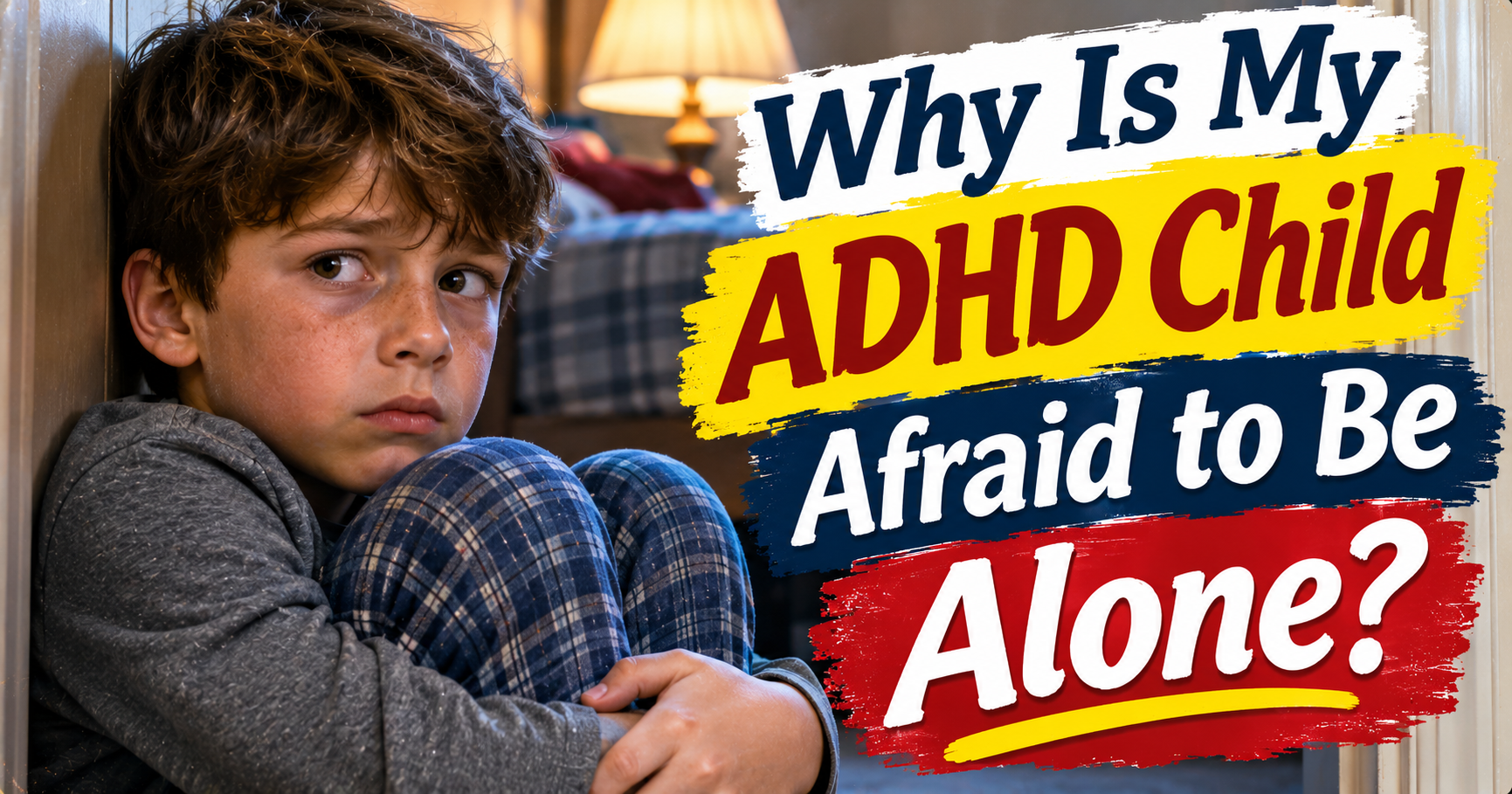
Having an ADHD child who’s afraid to be alone can be confusing, especially when they’re old enough to do certain things independently but still want Mom or Dad nearby constantly. Maybe your child won’t play in another room, follows you around the house, or gets upset when you leave them alone for even a few minutes.
This is something my wife and I understand personally.
Our 7-year-old son has ADHD, and one of his challenges is not liking to be alone. His ADHD affects a lot of his daily life, from focusing at school to remembering instructions and managing frustration.
And sometimes, as parents, it’s hard to know where ADHD ends and anxiety begins.
I grew up with ADHD myself, although mine is much better managed as an adult. My wife also has a milder form of ADHD. But our son’s challenges are considerably more difficult, even with medication and care from his mental health doctor.
That’s one reason I wanted to write about this.
Being afraid to be alone isn’t automatically an ADHD symptom. Some children with ADHD also experience anxiety, and understanding the difference can help parents figure out what kind of support their child needs.
If you’re dealing with this at home, there are practical things worth trying. And no, the answer isn’t simply telling your child to stop being scared.
Why Is My ADHD Child Afraid to Be Alone?
One of the first things I think parents should understand is that ADHD doesn’t automatically make children afraid of being alone.
ADHD primarily affects attention, impulse control, activity levels, and executive functioning.
But children with ADHD can also experience other challenges, including anxiety.
According to the American Academy of Pediatrics, anxiety disorders can occur alongside ADHD, including separation anxiety.
That matters because the behaviors can sometimes overlap.
Is It ADHD or Anxiety?
Imagine telling your child to go play in their bedroom while you finish something in the kitchen.
Instead of going, they stay beside you.
You remind them that you’re only a few rooms away.
They still don’t want to leave.
Now you’re wondering whether they’re being stubborn, distracted, or genuinely frightened.
The answer isn’t always obvious.
A child might want to stay close because:
- They’re worried about being separated. They may fear something bad will happen while you’re apart.
- They don’t like uncertainty. Being alone can feel uncomfortable when they don’t know exactly what will happen next.
- They have difficulty managing emotions. An uncomfortable feeling may become overwhelming quickly.
- They’re seeking reassurance. Being near a parent may temporarily make them feel calmer.
- Something else is bothering them. A frightening experience, poor sleep, or another source of stress could be contributing.
Sometimes several of these things happen together.
Why We Can’t Blame Everything on ADHD
This is something my wife and I have had to keep in mind throughout our son’s treatment.
When a child has a significant ADHD diagnosis, it’s easy to connect every behavior to that diagnosis.
But ADHD doesn’t explain everything.
Our son struggles with focus, forgetfulness, emotional reactions, and being alone. Those challenges can affect each other, but they don’t necessarily have the same cause.
That’s why we continue working with his mental health doctor rather than assuming every new problem is simply another part of ADHD.

We’ve shared more about what living with ADHD really looks like in our home, including the daily challenges that affect our whole family.
Can ADHD Cause Separation Anxiety in Children?
ADHD and separation anxiety are two different conditions, but they can occur together.
Separation anxiety involves significant fear or distress about being away from a parent or another important caregiver.
Some separation anxiety is normal during childhood.
However, when that fear becomes unusually intense for a child’s age or interferes with everyday activities, it may need professional attention.
What Does Separation Anxiety Look Like?
A child experiencing separation anxiety might:
- Follow their parents from room to room.
- Become upset when a parent leaves the house.
- Refuse to sleep without a parent nearby.
- Worry that something bad will happen to their family.
- Avoid activities that involve being separated.
- Complain about stomachaches or headaches before separations.
- Repeatedly ask when a parent will return.
Not every child who does these things has separation anxiety disorder.
For example, a seven-year-old wanting a parent nearby at bedtime isn’t automatically concerning.
What matters is how intense the fear becomes, how long it continues, and whether it interferes with normal life.
Why ADHD Can Make the Situation More Complicated
A child who has ADHD and anxiety may face two different challenges at once.
ADHD can make it difficult to regulate attention and emotions.
Anxiety can introduce worries, fears, and avoidance behaviors.
Together, they may make everyday situations harder.
A child might know that Mom is only in the kitchen but still feel overwhelmed about being in another room.
Telling them there’s nothing to worry about may not immediately change how they feel.
That’s why understanding the reason behind the behavior matters more than simply demanding independence.

Why Does My ADHD Child Follow Me Everywhere?
There are days when parents would love five uninterrupted minutes.
Five minutes to finish a conversation, fold laundry, or use the bathroom without somebody standing outside the door.
Apparently, privacy becomes a luxury item once you have children.
But when a school-age child follows a parent constantly, it’s worth understanding why.
Being Close to a Parent Can Feel Reassuring
For some children, having a trusted adult nearby provides comfort.
They know where you are.
They can ask questions.
They don’t have to wonder whether you’re leaving.
That reassurance can be especially important for children experiencing anxiety.
However, constantly staying beside a parent can also prevent a child from practicing independence if the behavior is driven by fear.
The goal shouldn’t be to suddenly take away their comfort.
It should be to help them gradually feel comfortable with small, manageable separations.
Ask What They’re Actually Afraid Of
Instead of immediately saying, “You’re old enough to play by yourself,” try asking a few questions.
“Does something scare you when you’re alone?”
“Are you worried I won’t come back?”
“Do you just feel better when somebody is with you?”
You might be surprised by the answer.
A child could be afraid of the dark, worried about a noise, or uncomfortable being separated without knowing why.
And sometimes they won’t have the words to explain it.
That’s okay.
We can still listen, observe, and look for patterns.

How Can I Help My ADHD Child Feel Comfortable Being Alone?
I think one of the biggest mistakes parents can make is expecting independence to happen all at once.
A child who becomes genuinely distressed when separated from a parent probably isn’t going to feel better because someone tells them they’re too old to be scared.
Instead, we can work on building confidence gradually.
The American Academy of Pediatrics recommends helping children face fears in manageable steps rather than avoiding every uncomfortable situation.
Start With Very Small Steps
For example, if your child doesn’t want to play alone in their bedroom, you could try a gradual approach.
- Begin together. Sit nearby while your child starts an activity they enjoy.
- Move a little farther away. Stay in the same room while they continue playing.
- Practice a brief separation. Explain that you’re stepping into the next room and will return shortly.
- Keep your promise. Come back when you said you would.
- Recognize their effort. Praise them for practicing, even if they felt nervous.
- Increase independence gradually. Work toward longer separations as your child becomes more comfortable.
The starting point should match your child’s needs.
If even a brief separation causes severe distress, ask their mental health professional to help create an appropriate plan.
Give Them Something Enjoyable to Do
Sitting alone with nothing to do may feel harder than being involved in an interesting activity.
For some children with ADHD, an engaging activity can make a short period of independent play easier.
Consider things like building blocks, drawing, puzzles, or another favorite activity.
But don’t expect a toy to solve significant anxiety.
It’s simply one way to make practicing independence more comfortable.
Make Your Expectations Predictable
Children often feel more secure when they know what to expect.
Instead of disappearing without saying anything, tell your child where you’re going.
For example:
“I’m going to put the laundry away. I’ll be back in a couple of minutes.”
Then follow through.
That consistency can help build trust.
The goal is for your child to gradually learn that short separations are manageable and that parents return when expected.
Should I Make My ADHD Child Stay Alone Until They Get Used to It?
This is a question I think deserves a careful answer.
Children sometimes need encouragement to face fears.
But there’s a difference between gently practicing independence and forcing a frightened child into a situation they aren’t prepared to handle.
Don’t Turn Independence Into a Punishment
Imagine a child who’s already scared.
A parent becomes frustrated and says:
“You’re staying in your room until you learn to be alone.”
That approach may increase distress instead of helping.
It also turns something the child is afraid of into a punishment.
A more helpful approach is to acknowledge the fear while maintaining reasonable expectations.
For example:
“I know being in here by yourself feels scary. We’re going to practice for a little bit, and I’ll be right nearby.”
The child still has an opportunity to practice.
But they aren’t being shamed for feeling afraid.
Avoid Making Every Decision Based on Fear
There’s another side to this, though.
If parents always eliminate every situation that makes a child anxious, the child may never have an opportunity to learn that they can handle it.
That’s why gradual practice is important.
We can provide comfort without automatically removing every challenge.
And if the anxiety is severe, a therapist experienced in childhood anxiety can help guide that process.
Why Is My ADHD Child Afraid to Sleep Alone?
Bedtime can be especially difficult for children who experience anxiety.
During the day, there are distractions everywhere.
At night, things become quieter.
A child may begin worrying about being alone, hearing unfamiliar noises, or being separated from their parents.
Some children with ADHD also experience sleep difficulties, which can make bedtime even more challenging.
Bedtime Anxiety Isn’t Always About ADHD
A child who refuses to sleep alone might be experiencing:
- Separation anxiety.
- Fear of the dark.
- Worries about nightmares.
- Difficulty settling down.
- An inconsistent bedtime routine.
- Medication-related sleep difficulties.
- Other sleep or mental health concerns.
The important thing is not to assume which one is responsible.
Our family has dealt with significant ADHD-related bedtime challenges, and we’ve documented more of that experience in how we approached our ADHD bedtime battles.
What Can Parents Try at Bedtime?
A predictable bedtime routine can be a useful starting point.
That might include a consistent bedtime, calming activities, a comfortable sleeping environment, and time to talk about worries before lights out.
If your child needs a parent nearby, discuss a gradual independence plan with their clinician rather than abruptly withdrawing reassurance.
And if bedtime fears are accompanied by persistent insomnia, significant anxiety, or unusual behavior, professional guidance is especially important.

Can ADHD Medication Make a Child More Anxious or Afraid?
This question matters to our family because we’ve been through numerous ADHD medication trials with our son.
Some medications didn’t provide enough improvement.
Others were associated with emotional or behavioral side effects that concerned us.
It’s been a long process, and we’re still working with his mental health doctor to manage his symptoms.
Medication Can Affect Children Differently
Some ADHD medications can cause side effects such as irritability, sleep difficulties, or increased anxiety in certain children.
But medication can also improve ADHD symptoms that contribute to stress.
The response depends on the child, the medication, and other individual factors.
A sudden change in fearfulness or behavior shouldn’t automatically be blamed on medication, but it shouldn’t be ignored either.
Keep Track of Changes
If your child begins showing new fears or worsening anxiety, it may help to record:
- When the behavior started.
- Whether a medication or dose recently changed.
- What time the medication was taken.
- Whether the fear happens at a particular time of day.
- How your child has been sleeping.
- Whether anything stressful happened at school or home.
Those observations can help your child’s prescriber evaluate the situation.
We keep a detailed record of our experiences in our child’s ADHD medication journey and ongoing case study.
If you’re concerned about a medication reaction, contact the prescribing clinician. Don’t change or stop prescribed medication without appropriate medical guidance.
When Should I Worry About My ADHD Child Being Afraid to Be Alone?
Not every fear requires treatment.
Children go through stages where they want extra reassurance.
Some are naturally more cautious than others.
But persistent fear that interferes with everyday life deserves attention.
Signs That Additional Help May Be Needed
Consider discussing the problem with your child’s pediatrician or mental health professional if:
- Your child regularly becomes extremely distressed during short separations.
- Their fear prevents them from attending school or participating in normal activities.
- They repeatedly worry that something terrible will happen to a parent.
- They experience frequent physical complaints related to separation.
- They have significant difficulty sleeping because of fear.
- Their anxiety seems to be getting worse.
- Their fears are interfering with family routines or relationships.
A clinician can help determine whether the behavior is related to separation anxiety, another anxiety concern, ADHD, or something else.
Why We’re Careful About Assuming We Know the Cause
One thing I’ve learned from raising our son is that having an ADHD diagnosis doesn’t mean we automatically understand every difficulty he experiences.
His ADHD is significant.
He struggles at school and at home, and treatment hasn’t made all those challenges disappear.
But that doesn’t mean every emotional problem is simply another ADHD symptom.
As parents, we need to stay curious.
We need to ask questions.
And sometimes we need to admit that a situation deserves more help than we can provide on our own.
Common Questions About ADHD and Fear of Being Alone
Is It Normal for a 7-Year-Old With ADHD to Be Afraid to Be Alone?
Some fear of being alone can be normal at this age, whether a child has ADHD or not.
However, intense or persistent fear that interferes with ordinary activities may indicate an anxiety concern.
The severity and impact of the fear matter more than the child’s ADHD diagnosis alone.
Does ADHD Cause Separation Anxiety?
ADHD doesn’t automatically cause separation anxiety.
However, ADHD and anxiety disorders can occur together.
A child may have both conditions, and symptoms can sometimes overlap.
A qualified clinician can help distinguish between them.
Why Does My ADHD Child Need Constant Reassurance?
Some children repeatedly seek reassurance because they’re worried, uncertain, or afraid of separation.
Others may simply prefer having a parent nearby.
If reassurance-seeking becomes excessive or interferes with daily life, it may be worth discussing with a mental health professional.
Will My Child Eventually Grow Out of Being Afraid to Be Alone?
Many childhood fears become less intense with age and experience.
However, significant separation anxiety doesn’t always disappear without support.
Gradual practice, supportive parenting, and professional treatment when needed can help children build confidence.
Should I Let My Child Sleep With Me if They’re Scared?
Families handle sleeping arrangements differently.
Occasional comfort isn’t automatically harmful, but if fear is preventing your child from sleeping independently and that’s a goal for your family, a gradual plan may help.
A pediatrician or mental health professional can help determine an approach appropriate for your child’s anxiety and sleep needs.
Can Anxiety Make ADHD Symptoms Worse?
Yes. Anxiety can make concentration, sleep, and emotional regulation more difficult.
That can make existing ADHD challenges harder to manage.
When a child has both ADHD and anxiety, addressing both concerns may be important.
Helping Our Children Feel Safe While Learning Independence
As parents, my wife and I want our son to become more independent.
We want him to feel comfortable playing, learning, and enjoying childhood without constantly feeling overwhelmed.
But we also know that his ADHD challenges are real.
Even with medication and professional care, some things are simply harder for him than they are for other children.
And being afraid to be alone is one of those challenges we’ve had to recognize.
I don’t think the answer is to rush children into independence or make them feel embarrassed for needing reassurance.
I think it’s about understanding what’s behind the fear, giving them opportunities to build confidence, and knowing when to ask for additional help.
If your ADHD child is afraid to be alone, remember that you don’t have to solve everything in one afternoon.
Sometimes progress starts with something as small as your child feeling comfortable playing in the next room for a few minutes.
That’s worth recognizing.
We share more of our family’s experiences and practical ADHD parenting information right here on The ADHD Blog. You can also follow our ADHD family updates on Facebook as we continue learning alongside other parents.
Our children deserve patience, understanding, and the chance to build confidence at their own pace.