It’s 10:30 PM. Your kid has been in bed since 8:30. They’ve come out three times for water, once to tell you something “really important,” and twice for reasons that made absolutely no sense.
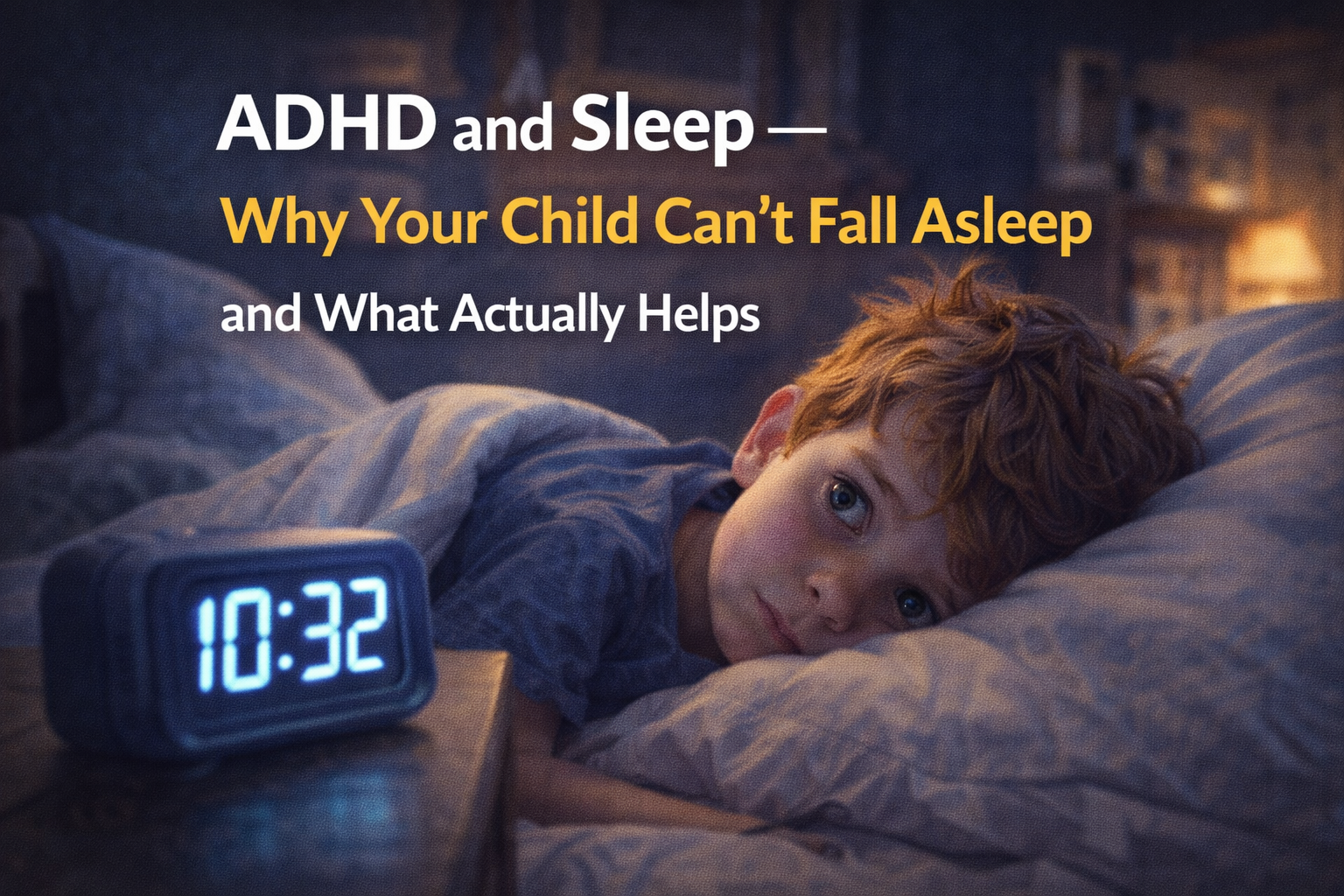
You’re exhausted. They’re somehow not.
If bedtime in your house feels like a nightly battle you never fully win, you’re not doing it wrong — and your child isn’t trying to manipulate you. Sleep is genuinely, neurologically harder for kids with ADHD than it is for other kids.
Here’s what’s actually going on in their brain, why the usual sleep advice fails, and what actually helps.


How Common Is This? (Very)
Research puts the numbers in stark perspective:
- 🔬 Up to 70% of children with ADHD experience some type of sleep problem
- 😴 Kids with ADHD are three times more likely to have difficulty falling or staying asleep than their peers
- 🌙 By age 12, 50% of kids with ADHD struggle to fall asleep almost every night
- 😤 In one study, more than half of ADHD kids woke up four or more times per night
- 👨👩👧 57% of their parents slept less than six hours as a result
You’re not imagining it. This is one of the most widespread and least-discussed struggles in ADHD parenting.

Why ADHD Brains Struggle to Sleep — The Actual Reason
The ADHD brain doesn’t just have trouble paying attention — it has trouble regulating arousal. That same system that makes it hard to sit still and focus during the day makes it hard to power down at night.
Several things are happening at once:
🧠 The Brain Won’t Quiet Down
The ADHD brain is hypersensitive to stimulation. At night, when the day’s distractions disappear, many kids describe feeling like their thoughts suddenly get louder — racing from topic to topic with no “off switch.” This isn’t anxiety (though anxiety can co-occur) — it’s the ADHD brain doing what it always does, just without anything to redirect it.
⏰ Their Internal Clock Runs Late
Many kids with ADHD have what researchers call a delayed circadian rhythm — their biological sleep clock is shifted later than their peers. Their brain doesn’t naturally start releasing melatonin until later in the evening. So when you’re putting them to bed at 8:30, their brain is genuinely not tired yet. It’s not defiance. It’s biology.
🔄 The Sleep-ADHD Cycle Makes Both Worse
Here’s the part that makes this so hard: sleep deprivation makes every single ADHD symptom worse. Worse focus. Worse emotional regulation. More impulsivity. More hyperactivity. And those worsened ADHD symptoms then make sleep harder the next night. It’s a cycle that feeds itself — and once you’re in it, breaking out requires deliberate effort.
💊 Medication Can Play a Role
If your child takes stimulant medication (Adderall, Ritalin, Vyvanse, etc.), timing matters a lot. Research confirms that stimulants can significantly extend sleep onset — meaning kids take longer to fall asleep. More frequent doses and longer-acting formulations tend to have a bigger impact. If medication timing is affecting sleep, that’s a conversation worth having with your prescribing doctor. Adjusting timing or switching formulations sometimes makes a meaningful difference.
What ADHD Sleep Problems Actually Look Like
It’s not always “won’t go to bed.” Sleep disruption in ADHD kids shows up in several different patterns: Pattern What It Looks Like Bedtime resistance Stalling, excuses, repeated trips out of bed, insisting they’re not tired Sleep onset delay In bed but can’t fall asleep — lying awake for 1–2+ hours even when quiet Night wakings Falling asleep but waking multiple times, can’t self-soothe back to sleep Early waking Up before 6 AM, fully alert, impossible to get back to sleep Restless sleep Thrashing, kicking, covers everywhere — sleep isn’t restful even when it happens Evening energy surge Gets a second wind right at bedtime — suddenly hyper-focused or wired just when they should be winding down Morning difficulty Impossible to wake, groggy for hours, needs repeated alarms — even after adequate sleep time
Many ADHD kids experience more than one of these patterns, and the mix can shift over time — especially as they hit puberty, when circadian shifts naturally push sleep later for all teens, and even later for those with ADHD.

Why Generic Sleep Advice Usually Fails ADHD Kids
Standard sleep hygiene advice — “put them to bed at the same time every night, no screens before bed, keep the room dark and cool” — isn’t wrong. But for ADHD kids, it’s often not enough on its own, and sometimes backfires.
- ❌ “Just put them to bed earlier” — if their circadian rhythm is delayed, earlier bedtime often just means more time lying awake getting anxious about not being asleep
- ❌ “Take away screens at 7 PM” — good idea in theory, but without a structured replacement activity, the ADHD brain has nothing to anchor it and thoughts race harder
- ❌ “They’ll fall asleep when they’re tired enough” — ADHD kids are notoriously bad at reading their own tiredness cues, so this doesn’t work the same way it does for other kids
- ❌ “Reward chart for staying in bed” — delayed rewards don’t motivate ADHD brains effectively, especially when they’re already dysregulated
ADHD sleep strategies need to work with the ADHD brain — not against it.

What Actually Works: Building an ADHD Sleep System
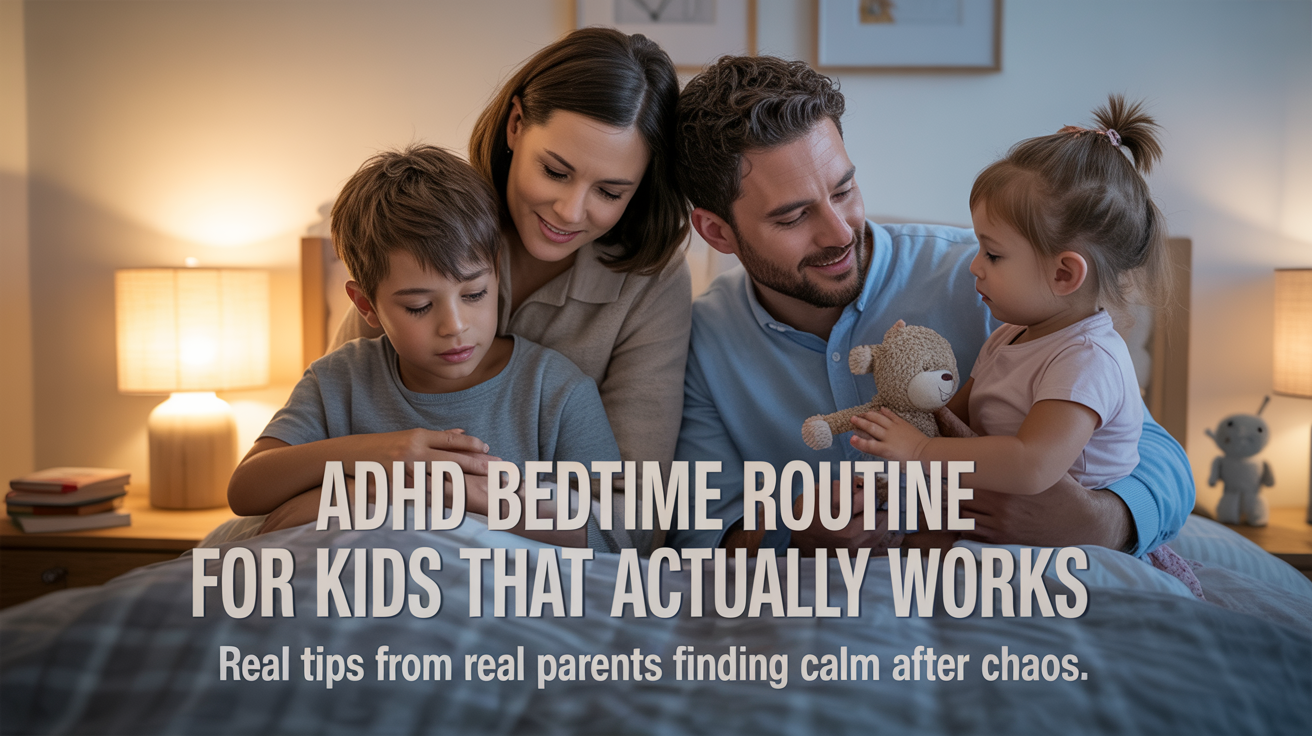
Think of this less as a bedtime routine and more as a wind-down system that starts earlier than you’d think.
1. Start Winding Down 60–90 Minutes Before Bed
The ADHD brain needs a longer runway than other kids. Don’t expect a child who was playing video games at 8:15 to be asleep by 8:30. Start the transition process early:
- Give a 10-minute warning before screens off — the ADHD brain hates abrupt transitions
- Move to lower-stimulation activities: building something simple, drawing, listening to calm music, audiobooks
- Dim the lights in the house — light suppresses melatonin and tells the brain it’s still daytime
2. Make the Routine Visual and Predictable
Verbal bedtime instructions go in one ear and out the other when the ADHD brain is tired. A posted visual checklist does the work instead:
- Shower or bath
- Pajamas on
- Brush teeth
- One glass of water (pre-emptively, before they ask at 9:30)
- 10 minutes of reading or audiobook in bed
- Lights out
The routine itself is a cue. The same sequence every night tells the brain what’s coming next — and eventually, the sequence itself starts triggering drowsiness.
3. Screen Rules That Actually Stick
- 📵 No screens at least 30–60 minutes before lights out — the blue light disrupts melatonin release
- 📱 Devices charge outside the bedroom, not on the nightstand — the proximity alone disrupts sleep
- 🎧 Audiobooks or calm podcasts are a great replacement — engaging enough to quiet racing thoughts without the stimulation of screens
4. Burn Physical Energy Earlier in the Day
Physical activity during the day significantly improves sleep quality for ADHD kids. The catch: timing matters. Exercise close to bedtime can be activating, so aim for afternoon physical activity — after school is perfect. Even a 20-minute bike ride or backyard play session makes a difference in how quickly they fall asleep that night.
5. Address the Racing Thoughts Directly
For kids who lie awake with their brain spinning, give the brain something to do:
- 🎧 Audiobooks or sleep podcasts for kids — gives the brain a gentle anchor
- 📓 Worry dump journal — 5 minutes before bed writing or drawing anything on their mind, then closing the book (literally)
- 🌬️ Simple breathing exercises — 4 counts in, hold 4, out 4 — gives the restless mind a task to focus on
- 🦺 Weighted blankets — the deep pressure is calming for many ADHD nervous systems. The Aricove Cooling Weighted Blanket is specifically designed for kids who run hot, which many ADHD kids do
6. White Noise or Noise Cancellation
ADHD brains are hypersensitive to sound — the creak of the house, a TV in another room, outside traffic. Any sound can jerk them back to alert. White noise or a fan running consistently masks these interruptions. For older kids and teens, noise-canceling headphones for sleep can be a genuine game changer.
7. Keep Weekends Consistent (Yes, Really)
Sleeping in on weekends feels like mercy — but it shifts the internal clock later, making Monday night even harder. Try to keep wake time within an hour of the school week schedule, even on weekends. This is hard. It’s also effective.
What About Melatonin?
Melatonin is one of the most common things parents try — and it can genuinely help, with important caveats.
What melatonin does: It helps signal the brain that it’s time to sleep — useful for kids whose circadian rhythm is shifted late. It’s most effective for sleep onset (falling asleep), not sleep maintenance (staying asleep).
What it doesn’t do: Fix the underlying issues. If racing thoughts, poor sleep hygiene, or late screens are the core problem, melatonin won’t solve them.
Important notes:
- Talk to your pediatrician before starting — dosing varies significantly and over-the-counter supplements vary widely in actual melatonin content
- Lower doses (0.5–1 mg) are often more effective than higher doses for kids
- Timing matters — typically 30–60 minutes before intended sleep time
- It’s a tool, not a long-term fix on its own
On the supplement front, magnesium is worth mentioning as well — it supports nervous system calm and several studies show it can help with sleep quality specifically. We covered the research in our full post on magnesium for ADHD kids.

When to Talk to Your Doctor
Behavioral strategies help most ADHD sleep problems — but some warrant a medical conversation:
- 🔴 Your child snores loudly or seems to stop breathing during sleep — could indicate sleep apnea, which is more common in ADHD kids and significantly worsens symptoms
- 🔴 They complain of uncomfortable sensations in their legs at night (restless legs syndrome is also more common in ADHD)
- 🔴 Sleep problems started or worsened after starting ADHD medication — timing and formulation adjustments can often help
- 🔴 They’re getting adequate hours in bed but still seem exhausted — may indicate poor sleep quality worth investigating
- 🔴 Nothing behavioral is making a dent after 3–4 consistent weeks
How Sleep Connects to Everything Else
Sleep isn’t just one problem — it’s the multiplier for every other ADHD challenge. A child who slept poorly is going to have worse focus, worse emotional regulation, worse behavior, and worse response to any strategy you try that day.
If you’re fighting bedtime battles on top of morning chaos, after-school meltdowns, and homework struggles — fixing sleep should be near the top of the priority list, because it improves everything downstream.
Our post on how we finally fixed our ADHD bedtime battles covers what the actual shift looked like in our house. And if emotional meltdowns are part of the picture — which they often are when sleep is poor — the article on ADHD meltdowns vs. tantrums explains what’s happening in those moments and how to respond without making it worse.
Frequently Asked Questions
Is it normal for ADHD kids to need less sleep than other kids?
Some ADHD kids genuinely seem to function on less sleep — and forcing more time in bed can create anxious lying-awake time that’s counterproductive. Pay more attention to how your child functions during the day than to hitting a specific hour count. If they’re managing reasonably well, their sleep needs may simply be lower.
My child falls asleep fine but wakes up multiple times. What helps?
Night wakings are often driven by light sleep cycles, environmental sounds, or restless sleep from ADHD-related brain activity. White noise, a weighted blanket, and eliminating light sources in the room are the first things to try. If it persists, a pediatrician can rule out sleep apnea or restless legs, which cause fragmented sleep.
Should I let my ADHD teen stay up later since their body clock runs late?
Within reason — yes. Forcing a teen whose biology shifts sleep to midnight into a 9 PM bedtime often results in two-plus hours of lying awake, which is worse than just letting them sleep when they’re actually tired. Work with the school schedule as the constraint and work backwards from wake time.
Does fixing sleep actually improve ADHD symptoms?
Yes — significantly. Research consistently shows sleep deprivation mimics and worsens ADHD symptoms. Inattention, impulsivity, emotional dysregulation — all of it gets worse with poor sleep. Improving sleep is one of the highest-leverage interventions available, and it’s free.
The Honest Truth About ADHD Sleep
There’s no single fix. No perfect bedtime routine that works the first week and stays working forever. ADHD sleep is a moving target — what works at 7 may stop working at 10, and what works during the school year may fall apart in summer.
What does work is having a system, staying consistent with it, and adjusting as your child changes. Some nights will still be a battle. That doesn’t mean the system failed — it means you have a kid with ADHD, and some nights are just hard.
Build the runway. Keep the routine. Stay calm at bedtime even when it’s exhausting. The consistency compounds over time in ways that aren’t visible week to week but show up clearly when you look back six months later.
About the Author
Sarah Holloway is a mom of two boys, both diagnosed with ADHD, and has spent nearly a decade figuring out what actually works — in routines, tools, supplements, and sanity. She started writing about her family’s experience because she kept finding advice that was either too clinical or too vague. She lives in Ohio with her husband, her two loud and wonderful kids, and a very patient dog.
As an Amazon Associate, we earn from qualifying purchases through some links in our articles. Read our full Affiliate Disclosure here .