Someone at school mentioned your child might qualify for a 504 or an IEP. Maybe a teacher brought it up. Maybe you’ve been researching at midnight trying to figure out what your kid actually needs.
Either way — welcome to one of the most confusing parts of parenting a child with ADHD.
The good news: once someone explains it clearly, it actually makes sense. The bad news: most explanations are buried in education law jargon that makes your eyes glaze over by paragraph two.
This is the plain-language version. What each plan is, how they’re different, which one fits which situation, what to ask for, and what to do if the school says no.
The One-Sentence Version
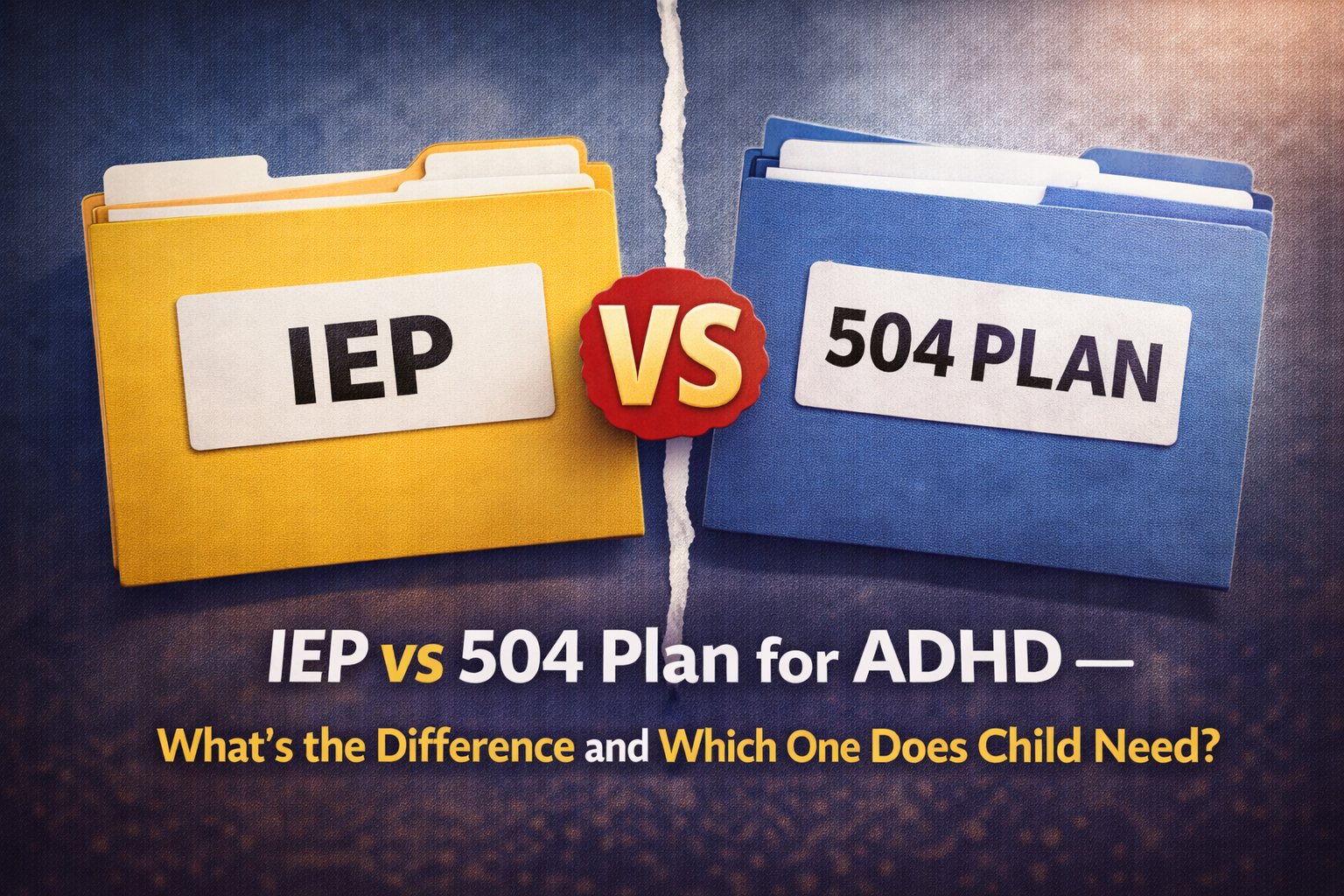
A 504 plan removes barriers so your child can access the same curriculum as everyone else. An IEP goes further — it provides specialized instruction and services that actually change how your child is taught.
That’s the core difference. Everything else flows from it.


IEP vs. 504 at a Glance
504 Plan IEP Law behind it Civil rights law (Section 504) Special education law (IDEA) What it provides Accommodations only Accommodations + specialized services Changes the curriculum? No — same content, different access Yes — can modify what’s taught and how Includes measurable goals? No Yes — required by law Easier to qualify for? Yes — broader eligibility More specific criteria required Parental rights Some Stronger — you’re a legal team member Who implements it Regular classroom teachers Special ed teachers + therapists + staff Best fit for ADHD when… Child can manage general curriculum with support Child needs direct skill instruction to keep up
Both are legally binding. Teachers must follow them — even if they personally disagree with the accommodations listed.

What Is a 504 Plan? (And What It Actually Does)
A 504 plan is a civil rights document — named after Section 504 of the Rehabilitation Act of 1973. Its job is to make sure students with disabilities can access education on equal terms.
Think of it like a ramp beside a flight of stairs. The building is the same for everyone — the ramp just makes it accessible.
To qualify: Your child needs a diagnosis (ADHD counts) and it needs to “substantially limit” a major life activity — like learning, concentrating, reading, or regulating emotions. ADHD almost always meets this standard.
Common 504 Accommodations for ADHD
- Extended time on tests and assignments
- Preferential seating (front of class, away from distractions)
- Copy of teacher notes provided
- Testing in a quiet, separate room
- Daily homework checklist signed by teacher
- Visual timer on desk during work time
- Permission to take movement breaks
- Use of organizational apps or tools
- Directions given one at a time, confirmed for understanding
- Weekly teacher-parent communication check-in
A 504 doesn’t change what your child learns — just the conditions under which they learn it.
What Is an IEP? (And When ADHD Kids Need One)
An IEP — Individualized Education Program — goes further. It’s governed by a different federal law (IDEA) and provides specialized instruction, not just accommodations. This means your child gets direct teaching of skills they’re struggling to develop on their own.
An IEP also includes:
- Your child’s current academic and functional performance levels
- Measurable annual goals
- Progress monitoring — the school must report how they’re doing
- Specialized services from trained professionals
- A formal review at least annually
Under an IEP, your child might receive: Hands-on tools such as ADHD practice skill cards may also give children a concrete way to practice skills alongside the specialized instruction in an IEP.
- One-on-one or small group instruction with a special ed teacher
- Speech-language therapy
- Occupational therapy (for fine motor or organizational skill building)
- Counseling services in school
- Social skills instruction
One study found that students with IEPs received individual support like counseling 44% more often than those with 504 plans. If your child needs people actively teaching them skills — not just removing obstacles — an IEP is likely the better fit.
To qualify for an IEP: Your child must fall under one of the eligible disability categories — ADHD typically qualifies under “Other Health Impairment” (OHI). The school must also determine that because of the disability, the child requires specialized education services. This is a higher bar than the 504, but it comes with significantly more support.


Which One Does My ADHD Child Actually Need?
Here’s the honest framework most articles skip:
Your child probably needs a 504 if:
- They’re keeping up academically, but struggling with conditions (focus, test anxiety, organization)
- They just need the playing field leveled, not the game changed
- ADHD is their only diagnosis
- With the right accommodations, they can access the general curriculum successfully
Your child probably needs an IEP if:
- They are falling significantly behind academically despite accommodations
- They have ADHD plus a learning disability (dyslexia, dyscalculia, dysgraphia)
- They need direct, explicit skill instruction from a specialist — not just classroom tweaks
- Executive function gaps are so significant that they can’t manage schoolwork even with support
- Emotional dysregulation is severely impacting their school day
Here’s something important most parents don’t know: schools often push 504 plans because they’re cheaper and easier to implement than IEPs. A 504 requires no specialized teachers, no related services budget, no formal progress goals. An IEP costs the school real time and money.
That doesn’t mean your child’s team is acting in bad faith — but it does mean you need to know what your child actually qualifies for and advocate for it.
How to Request an Evaluation — Step by Step
You don’t wait for the school to bring this to you. You can initiate it yourself — and doing so in writing starts the legal clock.
- Write a formal request letter. Address it to the director of special education services in your district. Say: “I am requesting a comprehensive evaluation of my child [name, grade, date of birth] to determine eligibility for special education services and/or a 504 plan.” Keep it short and factual.
- Send it in writing — email or certified mail. A verbal request has no legal weight. Written requests trigger a legal timeline the school must follow (typically 60 days, though this varies by state).
- Bring your documentation. Include your child’s ADHD diagnosis paperwork, any neuropsych evaluations, report cards, teacher notes, and anything that shows how ADHD is impacting school functioning.
- Attend the evaluation meeting. For IEPs, you are a legal member of the team. For 504s, schools vary — some include parents actively, others less so. Push for involvement either way.
- Request a separate meeting to review results. Don’t let the school assess your child and then hand you a plan to sign in the same meeting. Ask for time to review the evaluation first — ideally with your child’s doctor or therapist.


What If the School Says No?
It happens. You’ll hear things like:
- “They’re doing fine academically, so they don’t qualify.”
- “ADHD alone doesn’t automatically qualify them.”
- “Let’s just try some classroom strategies first.”
Here’s what you need to know:
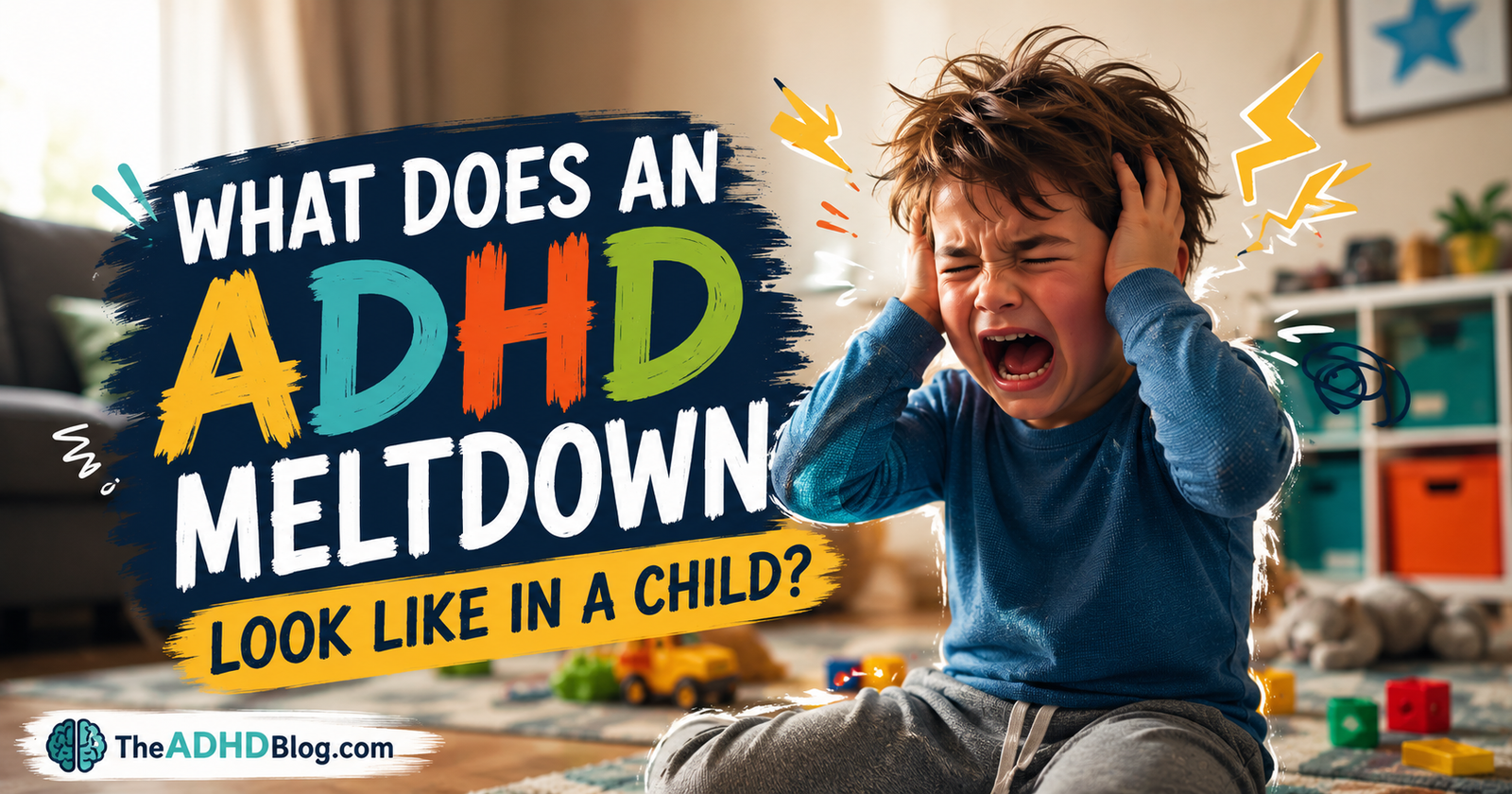
“Doing fine academically” is not the legal standard. The standard is whether the disability substantially limits a major life activity — and ADHD affecting a child’s ability to concentrate, organize, or regulate emotions in school absolutely can qualify, regardless of grades. Understanding ADHD meltdowns in children can help explain why emotional regulation difficulties may affect school functioning even when grades look fine.
Get everything in writing. After every meeting, send a follow-up email: “To confirm what we discussed today…” This paper trail matters if you ever need to escalate.
You can request an independent evaluation. If you disagree with the school’s assessment, you have the right to request an Independent Educational Evaluation (IEE) at the school’s expense.
You can dispute decisions. Both 504 plans and IEPs have formal dispute resolution processes. For IEPs under IDEA, these protections are especially robust.
Don’t be afraid to push back — politely and persistently. You’re not asking for favors. You’re standing on legal ground that exists specifically for this situation.
Specific Accommodations Worth Requesting for ADHD
Whether you end up with a 504 or an IEP, here are the accommodations with the most real-world impact for ADHD specifically:
For Focus and Attention
- Preferential seating near teacher, away from doors/windows
- Fidget tools permitted at desk (see our guide to ADHD fidget tools that actually work)
- Frequent check-ins from teacher during independent work
- Reduced written output requirements where appropriate
For Organization and Executive Function
- Daily planner or homework checklist verified by teacher
- Assignments broken into shorter chunks with interim deadlines
- Copies of notes or teacher-prepared study guides
- Backpack check at end of day before dismissal
For Tests and Assessments
- Extended time (typically 1.5x or 2x)
- Separate, quiet testing room
- Tests broken into sections across multiple sessions
- Permission to use text-to-speech or speech-to-text tools
For Emotional Regulation
- Permission to take a movement break or visit a calm-down space
- Advance warning before transitions
- Flexible homework completion timelines during high-stress periods
- Access to the school counselor as needed, not just scheduled
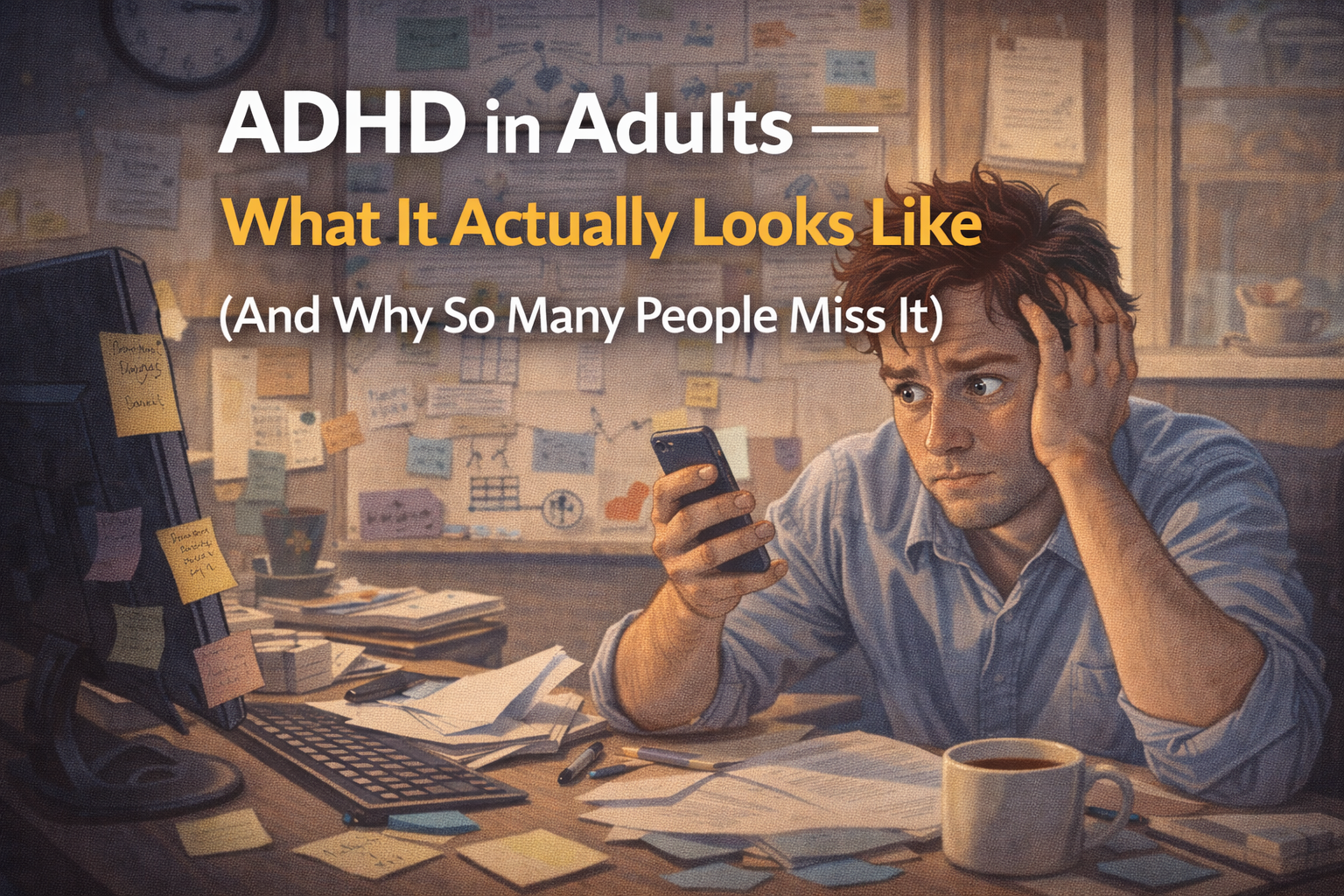
The more specific you are in the plan, the harder it is for individual teachers to interpret their way around it. An ADHD daily planner can give families another practical way to turn agreed-upon routines and supports into visible daily steps.


A Few Things to Keep Track Of Once a Plan Is in Place
- Review dates — IEPs are reviewed annually at minimum; request 504 reviews too, especially at school transitions
- Follow up with teachers — 504 plans have more room for inconsistent implementation; regular check-ins help
- Keep your own file — store copies of all plans, evaluations, meeting notes, and correspondence somewhere you can find them
- Plans transfer — but don’t assume — when your child moves to a new school or grade, reconfirm accommodations are in place before the year starts
Related Reading for Your ADHD School Journey

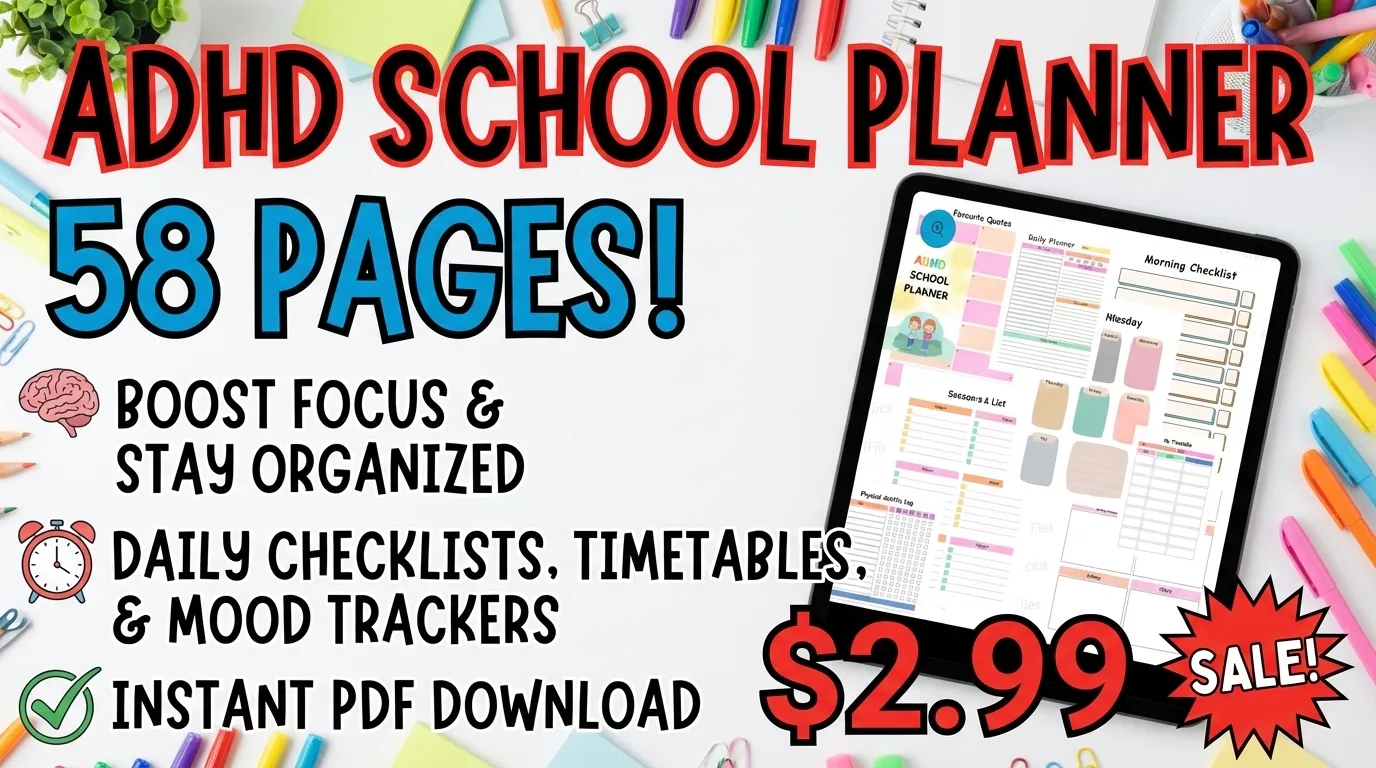
Getting the right plan in place is a huge step — but it’s just one piece. Our post on ADHD homework tips that actually work covers what to do at home once the school day is over. And if meltdowns after school are a daily battle, the article on ADHD meltdowns vs. tantrums explains what’s happening and how to actually respond. For keeping your kid organized day to day, the ADHD Student Planner PDF is a tool a lot of our readers use alongside school accommodations.


You Are the Expert on Your Child — The School Is the Expert on Process
The system can feel intimidating. Meetings with teachers, administrators, and specialists all sitting across from you with reports and acronyms — it’s a lot.
But here’s the reframe: they know the process. You know your child. Both matter equally in that room.
Walk in knowing what you’ve observed at home, what’s falling apart at school, and what you’re asking for. You don’t need to be an education law expert. You just need to show up, ask questions, and refuse to accept “no” when the evidence says otherwise.
Your child’s education is a right. The plan is just the paperwork that protects it.
Frequently Asked Questions
Can my child have both a 504 and an IEP?
No — a student is on one or the other. An IEP includes everything a 504 would plus the specialized services, so if a child qualifies for an IEP, that’s the document that governs their support.
Does an ADHD diagnosis automatically qualify my child?
Not automatically — but it’s a strong foundation. The evaluation must show the disability substantially limits school functioning. For most kids with diagnosed ADHD, this threshold is met, but the school still needs to conduct its own evaluation.
What if we switch schools or move districts?
Plans follow the child — the new school is required to honor the existing plan while conducting its own review. Don’t assume this happens automatically; reach out proactively before the school year starts.
Can I request specific accommodations or does the school decide?
You can and should request specific accommodations. The plan is developed collaboratively — you are a member of the team, not a passive recipient of their decisions.
About the Author
James Merritt is a dad of three and a former elementary school teacher who spent years working with kids with ADHD before realizing his own son had it too. He writes about practical systems, routines, and the stuff that actually holds up in real family life — not just in theory. He lives in Tennessee and coaches youth baseball on weekends. That practical perspective is also reflected in the blog's family-centered approach, where the writers explain the experiences that shape their guidance.