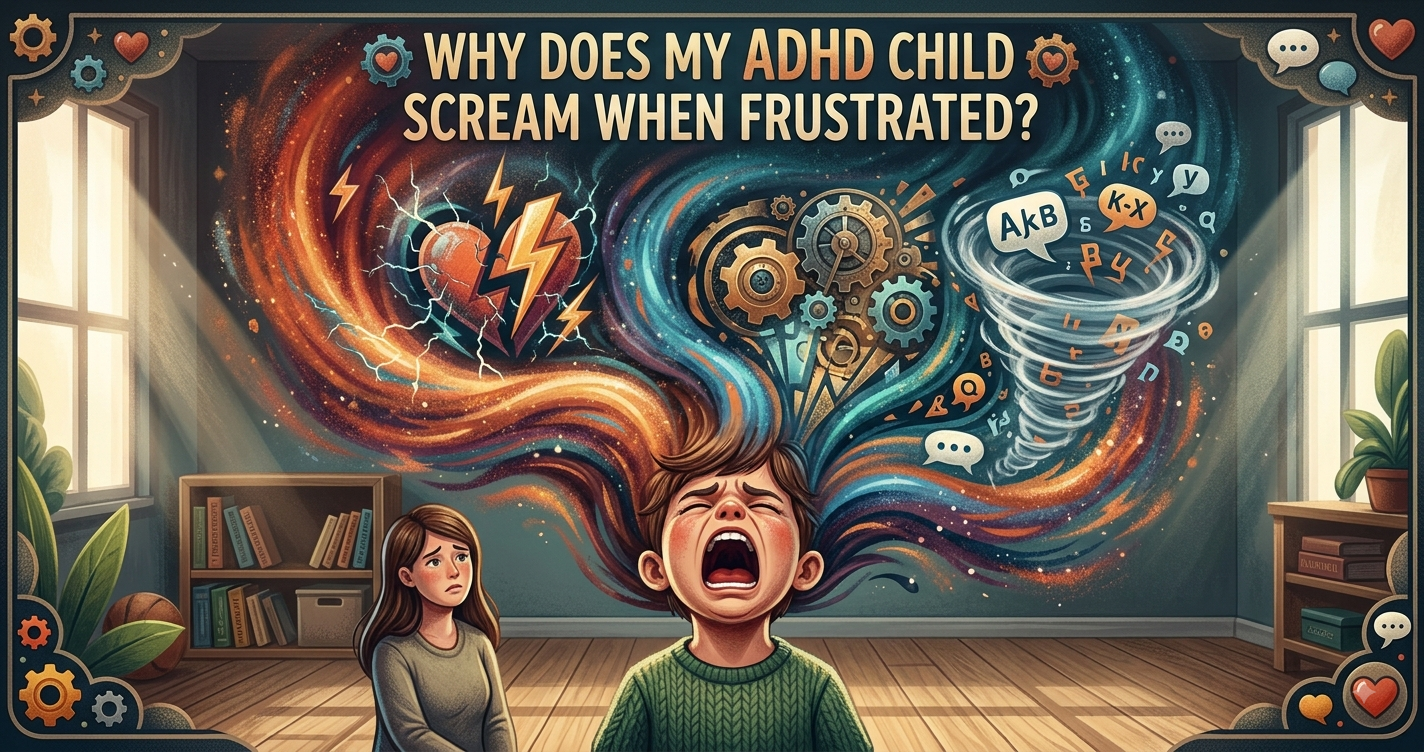
One minute everything is fine. The next, your child is on the floor screaming because their sock feels wrong.
You didn’t see it coming. It feels completely out of proportion. And now the whole house is in chaos over a sock.
If this is your life, you’re not failing as a parent — and your child isn’t being manipulative. What you’re watching is emotional dysregulation, and it’s one of the most misunderstood parts of ADHD. Our child ADHD medication journey also shows how emotional dysregulation can fit into a family’s broader experience of ADHD treatment.
Understanding what’s actually happening in those moments changes everything — how you respond, how you prevent it, and honestly, how much you blame yourself when it happens.
What Is Emotional Dysregulation in ADHD?
Emotional dysregulation means the brain has a harder time managing the size and speed of emotional reactions. It’s not just feeling things more strongly — it’s that the brain struggles to put the brakes on before those feelings overflow into behavior. Emotional regulation difficulties can continue beyond childhood, and Learn more about adhd in adults explains how they fit into the wider adult ADHD experience.
Here’s what that looks like in real life:
- Reactions that seem wildly out of proportion to what happened
- Going from calm to explosive in seconds with no visible warning
- Crying that won’t stop, even when they “know” it’s not a big deal
- Getting stuck in a feeling and unable to move past it
- Difficulty bouncing back after disappointment or frustration
- Storming off, slamming doors, shutting completely down
Here’s the critical thing to know: emotional dysregulation isn’t officially listed in the ADHD diagnostic criteria — but research consistently shows it affects between 34% and 70% of people with ADHD. Many experts now argue it’s one of the most impactful symptoms of the condition, even if it’s often overlooked in treatment plans.

Why ADHD Brains Struggle to Regulate Emotions
This isn’t a parenting problem. It’s a brain wiring problem.
A 2021 brain imaging study found that kids and young adults with ADHD showed different activity levels in the amygdala — the brain’s emotional alarm center — and weaker connections between the amygdala and the prefrontal cortex, which is the part that pumps the brakes on emotional reactions.
Think of it like this:
- The amygdala fires loudly: “THIS IS A CRISIS!”
- The prefrontal cortex barely responds: “…actually it’s just a sock.”
In a neurotypical brain, those two regions talk to each other efficiently. In an ADHD brain, that connection is weaker — so the emotional alarm goes off at full volume with very little regulation happening to quiet it down.
Add in lower dopamine levels, executive function delays, and a nervous system that’s often already running hot from the demands of the day — and you have a brain that is genuinely working harder to hold it together, and has less bandwidth left when something goes wrong. Poor sleep can further strain that already-overloaded system, as explained in ADHD and Sleep — Why Your Child Can’t Fall Asleep and What Actually Helps.
Your child isn’t choosing to fall apart. They’re running out of resources. A deeper understanding of behavioral and emotional challenges can help parents respond with more confidence, as discussed in This ADHD Parenting Book Helps You Actually Understand Your Child.
ADHD Meltdowns vs. Tantrums — They Are Not the Same Thing
This distinction matters enormously, because the right response to each is completely different. ADHD Meltdown Tantrum Not a choice — the child cannot stop it Goal-directed — trying to get something Giving in does NOT stop it Giving in often stops it immediately Child seems genuinely out of control Child is aware of their audience Can last 20–45+ minutes Usually resolves once goal is met or denied Triggered by overwhelm, transitions, sensory input Triggered by not getting what they want Needs: calm presence, safety, wait it outNeeds: clear limits, consistency, no giving in
Research from Fordham University found that more than 75% of children presenting with severe emotional outbursts met the criteria for ADHD. But those outbursts are frequently labeled as tantrums — and then parents are given tantrum advice that doesn’t work for meltdowns.
If your child genuinely cannot stop once it starts, that’s a meltdown. Discipline it like a tantrum and you’ll make it worse every time.
Common ADHD Meltdown Triggers
Meltdowns rarely come from nowhere — even when they feel that way. Learning your child’s specific triggers is one of the most powerful things you can do.
The most common triggers:
- Transitions — stopping a preferred activity (games, screen time) to do something less preferred
- Sensory overload — itchy clothing, loud environments, too much going on at once
- Hunger or fatigue — an already-depleted system has zero bandwidth left
- Feeling misunderstood or corrected — many ADHD kids have extreme rejection sensitivity
- Unexpected changes — plans changing last minute, surprise schedule shifts
- Homework or task demands — especially after a long school day when the tank is empty
- Build-up from the day — they held it together at school and explode the moment they get home (this is actually a sign of good coping — the home is their safe space)
Pro tip: Keep a simple log for two weeks. Note time of day, what happened right before, and how long it lasted. Patterns will emerge — and patterns are preventable.
The Warning Signs Most Parents Miss
Meltdowns don’t actually come out of nowhere. There are almost always early warning signs — you just have to know what you’re looking for.
Watch for these in the 15–30 minutes before a meltdown:
- Getting louder or more intense than the situation calls for
- Increased fidgeting, can’t sit still, pacing
- Shorter responses, clipped answers, shutting down conversation
- Picking fights with siblings over small things
- Eyes glazing over, zoning out
- Complaining about physical sensations — too hot, too itchy, stomach hurts
Catching these early signals is everything. A child who’s at a 6 out of 10 can often be brought back down with a snack, a break, or a quiet activity. A child who’s at a 9 is already past the point where any of that works.
What to Do DURING a Meltdown
This is where most parents accidentally make it worse — not because they’re bad parents, but because their instincts push them toward reasoning, consequences, or trying to fix it. None of that works during a full meltdown.
DO:
- Stay physically calm — your nervous system genuinely regulates theirs
- Lower your voice, slow your speech, reduce stimulation around them
- Give them space but stay nearby — don’t abandon them in it
- Use the fewest words possible: “I’m here. You’re safe. Take your time.”
- Wait. The meltdown has to run its course — there’s no shortcut
- Offer a comfort item or quiet space if they’ll take it
DON’T:
- Try to reason with them, explain, or lecture — the thinking brain is offline
- Threaten consequences mid-meltdown — it adds fuel, not brakes
- Match their energy — if you escalate, they escalate
- Make them apologize or discuss it while they’re still dysregulated
- Give in to what triggered it — this teaches meltdown = result
- Walk away completely — they need to know you’re still there
The window for talking, processing, and natural consequences is after — once they’re calm. That’s when the learning can happen.

What to Do AFTER a Meltdown
The recovery phase matters as much as the response. Once your child is calm — really calm, not just quiet — this is your window.
- Give them time. Don’t rush to debrief the moment it ends. Let them come back to themselves fully first.
- Reconnect before you correct. A hug, a calm check-in, some water. Relationship first, lesson second.
- Keep it short. “That was really hard. What do you think set it off?” One question. Not a speech.
- Problem-solve together. “Next time you’re feeling like that, what could we try?” Let them generate ideas — buy-in matters.
- Name what they did well. Even in a bad meltdown, something went okay. Find it. “I noticed you didn’t hit anyone this time.”
Longer-Term Strategies That Actually Build Regulation Skills
Surviving meltdowns is the short game. Building regulation capacity over time is the long game — and it’s very possible with consistent effort.
Teach the Feeling Before the Flood
Work with your child during calm moments to build emotional vocabulary. The ADHD Skill Cards for Kids are excellent for this — 52 guided cards that build emotional awareness, regulation strategies, and coping skills in a format kids can actually engage with. Using them regularly during calm times means those skills are more accessible when things get hard.
Build a “Cool Down Kit”
Together with your child, create a designated calm-down space and kit. Let them choose what goes in it:
- A fidget toy or sensory tool
- Headphones and a playlist
- A weighted blanket — the deep pressure is genuinely calming for many ADHD kids
- A drawing pad or journal
- Their comfort item

The goal is that they learn to use this space when they feel the early warning signs — not just after things have already exploded.
Protect the High-Risk Hours
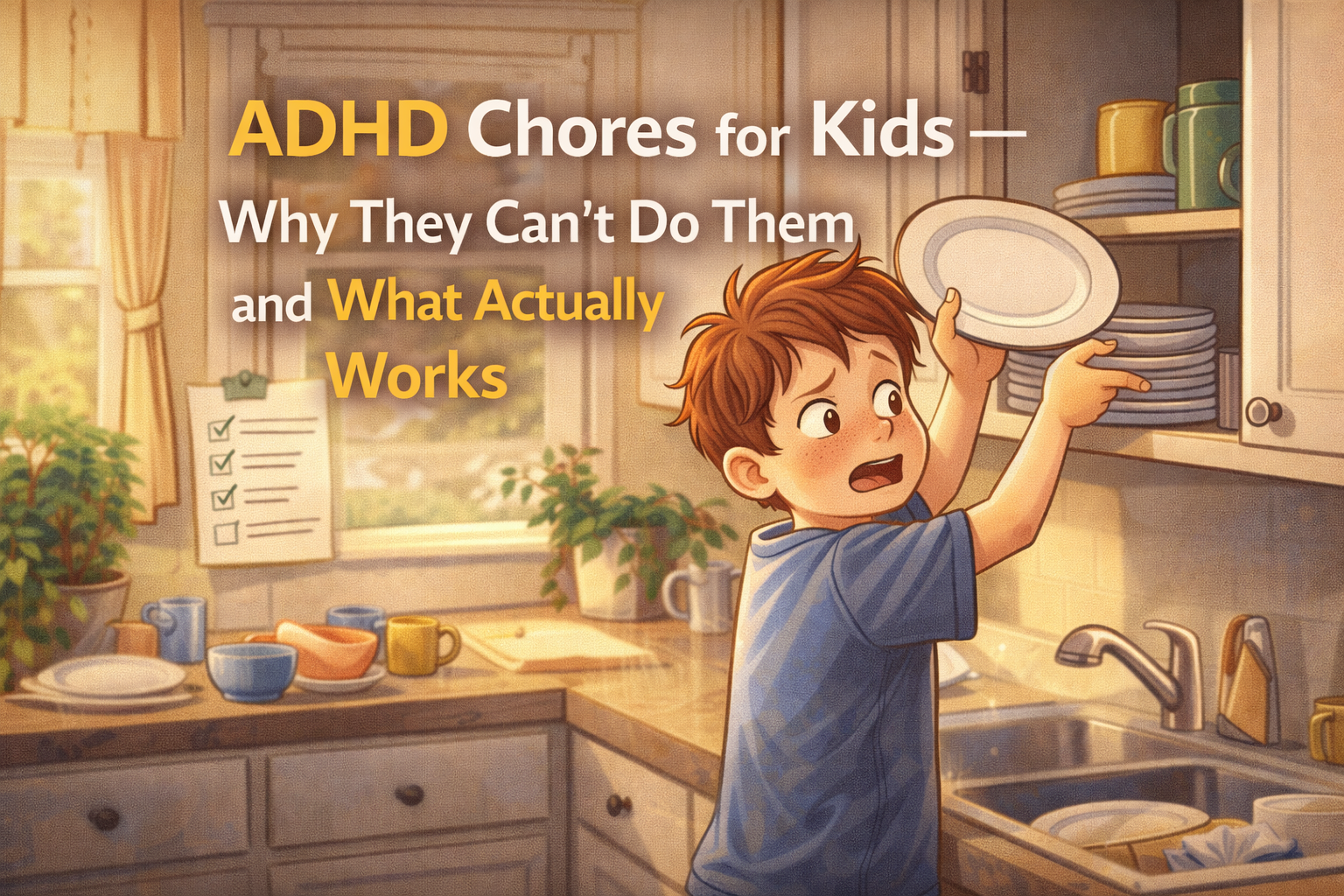
Most ADHD meltdowns cluster around transitions and depletion points: right after school, the homework window, and bedtime. Build in decompression buffers. Coming home from school should include 20–30 minutes of no demands before anything else happens. That buffer is protective. Predictable systems can also reduce friction when children transition into responsibilities, as shown in these structured chore routines.
Keep an Eye on Sleep and Nutrition
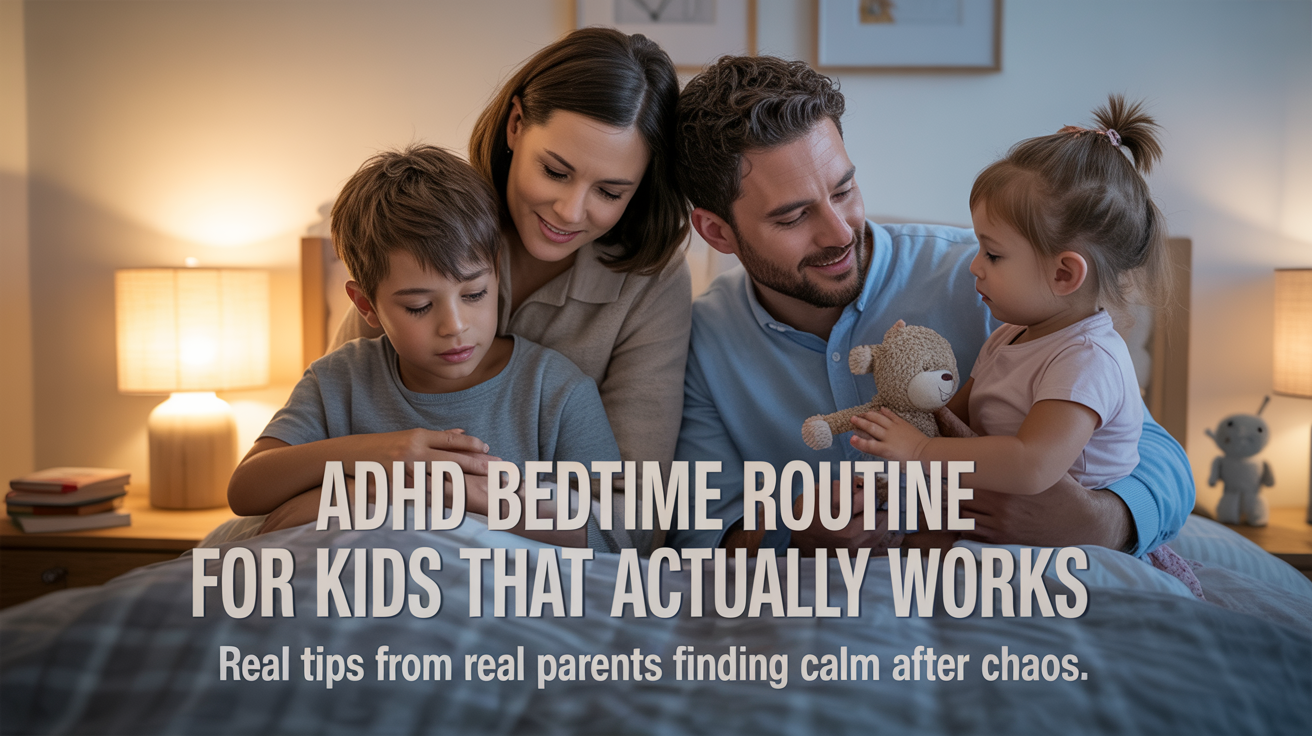
A tired, hungry ADHD brain is running on empty before the day even throws challenges at it. Inconsistent sleep and blood sugar crashes dramatically lower the threshold for dysregulation. Our post on how we finally fixed our ADHD bedtime battles covers the sleep piece specifically — it made a measurable difference in daytime regulation for us.
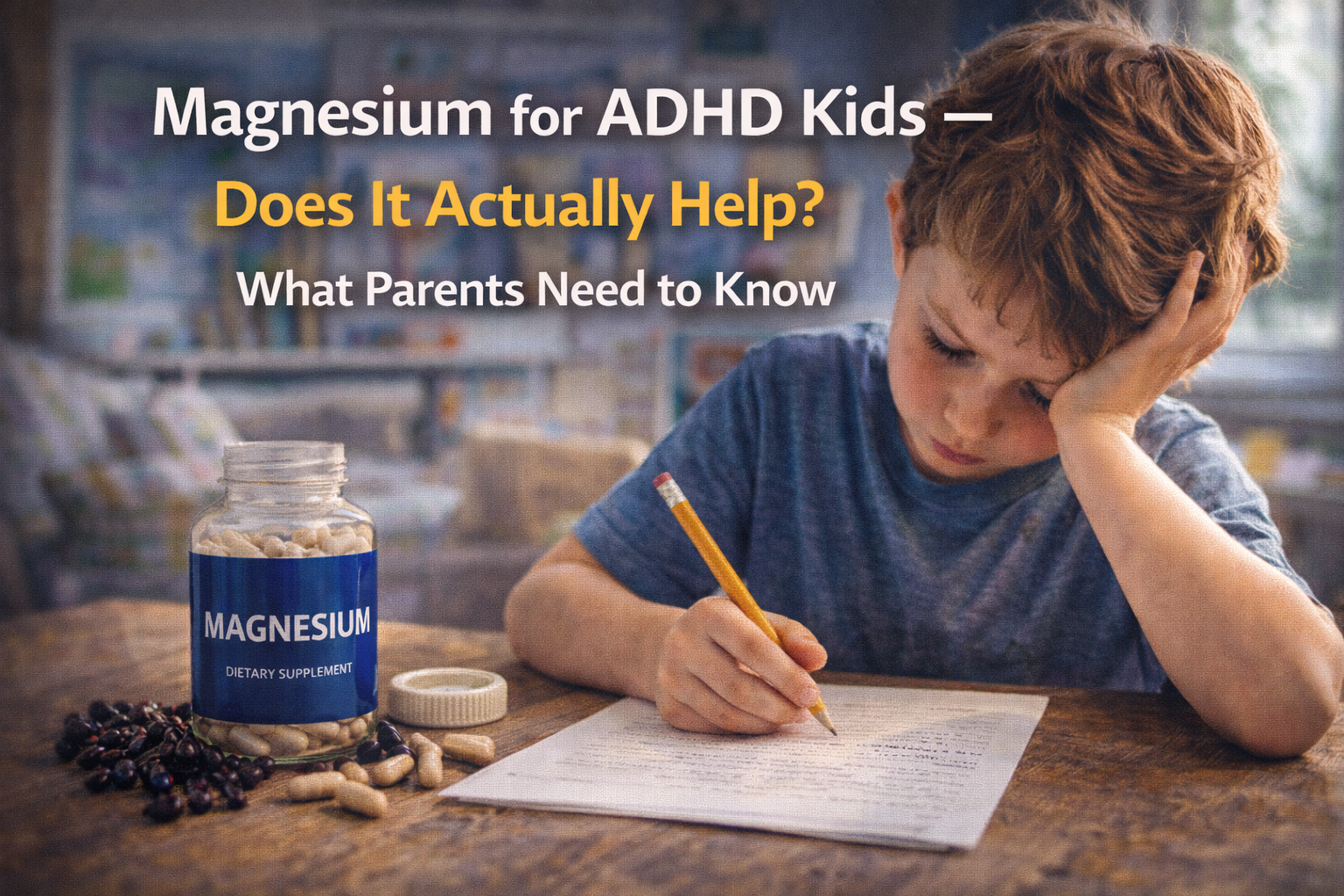
On the nutrition side, magnesium in particular has some interesting research behind it for emotional regulation and nervous system calm. We did a full breakdown of magnesium for ADHD kids if that’s something you want to explore with your pediatrician.
Consider Professional Support
If meltdowns are happening daily, lasting longer than 30–45 minutes regularly, or becoming physically unsafe — that’s beyond what parenting strategies alone can fix. A therapist who specializes in ADHD, particularly one trained in Parent-Child Interaction Therapy (PCIT) or Collaborative Problem Solving (CPS), can make an enormous difference. Don’t wait until it’s a crisis to ask for help.
A Note for Parents Who Are Barely Holding It Together
Living with meltdowns is exhausting in a way that’s hard to explain to people who haven’t experienced it. The hypervigilance alone — constantly scanning for warning signs, walking on eggshells, bracing for what might set it off — wears you down in ways that don’t show up on the outside.
You’re not dramatic for finding this hard. You’re not a bad parent for losing your calm sometimes. Dysregulation is contagious — your child’s activated nervous system activates yours, and that’s biology, not failure.
What helps you regulate matters too. Because your calm, more than any strategy or tool, is the most powerful thing in the room when things go sideways.
If you want to go deeper on the parenting side of all this — the staying calm, the not yelling, the holding limits without losing yourself — check out our piece on helping your ADHD child without losing your mind. It fits right alongside everything in this article.
Frequently Asked Questions
At what age do ADHD meltdowns get better?
Most kids show gradual improvement through middle school as the prefrontal cortex matures and they build more coping skills — but this is a slow process. With consistent support, strategies, and sometimes therapy, many families see meaningful improvement within 6–12 months of intentional effort. It’s not a light switch — it’s a dimmer.
My child only melts down at home. Is that normal?
Extremely common. Home is where they feel safe enough to fall apart. They’ve been holding it together all day at school — which takes an enormous amount of energy — and you get the release. It’s actually a sign of secure attachment, even when it doesn’t feel like it. For a toddler-specific example of this home-after-school pattern, see after-school meltdowns.
Should I discipline after a meltdown?
Calmly and briefly — yes, if there was behavior that caused harm. But not during, and not with major consequences that feel punitive. The goal is understanding and skill-building, not punishment for a neurological response they couldn’t fully control.
You Know Your Kid Better Than Any Article Does
Everything here is a framework — not a prescription. Your child’s meltdown profile is specific to them. Their triggers, their warning signs, their cool-down needs, what helps and what makes it worse — you’ll know all of that better than any expert after you start paying attention with fresh eyes.
The goal isn’t zero meltdowns. The goal is fewer, shorter, and recovery that gets faster over time. That’s a realistic target — and it’s absolutely achievable.
About the Author
Sarah Holloway is a mom of two boys, both diagnosed with ADHD, and has spent nearly a decade figuring out what actually works — in routines, tools, supplements, and sanity. She started writing about her family’s experience because she kept finding advice that was either too clinical or too vague. She lives in Ohio with her husband, her two loud and wonderful kids, and a very patient dog.