Many kids with ADHD have low magnesium levels. Here’s what the research actually shows, which form works best for kids, how much to give, and what our family noticed.
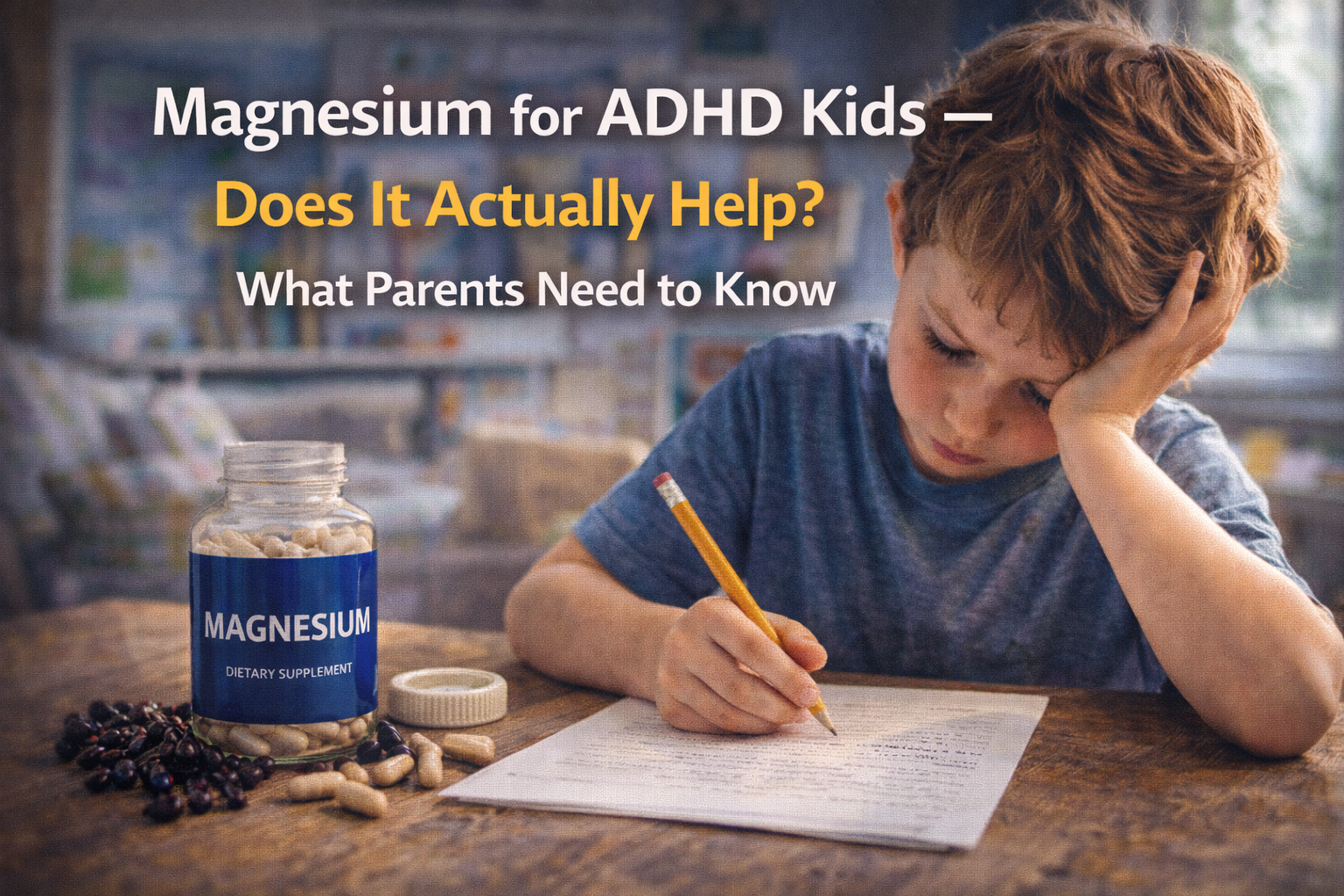
I spent about three months reading every forum post, research summary, and parent testimonial I could find about magnesium and ADHD before I actually tried it with my son.
Three months of “maybe this will help” sitting in my Amazon cart before I finally pulled the trigger.
That was two years ago. And while I’m not here to tell you magnesium is some miracle cure — because it absolutely isn’t — I am here to tell you what I wish someone had explained to me before I started: what the research actually says, what form matters, what dose makes sense for kids, and what we personally noticed. For another discussion of a brain-focused magnesium form, see This Brain-Boosting Magnesium Is Huge for ADHD Focus and Memory.
Let’s get into it.
Why Are People Even Talking About Magnesium and ADHD?
It started with researchers noticing something interesting: kids with ADHD tend to have lower magnesium levels than kids without ADHD.
Multiple studies have found this pattern. One study found magnesium deficiency in 72% of children with ADHD. A 2024 meta-analysis confirmed that children with ADHD had, on average, lower serum magnesium than control groups. A 2025 study added more weight to the connection, suggesting that lower magnesium levels may correlate with increased ADHD symptom severity.
Now — correlation isn’t causation. Lower magnesium doesn’t cause ADHD, and topping it up won’t make ADHD disappear. But here’s why researchers think it matters:
Magnesium is involved in over 300 processes in the body — including several that directly affect the brain. It helps regulate dopamine, norepinephrine, and serotonin. It supports nerve function. It helps calm an overactive nervous system. For a brain that’s already struggling with regulation, a deficiency in a mineral that supports regulation is worth paying attention to.

What Does the Research Actually Show?
I want to be straight with you here, because a lot of supplement content oversells the evidence. The honest answer is: the research is promising but not definitive. Here’s what we have:
The Vitamin D + Magnesium Study
A randomized controlled trial of 66 children with ADHD found that kids who received combined magnesium and vitamin D supplementation for 8 weeks showed significant improvements in conduct problems, social problems, and anxiety compared to the placebo group. That’s a real, controlled study — not just parent reports.
The Long-Term Hyperactivity Study
A separate study gave children with ADHD who had magnesium deficiency 200 mg of magnesium daily for 6 months. By the end, researchers saw a significant decrease in hyperactivity. Six months is a meaningful time frame — this wasn’t a two-week experiment.
The Magnesium + B6 Studies
Multiple studies using combined magnesium and vitamin B6 supplementation in ADHD children reported decreases in hyperactivity, inattention, and classroom behavioral problems after 4 months of use.

The honest caveat: Most of these studies are small. Researchers consistently call for larger, longer, more rigorous trials. So while the pattern is encouraging, we can’t say magnesium is a proven ADHD treatment. What we can say is that if your child is deficient — which many ADHD kids are — correcting that deficiency is unlikely to hurt and may genuinely help. Parents weighing treatment options can also compare this discussion with Our Child’s ADHD Medication Journey: A Real Life Case Study, a separate account of one family’s experience with medication.
Always talk to your child’s pediatrician before starting any supplement. That’s not just a legal disclaimer — your doctor can actually check your child’s magnesium levels and give you a real starting point.
What Form of Magnesium Is Best for Kids with ADHD?
This part matters more than most people realize. “Magnesium” on a label doesn’t tell you much — the form it’s in determines how well the body absorbs it and what effect it has.
Magnesium Glycinate
Bound to the amino acid glycine, this is one of the most bioavailable forms and is known for being easy on the stomach. Glycine itself has calming properties, which makes this form particularly well-suited for kids who struggle with anxiety, emotional dysregulation, or sleep. This is the form most often recommended for ADHD specifically. For parents dealing with emotional dysregulation, ADHD emotional outbursts explains what may be happening during those intense moments.
Magnesium L-Threonate
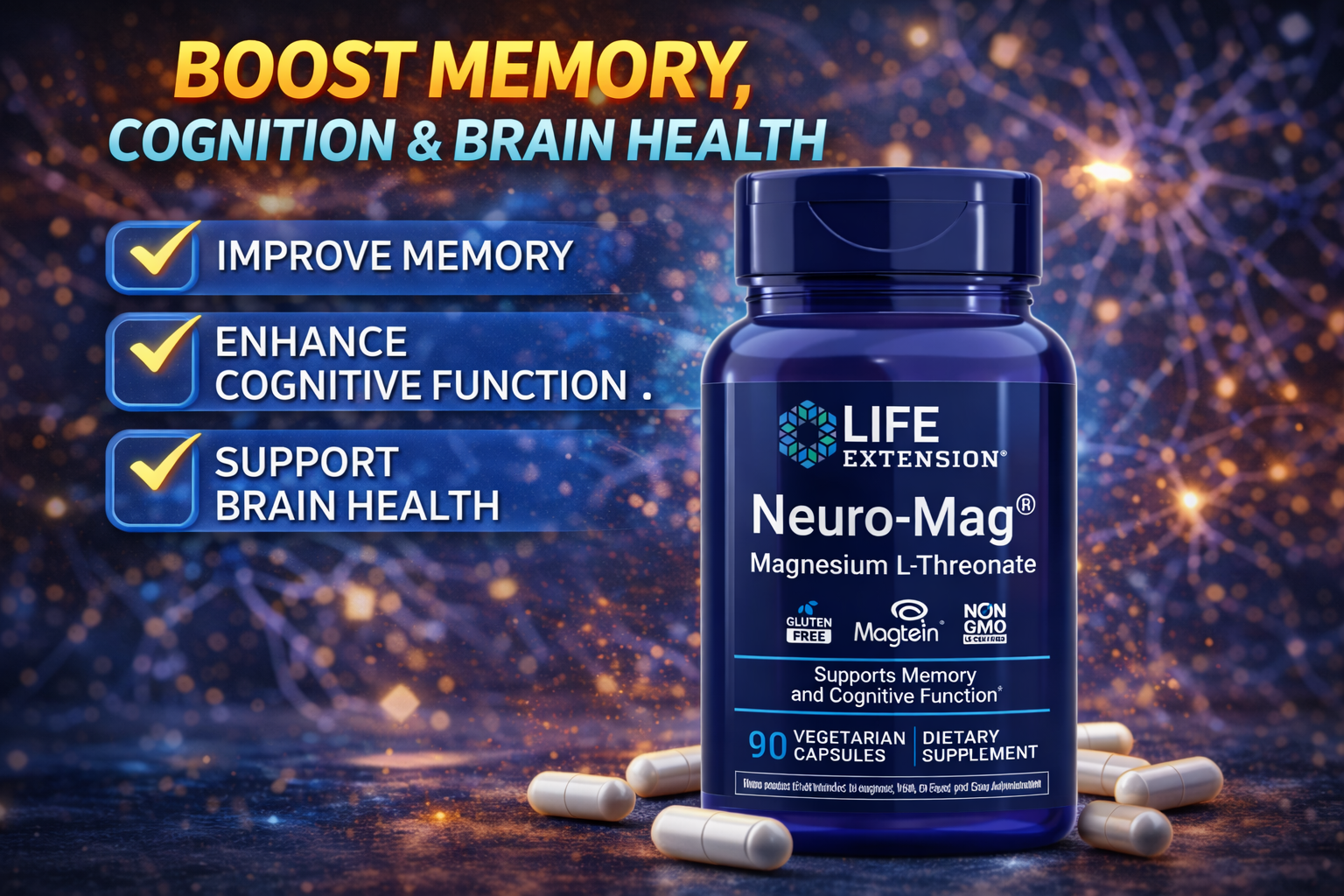
This form was developed specifically to cross the blood-brain barrier — meaning more of it actually reaches the brain rather than staying in the bloodstream. Early research on this form has focused on memory and cognitive function. It’s newer, pricier, and the research in kids is thinner, but the mechanism is compelling. The Life Extension Neuro Mag Magnesium L-Threonate is a well-known option in this category.
Magnesium Citrate
Highly absorbable and commonly available. One thing to know: at higher doses it has a laxative effect, so it’s best used at lower doses or with food. Not ideal as a primary form for kids, but fine in a multi or at moderate amounts.
Magnesium Oxide
The cheapest and most common form in drugstore supplements. Unfortunately it’s also the least well-absorbed — much of it passes through without being used. If you’re buying magnesium for ADHD support, skip this one.
Bottom line on form: For kids, magnesium glycinate is usually the best starting point. It’s gentle, well-absorbed, and the calming effect of glycine pairs well with ADHD symptoms like hyperactivity and emotional swings.
What About Kid-Friendly Magnesium Options?
Not every kid will swallow capsules, and that’s fine. There are good gummy options worth knowing about.
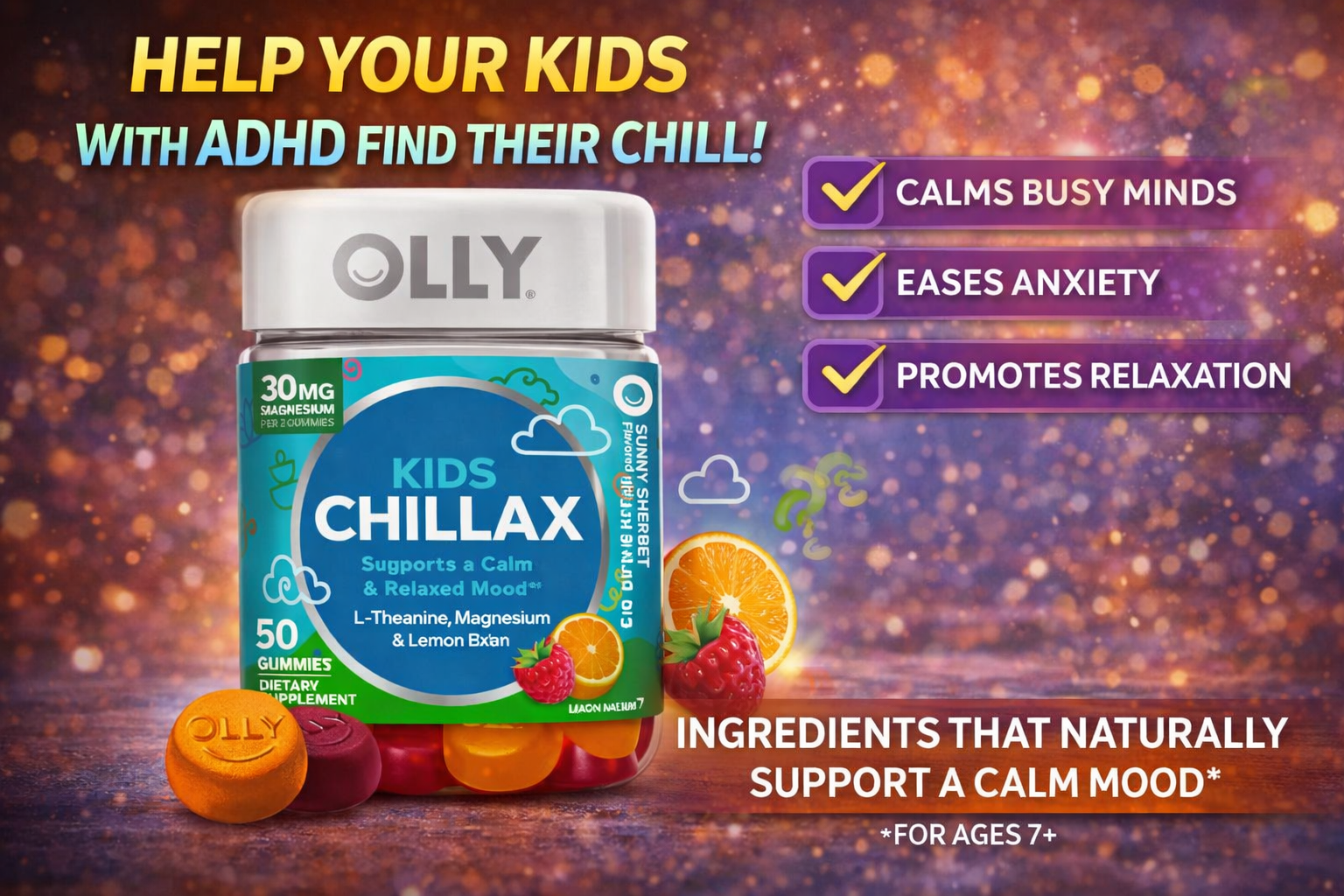
The OLLY Kids Chillax Gummies combine magnesium with L-theanine and lemon balm — two additional ingredients that support calm focus. L-theanine in particular has decent research behind it for reducing anxiety without sedation. These are a solid option for younger kids who need something chewable.
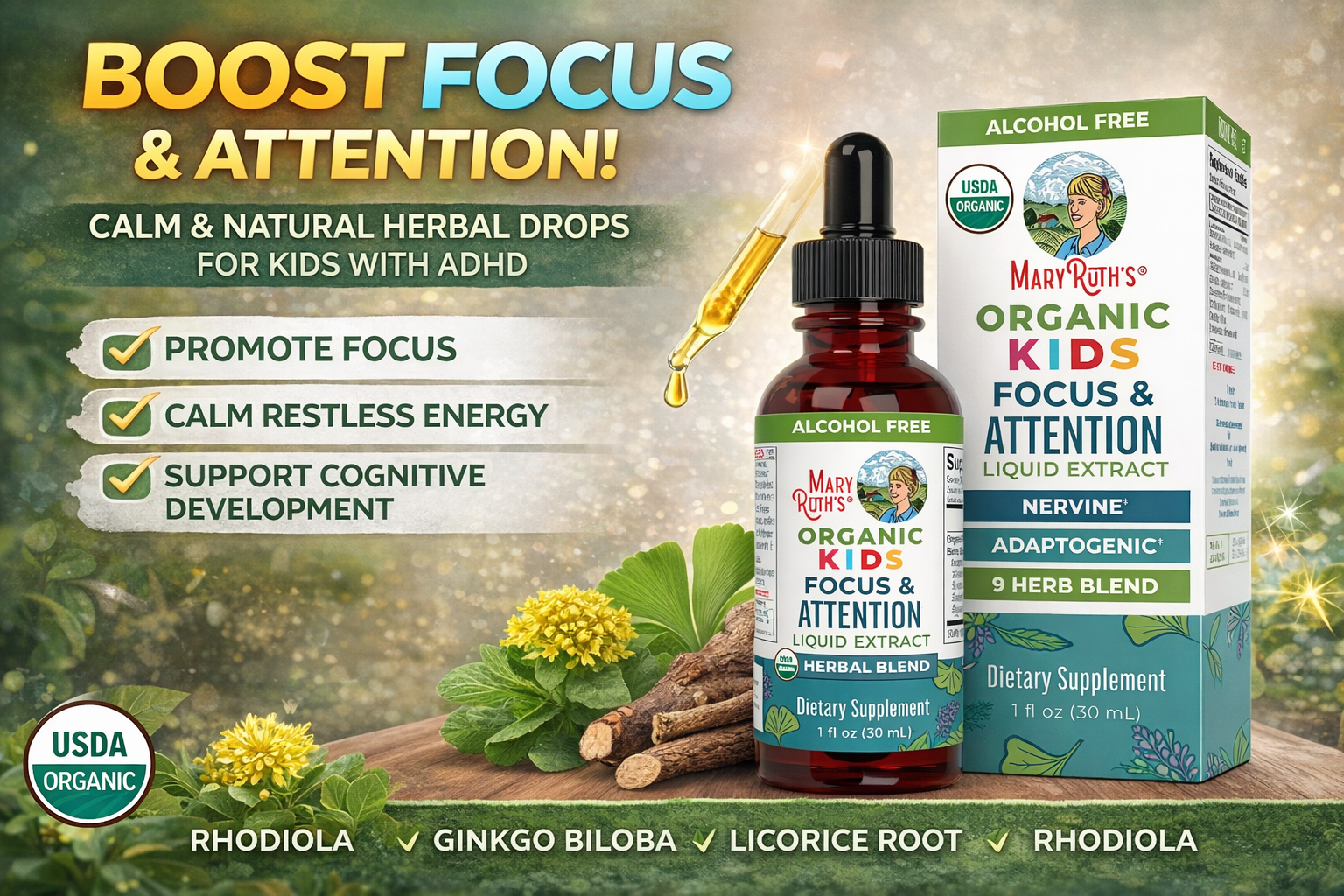
If you’re looking for a more targeted focus and attention formula, MaryRuth Organics Kids Focus and Attention Drops are another parent-favorite, combining ginkgo and rhodiola with other botanicals designed for cognitive support.
For adults or teens who can take capsules, the Nootropic Brain Supplement with Bacopa Monnieri is worth a look — it combines cognitive-support ingredients including B vitamins, folate, and niacin that support the same neurotransmitter pathways magnesium targets.
How Much Magnesium Do Kids Need?
General daily magnesium recommendations by age (these are standard nutritional guidelines, not ADHD-specific therapeutic doses):
- Ages 4–8: 130 mg/day
- Ages 9–13: 240 mg/day
- Ages 14–18: 360 mg (girls) / 410 mg (boys)
The studies showing ADHD-specific benefits used doses around 6 mg per kilogram of body weight per day — so a 50-pound child (about 23 kg) would land around 138 mg. That’s right in line with general recommendations for that age group, which is reassuring.
The key is that most kids aren’t getting anywhere near this through food alone, especially kids who are picky eaters — which, let’s be honest, describes a lot of ADHD kids.
Talk to your pediatrician before dosing. They can test your child’s actual magnesium levels and help you find the right amount for your specific child’s weight and diet.
What Foods Are High in Magnesium?
If you want to try food first — or stack food with supplementation — here’s what to focus on:
- Pumpkin seeds — one of the single highest magnesium foods per serving
- Dark chocolate — yes, really (and a much easier sell to kids than spinach)
- Almonds and cashews
- Black beans and edamame
- Avocado
- Bananas
- Whole grain bread and oatmeal
The reality for most ADHD families? Diet alone rarely closes the gap, especially with kids who have sensory food aversions or very limited palates. That’s where supplementation can genuinely help fill in what food misses.
What We Actually Noticed (Our Experience)
I started my son on magnesium glycinate gummies — roughly 130 mg per day — about two years ago. He was 9 at the time. We were already doing everything else: behavioral therapy, school accommodations, a pretty consistent routine. Medication was something we were exploring but hadn’t committed to yet.
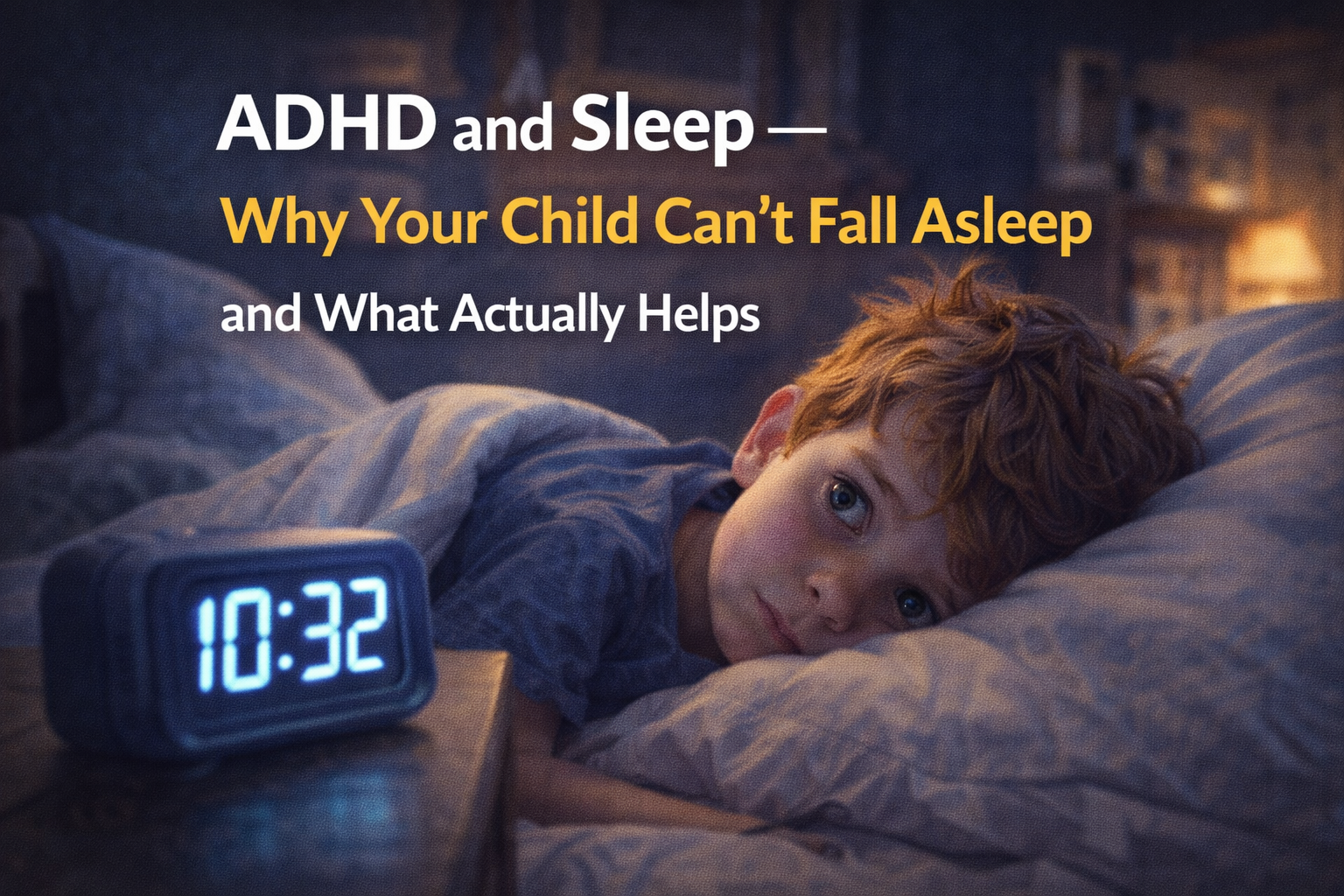
What I noticed in the first month: better sleep. Not dramatically different behavior during the day, but he was falling asleep faster and waking up less. That alone was worth it — because sleep deprivation makes every single ADHD symptom worse. The broader connection between sleep and ADHD symptoms is explained in ADHD sleep challenges.
By month two, my husband noticed he seemed a little less reactive in the evenings. Less likely to spiral when something didn’t go his way. We couldn’t say for certain it was the magnesium versus the therapy or just him maturing — and that’s the honest truth about supplements. It’s hard to isolate variables in real life.
What I can say: we’ve kept it up. It’s become part of our daily routine because nothing about it hurt, and several things seemed to help.
Signs Your Child Might Be Magnesium Deficient
These aren’t diagnostic criteria — just patterns worth being aware of and discussing with your doctor:
- Trouble falling or staying asleep
- Muscle cramps or growing pains
- Heightened anxiety or irritability
- Constipation
- Sensitivity to loud sounds or sensory input
- Teeth grinding at night
Several of these overlap heavily with ADHD symptoms themselves, which is part of why researchers are interested in the connection. And why correcting a potential deficiency is worth exploring.

Can You Give Magnesium with ADHD Medication?
This is a question you need to take directly to your child’s prescribing doctor — not a blog. What I can share is that many parents do use magnesium alongside medication, and some report that magnesium seems to help with medication side effects like irritability and appetite suppression during the evening “rebound.” But that’s parent experience, not clinical guidance.
Your doctor can review interactions, timing, and dosing. Please have that conversation before combining anything.
Is Magnesium Safe for Kids?
At appropriate doses, magnesium is generally considered safe and well-tolerated. The most common side effect at higher doses is loose stools or diarrhea — this is more common with magnesium oxide or citrate and less common with glycinate. Starting low and increasing gradually helps avoid this.
The tolerable upper intake level (UL) set by the National Institutes of Health for supplemental magnesium in children ages 4–8 is 110 mg/day, and 350 mg/day for ages 9 and up. These are for supplemental magnesium only — food-based magnesium doesn’t carry the same concern.
Again: pediatrician first. Especially if your child is on any medications.
The Bottom Line on Magnesium for ADHD Kids
Magnesium isn’t a replacement for medication, therapy, or the hard daily work of parenting an ADHD child. But the research makes a reasonable case that many kids with ADHD are running low on a mineral that directly affects the neurotransmitters and nervous system functions they’re already struggling with.
Correcting that deficiency — through food, supplementation, or both — is a low-risk, potentially meaningful piece of a bigger puzzle.
It’s not magic. But in a situation where every small edge helps, it’s worth the conversation with your pediatrician.

If you found this useful, you might also want to read about the best ADHD fidget tools for focus, how we finally got our ADHD bedtime battles under control, and our honest look at the morning routine that actually works for us.
Products Mentioned in This Article
- Life Extension Neuro Mag Magnesium L-Threonate — the brain-targeted form, popular with adults and teens
- OLLY Kids Chillax Gummies — magnesium + L-theanine + lemon balm, kid-friendly
- MaryRuth Organics Kids Focus and Attention Drops — ginkgo and rhodiola formula
- Nootropic Brain Supplement with Bacopa Monnieri — for teens/adults looking for broader cognitive support
Disclaimer: This article is written from a parent’s perspective and is for informational purposes only. It is not medical advice. Always consult your child’s pediatrician before starting any supplement, especially if your child takes medication.
About the Author
Sarah Holloway is a mom of two boys, both diagnosed with ADHD, and has spent nearly a decade figuring out what actually works — in routines, tools, supplements, and sanity. She started writing about her family’s experience because she kept finding advice that was either too clinical or too vague. She lives in Ohio with her husband, her two loud and wonderful kids, and a very patient dog.