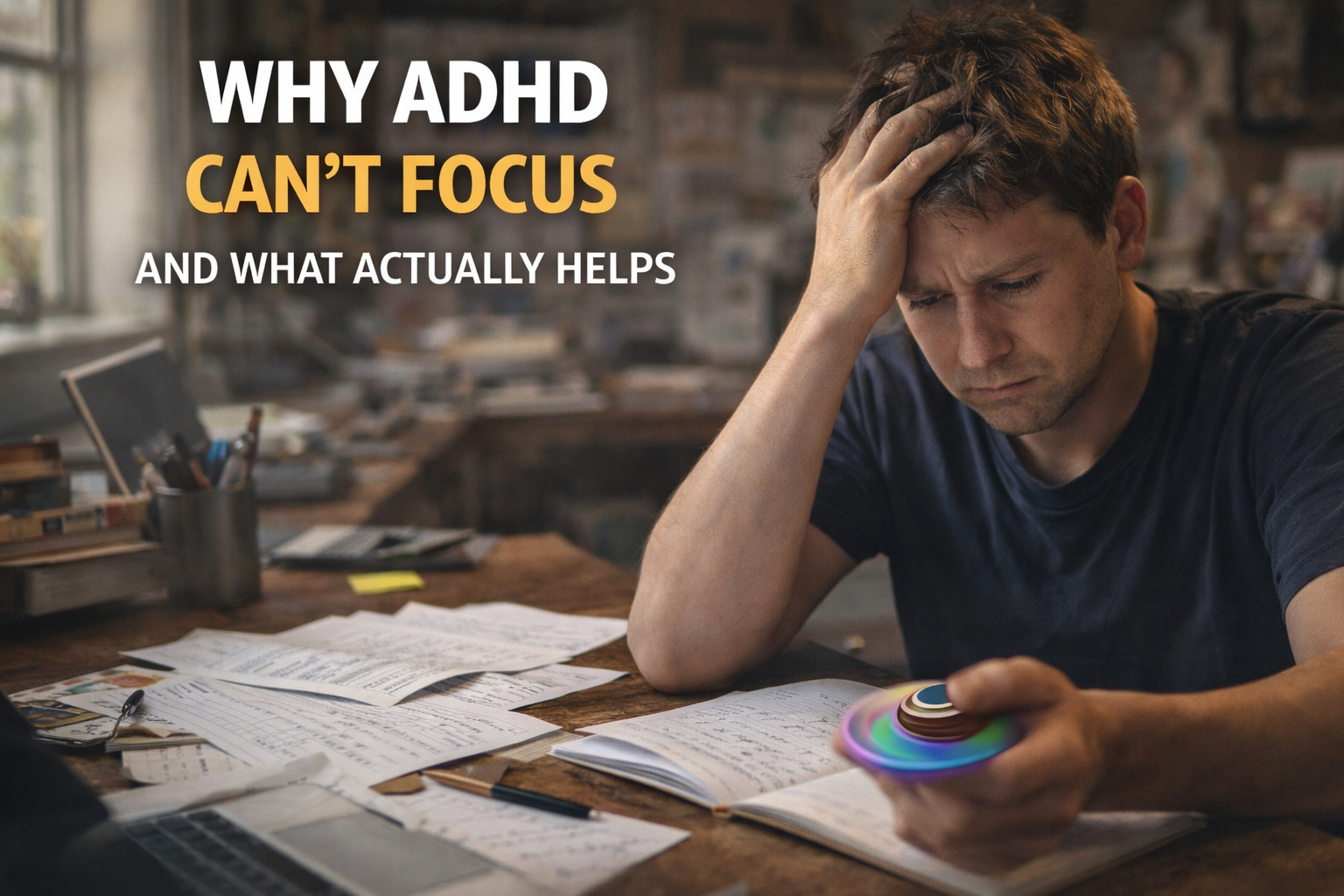
ADHD focus problems can feel incredibly frustrating, especially when you’re trying your best and it still feels like your brain just won’t cooperate. If you’ve ever sat down ready to get something done and within minutes your attention is gone, you’re not alone.
We’ve lived this in our home every single day, and for a long time, it felt like nothing was working.
The hardest part isn’t just the lack of focus. It’s the confusion, the frustration, and sometimes even the guilt that comes with it. You start wondering why something so simple feels so difficult.
What finally changed things for us wasn’t trying harder. It was understanding what was actually going on.

What ADHD Focus Problems Actually Feel Like
If you don’t live with ADHD, it’s easy to misunderstand what focus problems really feel like.
It’s not just getting distracted once in a while. It’s a constant battle to stay on track.
You might start a task with good intentions, only to find yourself doing something completely different minutes later. You sit down to work, and suddenly everything else feels more interesting or urgent.
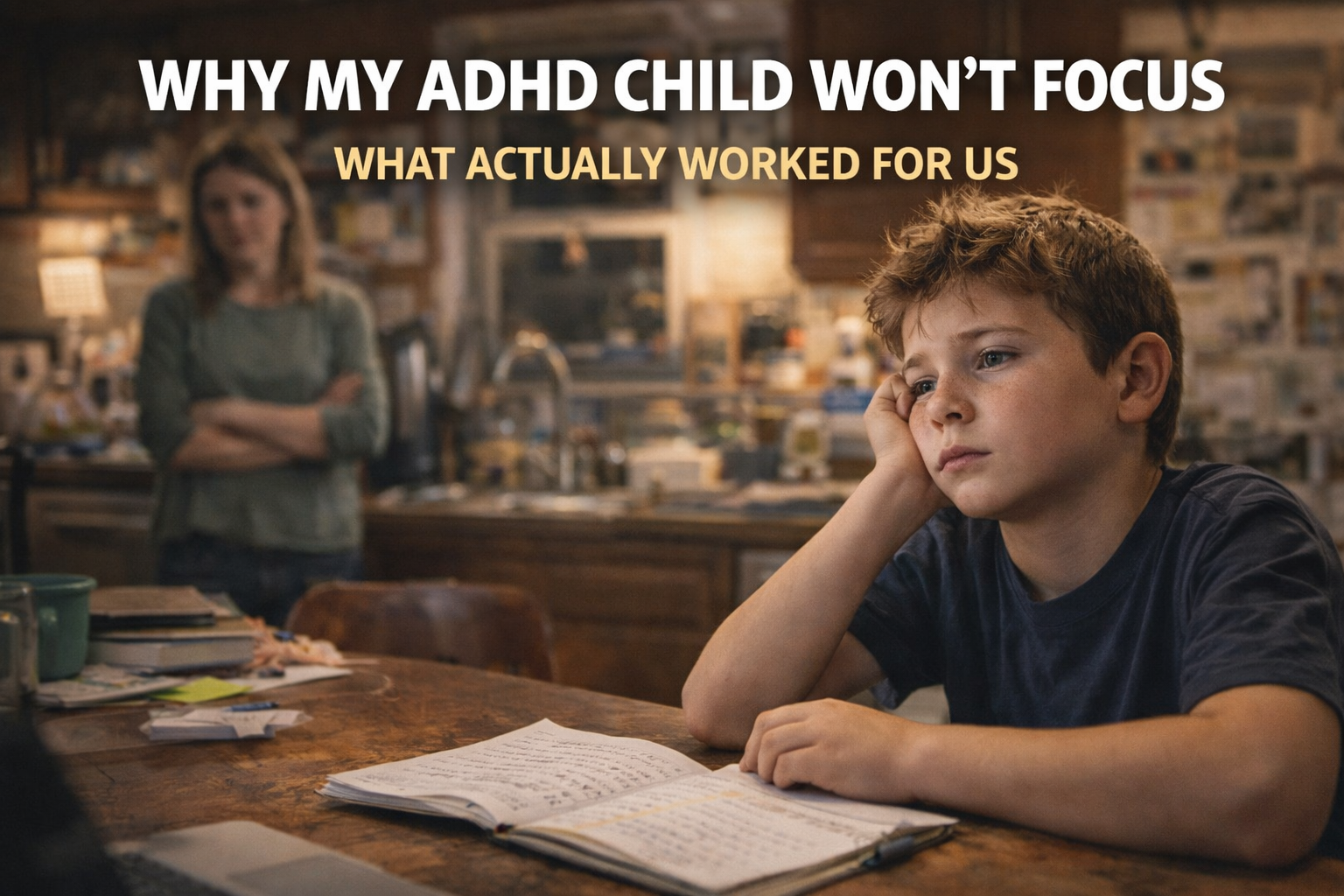
For kids, this shows up in ways like struggling with homework, getting up constantly, or zoning out in the middle of simple instructions.

We’ve seen this firsthand, and it’s something we talk about more in detail in what living with ADHD actually looks like in our home.
It’s not about not wanting to focus. It’s about not being able to hold that focus consistently.
Why ADHD Makes It So Hard to Focus

The biggest reason ADHD affects focus comes down to how the brain handles stimulation and attention. That connection between stimulation and attention is explored through practical examples in Best ADHD Fidget Toys for Focus That Actually Work (Real Results).
The ADHD brain doesn’t regulate dopamine the same way. Dopamine plays a huge role in motivation, attention, and reward.
When dopamine levels are low, the brain looks for ways to increase stimulation. That’s why boring or repetitive tasks feel almost impossible to stick with.
It’s also why more engaging or fast-moving activities are easier to focus on.
This is why telling someone with ADHD to “just focus” doesn’t work. The issue isn’t effort. It’s how the brain is wired.
The ADHD Brain and Stimulation
This is where everything starts to make sense.
The ADHD brain needs the right level of stimulation to stay engaged.
Too little stimulation leads to distraction and boredom. Too much stimulation leads to overwhelm.
The goal is finding the middle ground.
That’s why things like movement, hands-on activity, or small sensory input can actually improve focus instead of hurting it.

We started noticing this during everyday routines. Once we added small changes and structure like we shared in our ADHD morning routine that finally made life easier, focus became easier to maintain.
Why “Just Try Harder” Doesn’t Work
This is one of the biggest misconceptions about ADHD.
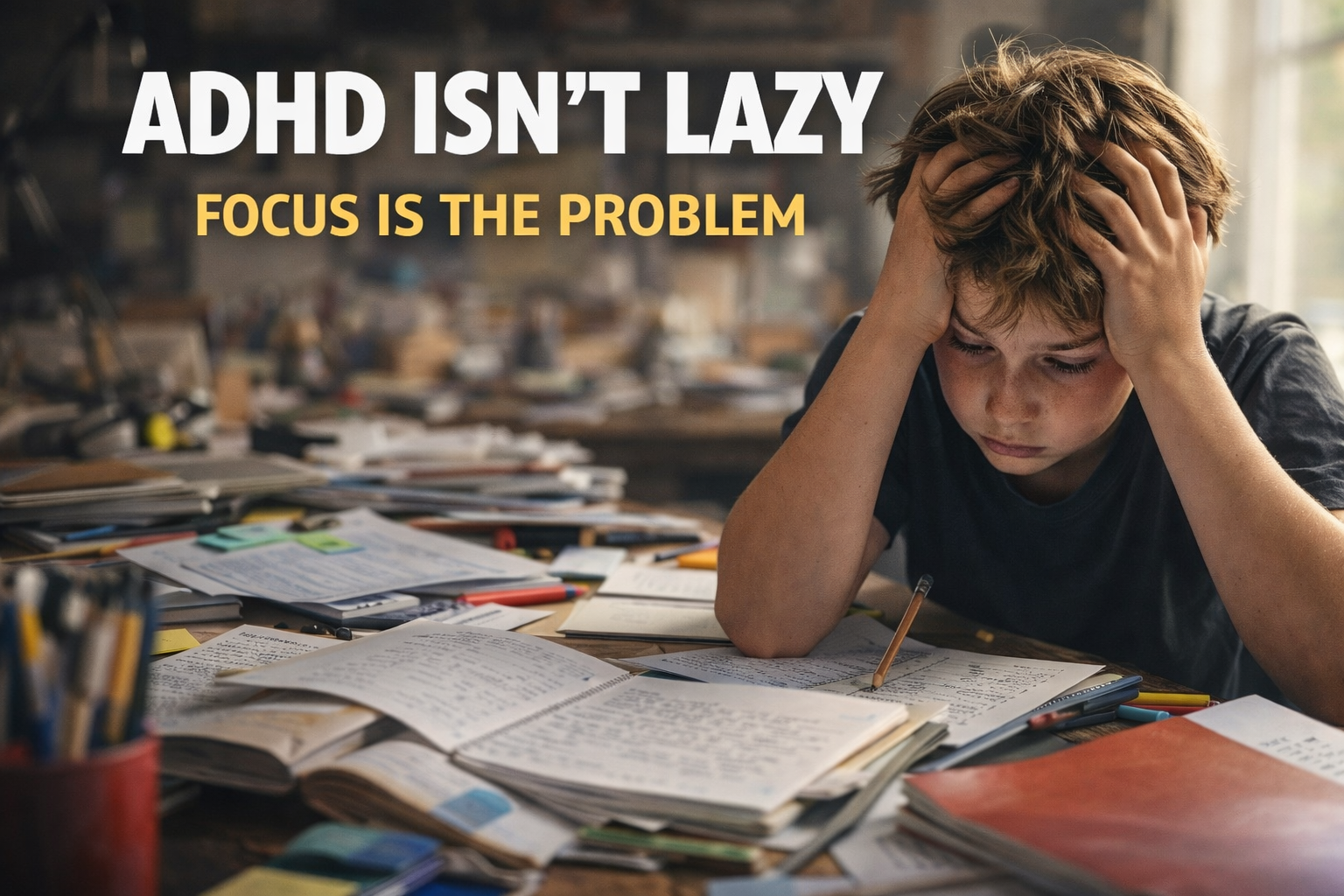
From the outside, it can look like someone just isn’t trying hard enough. But in reality, many people with ADHD are trying harder than anyone realizes.
For kids, this can lead to frustration, low confidence, and feeling like they’re constantly doing something wrong.
For parents, it can feel overwhelming and exhausting trying to figure out what actually helps.
We’ve been there.
Trying to push harder, correct behavior, and expect better results… only to end up more frustrated.
The shift came when we stopped fighting how ADHD works and started supporting it instead.

How to Actually Improve ADHD Focus
Improving focus with ADHD isn’t about forcing it. It’s about creating the right conditions for focus to happen.
One of the biggest things that helped us was allowing movement instead of trying to eliminate it.
Movement-based focus can look like using hands while working, standing instead of sitting, or incorporating short breaks.
Another key factor is environment.
Reducing distractions, keeping things simple, and creating a predictable routine can make a big difference.
We also found that shorter work periods worked better than long sessions. Breaking tasks into smaller chunks helped keep attention from dropping off too quickly.
This is especially helpful for kids during homework, which we talk more about in ADHD homework tips that actually work.
ADHD Tools That Actually Help With Focus
This is where things really started to improve for us.
Instead of trying to force focus, we introduced tools that supported it.
Simple things like fidget tools, timers, and structured systems made a noticeable difference.
Fidget tools, in particular, helped by giving the hands something to do while keeping the brain engaged.
They didn’t solve everything, but they made it easier to stay on task.

If you want to see exactly what tools worked for us and how we used them, you can read the full guide on ADHD fidget tools that actually help with focus.

ADHD Focus Tips for Kids vs Adults
ADHD shows up differently depending on age, and focus strategies need to match that.
For kids, structure is key. Clear routines, simple instructions, and tools that allow movement can make a big difference.
For adults, environment and habits matter more.
Things like reducing distractions, setting up a focused workspace, and using short work sessions can help improve productivity.
Both benefit from understanding how the ADHD brain works instead of fighting it.
Common ADHD Focus Mistakes People Make
One of the biggest mistakes is trying to force stillness.
Sitting completely still for long periods often makes focus worse, not better.
Another mistake is expecting long periods of attention.
Short, focused bursts are usually much more effective.
Overloading the environment with too many distractions or even too much structure can also backfire.
Finding balance is what matters most.

What Finally Worked for Us
The biggest change for us wasn’t one single strategy or tool.
It was a shift in how we approached everything.
Instead of trying to make ADHD fit into a traditional structure, we adapted our approach to fit how ADHD actually works.
We allowed movement. We simplified routines. We used tools that supported focus instead of forcing it.
And slowly, things started to improve.
Not perfectly, but enough to make daily life feel more manageable.
If you want to see the tools that made the biggest difference, you can check out the ADHD focus tools that actually worked for us.
Can ADHD Focus Improve Over Time?
Yes, but not in the way most people think.
ADHD doesn’t go away, but focus can improve with the right systems and support.
As you learn what works and build routines around it, things become easier to manage.
It’s not about fixing ADHD. It’s about working with it.
And once you start doing that, everything begins to feel a little more manageable.